Built Around the Needs of Sheet Metal Fabricators
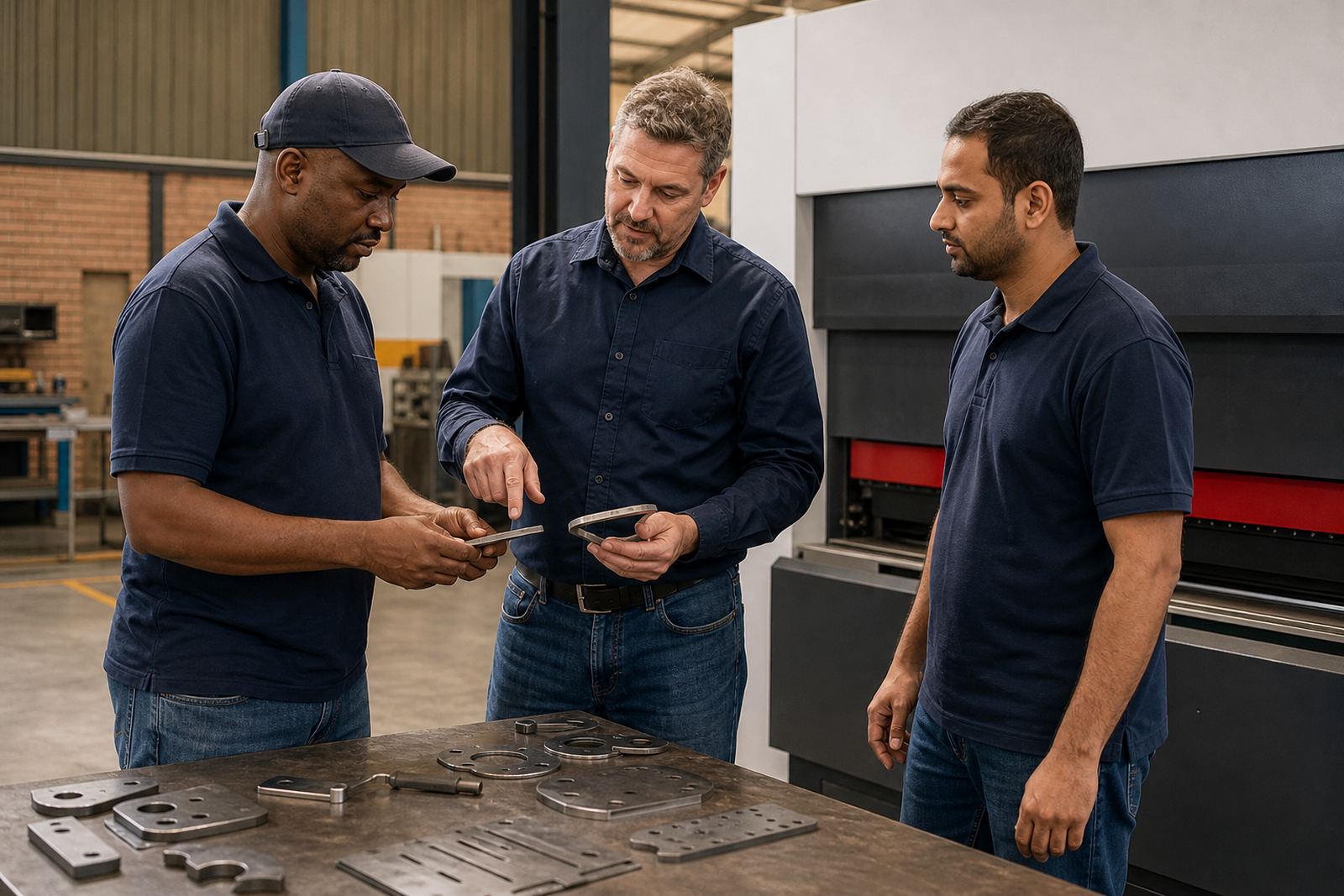
Deburring started with a simple view of the job: if laser-cut parts leave the cutting table with sharp edges, slag, burrs or uneven finishing, the next stage of production slows down. Parts are harder to handle, weld preparation takes longer, packaging is messier and quality checks take more time. Our focus has always been on the stage after cutting, where good process control makes a measurable difference.
From our base in Wadeville, Germiston, we supply machines for the daily realities of South African manufacturing. That means long shifts, pressure to keep lead times down, inconsistent power supply in some areas, and workshops that need equipment suited to local conditions. We work with fabricators in Johannesburg, Pretoria, Durban, Cape Town and Rustenburg, and we understand that a machine must do more than look good on paper. It has to fit the way a factory actually runs.
Our story has been shaped by the same questions clients ask us: how do we reduce manual finishing, how do we keep parts consistent, and how do we get more through the shop without adding unnecessary labour. We answer those questions by matching the right machine to the right process, then backing it with proper installation and after-sales support.
What We Stand For in Daily Work
We are practical people. That means we value machines that hold tolerances, finish edges properly and keep throughput steady. We also value honest guidance. If a machine is not the right fit for a certain part range, material thickness or output target, we say so. That straightforward approach has helped us build long-term relationships with workshops and production teams across the country.
Our values are visible in the way we handle each project. We pay attention to the type of laser-cut parts being processed, the volume per shift, the finish required, the available floor space and the skills already in the workshop. A line that suits a jobbing fabricator in the East Rand may not suit a higher-volume production plant in Durban, and we treat those differences properly, not as an afterthought.
- Clear advice based on the parts being processed
- Support that considers production targets and labour realities
- Machines selected for repeatability, safety and ease of use
- Service planning that helps reduce unplanned downtime
- Practical recommendations for local workshop conditions
How We Support Customers Across South Africa
We serve clients nationally, with regular support and demonstrations arranged for Johannesburg, Pretoria, Durban, Cape Town and Rustenburg. Our branches and area support points help us stay close to the people who actually run the machines. That matters when a production line is under pressure and a decision has to be made quickly.
Support starts before a machine is installed. We look at the application, the thickness range, the finish standard and the desired output per hour. We also discuss space, floor layout, loading access and power requirements. For coastal workshops, we pay attention to humidity and corrosion risks. For inland sites, dust control and heat can be just as important. This kind of detail helps us recommend equipment that can handle the environment and not just the brochure specification.
Once a machine is in place, our team stays involved. We do not treat handover as the end of the job. Instead, we make sure operators understand the settings, the consumables, the maintenance intervals and the practical checks that keep production steady.
Our Team and How We Work Together
Deburring is led by Pieter Johannes van der Merwe, with a team that covers sales, applications, workshop support and customer care. Each person plays a specific role, but the handover between roles is just as important. A machine sale only works well if the applications advice, workshop preparation and service follow-through all line up.
Thandiwe Mokoena manages sales conversations and helps clients match their needs to the right equipment. Sibusiso Dlamini oversees service matters and breakdown response. Ayesha Patel works on applications and sample part testing, helping clients see how parts respond before they commit. Johan Kruger manages the workshop side, including preparation, checks and practical build quality. Lerato Nkosi leads customer support, keeping communication clear once a project is underway.
This structure keeps us responsive. A client in Pretoria may need a demo, a workshop in Cape Town may need a service plan, and a factory in Wadeville may need an urgent audit after a change in production. Because our team is organised around those tasks, we can respond without making the process needlessly complicated.
Services That Keep Production Moving
Our work goes beyond supplying a machine. We help clients keep that machine productive over the long term with support that matches the real demands of the shop floor. Some clients come to us for a new installation, while others need help recovering output after a change in workload or a breakdown in another part of the process.
We regularly assist with machine installation, operator training, preventive maintenance, breakdown repairs and abrasive replacement. We also carry out machine audits, sample part testing, process optimisation and production planning help. For sites that want predictable running costs, annual service contracts can make planning easier, especially where shutdown windows are short and every hour counts.
- Machine installation and relocation support
- Operator training for new and existing staff
- Preventive maintenance and annual service contracts
- Breakdown repairs and spares supply
- Sample part testing and process optimisation
We understand that a plant cannot stop for long while waiting on a fix. That is why we focus on practical maintenance planning and clear communication around parts, wear items and service timing. It helps clients keep the line moving and avoid surprises.
Why Fabricators Choose Deburring
Fabricators choose us because we speak plainly about the job. We know that laser-cut sheet metal has to move from cutting to finishing to assembly with as little handling as possible. If the edge finish is poor, the whole workflow suffers. If the machine is easy to use and dependable, the team can concentrate on output instead of constant adjustment.
We also recognise that South African workshops work under tight margins. Load shedding, labour constraints and transport delays can all put pressure on delivery dates. A dependable finishing process can take some of that pressure off by reducing rework, improving consistency and giving supervisors better control over turnaround times. That is why we pay so much attention to selection, setup and support.
Our clients know they can reach us through the enquiry form on our contact page and expect a considered response. Whether the need is for a demo, a sample part test, a service visit or help planning a new line, we approach it with the same attitude: keep it practical, keep it accurate, and keep the workshop productive.