Built For Aluminium Sheet After Laser Cutting
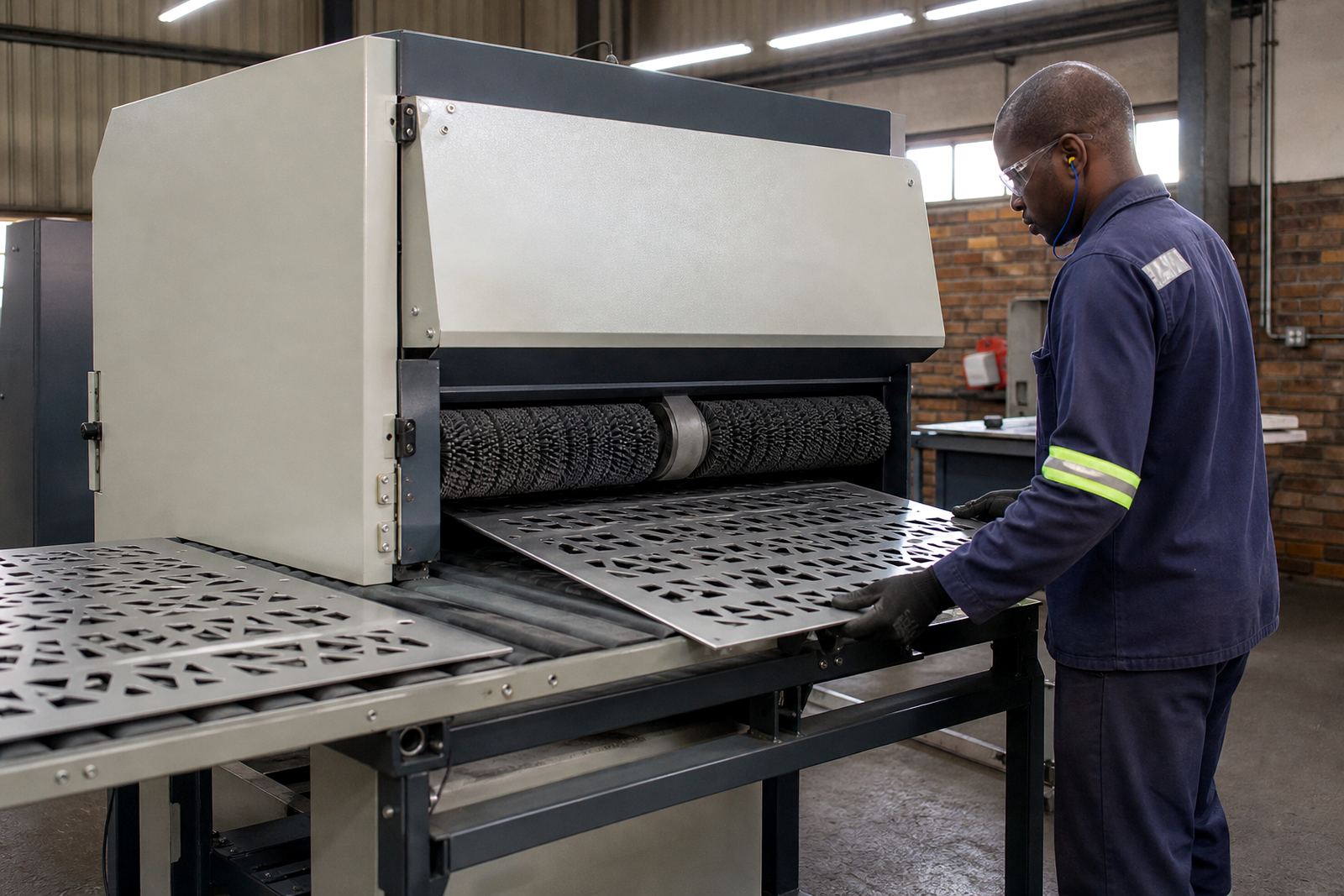
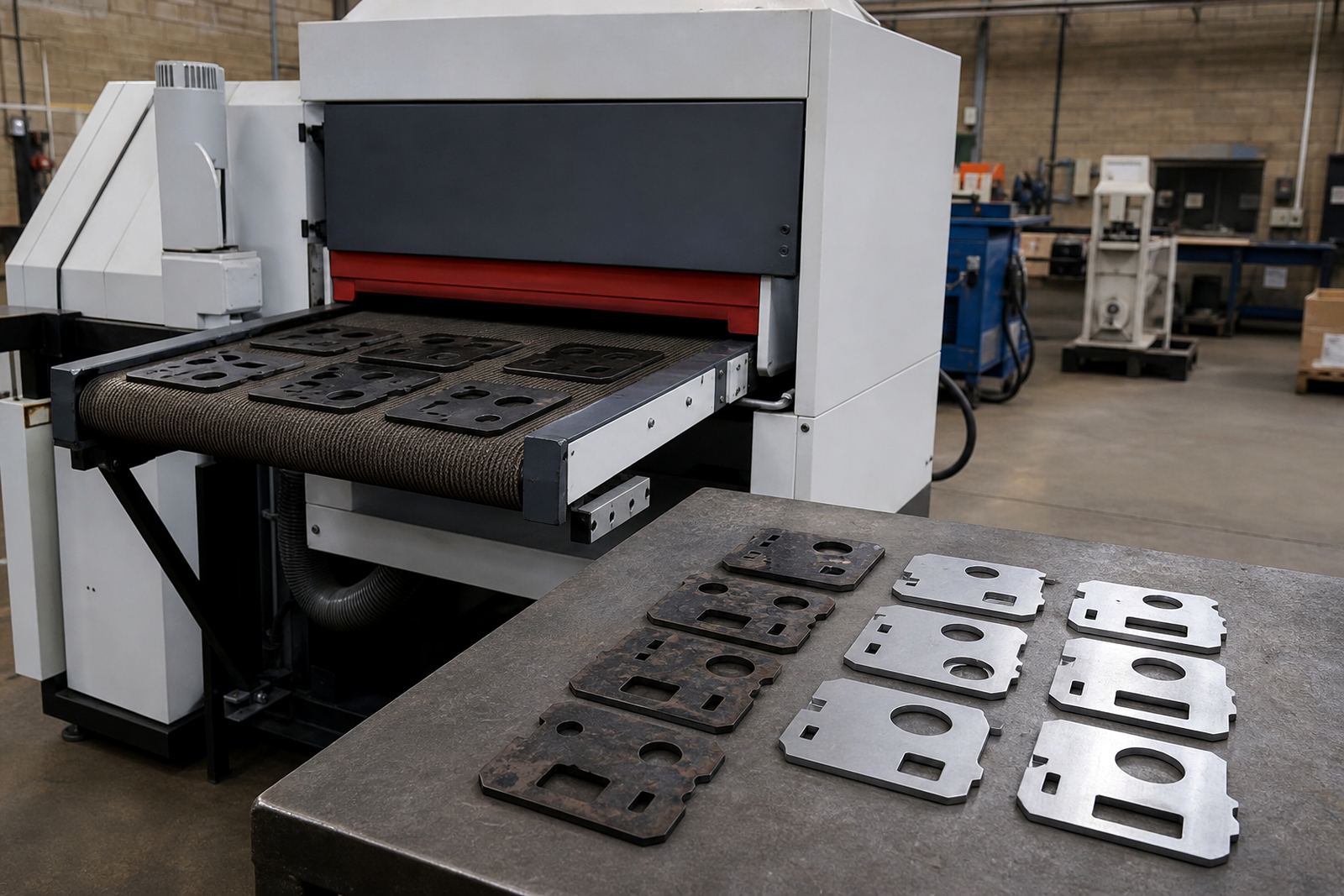
This machine is tuned for the lighter, more sensitive behaviour of aluminium after laser cutting. Aluminium can show marks quickly, so the working setup focuses on controlled abrasion, stable feed, and a finish that removes burrs without overworking the surface. That matters on parts that still need to fit cleanly, take anodising, powder coating, or go straight into assembly.
In many shops around Wadeville, Germiston, and the East Rand, the same laser table may run mild steel in the morning and aluminium later in the day. This unit is useful where the aluminium job cannot be treated like heavier plate. It helps reduce hand filing, improves edge consistency, and keeps the line moving when jobs are tight and the customer wants neat edges on the first pass.
- Designed for laser-cut aluminium sheet and flat parts
- Controls burrs without aggressive edge marking
- Suitable for mixed production runs and repeated part batches
- Helps reduce manual finishing and uneven rework
Sizes And Working Width Options
The Aluminium Edge Unit is usually specified by working width, part size range, and whether the shop needs a single-side or multi-action finishing sequence. For small bracket work, a narrower machine can be enough, while larger panels and cabinet parts often need a wider opening and stronger part support. The right choice depends on the biggest sheet size you expect to process, not only the average job.
Available configurations can include adjustable feed speed, variable finishing pressure, and support for different abrasive media so the finish can be matched to the alloy, sheet thickness, and cosmetic requirement. If your work includes thin fascia parts, folded enclosures, or machined aluminium plates, the machine should be set up to keep the face clean and the edges even, not just remove burrs as quickly as possible.
- Working widths commonly supplied from 400 mm to 1300 mm
- Sheet thickness range typically from 0.5 mm to 20 mm
- Feed speeds adjustable for fine finish or higher throughput
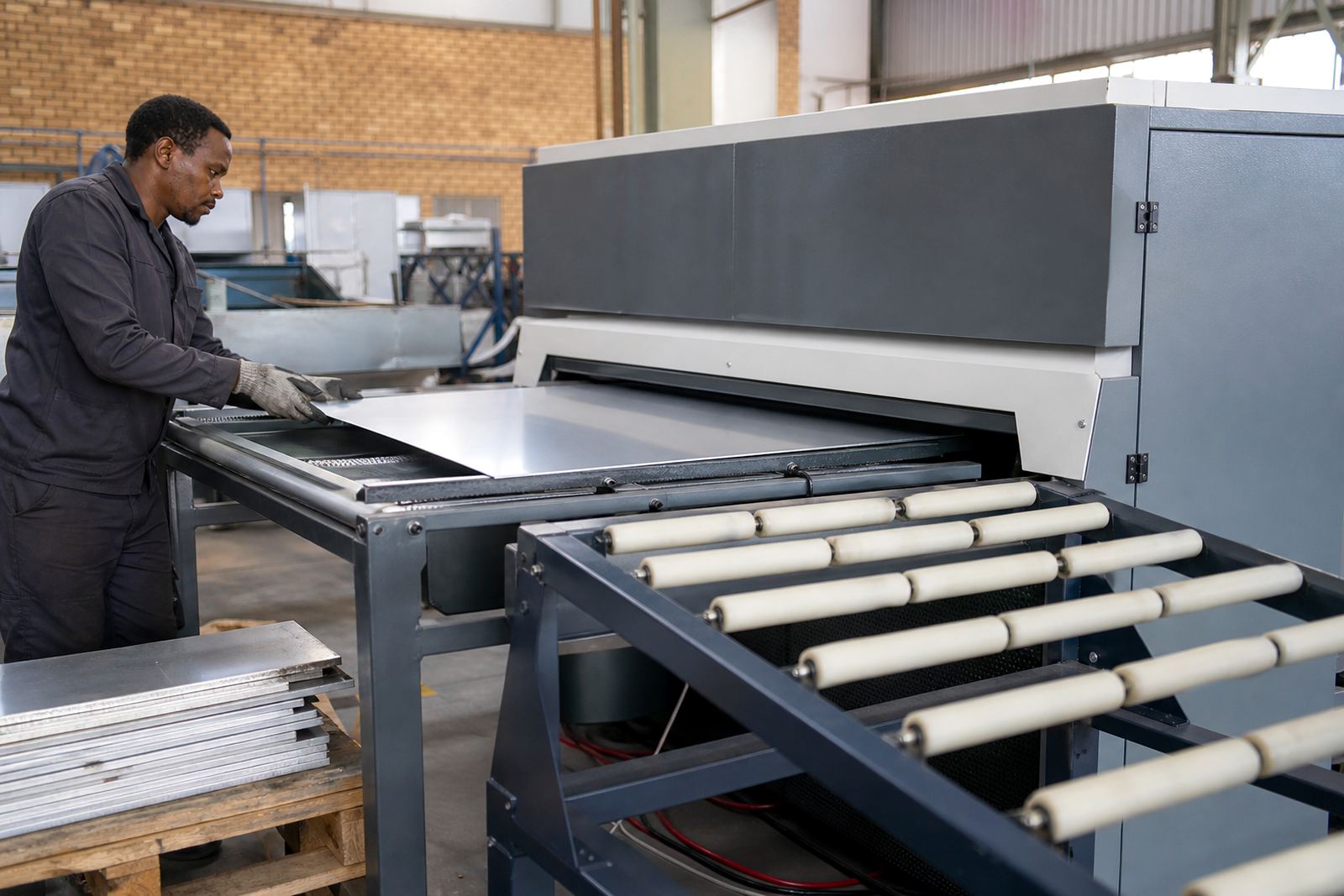
- Optional infeed and outfeed support for larger sheets
Where It Fits In South African Fabrication
This unit suits job shops and production floors that cut aluminium for electrical enclosures, signage parts, transport fittings, architectural components, shopfitting hardware, and light industrial assemblies. In Durban and Cape Town, where coastal humidity can affect stored sheet and finished parts, a clean edge matters because surface condition often has to be right before packing or finishing. In Pretoria and Rustenburg, the machine is often used where repeatability and batch control are more important than heavy stock removal.
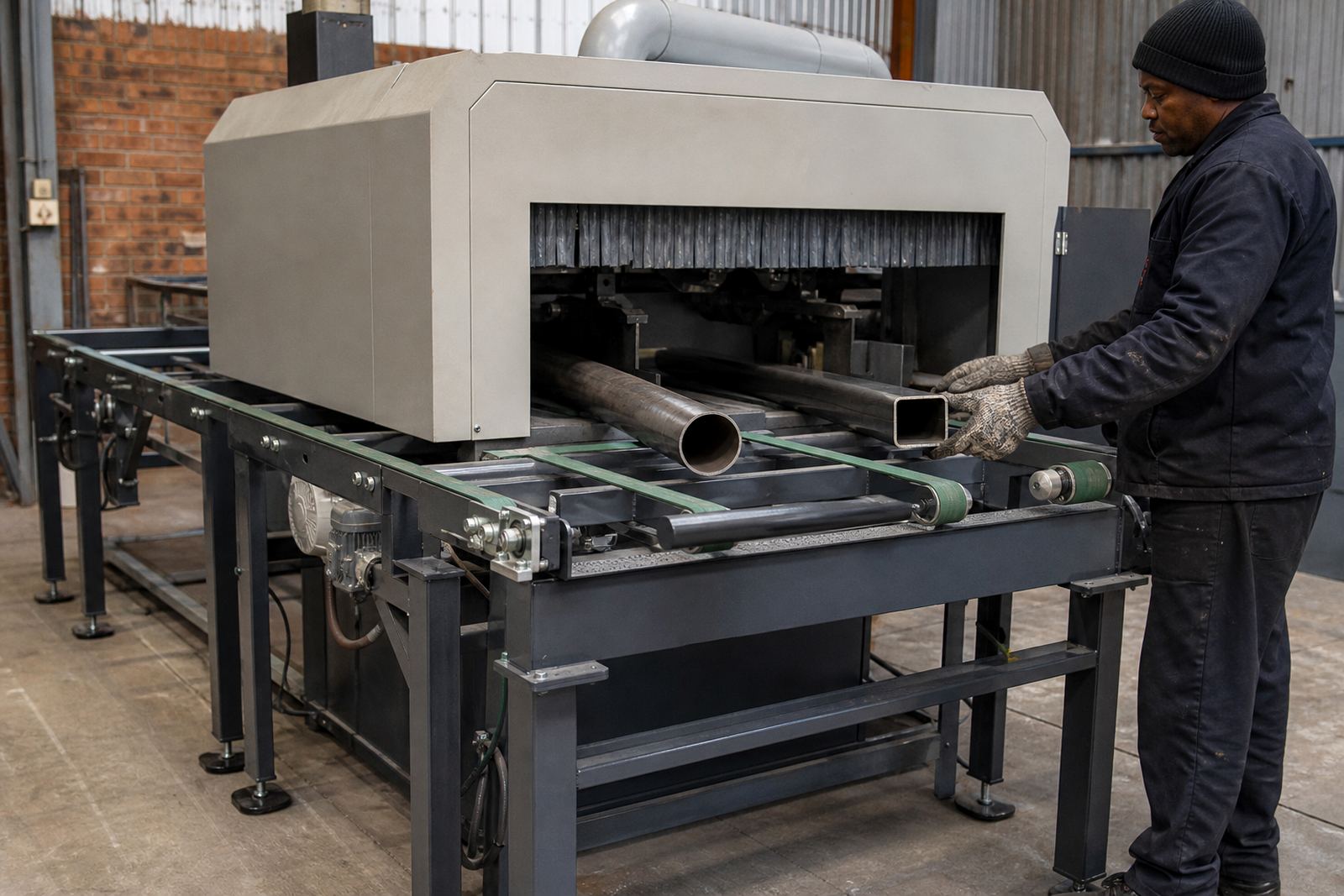
It also fits shops that need predictable output during load-shedding planning. When power is limited, production is usually arranged in batches, so the finishing machine has to be dependable, easy to restart, and simple to monitor. A steady edge-finishing process saves labour on the back end and helps the cutting department hand over parts that do not need extra filing before dispatch. Some shops also use it on mixed aluminium runs with a few steel parts interspersed, though the settings should be checked carefully between material changes.
Installation, Power And Workshop Requirements
Installation is usually straightforward, but the floor space and service access need proper planning. The machine should sit on a level concrete floor with enough room for infeed, outfeed, and safe operator movement. Allow space for part handling, abrasive changes, and cleaning around the machine so dust does not build up in corners or on moving parts. If your shop runs forklifts or pallet trucks, the approach route should be kept clear and marked.
Most units need standard three-phase power, with the final supply depending on the selected width and motor package. Where compressed air is used for clearing dust or supporting the finishing process, clean dry air is important. In workshops near the coast, moisture separators and basic rust control help keep the system reliable. A proper electrical check is sensible before commissioning, especially where voltage swings or generator changeovers are part of daily production.
- Level floor and clear access for sheet handling
- Three-phase supply usually required
- Compressed air may be needed for certain setups
- Dust control and regular cleaning recommended
Care, Servicing, And Wear Parts
The machine gives best results when abrasive condition, feed alignment, and pressure settings are checked often. Aluminium can load abrasives faster than some other metals, so operators should watch for glazing, uneven finish, and any sign that the part is starting to polish instead of deburr cleanly. A short daily clean can prevent a small issue turning into a much longer production delay.
Preventive maintenance should cover bearings, drive components, belts, dust extraction points, and safety devices. In shops that run long shifts, a planned service interval is better than waiting for a breakdown on a Friday afternoon when the loading bay is full. We also recommend keeping wear parts on hand so replacement does not interrupt a batch mid-run. Annual service contracts can help keep output stable and give your team a fixed plan for inspections, adjustments, and consumables.
- Check abrasive condition and loading frequently
- Clean dust points and machine guards each shift
- Inspect feed alignment and pressure settings
- Keep essential wear parts in stock for busy periods
What To Confirm Before Ordering
Before ordering, confirm the largest sheet size, average part thickness, alloy type, daily throughput, and whether the finish must be cosmetic or purely functional. If your parts go for powder coating, anodising, or welding after finishing, say so early because the edge condition may need to suit later processes. It also helps to know if the machine will sit next to laser cutting, in a separate finishing area, or as part of a broader production line.
Please also check floor loading, power supply, access for installation, and whether your operators need training on setup changes between batches. For some shops, a sample part test is the best way to confirm the finish before purchase. If you are supplying multiple branches or sites across Johannesburg, Pretoria, Durban, Cape Town, or Rustenburg, tell us how parts move between locations so the machine package can match your workflow. Pieter Johannes van der Merwe and the team in Wadeville can help with the right setup, but the more detail you give, the better the result.
Key facts
| Machine type | Edge-finishing unit for laser-cut aluminium sheet |
|---|---|
| Working width | 400 mm to 1300 mm depending on configuration |
| Material range | 0.5 mm to 20 mm aluminium sheet and flat parts |
| Power supply | Three-phase supply, final rating depends on build |
| Control features | Adjustable feed speed and finishing pressure |
| Typical use | Burr removal, edge clean-up, light finishing before assembly or coating |