Built for tube, profile and cut-out edges
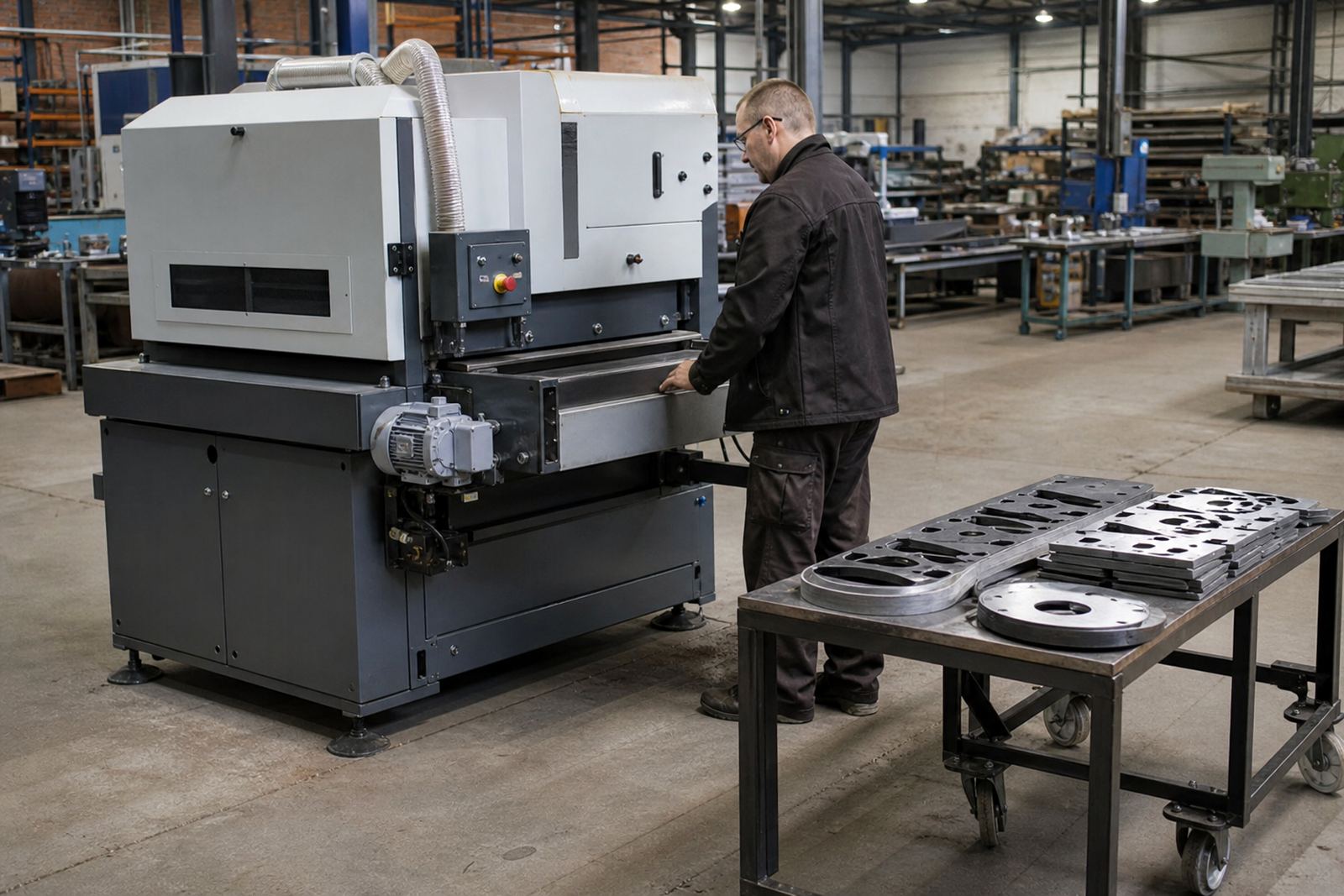
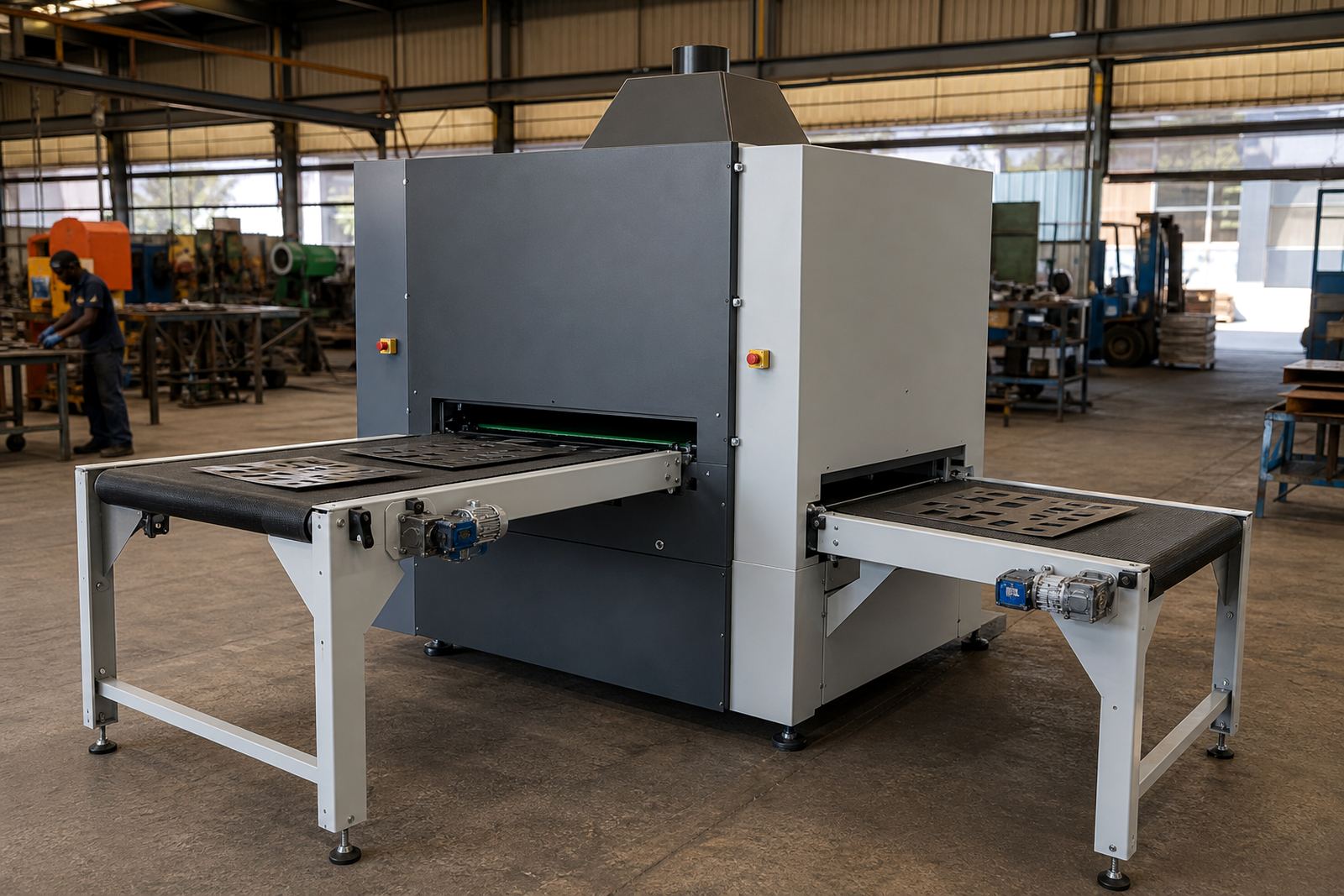
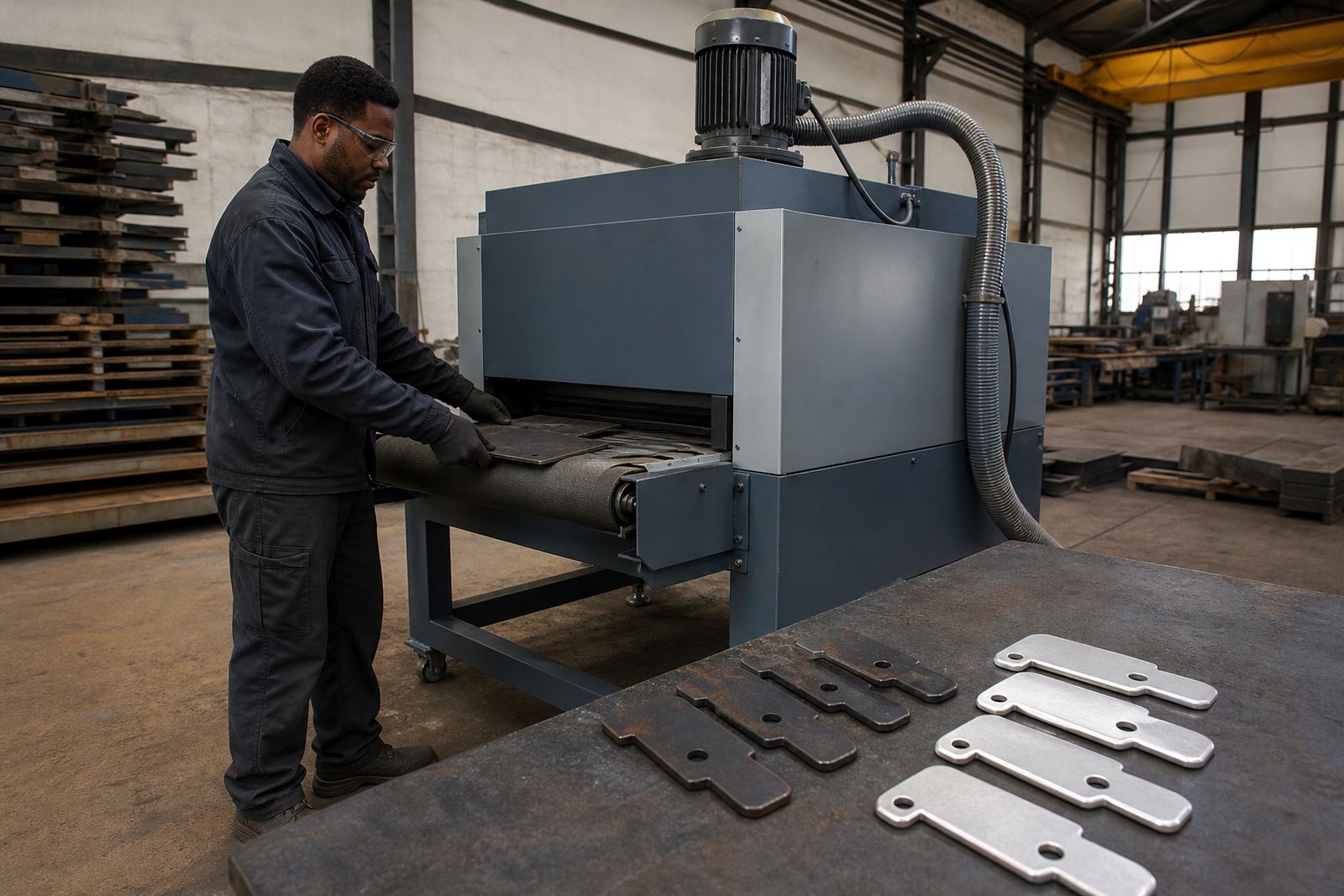
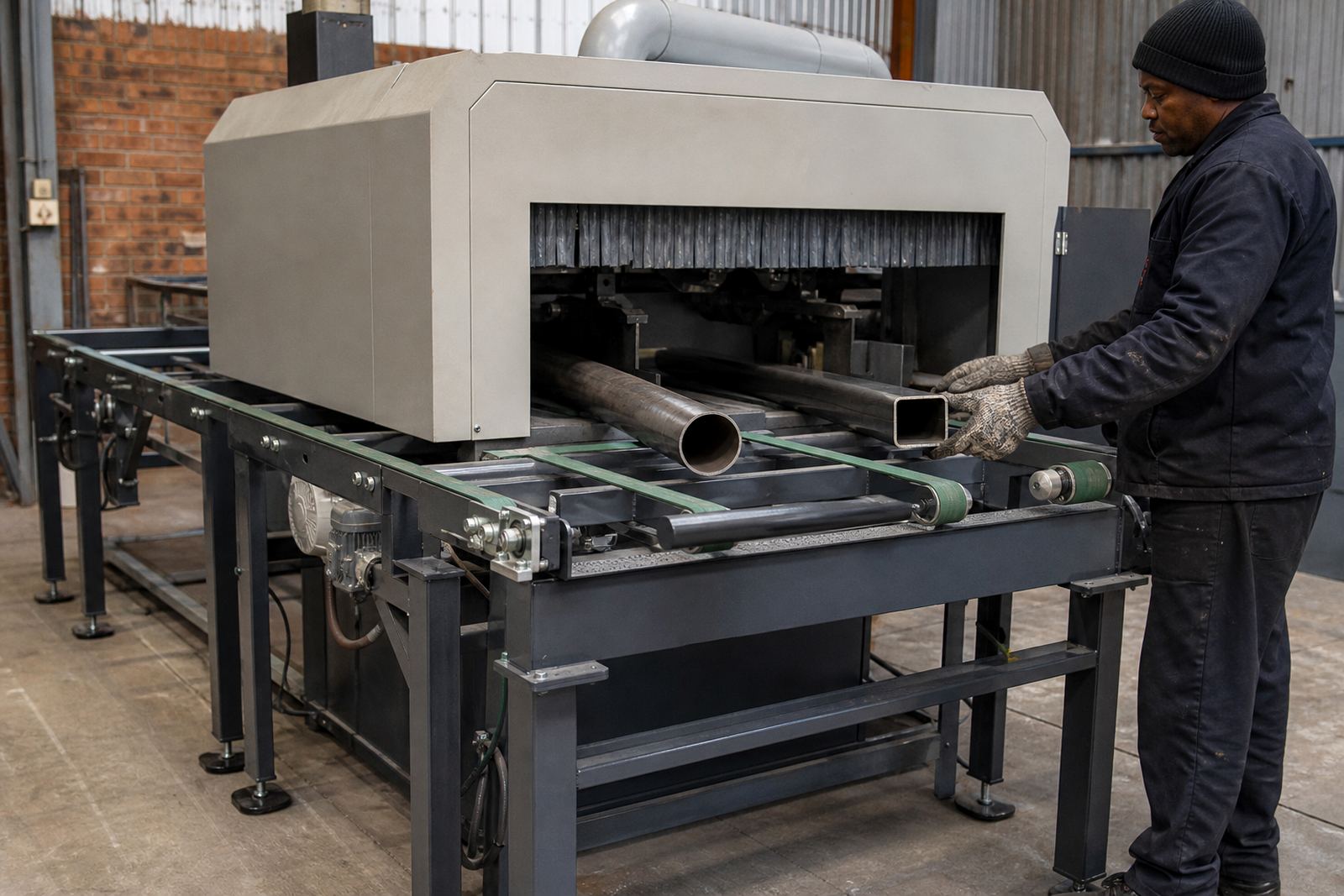
A tube edge finisher is used after laser cutting to remove sharp edges, burrs and light slag from tube and profile components. It is suited to round tube, square tube, rectangular tube and many open profiles where a clean edge is needed for safe handling and better fit-up. On high-mix jobs, it helps keep each part uniform so the next process starts from the same standard every time.
For laser-cut work, the machine is typically used where parts leave the cutting cell and move straight into deburring, before drilling, welding, powder coating or assembly. That is especially useful for fabricators supplying structural frames, furniture, racking, agricultural equipment, enclosures and custom metalwork around Gauteng, KwaZulu-Natal and the Western Cape. It saves time on manual grinding, and it also helps reduce rework from over-ground edges or inconsistent hand finishing.
In many workshops the operator only wants a repeatable finish, not a heavy material removal process. This machine is set up for that purpose. It handles edge clean-up in a controlled way, with settings that can be matched to the material thickness, cut quality and the finish required by the job.
- Suitable for laser-cut tube and open profile parts
- Consistent edge cleanup for safe handling and assembly
- Helps reduce hand grinding and uneven finishing
- Useful before welding, coating or packing
Sizes, tooling and finish options
Tube edge finisher machines are usually specified by the size range of the parts you process most often. In practical terms, that means looking at the minimum and maximum tube dimensions, the longest component you want to run through safely, and the finish standard your customer expects. A smaller machine may suit short production runs and jobbing shops, while a larger unit is better for repeat work in higher volumes.
Options can include adjustable pressure, variable feed speed, different brush or abrasive heads, and outfeed support for long parts. Some shops need a lighter edge break only. Others need more aggressive cleanup on burrs from thicker material or tighter laser settings. The right setup depends on the material mix too, including mild steel, stainless steel and aluminium. Where the workshop handles coated or sensitive material, the contact surfaces and tooling choice must be matched carefully.
- Tube and profile size range matched to your production mix
- Feed speed control for light or heavier edge cleanup
- Brush or abrasive tooling options for different finishes
- Support tables or rollers for longer sections
- Settings for mild steel, stainless steel and aluminium work
Because every cutting department works differently, we look at the part shape, burr level, throughput target and the finish needed after deburring. That makes it easier to specify a machine that suits the actual work, not just a catalogue figure.
Where it fits in the workshop
This machine suits fabricators who cut tube and profile parts on a laser and need a clean handover to the next station. It is a good fit for jobs where sharp edges slow the team down, where the client expects neat handling edges, or where weld prep must be cleaner before tacking. It also helps when parts are packed and transported across town or to site, because sharp edges can damage gloves, packaging and coating.
In South Africa many workshops are running under pressure from short lead times, load-shedding and limited floor space. A dedicated tube edge finisher can reduce the time spent at a bench with flap wheels and angle grinders, which frees staff for more productive work. It also gives more predictable results across shifts, even when different operators are on the tools. That matters in high-volume production and in smaller shops where one person often handles several jobs at once.
It suits:
- Laser-cut tube and profile jobbing shops
- Structural steel and light fabrication workshops
- Furniture, racking and enclosure manufacturers
- Facilities supplying local and export-grade parts
- Operations that need cleaner weld prep and safer handling
Installation, power and workshop requirements
Installation should be planned around the machine length, infeed and outfeed space, and the way material moves through your workshop. A tube finisher needs a level floor, enough clearance for loading long stock, and a sensible position near the laser or the part staging area. If parts are long or awkward, roller support or transfer handling may be needed so operators are not forcing material through the machine.
Power requirements depend on the machine size and tooling, but most shops will need a suitable three-phase supply with correct protection and earthing. We confirm the actual requirements at quotation stage so the electrical side is sorted before delivery. On sites affected by power dips or load-shedding, it is also worth planning around restart procedure, control protection and production scheduling. In some cases, backup power is used for controls and lighting, while the machine itself runs during available supply windows.
Compressed air may be needed for certain cleaning or extraction functions, depending on the model and the way the machine is configured. Dust extraction and housekeeping are important too, especially in enclosed workshops and on sites near the coast where fine abrasive dust and humidity can create extra maintenance issues. A clean, dry environment gives the machine a better working life and helps keep finish quality stable.
Care, servicing and daily checks
Like any finishing machine, a tube edge finisher works best when it is cleaned and inspected regularly. Daily checks should cover tooling condition, feed components, guards, extraction points and the general state of the work area. If abrasive or brush heads are worn unevenly, they can leave inconsistent results on the part and place extra strain on the machine. That is why planned replacement is better than waiting for visible failure.
Preventive maintenance is useful for workshops that run continuous shifts or process mixed material sizes. A routine service can pick up alignment issues, worn bearings, belt wear, tension problems and control faults before they turn into breakdowns. In Durban or Cape Town, where humidity and salt air can affect components, keeping the machine clean and properly serviced matters even more. In Gauteng, dust and heavy use can cause its own set of problems, so the service interval should suit the actual workload not just the calendar.
- Clean dust and swarf from guards and moving parts
- Check tooling wear and replace before finish quality drops
- Inspect feed and drive components for alignment
- Keep electrical cabinets clean and dry
- Book planned maintenance before peak production periods
What to check before you order
Before ordering a tube edge finisher, it helps to define the parts you run most often and the finish you expect. Bring sample parts where possible, especially if your laser leaves variable burrs, heat marks or cut quality across different materials. A proper sample test can show whether the machine needs a lighter edge break or a more active clean-up setup. It also helps confirm the working direction, support needs and any handling limits for long sections.
Ask for the following details during specification:
- Minimum and maximum tube or profile sizes
- Material types and typical thicknesses
- Daily or monthly part volume
- Required finish standard after deburring
- Available floor space and loading method
- Power supply details and site constraints
- Any extraction, air or dust control requirements
If you are planning a new cell or replacing manual grinding, it is worth considering production flow as well. A machine that is too small can bottleneck the line, while one that is too large may waste space and cost more than needed. The right choice is the one that fits your parts, your volume and your current workshop setup.
Our Wadeville, Germiston team supports fabricators across Johannesburg, Pretoria, Durban, Cape Town and Rustenburg, with demos, setup guidance, operator training and after-sales support through the enquiry form on our contact page.
Key facts
| Machine type | Dedicated tube and profile edge-finishing unit |
|---|---|
| Suitable material | Laser-cut mild steel, stainless steel and aluminium |
| Part shapes | Round tube, square tube, rectangular tube and open profiles |
| Typical workflow | Post-laser deburring before welding, coating or assembly |
| Power supply | Three-phase supply, final specification confirmed to site |
| Support | Installation, training, maintenance and spares supply from Wadeville, Germiston |