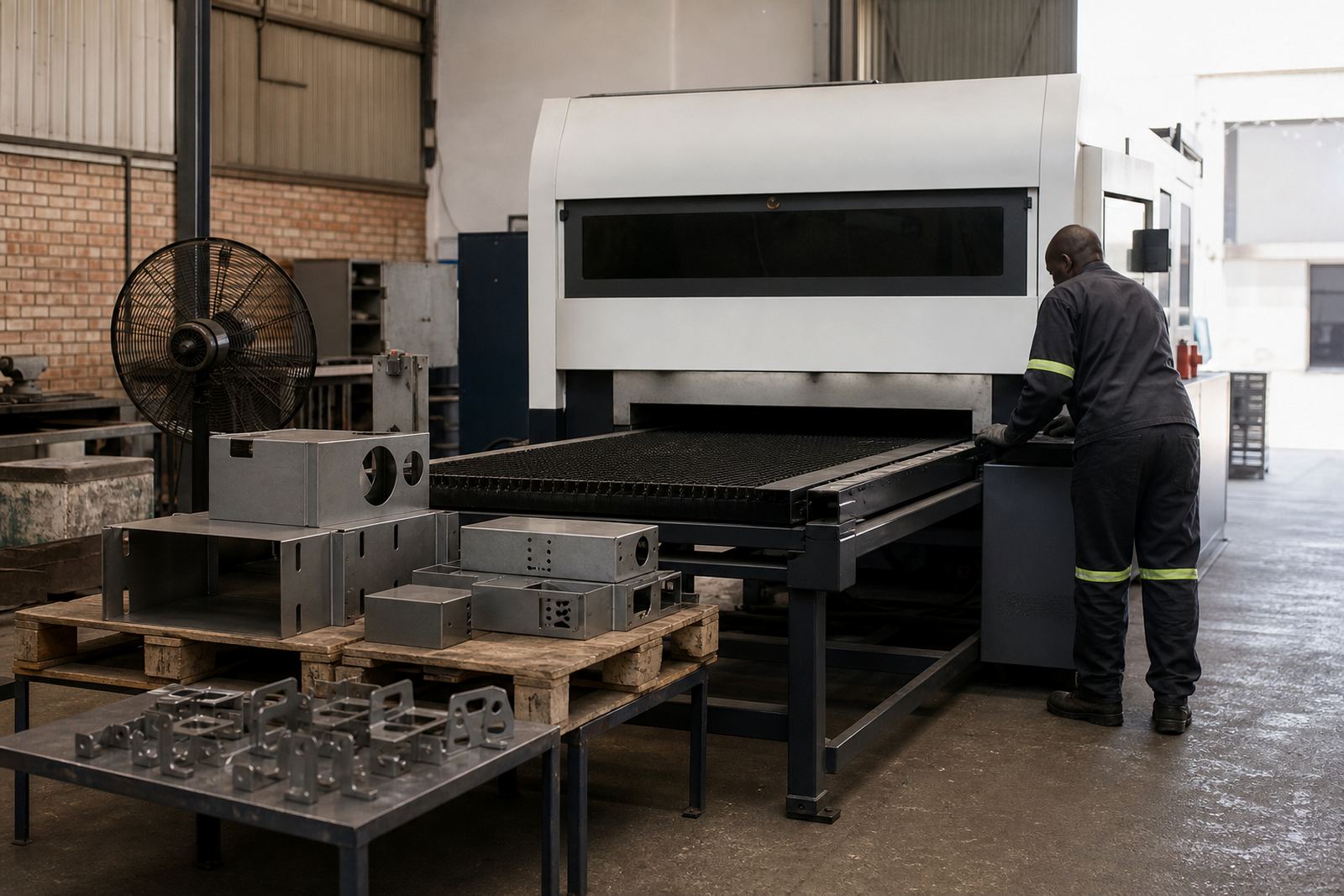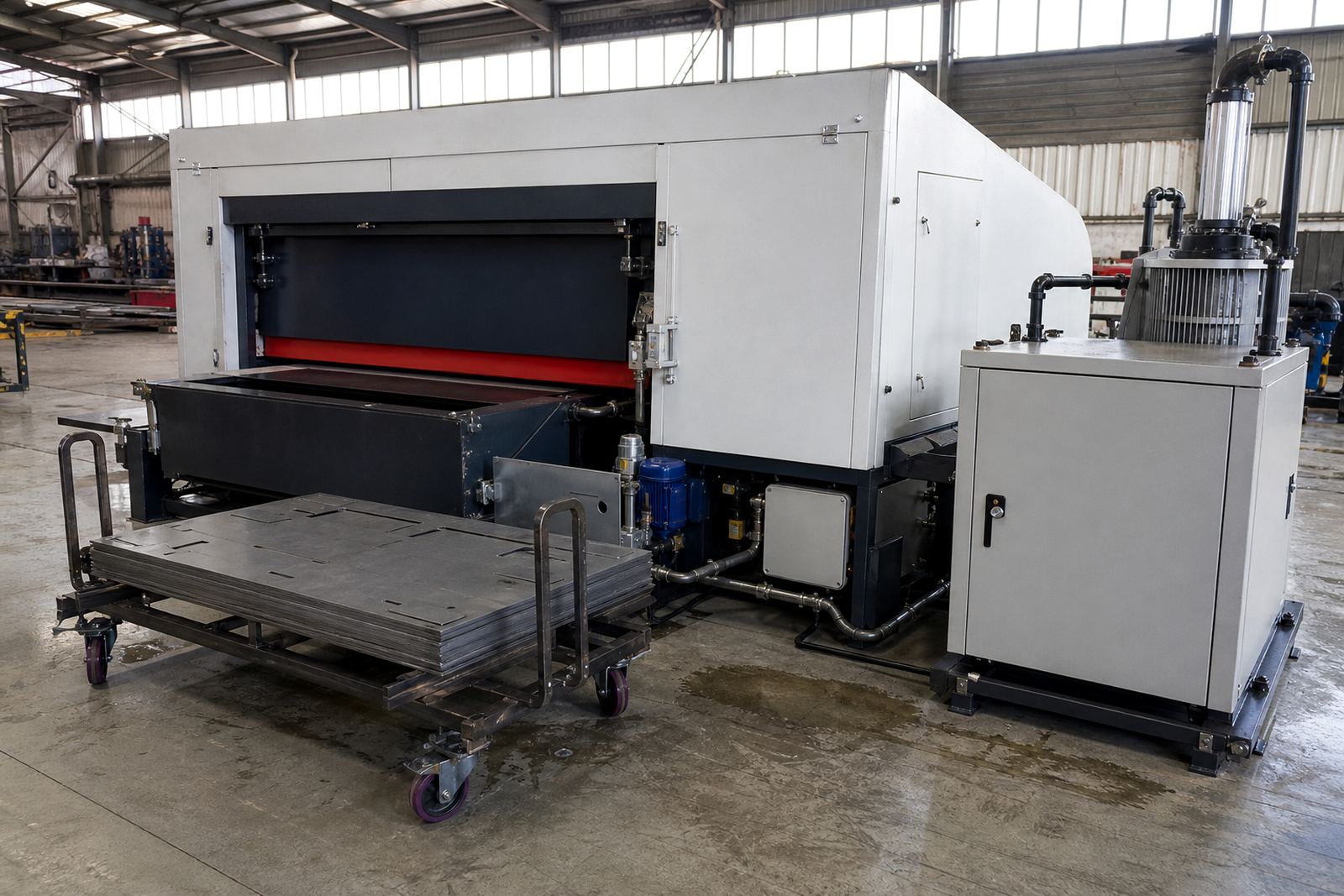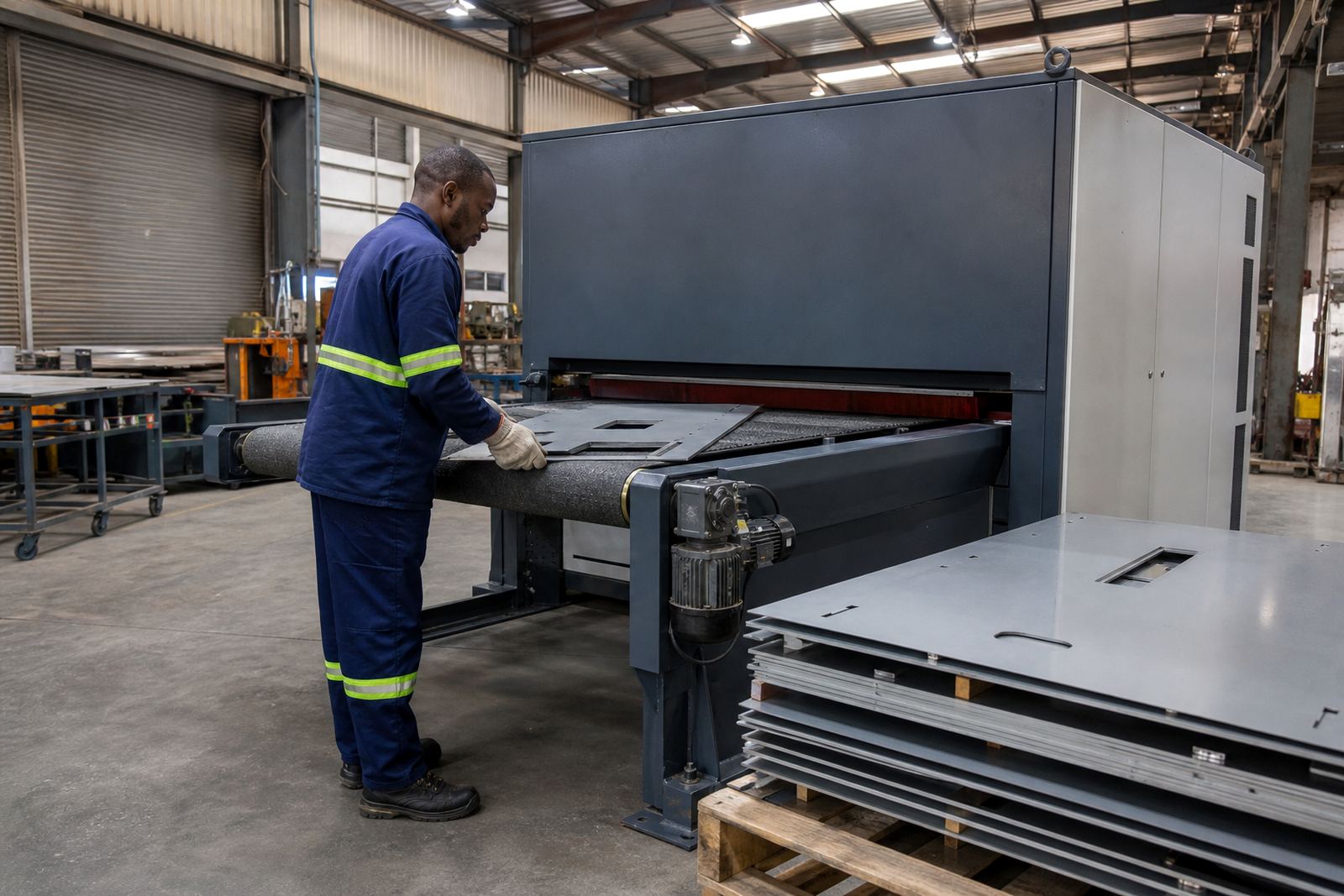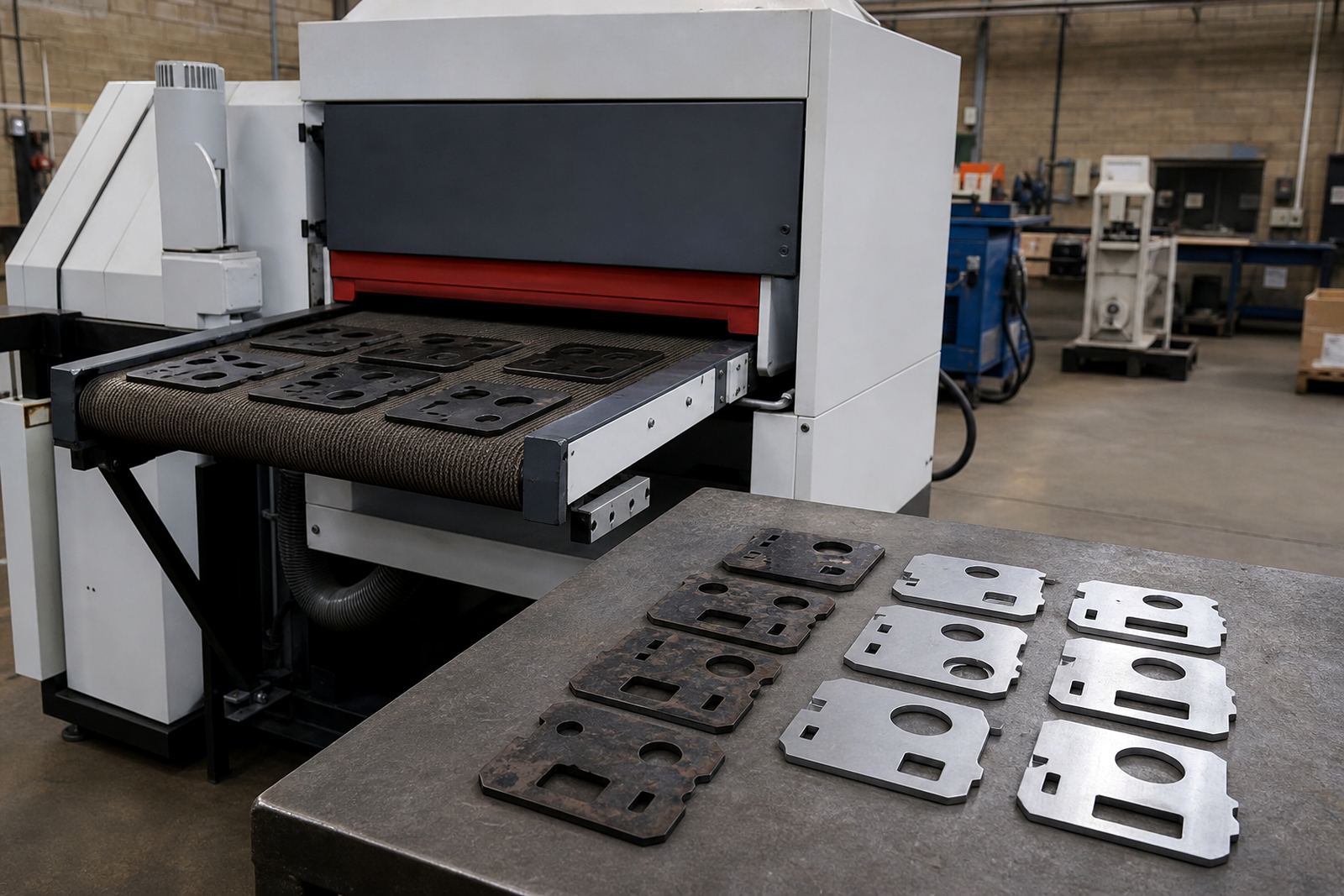
Built for light oxide removal after laser cutting
The Entry Oxide Brush is aimed at shops that cut mild steel, stainless steel or aluminium on a laser and need a more consistent clean-up step before folding, welding or coating. It removes light edge oxide and scuff marks from the cut face, helping parts look neater and take coatings more evenly. For many Gauteng and coastal workshops, that means less hand finishing and fewer part reworks on the floor.
This machine is not intended for heavy scale removal or deep burrs on thick plate. It is a lighter-duty finishing solution, best used where parts come off the laser with manageable oxide and a fairly even cut edge. If your job cards include cabinet parts, brackets, covers, frames and small to medium sheet components, the Entry Oxide Brush can fit neatly into the line.
Because the process is controlled and repeatable, operators can process batches with less variation than hand brushing. That helps when you are running mixed work in Johannesburg or Pretoria and need to keep output moving during load-shedding windows, without chasing every part with a manual tool.
Where this machine suits your workshop
The Entry Oxide Brush suits manufacturers and fabricators that want a straightforward finishing step after laser cutting. It works well in jobbing shops, contract metalwork, HVAC suppliers, electrical enclosure producers and general sheet metal workshops. For operations in Durban and Cape Town, it is also useful where coastal humidity can make freshly cut parts mark or stain faster if they are left stacked too long.
Typical use cases include parts that must be powder coated, painted, welded or assembled immediately after cutting. It is also helpful where customers expect a neater cosmetic edge on visible components. If your team has been using hand pads or angle grinders for every batch, the Entry Oxide Brush can relieve pressure on labour and improve consistency.
- Light oxide removal after laser cutting
- Surface prep before coating or welding
- Cleaner edges on visible sheet metal parts
- Batch processing for repeat parts
- Works well in small to medium production runs
Sizes and configuration choices
The Entry Oxide Brush is usually selected according to part width, material mix and daily output. We help match the working width and brush arrangement to the typical size of your sheet metal parts, so the machine is not over-specified for your workload. Wider formats suit larger panels and bulk runs, while narrower units are often better for smaller parts and lower throughputs.
Common options include single-side or multi-brush setups, variable feed speed, adjustable brush pressure and different brush grades for mild steel or stainless steel. If you run a mix of materials, it is worth checking what changeover steps are needed between jobs. In some workshops a simple configuration is better, while in others a slightly more flexible setup pays for itself over time.
- Working width matched to part size
- Adjustable brush pressure for lighter or firmer contact
- Variable conveyor speed for different cut conditions
- Brush selection based on material and finish requirement
- Compact footprint for tighter production spaces
For plants in Rustenburg or the East Rand with limited floor space, the footprint and access sides matter just as much as the finishing result. We look at material flow, stacking space and how parts move from laser to finishing to packing.
Installation, power and workshop requirements
Installation is planned around your workshop layout, incoming power supply and the way parts are loaded and offloaded. The machine should sit on a level floor with enough room for entry, exit and routine cleaning. If your site has uneven slabs or older factory flooring, that must be checked before delivery so the machine can be positioned correctly and kept stable.
Most workshops will need three-phase electrical supply for reliable operation. Exact power needs depend on the selected configuration, motor size and any extras fitted to the machine. Where compressed air is required for specific functions, we confirm pressure and air quality before commissioning. Clean, dry air is important, especially in humid coastal areas where moisture in the line can cause trouble for valves and control components.
We also look at dust management, access for maintenance and the route parts will take in and out of the machine. A good installation is not only about getting the unit on site, it is about making sure it works properly in daily use.
Running costs, care and servicing
The Entry Oxide Brush is intended to be simple to run and maintain. Brush wear will depend on how often you process parts, the material type and the level of oxide on the cut edge. Regular checks on brush condition, feed alignment and surface cleanliness help keep the finish even and reduce the chance of marking parts.
Preventive maintenance should include cleaning, inspection of drive components, checking tension and confirming that guards and controls are in good order. It is worth keeping a small stock of wear items on site, so a worn brush does not stop production during a busy week. For many South African shops, especially those working around power interruptions and tight delivery dates, planned maintenance is cheaper than waiting for breakdowns.
Our service team can support machine installation, operator training, preventive maintenance, breakdown repairs, abrasive replacement, machine audits and annual service contracts. We also assist with spares supply and production planning help when a workshop needs to keep jobs moving through a busy month.
What to check before you place an order
Before ordering, it helps to confirm exactly what you are finishing and what result you need. Some customers want only light oxide removal, while others expect a more uniform cosmetic surface before coating. The more detail you share on your parts, the better the machine selection will be.
- Typical part size and maximum sheet width
- Material types and thickness ranges
- Level of oxide on the laser cut edge
- Daily or weekly batch volume
- Whether the parts go on to welding, folding or coating
- Available floor space, power supply and compressed air
- Whether you need installation, training and service support
If you are comparing options for Johannesburg, Pretoria, Durban, Cape Town or Rustenburg, bring samples if you can. Sample part testing is often the quickest way to see whether the Entry Oxide Brush matches your finish target and production pace. It also helps identify whether a lighter setting will do the job or whether a different configuration is more suitable.
For shops in Wadeville, Germiston and the wider East Rand, we can also support process checks, relocation support and production planning help. That makes it easier to fit the machine into an existing line without interrupting the rest of the workshop for too long.
Who will help you choose the right setup
Deburring is based in Wadeville, Germiston and supplies finishing equipment to fabricators across South Africa. Our team includes Pieter Johannes van der Merwe, Thandiwe Mokoena, Sibusiso Dlamini, Ayesha Patel, Johan Kruger and Lerato Nkosi. We work with customers who need a clear answer on what machine will suit the parts on their floor, not just a brochure spec sheet.
We support enquiries from Johannesburg, Pretoria, Durban, Cape Town and Rustenburg, with local coverage through Wadeville Support, Germiston Support, Johannesburg Demos, Pretoria Demos, Durban Demos, Cape Town Demos, Rustenburg Support and East Rand Support. If you need a practical starting point for light oxide removal, the Entry Oxide Brush is a sensible place to begin.
Send an enquiry through the contact page and include a sample description, material type and expected output. That gives us enough detail to guide you on size, options and the best way to slot the machine into your workshop.
Key facts
| Machine type | Entry-level oxide brush finisher for laser-cut sheet metal |
|---|---|
| Primary use | Light oxide removal and surface preparation |
| Typical materials | Mild steel, stainless steel and aluminium |
| Configuration options | Working width, brush grade, feed speed, brush pressure |
| Power requirement | Usually three-phase supply, final spec confirmed to configuration |
| Support included | Installation, training, maintenance, spares and sample testing |