Purpose-built for repeated flat parts
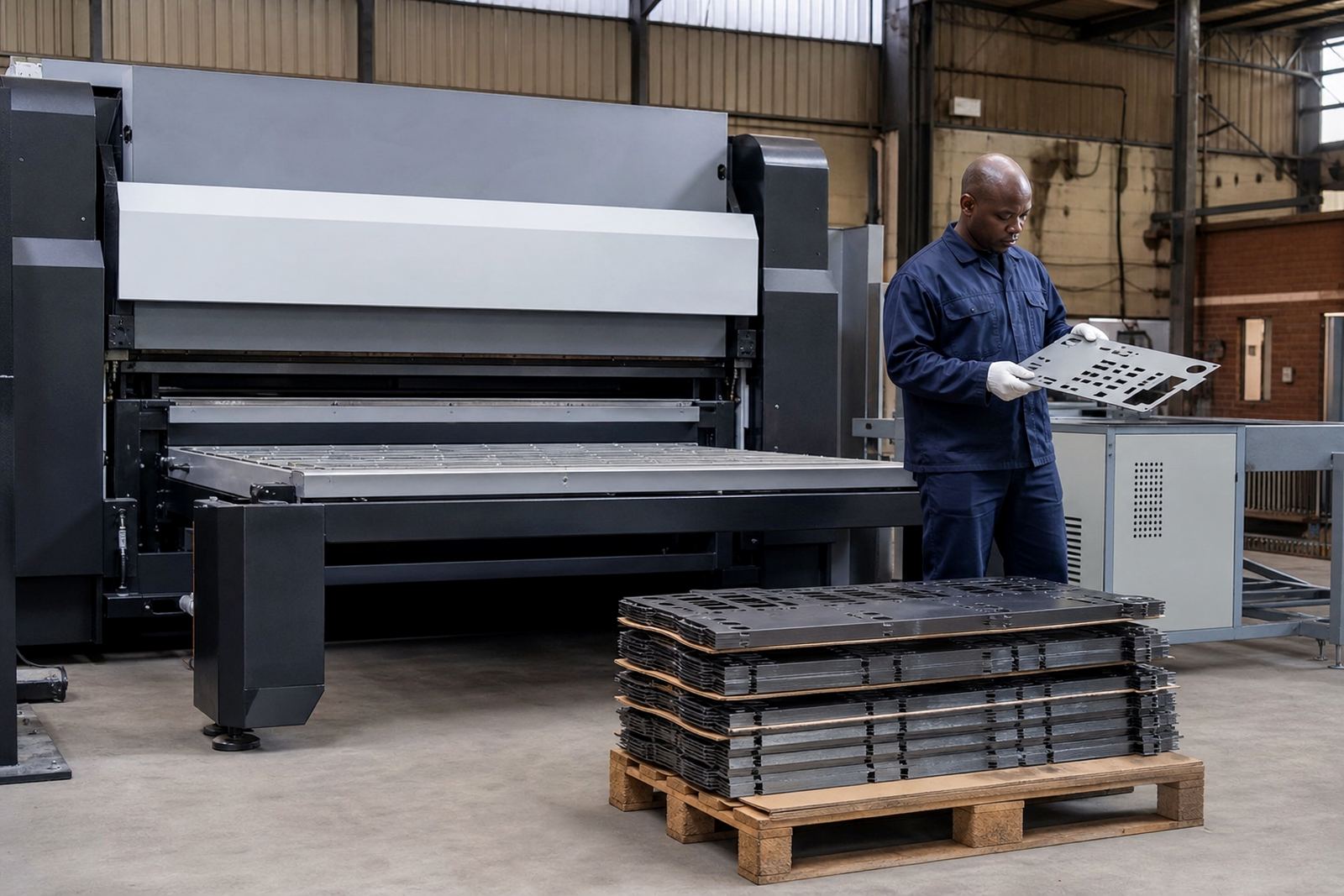
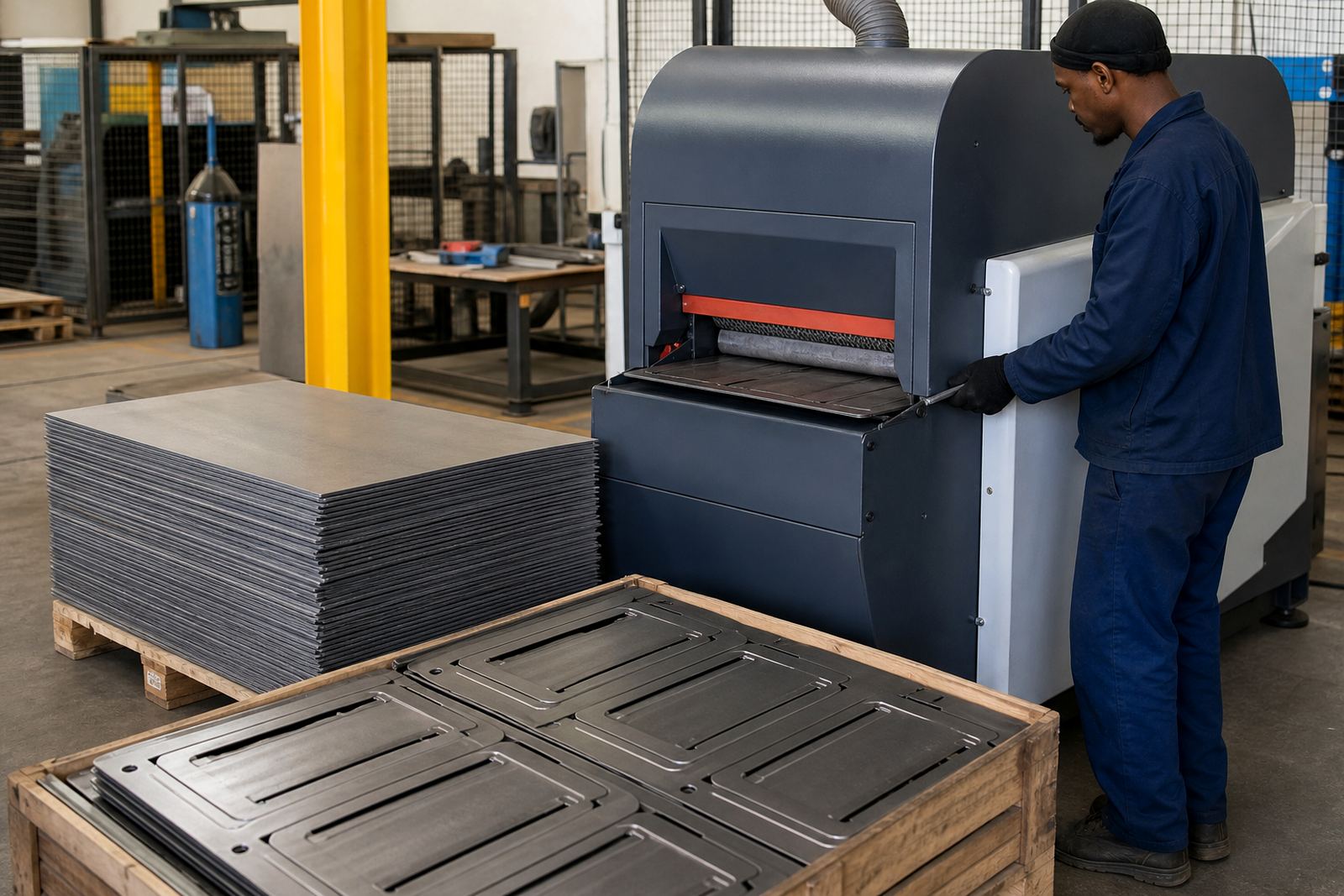
The Cabinet Shop Unit is made for shops that cut the same kind of parts day after day, such as cabinet panels, electrical enclosures, small doors, backs, side plates and bracket sets. It is not a general purpose finishing line for every metal job. It is set up to handle laser-cut sheet metal where the main need is to remove sharp edges, light burrs and cut edge slag before folding, drilling, powder coating or final assembly.
For cabinet makers in Wadeville, Germiston, and for fabricators supplying Johannesburg, Pretoria, Durban, Cape Town and Rustenburg, this matters because repeat work needs repeatable results. A clean edge means safer handling, better fit-up and fewer reworks when parts move through marking, bending and assembly. The unit is also a good fit where staff turn over is high and you need a machine that gives the same finish even when the operator changes shift.
Sizes and layout options for small to medium shops
The Cabinet Shop Unit is supplied in compact widths that suit workshops with limited floor space, as well as longer feed beds for higher part volumes. Typical options cover narrow sheets for inserts and brackets through to wider formats used for cabinet sides and enclosure panels. Where the shop handles mixed part sizes, a variable conveyor speed and adjustable head pressure help keep the finish even without overworking thin material.
- Working widths from 450 mm to 1250 mm
- Sheet thickness range: 0.8 mm to 6.0 mm mild steel, stainless steel and aluminium
- Variable feed speed for light and heavy parts
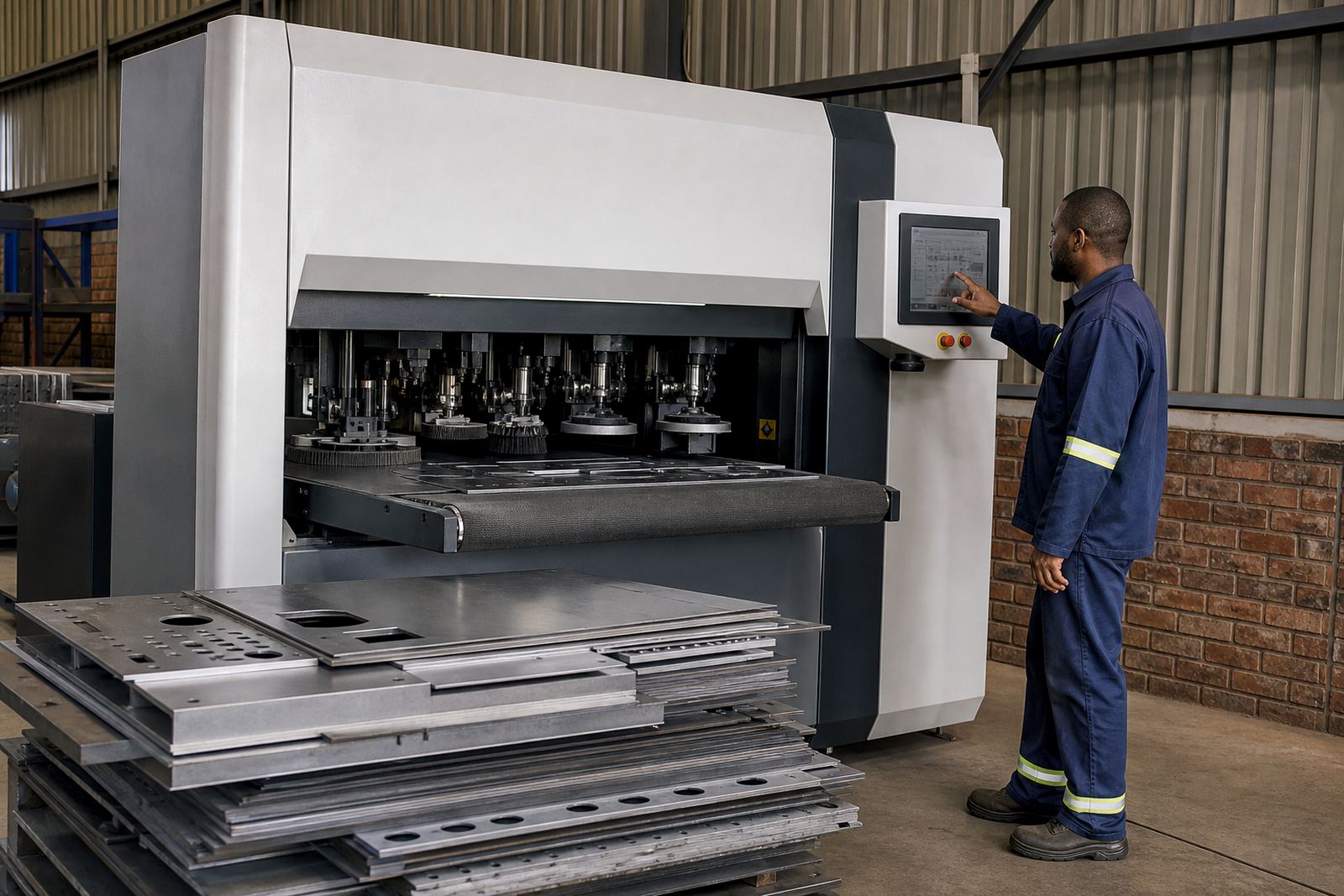
- Multiple finishing heads for edge break, brushing or light surface clean-up
- Optional infeed and outfeed tables for long panels
For cabinet shops that run smaller batches, a shorter machine can be easier to position beside a laser cutter or folder. For larger production lines, a wider unit with powered infeed helps reduce manual handling and keeps parts moving without stacking up at the side of the machine.
What the machine does on the shop floor
This unit is built to remove burrs and soften sharp edges left by laser cutting. It does that through a controlled finishing process that treats the edge consistently across every part. On cabinet work, that often means less time spent with hand files or grinders, cleaner edges for hinges and fixings, and a better starting point for coating. It also helps when parts must be handled by installers or packed for delivery, since sharp edges are a common cause of damaged gloves and scratched finishes.
The machine suits shops that produce enclosure parts for electrical contractors, security cabinet makers, steel furniture fabricators and general sheet metal workshops. It is especially useful where the same pattern gets cut in volume and the main issue is not heavy weld clean-up, but tidy edge control and steady output.
- Removes laser burrs and micro-tabs from flat sheet parts
- Improves edge quality before folding or powder coating
- Reduces hand finishing and uneven file marks
- Supports batch work with repeatable results
Installation, power and workshop requirements
Installation is straightforward, but the machine still needs the right foundation and services. Most Cabinet Shop Unit setups run on a 3 phase electrical supply, typically 400 V, with the exact load depending on width and finishing heads. A clean, level floor is important so the feed stays true and the parts track straight. If the workshop has unstable power or load-shedding interruptions, it is wise to plan for proper protection on the supply side so the machine is not stopped mid cycle.
The machine does not need gas. It does, however, benefit from good dust and fume extraction, especially when finishing stainless steel or coated parts. In coastal areas like Durban and Cape Town, salt air and humidity can also affect exposed steel parts and electrics, so storage, cleaning and regular inspection matter. In busy Johannesburg and Pretoria workshops, make sure there is enough loading space at both ends for panels and safe movement around the line.
- 3 phase power preferred, with supply matched to machine size
- Level floor and clear working aisle for infeed and outfeed
- No gas connection required
- Dust extraction and housekeeping recommended
- Allow space for trolley loading and finished part stacking
Care, servicing and daily upkeep
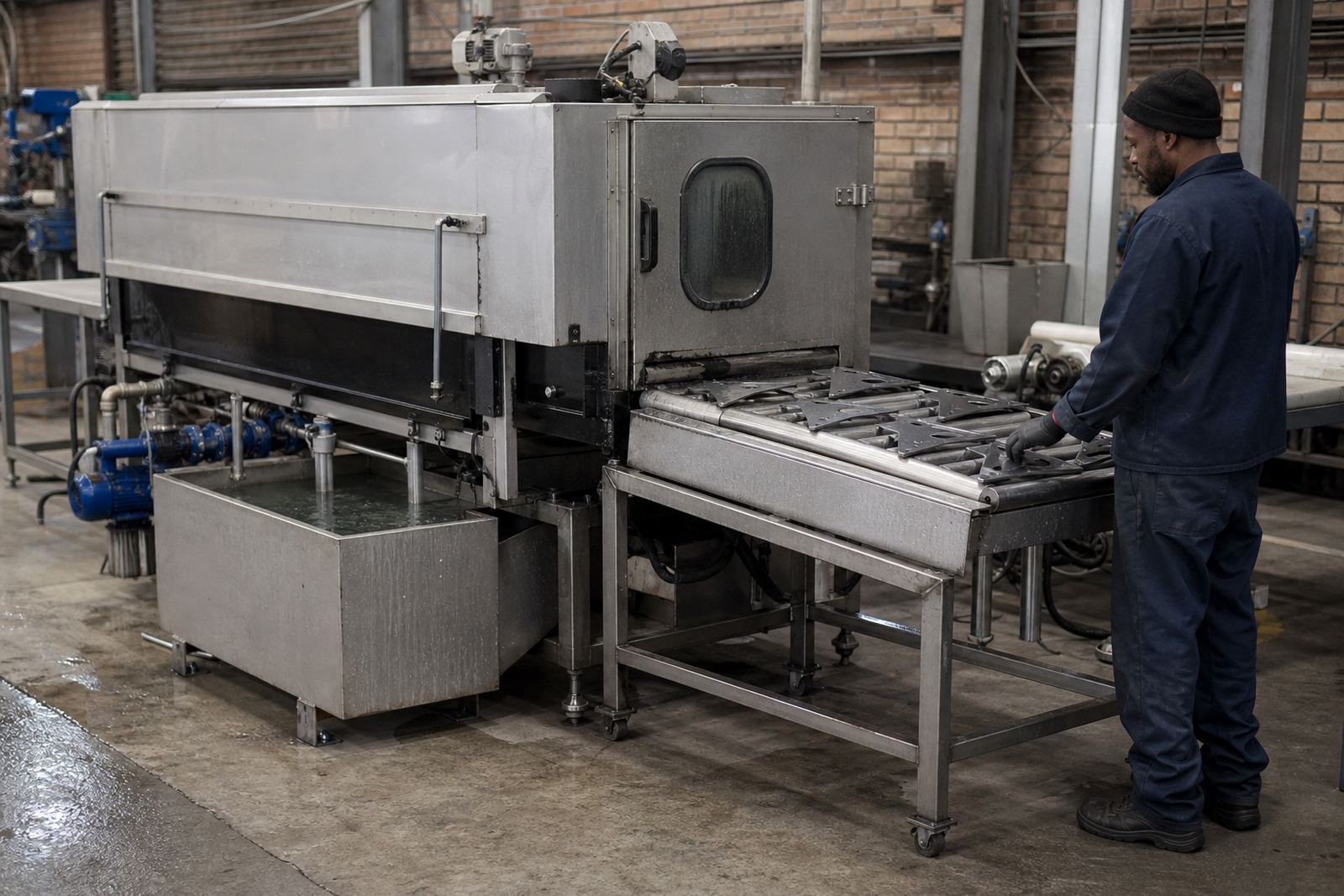
A deburring machine works best when it is kept clean and checked regularly. For cabinet shops, the main tasks are simple: clear off fine swarf, inspect abrasive wear, check conveyor tracking, and make sure the finishing heads are set correctly for the material being run. If parts start coming off with uneven edge break or visible marks, the machine usually needs a quick inspection before the issue grows into a larger stoppage.
We support machine installation, operator training, preventive maintenance, breakdown repairs, abrasive replacement, machine audits and annual service contracts. For sites in Germiston, the East Rand and further afield, scheduled servicing helps avoid unscheduled down time. A well-kept unit will last longer and keep the finish stable, which is important when you have deadlines for cabinet installation or enclosure dispatch. Keep spares on hand for wear items and do not leave abrasive media sitting in damp areas after a long shift.
What to check before you order
Before choosing a Cabinet Shop Unit, it helps to work through the parts you cut most often. The machine should match your sheet sizes, thickness range and finish standard. If your shop mainly handles flat cabinet panels, you may need a wider conveyor and a smoother finish. If you work mostly with small enclosure parts, a more compact machine may be enough and easier to place beside your laser cutter.
It is also worth checking how the machine will fit into your current process. Some shops need sample part testing before placing an order, while others need production planning help to work out the best feed speed and finishing sequence. If your team is new to machine deburring, operator training should be part of the plan from the start so the machine is used correctly from day one.
- Largest sheet size and typical batch size
- Material types and thicknesses you run most often
- Required edge finish before folding, coating or assembly
- Available floor space and access for loading
- Power supply on site and any load-shedding backup plans
- Need for testing, training or service support
Clients in Johannesburg, Pretoria, Durban, Cape Town and Rustenburg can reach us through the enquiry form on our contact page. From our Wadeville base, we support cabinet makers and enclosure fabricators across South Africa with practical advice, spares and field service when needed.
Key facts
| Working widths | 450 mm, 650 mm, 1000 mm and 1250 mm options |
|---|---|
| Material thickness | 0.8 mm to 6.0 mm depending on setup |
| Power supply | 400 V, 3 phase, 50 Hz typical |
| Feed control | Variable speed conveyor drive |
| Finish types | Edge break, burr removal and light surface finishing |
| Typical use | Laser-cut cabinet parts, enclosure panels, flat sheet components |