
Built for everyday laser-cut sheet metal work
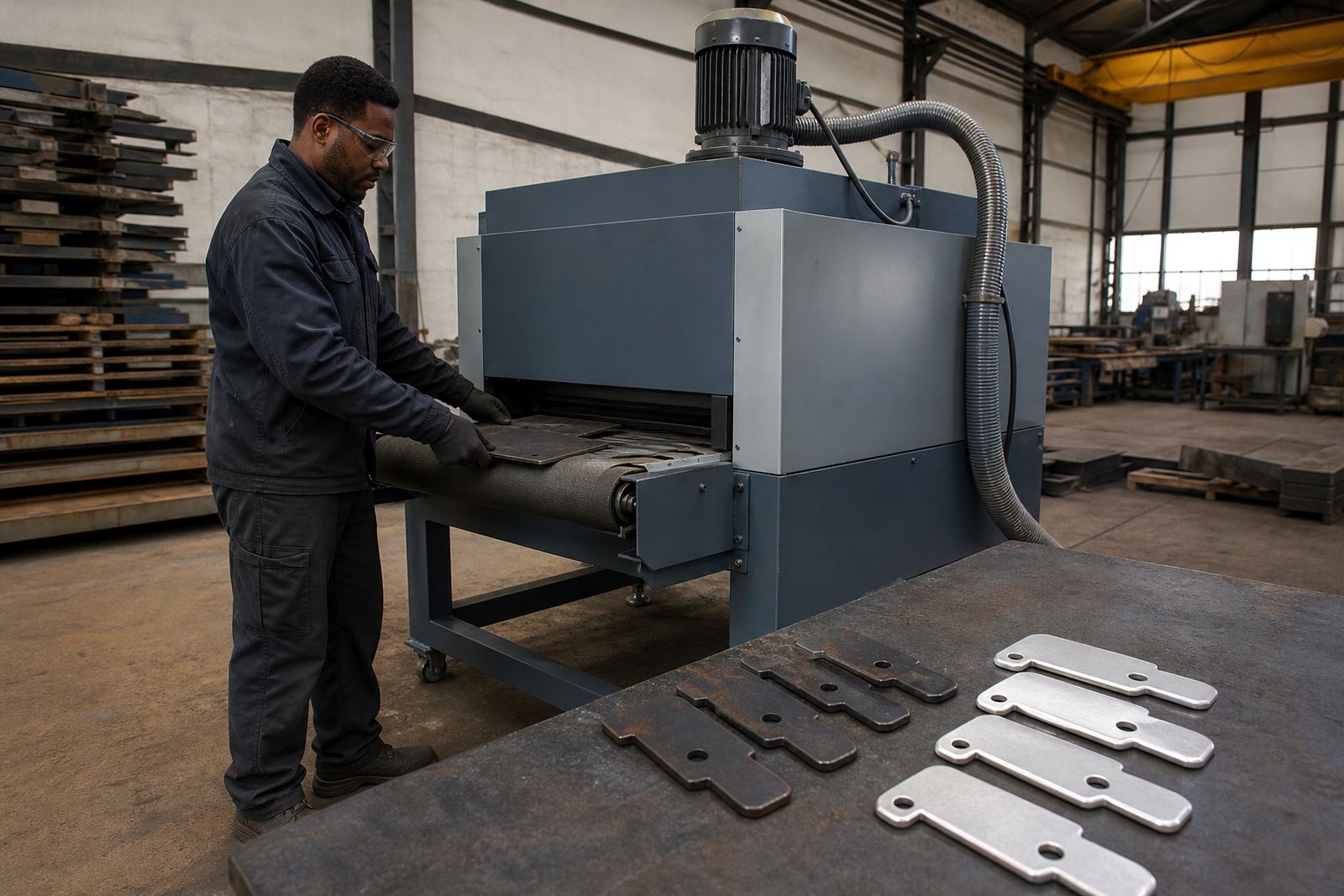
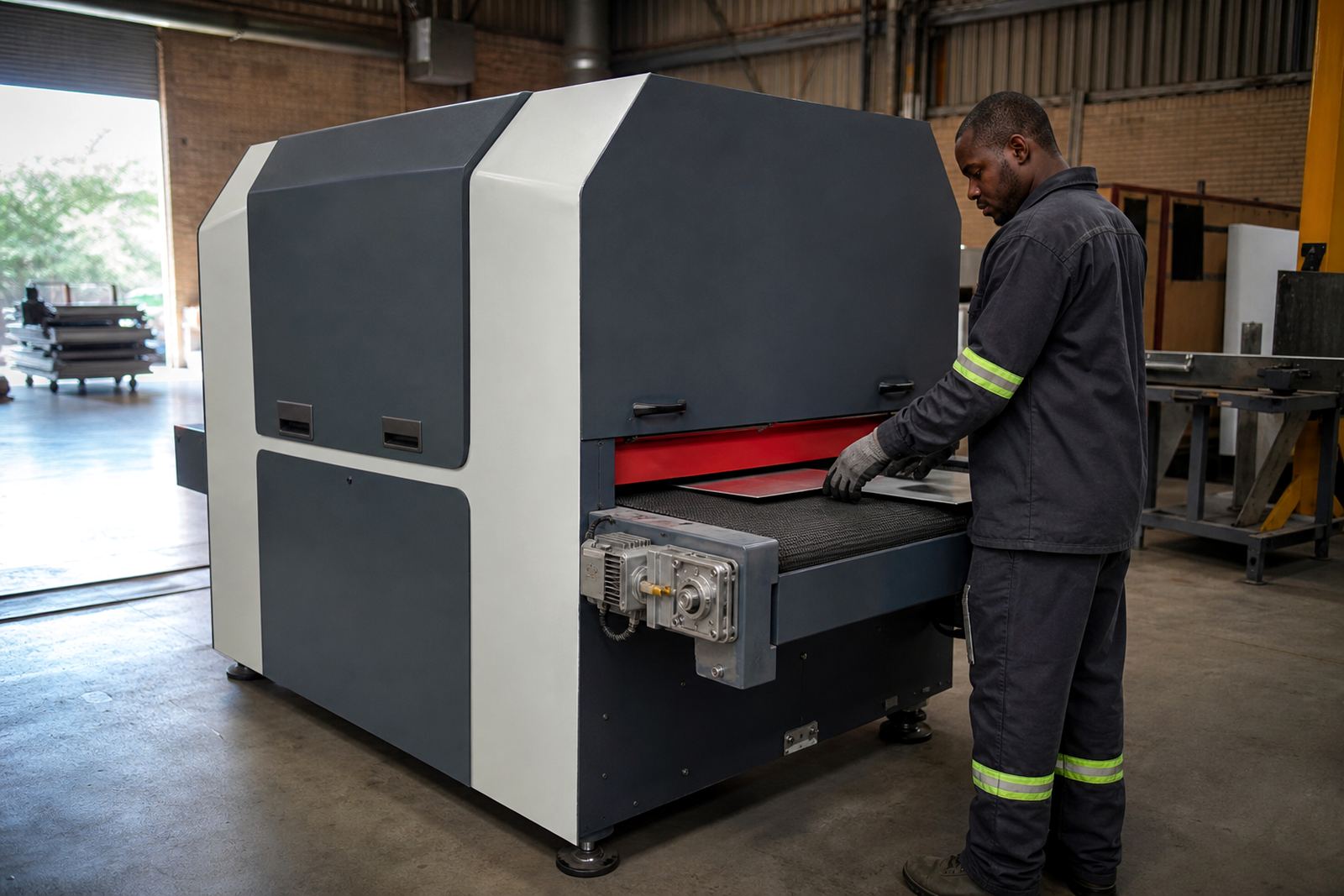
The Standard Sheetline is aimed at fabricators that process a steady mix of mild steel, stainless steel and aluminium parts. It gives a controlled edge finish after laser cutting, removing burrs and softening sharp edges so parts are safer to handle and more consistent before folding, welding, powder coating or assembly.
In a busy shop the value is simple: less hand finishing, fewer rejected parts, and a more repeatable result from one shift to the next. It is a practical choice for jobbing work, batch runs and internal production lines where the same machine must handle different part sizes through the week.
Typical sizes, working widths and options
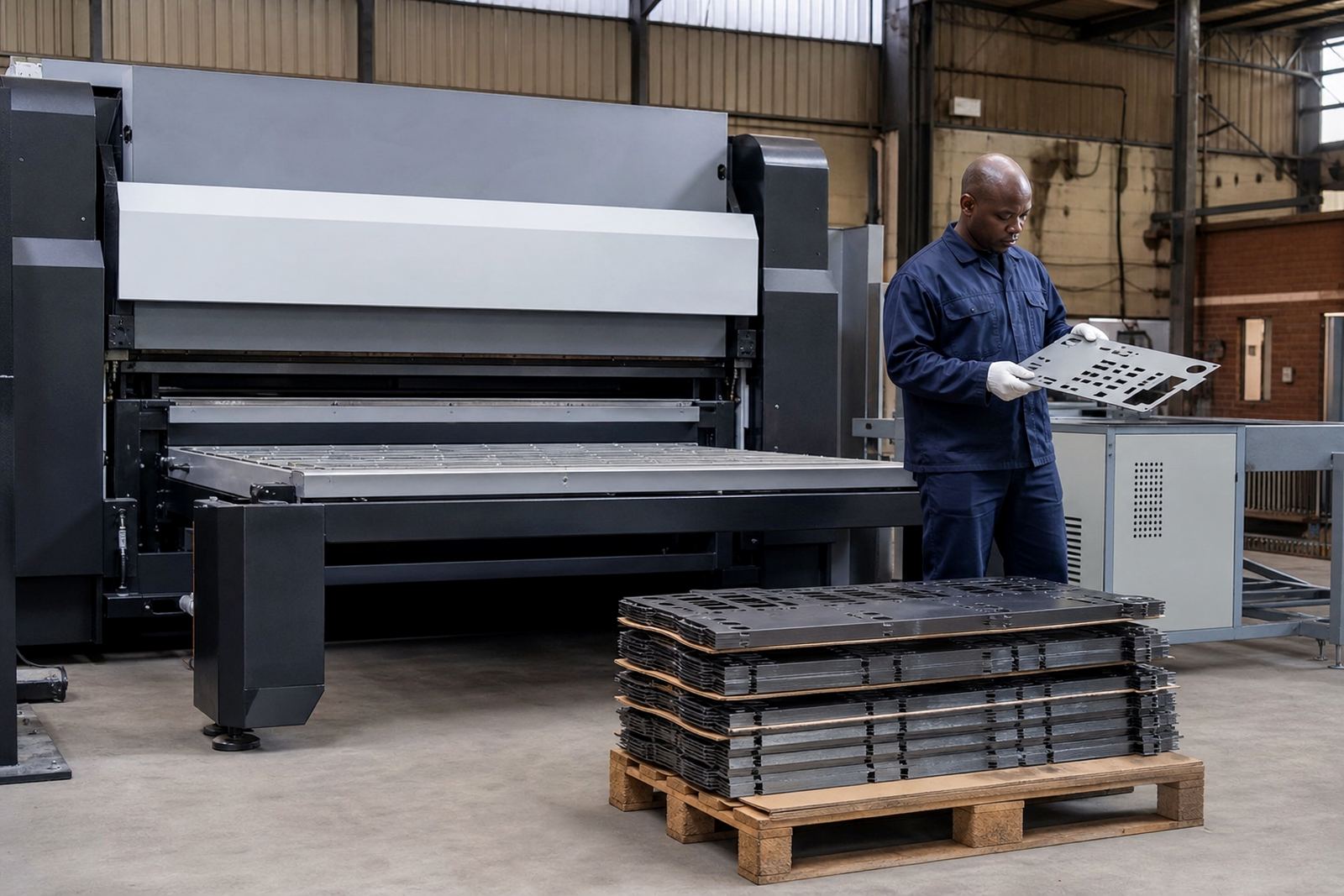
This range is normally specified to suit the footprint and output of the shop. Machines can be selected by working width, conveyor style and finishing setup, depending on part size and the level of edge break required. For smaller fabrication shops a compact unit may be enough, while higher-output plants often need a wider machine with stronger extraction and longer infeed and outfeed support.
- Working widths typically selected to suit common sheet sizes and nested laser parts
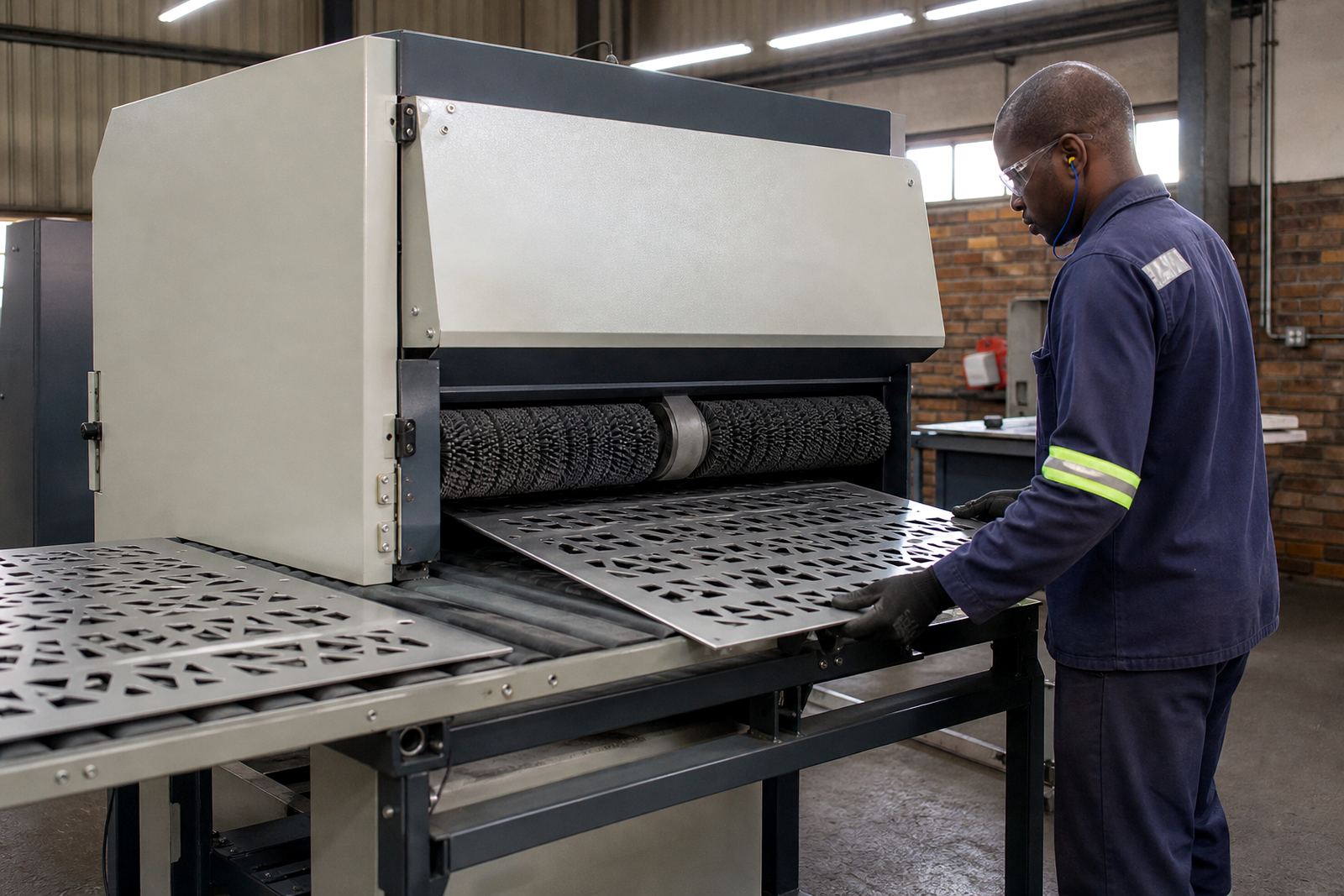
- Adjustable finishing heads for light burr removal or a more pronounced edge break
- Variable conveyor speed for different material types and thicknesses
- Options for dry processing or wet collection, depending on the material and duty cycle
- Infeed and outfeed support for longer parts and mixed batch work
If your shop handles mixed job sizes, it helps to check the largest flat part, the shortest part that must run through safely, and whether parts are cut from full sheets or smaller offcuts.
Where the Standard Sheetline fits best
This machine suits laser-cutting shops, sheet metal contractors, industrial maintenance workshops and manufacturers that want a reliable edge-finishing step built into production. It is especially useful where operators are losing time to hand deburring, flap disc work or secondary finishing before coating or assembly.
For Gauteng plants in Johannesburg, Germiston and Pretoria, the machine can slot into a compact production area without needing a large footprint. In coastal sites such as Durban and Cape Town, it is also worth planning for corrosion control, filtered air, and storage conditions that keep abrasive parts and electrical components in good order. In Rustenburg and other industrial zones, dust management and stable power supply are important for consistent output.
- Best for daily production, not occasional one-off use
- Useful where the same parts must meet a repeatable finish standard
- Helps reduce manual finishing before powder coating or assembly
- Suitable for shops looking to improve flow without overcomplicating the process
Installation, power and workshop setup
Installation should be planned around floor space, material flow and safe access for loading and unloading. The machine needs a level surface, adequate lifting access and enough room for maintenance at the sides and rear. If the line is placed near a laser or storage rack, make sure the path for sheet movement stays clear and operators are not forced into tight handling angles.
Power requirements depend on the selected machine size and finishing configuration, but most installations need a dedicated electrical supply with proper protection and isolation. In South Africa, this should be done by a competent electrician and aligned with the site’s compliance rules. Where extraction, dust collection or wet separation is specified, plan for the matching services and drainage if required. For plants dealing with load-shedding, it is worth checking what restart procedure the machine needs and whether surge protection should be added.
- Allow for floor levelling and safe access around the machine
- Confirm electrical supply, breaker sizing and isolation before delivery
- Check extraction or collection needs for the chosen finishing method
- Plan the machine layout so parts can move from laser cutting to finishing without double handling
Care, servicing and day-to-day upkeep
Like any production machine, the Standard Sheetline works best when it is kept clean and inspected often. Abrasive elements wear down with use, so output quality should be checked regularly and replacement planned before parts begin to slip through with uneven edge treatment. Keep the infeed area clear, remove offcuts and swarf, and make sure the conveyor and guarding stay free of build-up.
A preventive maintenance routine helps protect bearings, drives, electrical controls and finishing components. For shops running long shifts or weekend production, a scheduled service is better than waiting for a breakdown. Our service team can assist with operator training, annual service contracts, machine audits and breakdown repairs, as well as spares supply and abrasive replacement. In humid coastal areas, attention to stored spares and unused machines matters more, because moisture can affect condition faster than many shops expect.
What to confirm before you order
Before placing an order, it helps to confirm the exact material mix, part sizes and daily output target. A machine that suits thin laser-cut brackets may not be the right choice for heavy plate or wide panels with sharp burrs. The more detail you give upfront, the easier it is to match the equipment to your work.
- Material type and thickness range, including stainless steel or aluminium
- Largest and smallest part size that must be processed safely
- Required finish level, from light deburring to stronger edge break
- Daily or weekly output, and whether production runs in one shift or more
- Available floor space, power supply and extraction or collection arrangements
- Whether you need installation, training, sample part testing or relocation support
If you are comparing options, ask for sample part testing so the finish can be checked on your own cut parts before the final specification is confirmed. That saves time and avoids ordering a machine that is too small or more elaborate than you need.
Key facts
| Machine type | Production deburring and edge-finishing machine for laser-cut sheet metal |
|---|---|
| Typical use | Daily processing of cut parts before folding, welding or coating |
| Working widths | Selected to suit shop output and common sheet sizes |
| Material range | Mild steel, stainless steel and aluminium, depending on specification |
| Power supply | Dedicated electrical supply, size depends on machine configuration |
| Support | Installation, training, maintenance, sample testing and spares supply |