Wetline standard for cleaner laser-cut finishing
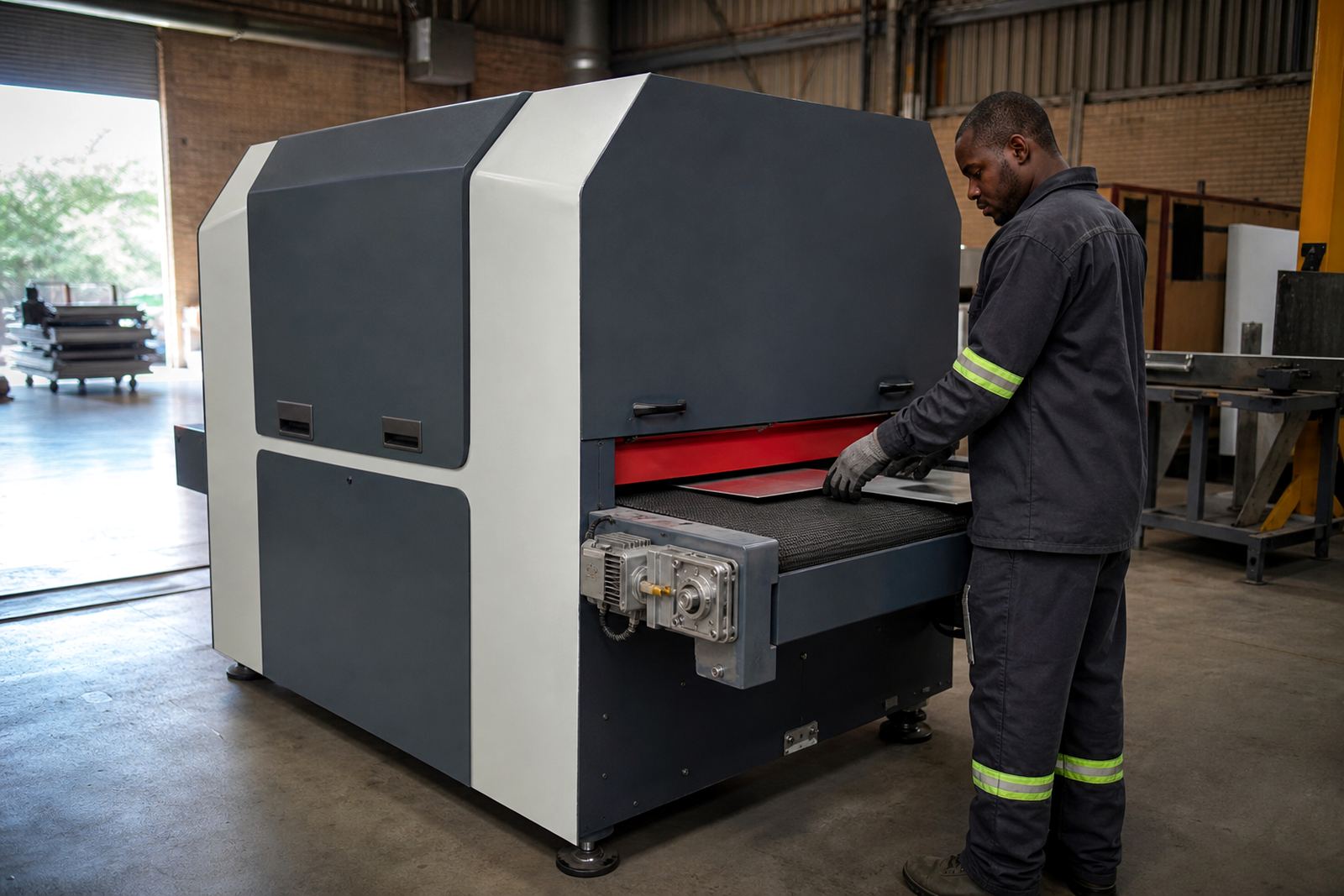
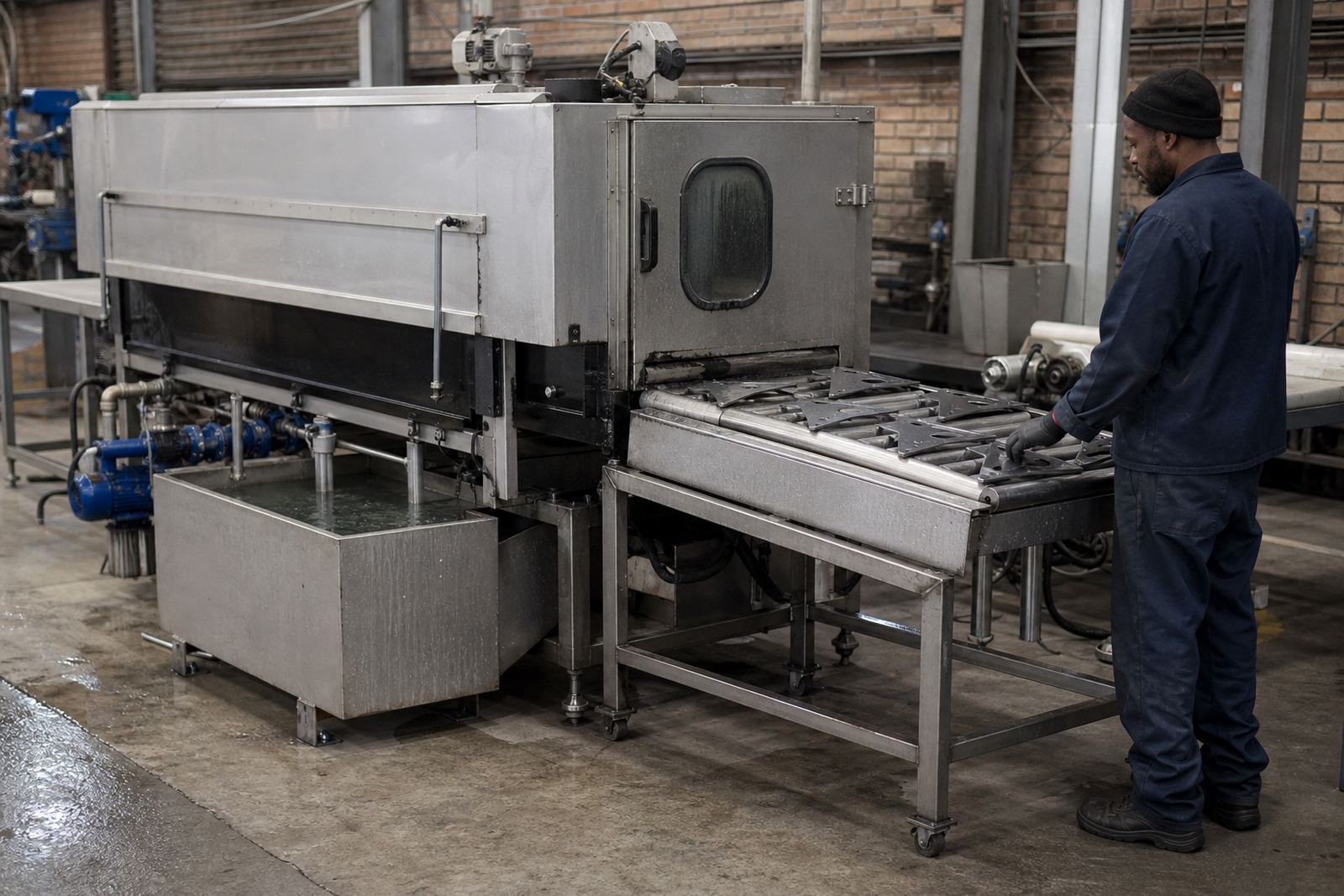
The Wetline Standard is a wet-process machine used after laser cutting to remove burrs, soften sharp edges and improve the finish on flat sheet parts. Water-based processing helps keep dust down in the workshop, which is useful in busy fabrication spaces, especially where multiple machines run at the same time.
It is aimed at shops that cut stainless steel, mild steel and aluminium and need repeatable results on parts that go straight to bending, welding, painting or assembly. Because the working area is wet, the machine also helps reduce airborne fines around operators and nearby equipment.
For South African fabricators in Wadeville, Johannesburg, Pretoria, Durban, Cape Town and Rustenburg, this matters in summer heat, coastal humidity and dust-heavy production bays. The machine is practical for day-to-day use, not only for special jobs.
Sizes and configuration options
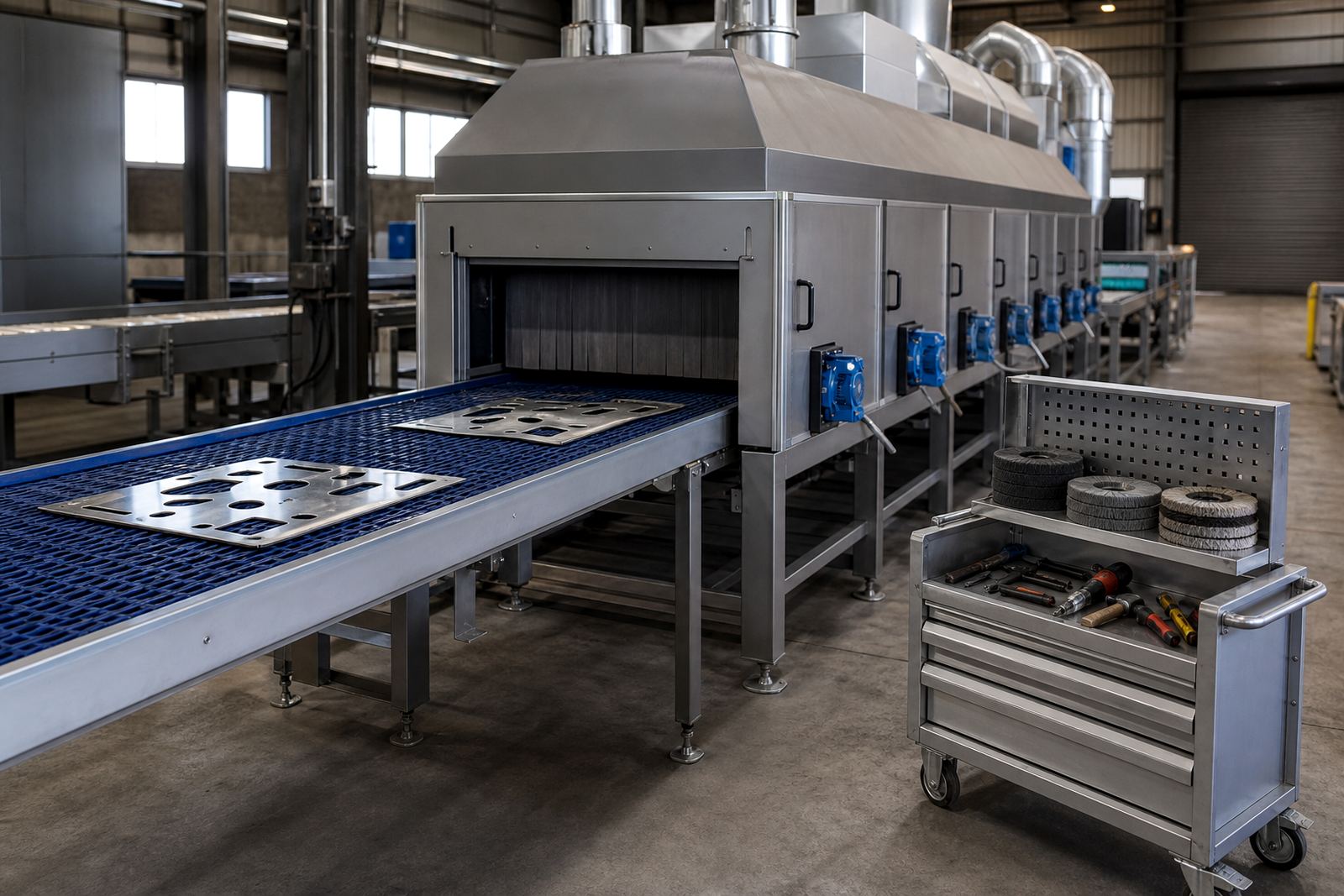
The Wetline Standard is supplied in different working widths and feed arrangements to suit smaller job shops as well as higher-output production lines. Selection usually depends on the largest sheet size you process, the number of parts per shift and whether the machine will sit inline with cutting, sorting or bending.
- Working width options for common sheet sizes and nested part runs
- Single or multi-station finishing setup depending on throughput
- Variable feed speed for light deburring or more aggressive edge work
- Adjustable pressure settings to suit different material thicknesses
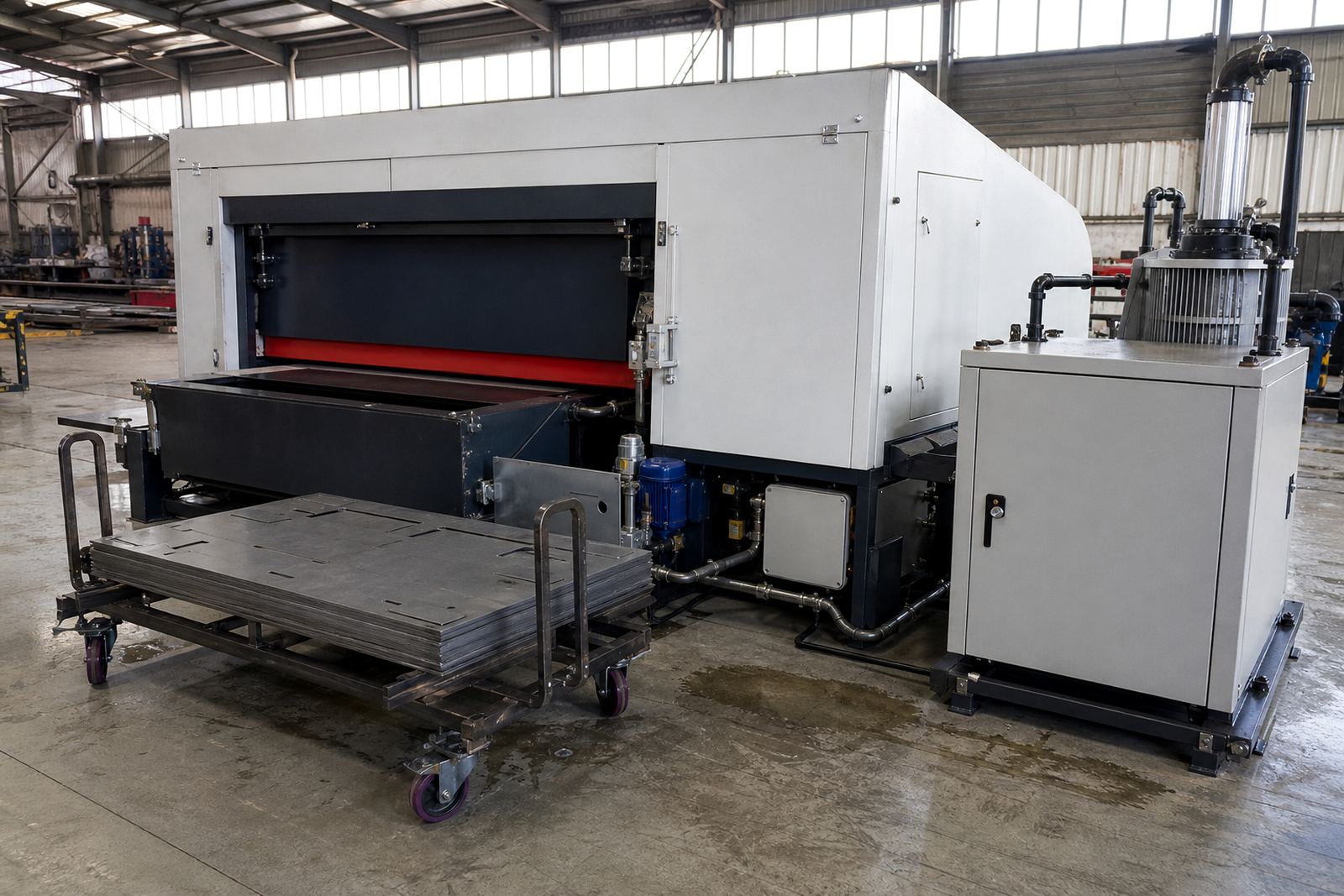
- Wet collection system to manage swarf and residue during use
Where space is tight, the footprint should be checked against aisle width, crane access and loading bay movement. In smaller workshops a compact unit may be the better choice, while higher-volume plants often need wider infeed and outfeed room for safe handling.
Where the Wetline Standard fits best
This machine suits metal fabricators who want a better finish than hand filing, flap discs or repeated rework. It is often used on parts that need clean edges before powder coating, galvanising, welding or assembly. It also helps where the customer expects consistent edge quality across large batches.
Typical applications include electrical enclosures, brackets, chassis parts, guards, covers and cut panels. Shops working with mixed part sizes benefit from the machine’s consistency because it reduces operator variation from job to job. The output is more predictable, which makes production planning easier.
Wet processing is useful in coastal regions like Durban and Cape Town, where dust control and surface condition both matter. It also helps in enclosed industrial parks where ventilation can be limited and housekeeping rules are strict.
- Laser-cut parts with sharp burrs or oxide edges
- Sheet metal going to paint, powder coat or galvanising
- Workshops trying to reduce manual finishing time
- Operations that need better dust management around the machine area
Installation, power and workshop requirements
Installation is normally planned around floor loading, water management, drainage and safe operator access. The machine should be placed on a level slab with enough space for loading, cleaning and maintenance access. If the unit is near other production equipment, allow room for wet handling and regular swarf removal.
Power requirements depend on the selected configuration, but the machine is generally suited to standard industrial electrical supply with proper protection. Where load-shedding affects production, many shops factor the Wetline Standard into generator planning or staggered production schedules so finishing does not hold up downstream work.
A water supply and drainage point are needed, and some facilities may also need filtration or a collection method for residue. If the workshop is in a municipal industrial area, it is worth checking local rules for wastewater discharge before installation. We also look at access for forklifts or pallet handling during delivery and future relocation.
- Level concrete floor with clear access around the machine
- Industrial electrical supply with protection matched to the unit
- Water supply and planned drainage or collection method
- Space for loading, cleaning and maintenance access
Care, servicing and production support
Like any wet machine, the Wetline Standard works best when it is cleaned regularly and the working fluids are kept in order. Daily checks usually include removing settled debris, checking the water condition and making sure feed components move freely. If the machine is allowed to build up sludge or swarf, performance drops and the finish becomes less even.
Preventive maintenance helps avoid downtime and keeps the machine working to a repeatable standard. We support customers with operator training, annual service contracts, breakdown repairs, machine audits and spares supply. For plants running long shifts, a planned service interval is the safer option than waiting for wear to show up in production.
Where local dust, heat or humid air affects workshop conditions, care schedules may need to be a bit tighter. Small issues like blocked drainage or worn consumables can quickly affect finish quality, so the machine should be checked before they start causing scrap.
What to confirm before you place an order
Before ordering, confirm the material types, sheet thickness range and the finish standard you need on the final part. A machine that works well for mild steel brackets may need a different setup for stainless steel or more delicate cut parts. It also helps to know whether the job is mainly light deburring or heavier edge finishing.
Check the following points so the machine is matched properly to your production:
- Largest part size and typical batch size
- Material mix, including steel, stainless steel and aluminium
- Required finish, edge break and burr removal level
- Available floor space, floor strength and loading access
- Electrical supply, water connection and drainage arrangements
- Expected shift pattern and daily output target
We can assist with sample part testing, process optimisation and production planning help before the machine is signed off. That way the setup is suited to your actual work, not only the catalogue spec.
Key facts
| Machine type | Wet deburring and edge-finishing machine for laser-cut sheet metal |
|---|---|
| Typical material range | Mild steel, stainless steel and aluminium |
| Finish function | Burr removal, edge breaking and refined surface preparation |
| Operating method | Wet process for dust-managed finishing |
| Best suited for | Fabrication shops needing consistent post-laser finishing |
| Support options | Installation, training, maintenance, audits, spares and sample testing |