What a corner rounding unit does on laser-cut parts
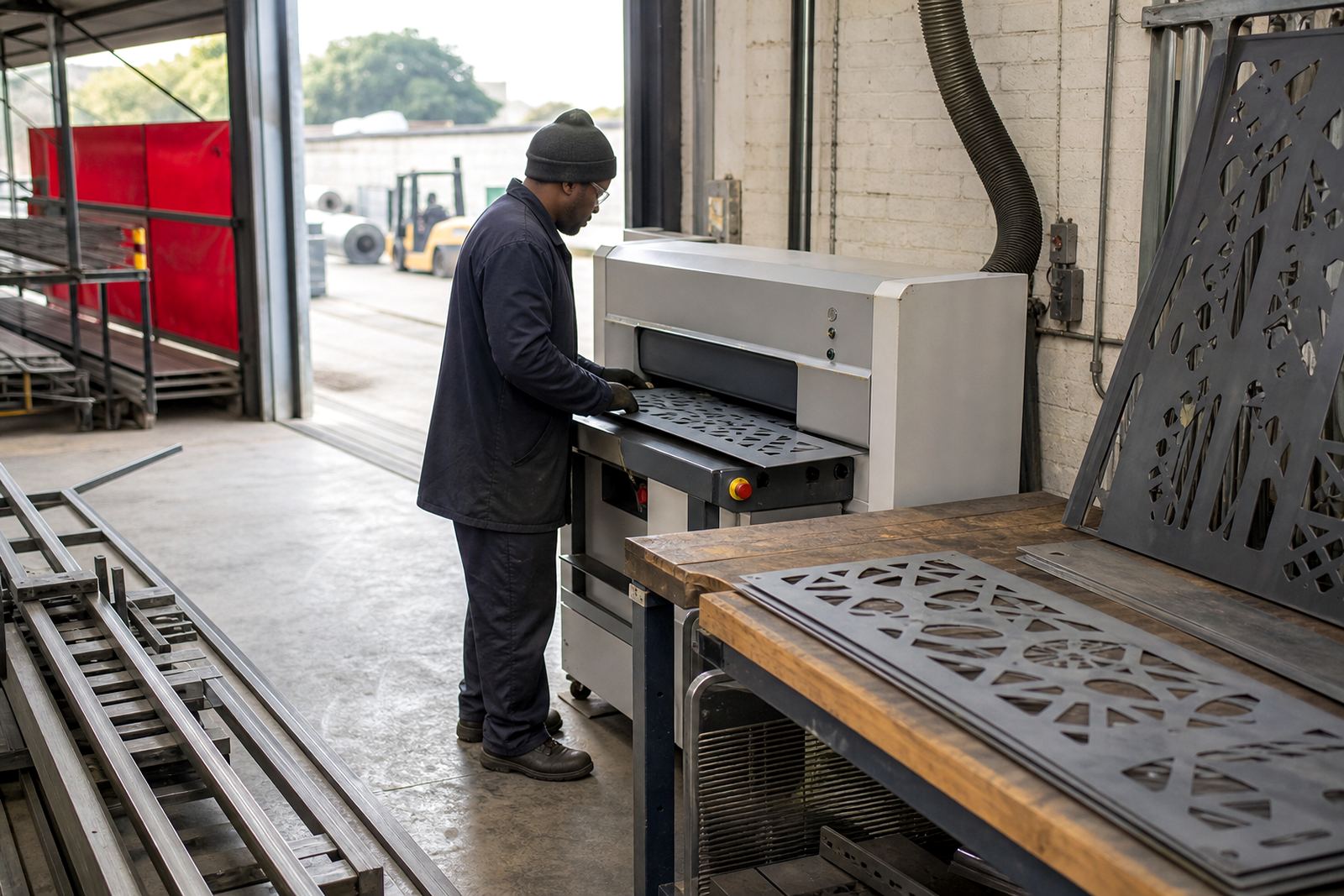
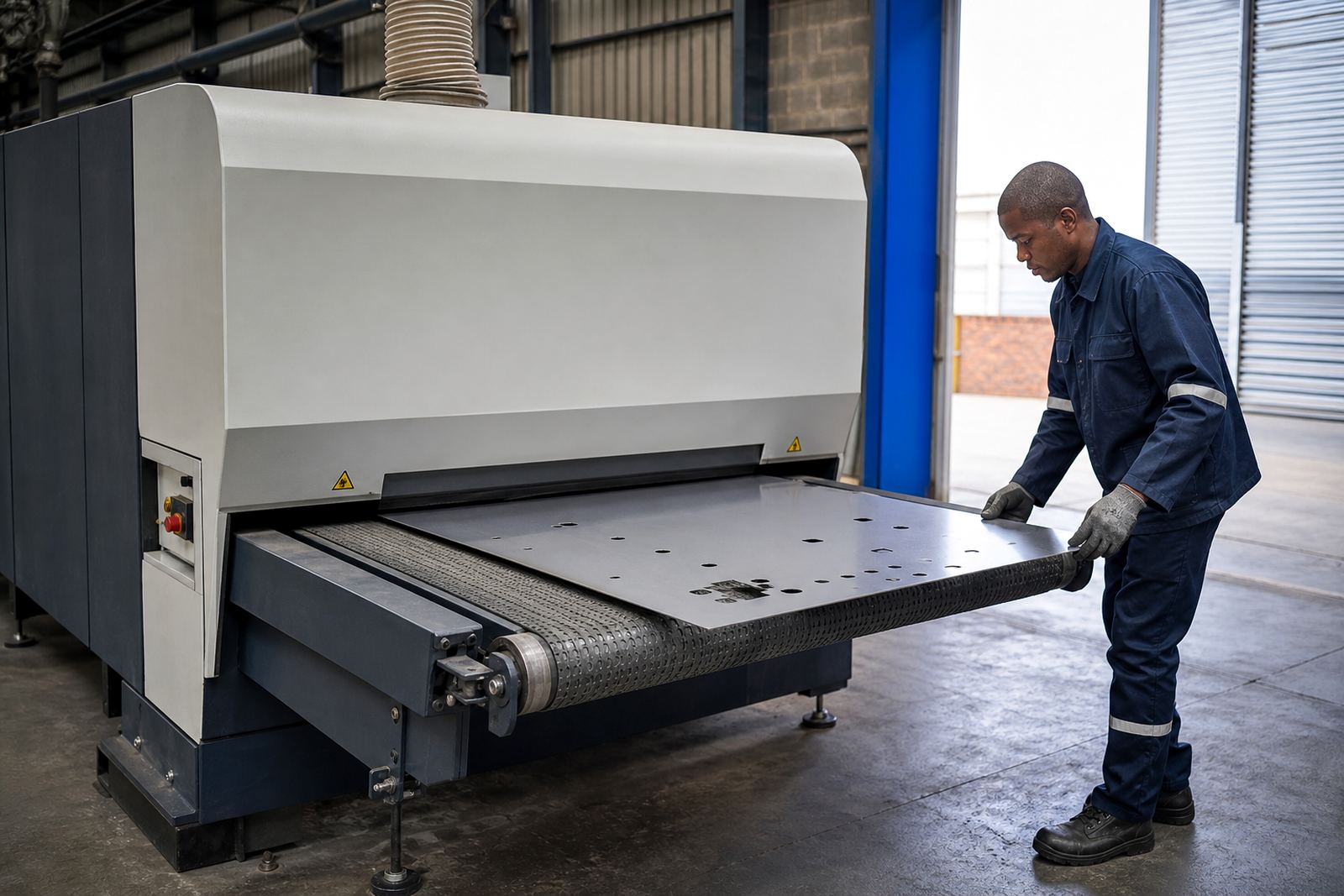
A corner rounding unit is used to remove sharp outside corners from laser-cut sheet metal and replace them with a consistent rounded profile. For shops handling panels, covers, brackets, guards and decorative parts, that makes the finished component easier to handle and far more suitable for painting, powder coating or assembly. It also reduces the risk of minor cuts during packing, fitting and installation, which matters when parts move from the workshop to site and through several hands.
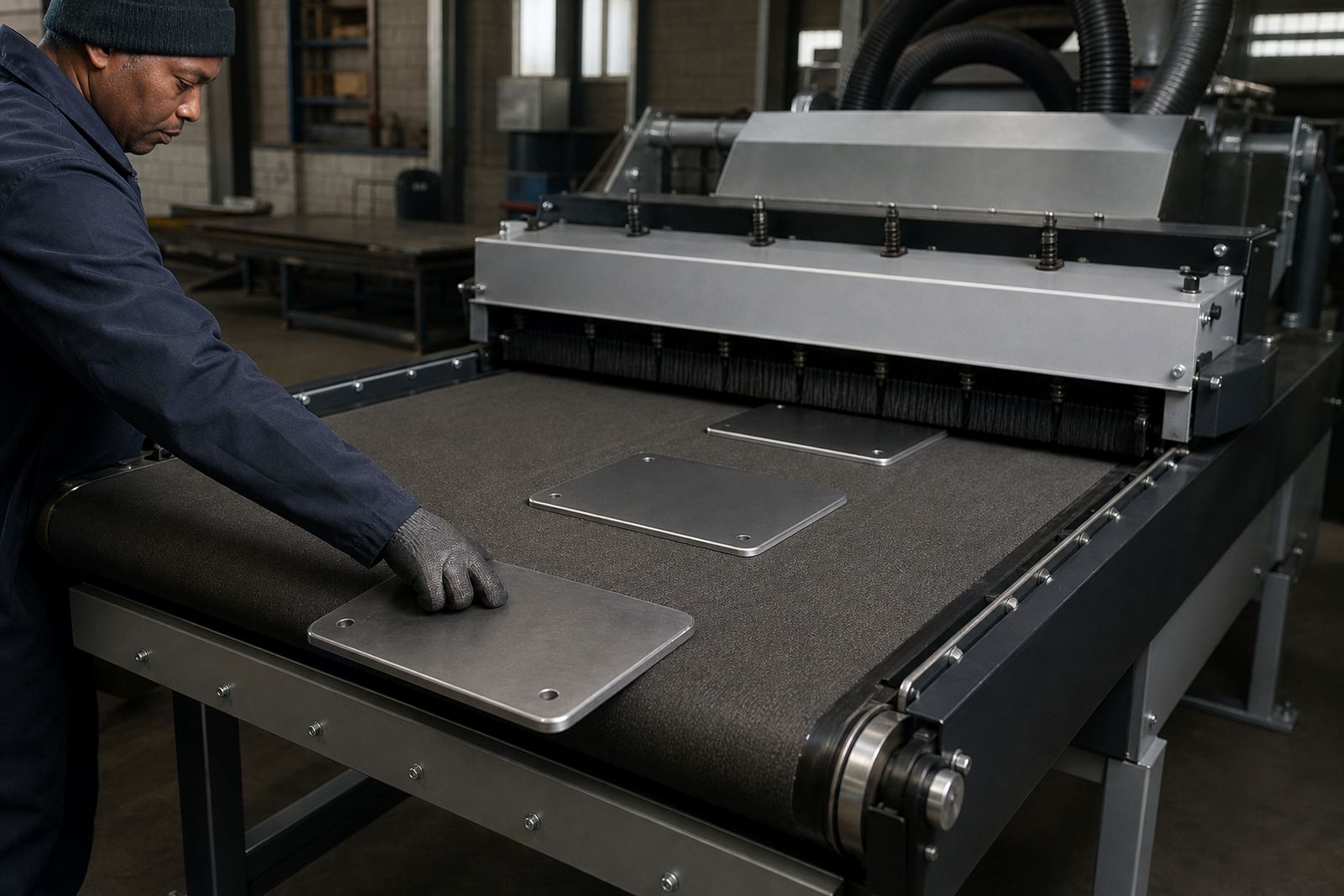
These units are built for repeatable processing of cut sheet metal, with controlled corner treatment rather than hand grinding. That gives a cleaner result across batches and helps keep edge quality more even from shift to shift. In a busy Gauteng fabrication shop, that consistency can save time on rework and reduce the number of parts sent back for touch-up.
Because the unit is made for laser-cut material, it works best on parts with clean profiles and predictable geometry. It is not a general purpose grinding bench. The focus is on producing a neat corner break or radius, with less operator strain and better output control.
Typical sizes, capacities and machine options
Corner rounding requirements differ from one shop to another, so the machine can be specified around your part size, material range and production rate. Smaller operations in Germiston or Wadeville may need a compact unit for mixed work, while higher volume plants in Johannesburg, Pretoria or Durban often look for wider working capacity and faster throughput.
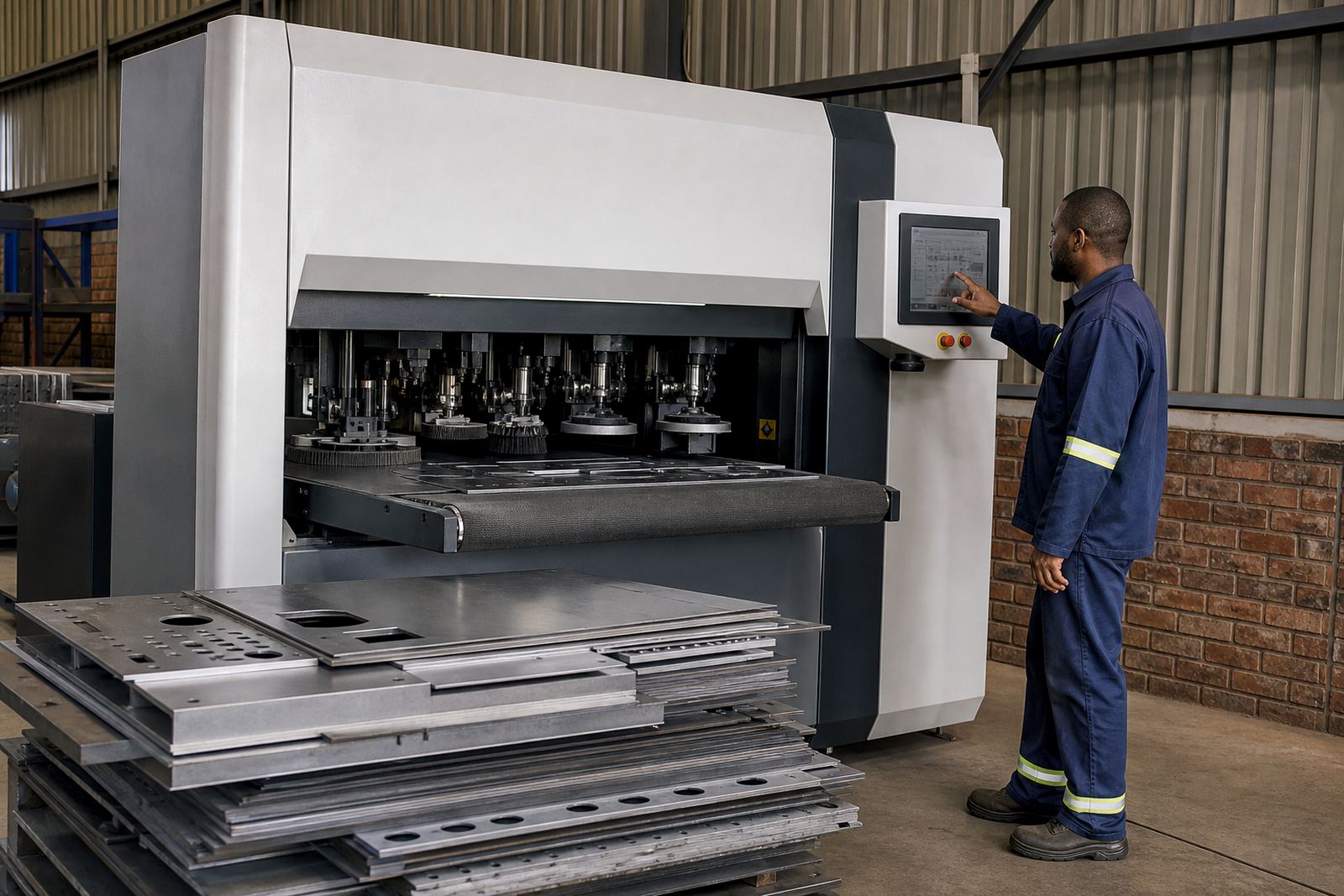
Common options include adjustable processing settings, different tooling arrangements and feed support suited to light or heavier sheet metal. The right specification depends on the radius you want to achieve, the type of cut edge and whether the parts are flat, nested or already bent. If your parts include mild steel, stainless steel or aluminium, the machine needs to be matched to the material and finish expectation.
- Working width options for different sheet sizes and part layouts
- Adjustable corner treatment for small breaks or more rounded edges
- Tooling setups for repeatable batch work
- Suitability for light gauge to heavier fabricated parts, depending on configuration
- Infeed and outfeed support for stable handling of small and large components
For most South African fabricators, the key is not just width, but how the unit fits into the flow of the workshop. If parts come off a laser and go straight to coating, the rounding station must keep pace without bottlenecks.
Where this machine suits best in local production
This unit suits shops that want a neater edge profile without the labour cost of manual finishing. It is especially useful where safety, appearance and coating adhesion all matter. That includes electrical enclosures, access panels, protective covers, signage parts, appliance components, architectural metalwork and general fabricated products. It also helps when customers want a more finished look straight after laser cutting, not after several hand operations.
For coastal work in Durban or Cape Town, a better pre-coat edge finish can help the coating team produce a more even result on exposed parts. In inland plants around Rustenburg, Pretoria and the East Rand, the machine helps keep up with production runs where the same part may be cut in hundreds or thousands. It is a practical fit for fabricators that do contract work and need repeatable quality without tying up skilled labour on small edge tasks.
Because it handles one part of the finishing process very specifically, it is also a sensible addition to shops that already have deburring, brushing or sanding equipment. The corner unit takes care of the corners, while other finishing stages can deal with the remaining edge condition where needed. That split of work can make the whole line easier to manage.
Installation, utilities and workshop requirements
Installation needs to be planned around floor space, material flow and the power available in the workshop. The machine should be positioned so operators can load parts from the laser output area or from a trolley with minimal lifting. Where possible, leave enough space for safe access around the infeed, outfeed and control side. On a tight production floor, that layout choice can make the difference between a useful station and a daily obstacle.
Most units will need stable electrical supply and a clean, dry environment. In South Africa, many workshops must also deal with load-shedding, so it is worth planning for controlled shutdowns and restart procedures. If the machine includes dust extraction, pneumatic assist or additional tooling functions, the site should allow for those services as well. Compressed air quality should be checked, especially in humid coastal areas where water in the line can become a problem.
- Level floor and clear access for loading and unloading
- Suitable power supply and protection for workshop conditions
- Compressed air provision if specified for the setup
- Space for material staging, trolleys and finished parts
- Extraction or cleaning arrangements where dust and fines are created
If you are moving the unit into an existing line, we can help plan the installation so it works with your current cutting, finishing and packing flow. That includes positioning around cranes, forklifts and shared aisle space.
Care, servicing and keeping the finish consistent
Like any production machine, a corner rounding unit needs regular care if you want steady output. Tool condition should be checked often, along with guides, rollers, clamping points and any wear parts that affect the corner profile. A dull or damaged tool can leave uneven results and may cause extra handling after the cut, which defeats the purpose of the machine. Small checks at the start of shift are better than waiting until the finished edge starts to vary.
Preventive maintenance is especially useful where the machine runs daily on the same part family. It helps keep the rounding result consistent and reduces breakdown risk during busy periods. For shops working under contract deadlines, that matters. You do not want a machine down on a Thursday afternoon when the truck is already booked for Friday delivery. Our service team can assist with routine maintenance, breakdown repairs, annual service contracts and spares supply, depending on how the machine is being used.
If you process stainless or coated material, housekeeping is also important. Swarf, abrasive residue and surface contamination can affect finish quality and may show up later in the coating line. A clean machine and a clean loading area are worth the effort, particularly when you are producing visible parts.
What to confirm before you order
Before ordering a corner rounding unit, it helps to check the type of parts you make most often and the finish your customer expects. The right machine for a shop in Wadeville might not be the same as the right machine for a plant in Cape Town, because part mix, material thickness and volume can differ quite a lot. If you are unsure, sample part testing is a sensible first step.
Important points to confirm include the part size range, material type, target corner profile, daily output and available power. You should also know whether the parts are flat blanks, nested components or formed pieces. If your workshop handles a mix of mild steel and stainless, that should be stated up front, along with the thickness range and whether you need a light break or a more defined radius.
- Largest and smallest part dimensions you plan to run
- Material type and thickness range
- Required corner radius or edge break
- Daily or weekly production volume
- Available floor space, power and air supply
- Whether you need training, installation and service support
We work with fabricators across Johannesburg, Pretoria, Durban, Cape Town and Rustenburg, and can help match the machine to your production needs. If you already know the part type, send a sample through the enquiry form and we can advise on the best setup and likely process results.
Key facts
| Application | Laser-cut sheet metal corner rounding and edge finishing |
|---|---|
| Material range | Mild steel, stainless steel and aluminium, subject to setup |
| Part size | Configured to suit small components through larger flat sheets |
| Finish goal | Safer handling and paint-ready edge profiles |
| Installation needs | Stable floor, suitable electrical supply and clear access |
| Support options | Installation, training, maintenance, repairs and spares |