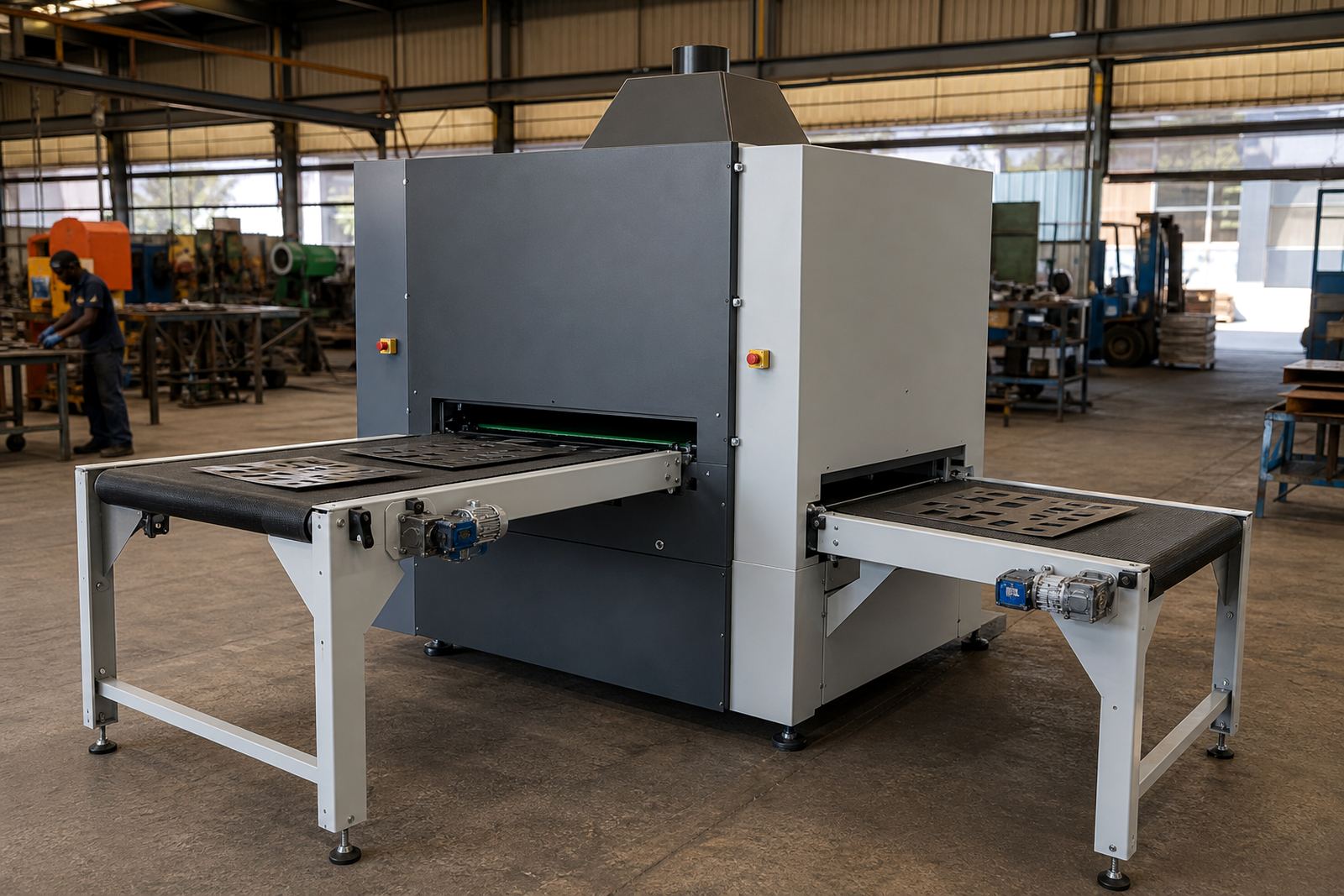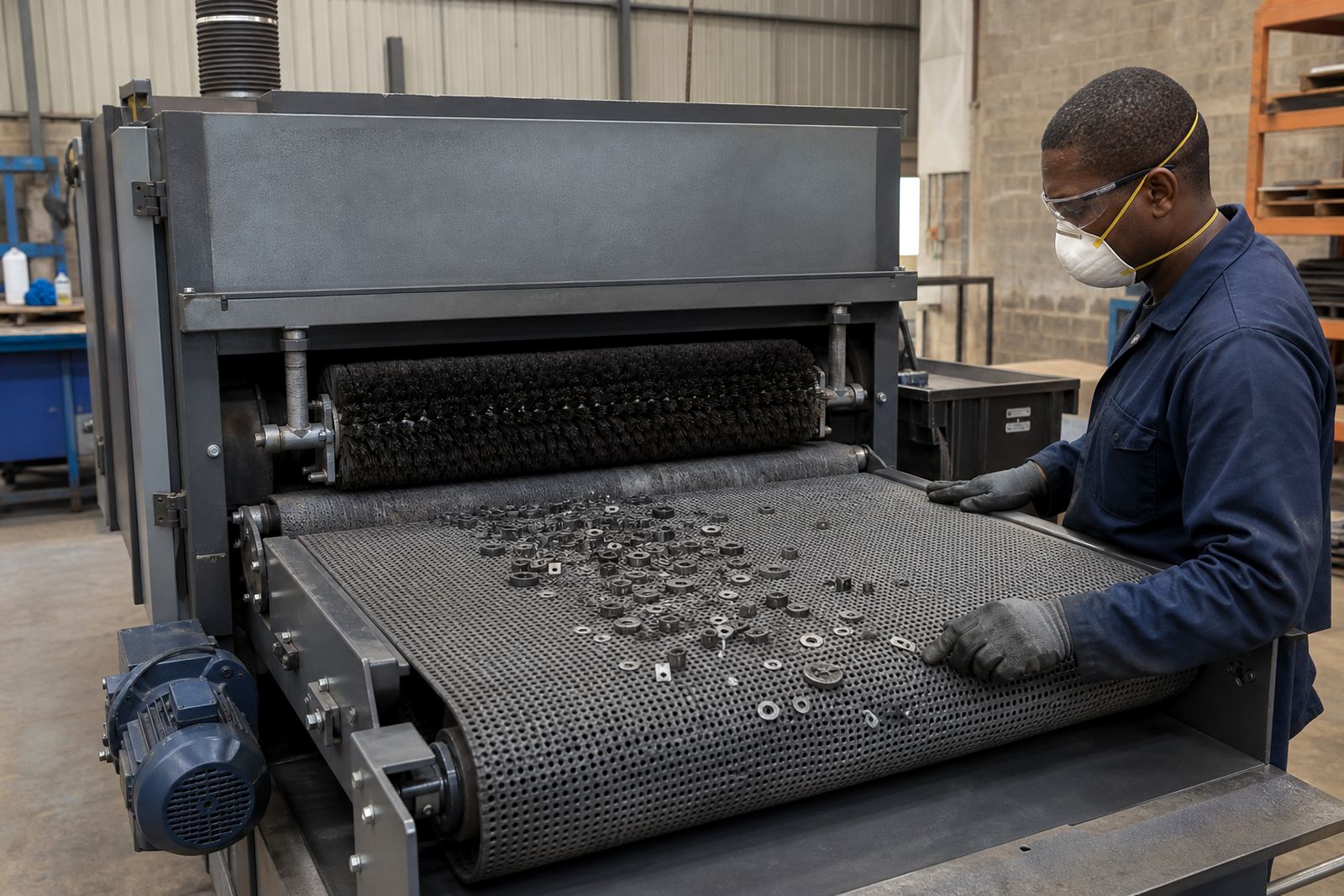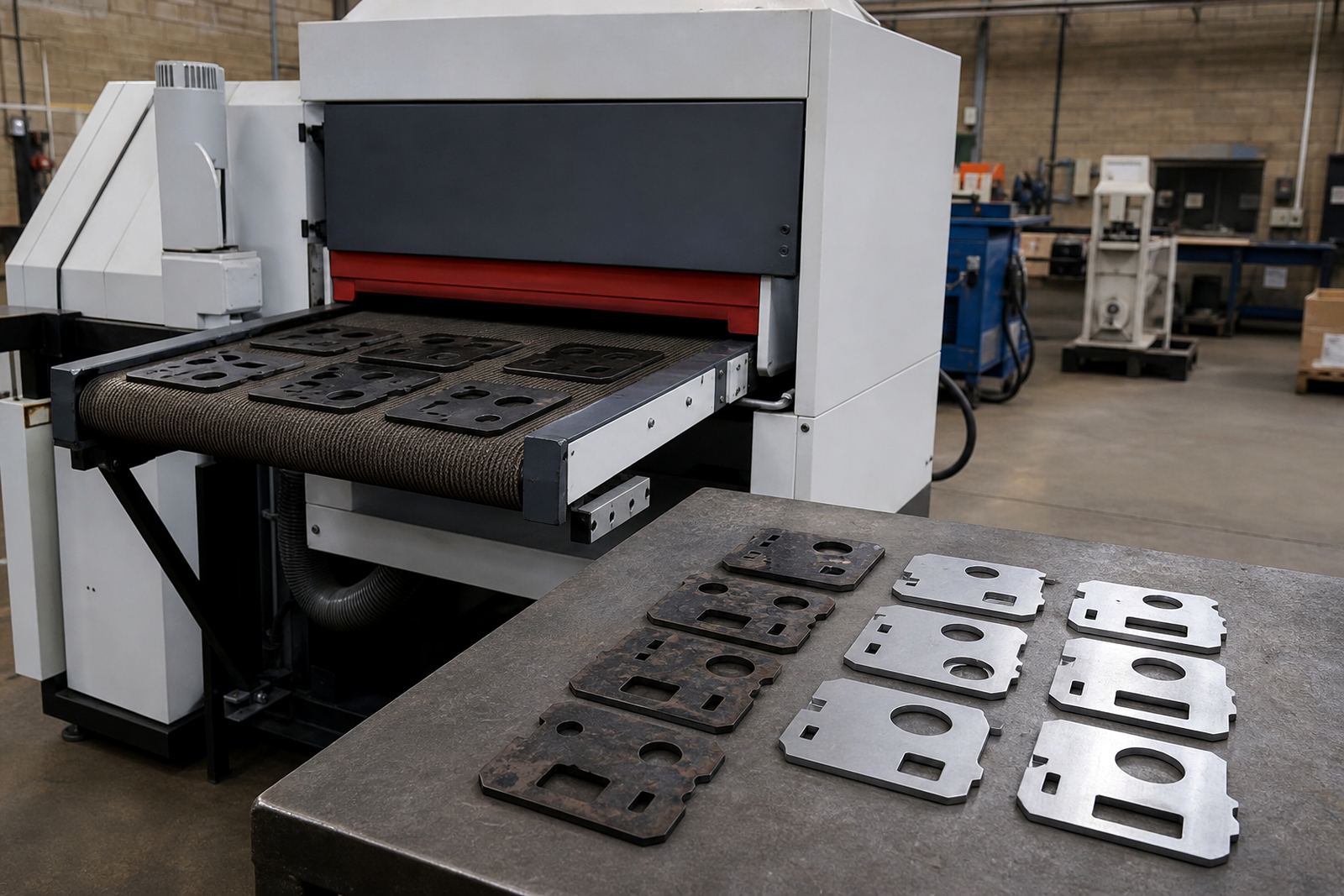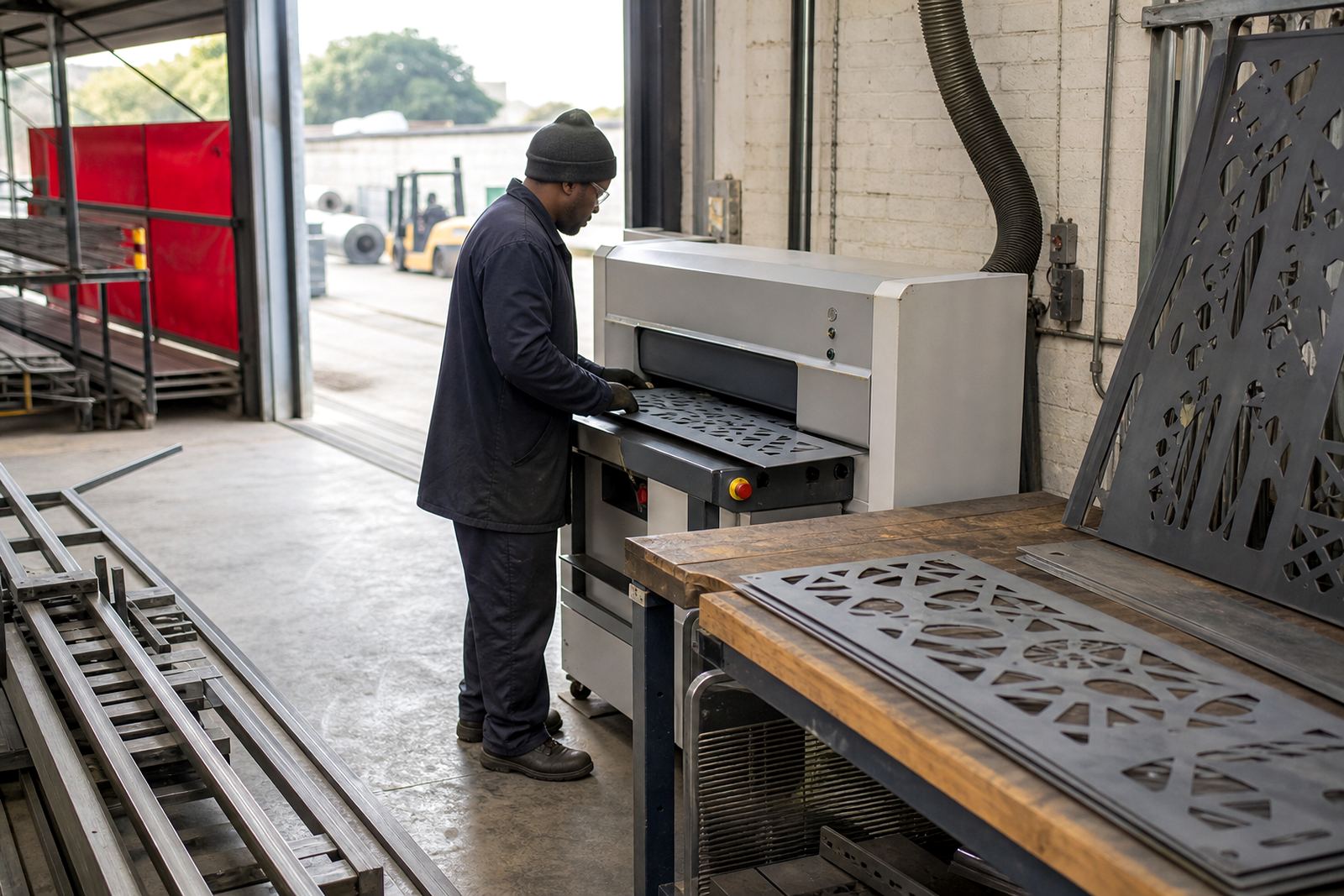
A compact machine for real workshop output
The Compact Fabricator is a space-saving deburring and edge-finishing machine for laser-cut sheet metal, made for fabricators who are ready to move away from slow manual filing and grinding. It handles the everyday mix of mild steel, stainless steel and aluminium parts that come off a laser with burrs, sharp edges and surface marks that need cleaning before assembly, coating or dispatch.
Because it is smaller than a full production line machine, it fits better into workshops where every square metre counts. That makes it a practical choice for job shops, smaller fabrication bays and plant rooms in Wadeville, Germiston, Johannesburg, Pretoria and other busy industrial areas. It still gives a consistent finish, and it helps reduce the risk of uneven edges that can cause problems later in bending, welding or powder coating.
The machine is intended for shops that want a proper mechanical process instead of relying on hand tools and labour, but do not have the space or volume for a large through-feed setup. It is also useful where staff turnover is high, because the process is easier to standardise and less dependent on the skill of one operator.
Sizes and options that suit smaller production runs
The Compact Fabricator is supplied in working widths and configuration options to suit different part sizes, sheet formats and throughput needs. A smaller workshop may only need a narrow machine for batch work, while a busier fabricator may need a wider option to handle larger panels and mixed job cards. The right choice depends on the parts you cut, the finish you expect, and how many sheets move through the shop on a normal shift.
- Working widths for smaller and medium sheet-metal parts
- Variable feed setup for controlled surface finish
- Wet or dry process options, depending on material and application
- Deburring heads for edge cleaning and surface finishing
- Optional infeed and outfeed support for easier handling
If your work includes brackets, covers, panels, flanges or repetitive flat parts, the machine can be matched to your part mix so you are not over-buying capacity you will not use. For many smaller workshops, that balance between footprint and capability is the main reason the Compact Fabricator is a better fit than a larger unit.
Where it fits best in South African workshops
This machine suits fabricators that cut laser parts for general engineering, electrical enclosures, mining support work, steel furniture, signage frames and stainless items that need a neat finish before the next process. It is especially useful where parts must be safe to handle by hand, or where edges need to be cleaned before folding, assembly or coating.
In coastal towns like Durban and Cape Town, the machine can form part of a cleaner finishing process that helps reduce rework from surface contamination and rough handling. In Gauteng, where smaller workshops often run under pressure for space and power planning, the compact footprint makes a difference. If load-shedding planning is tight, you may want to stage the machine into your production schedule so it runs when your support systems are ready and the rest of the line is balanced.
It is also a good fit for businesses that take on custom work. When every order is different, a dependable edge-finishing step saves time and helps keep turnaround steady even when the load is mixed and the day changes fast.
Installation, power and workshop setup
Installation needs a level floor, enough access for moving the machine into position and a clear space around it for loading, cleaning and service access. Most workshops place it near laser cutting or near the next process, so parts do not have to travel far. If the building has a tight layout, we can help plan the best position and discuss how the machine will fit with trolleys, racks and material flow.
Power needs depend on the selected specification and process type. Some setups need standard electrical supply only, while others may need additional services for extraction, compressed air or process media. Where coastal humidity or dust are concerns, it is worth planning proper ventilation, storage and housekeeping from the start. A neat installation helps the machine last longer and keeps the finish more consistent. We also look at access for maintenance, because a machine that is hard to service tends to be neglected over time.
- Level floor and safe operator access
- Electrical supply matched to the machine specification
- Space for loading, outfeed and cleaning
- Compressed air or extraction where required
- Clear route for installation, service and future relocation
Care, servicing and day-to-day finishing quality
Like any production machine, the Compact Fabricator works best with regular cleaning and simple checks. Abrasive parts wear down with use, and process quality can drift if the machine is left dirty or settings are changed without a proper record. A daily wipe-down, visual inspection and scheduled replacement of wearing items will help keep your edge quality consistent.
For workshops that run every day, preventive maintenance is the best way to avoid stop-start production. We can assist with operator training, maintenance routines, breakdown repairs and annual service contracts. If you are running a small team, it helps to appoint one person to watch finish quality and another to record when consumables are due for replacement. That small discipline often saves a lot of wasted sheet and rework.
Service support is available for clients in Wadeville, Germiston, Johannesburg, Pretoria, Durban, Cape Town, Rustenburg and the East Rand. If you are far from our base in Wadeville, we can still help plan maintenance timing and spares supply so you are not waiting when production is already under pressure.
What to check before you order
Before placing an order, it helps to confirm the kind of sheet you process, the part sizes you run most often and the finish you need after deburring. A laser-cut part with a light burr is different from a heavy-kerf component with sharp internal edges, and not every machine setup is best for both. You should also check whether your parts need edge rounding, oxide removal, or just burr removal before the next operation.
It is also worth thinking about the workshop routine around the machine. Do parts arrive flat on pallets or mixed in bins? Do you need to process single sheets, nested parts or separated components? Do you have enough space for infeed, outfeed and inspection? These details affect the right size and configuration. If you are unsure, sample part testing can show how the machine will handle your actual parts before you commit.
- Material type and thickness range
- Largest and smallest part sizes
- Required finish, including edge rounding if needed
- Throughput per shift or per week
- Available floor space and access for delivery
- Power, air and extraction requirements
For many smaller fabricators, the best answer is not the biggest machine but the one that fits the work pattern properly. That keeps capital spend under control and avoids buying capacity you will never use.
Key facts
| Machine type | Compact deburring and edge-finishing machine for laser-cut sheet metal |
|---|---|
| Typical materials | Mild steel, stainless steel, aluminium and mixed laser-cut parts |
| Workshop fit | Small to medium fabrication shops with limited floor space |
| Application | Deburring, edge finishing and preparation for bending, welding or coating |
| Support options | Installation, operator training, preventive maintenance and sample part testing |
| Service area | Wadeville, Germiston, Johannesburg, Pretoria, Durban, Cape Town and Rustenburg |