What the Oxide Removal Cell does on laser-cut parts
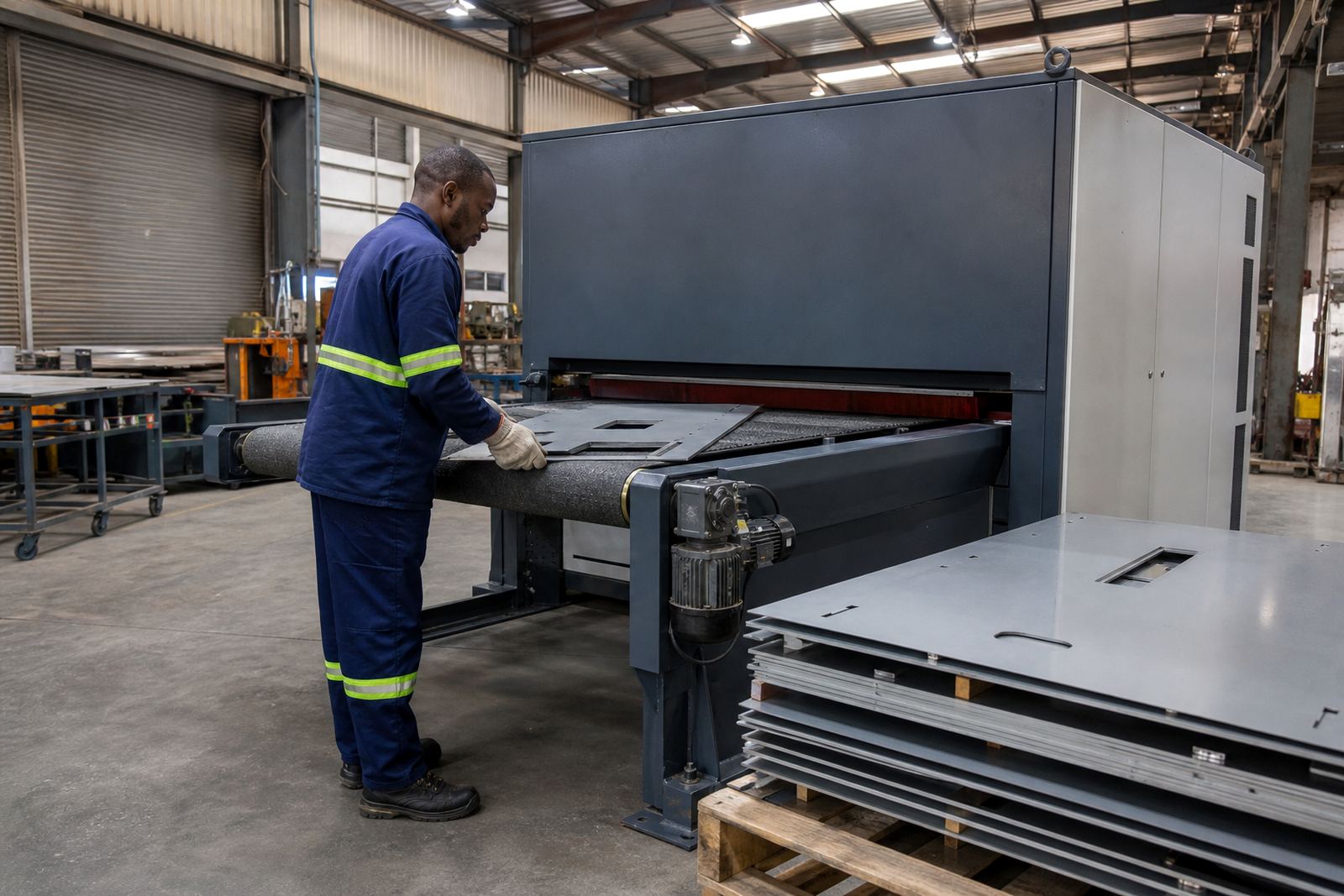
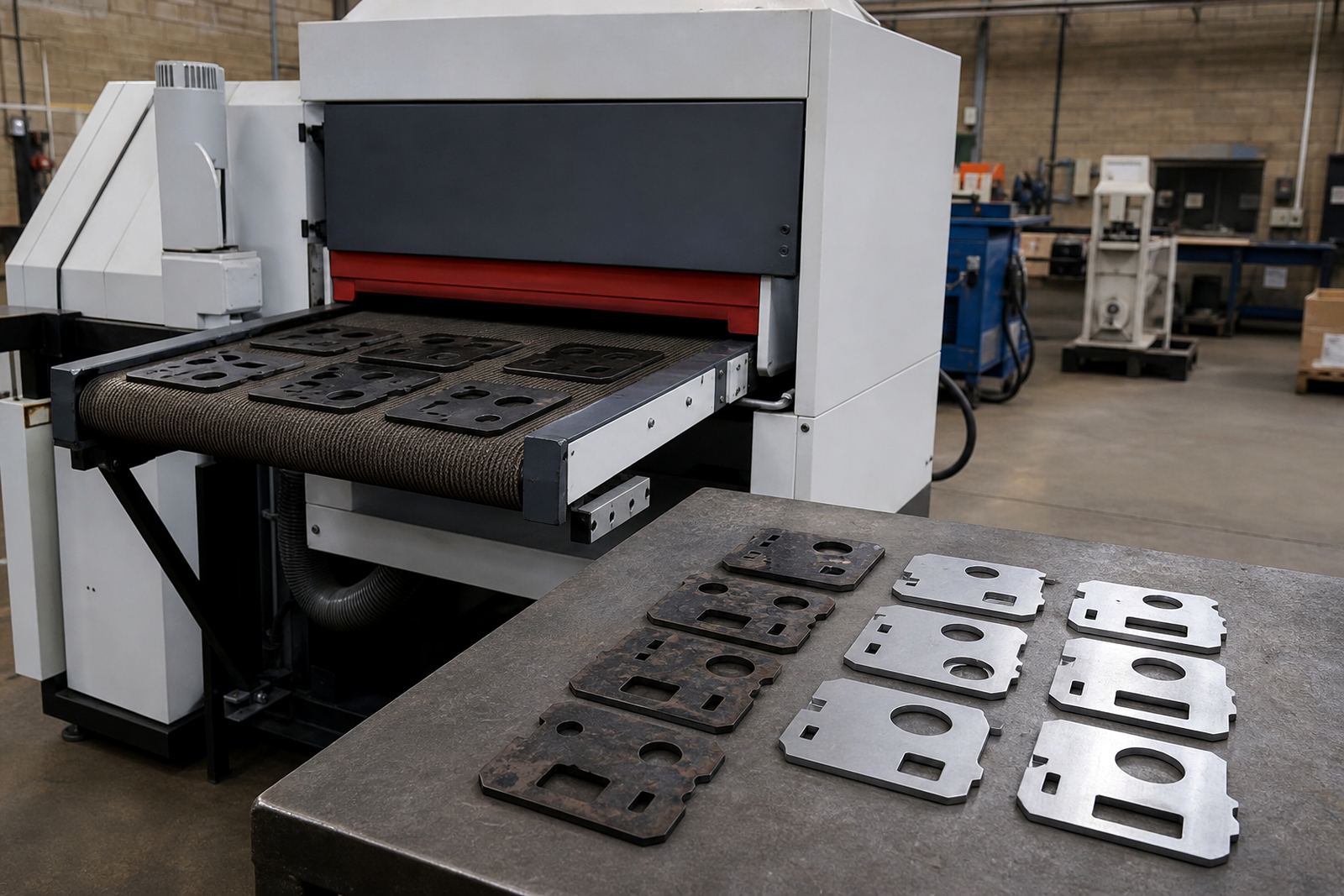
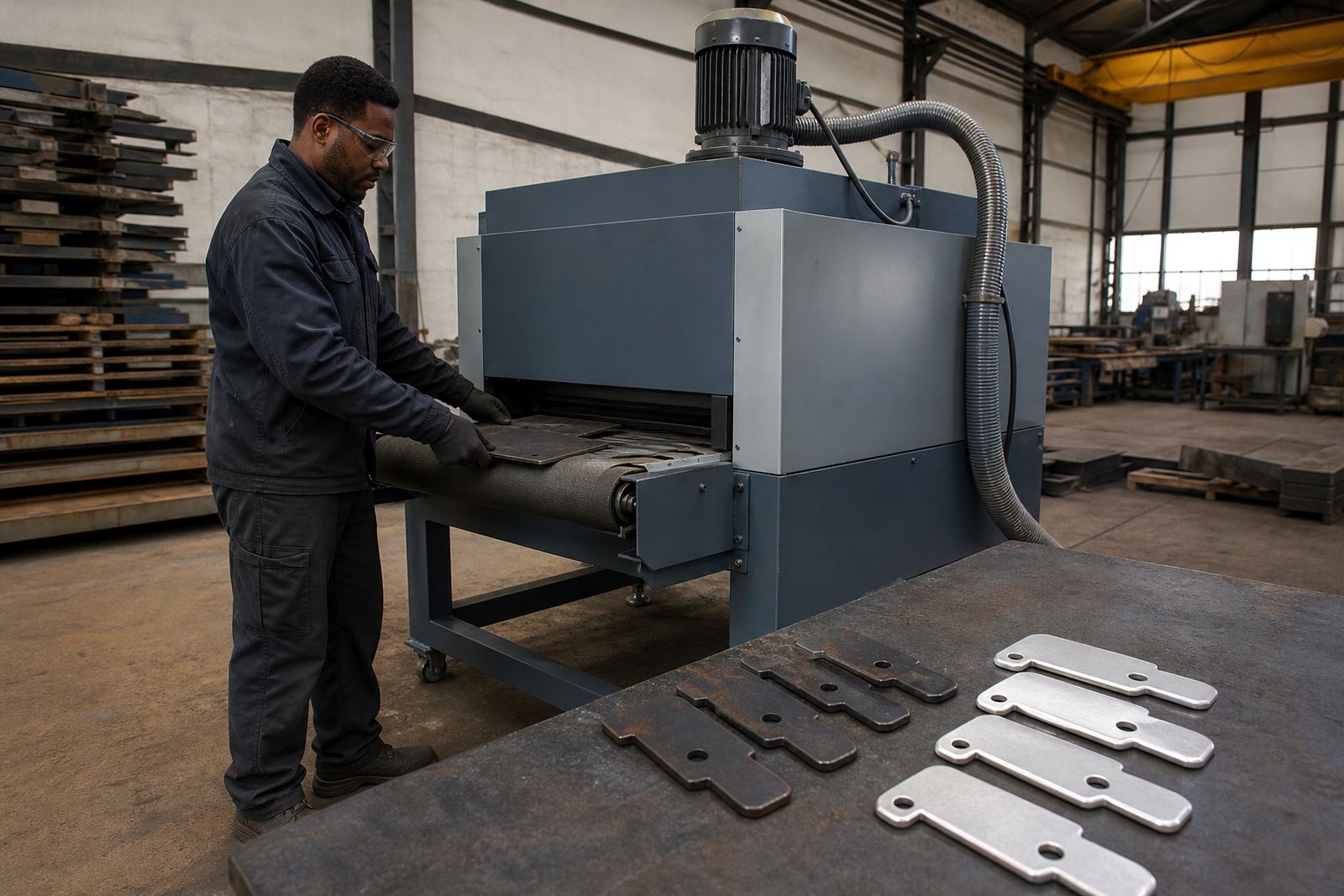
Laser cutting leaves a hard oxide layer on the cut edge, especially on mild steel. If that layer stays in place, welds can be harder to control, coatings may not key properly, and fit-up can take longer at the bench. The Oxide Removal Cell is a specialist machine for reducing that oxide in a controlled way, so parts come off the laser with a cleaner edge and less post-processing.
It is intended for fabricators working with flat sheet parts, brackets, housings, frames and cut components that need a better finish before the next operation. For many shops in Wadeville, Germiston, this step sits between cutting and folding, or between cutting and weld prep. That makes it easier to keep production moving instead of sending parts back for manual clean-up after the fact.
The machine is especially useful where repeatable results matter. Operators can process batches more consistently than with hand tools, and the finish is easier to standardise across different shifts. It also helps reduce variation caused by different operators, worn abrasives, or rushed prep when orders pile up. In a busy plant, that matters more than people think.
Where it fits in South African fabrication shops
Oxide removal is a practical fit for sheet metal manufacturers, laser-cutting workshops, and jobbing fabricators handling repeat production. It suits parts that are welded after cutting, parts that will be powder coated or painted, and parts where a cleaner edge improves handling and assembly. It is also useful for customers supplying local OEM work, enclosure work, agricultural equipment, racking, and general steel fabrication.
Across Johannesburg, Pretoria, Durban, Cape Town and Rustenburg, we often see the same pressure points: short lead times, labour shortages, and the need to keep machines running through load-shedding schedules. A dedicated oxide removal machine helps take a bottleneck out of the finishing area. Instead of using staff time on hand sanding or flap discs, the machine handles the repetitive side of the job.
- Best for laser-cut mild steel parts with visible oxide on the cut edge
- Useful before MIG, TIG or spot welding
- Suitable before coating, painting, or assembly
- Helps when customers expect cleaner edges and more consistent finish quality
Sizes, layout choices and batch handling
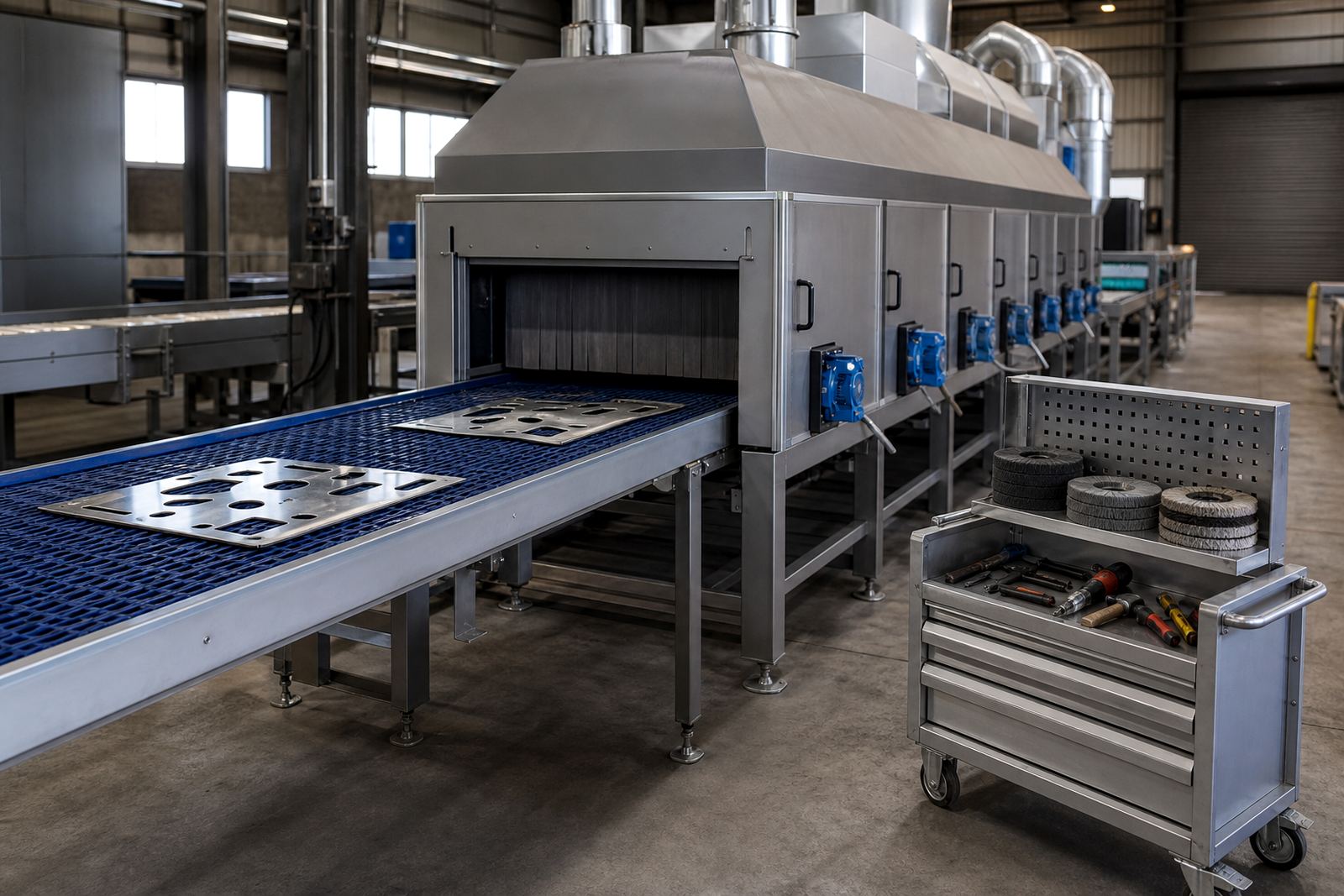
Oxide Removal Cell configurations are selected according to part size, daily throughput and floor space. Smaller workshops may need a compact unit for short runs and mixed jobbing work, while larger plants often need a wider working area to keep up with laser output. The right setup depends on sheet size, part nesting style, and how often the machine will be used in a shift.
Typical layout options include single-station feeding for smaller batches and wider capacity units for higher volume production. If your shop handles both thin sheet and heavier plate, it is worth checking the supported material range before ordering. Some parts are fine after one pass, while heavier oxide or thicker plate may need a more deliberate process. That is where a proper sample test helps, because not every laser shop cuts the same mix of material thickness.
- Compact format for smaller fabrication floors
- Wider working width for batch production
- Suitable for mixed part sizes and nested sheet work
- Can be matched to output from one or more laser cutting machines
Installation, power and workshop utilities
Installation is planned around the workshop floor, access for moving the machine in, and the services available at the site. In Germiston and across the East Rand, many factories have limited crane access or narrow roller door entries, so it is important to confirm clearances before delivery. If the machine must be relocated between bays, the route should be checked for floor level changes, cable runs and any obstructions.
Power requirements depend on the configuration supplied, but buyers should expect a proper industrial electrical connection, with the final setup confirmed against the machine specification. If your site has generator backup or inverter support for load-shedding, the starting current and running load should be checked in advance. Stable voltage matters because finishing quality can vary if the supply is poor.
Some installations may also need dust extraction or localised cleaning support depending on the process used in the cell. Good housekeeping around the machine helps keep debris out of moving parts and keeps the work area safer. In coastal areas like Durban and Cape Town, storage and maintenance planning should also consider humidity and corrosion control, especially if parts wait before secondary processing.
Care, servicing and keeping finish quality consistent
Like any production machine, the Oxide Removal Cell performs best when it is kept clean and checked on schedule. Regular care usually includes cleaning work surfaces, inspecting wear items, checking moving components, and replacing abrasives or consumables before they affect the finish. If the process relies on contact parts, worn consumables can leave uneven results and cause unnecessary rework.
We recommend preventive maintenance rather than waiting for a breakdown. That is especially true for workshops that run long shifts or process multiple part families in a week. A planned service routine helps protect uptime and gives your operators a predictable standard to work with. It also makes it easier to budget for spares instead of reacting to sudden failures when orders are already loaded.
- Daily cleaning of dust, slag and loose particles
- Routine inspection of consumables and wear parts
- Scheduled servicing to keep output consistent
- Training for operators so settings are used correctly
- Support with breakdown repairs and spares supply when needed
What to check before placing an order
Before ordering, it helps to define the parts you want to process, the daily quantity, and the finish standard expected by your customer. Bring samples if possible, especially if your workload includes different grades of steel, mixed thicknesses, or parts with tight weld-prep requirements. A sample part test can show whether the machine setup matches your actual cutting and finishing needs.
Also confirm your available floor space, the power supply at the site, access for installation, and whether you need operator training as part of the handover. If the machine must be moved later, ask about relocation support up front. For many fabricators, the right choice is not just the machine itself but the support behind it, including audits, production planning help and annual service contracts.
Deburring works from Wadeville, Germiston and supports customers across South Africa through the enquiry form on our contact page. Our team includes Pieter Johannes van der Merwe, Thandiwe Mokoena, Sibusiso Dlamini, Ayesha Patel, Johan Kruger and Lerato Nkosi, so buyers can get help with sales, service, applications and workshop support without waiting around for answers.
Key facts
| Machine type | Oxide removal and edge-finishing cell for laser-cut sheet metal |
|---|---|
| Primary use | Reducing laser oxide before welding, coating or further fabrication |
| Typical material | Laser-cut mild steel parts and related sheet metal components |
| Capacity options | Compact and wider batch-processing configurations available |
| Utilities | Industrial electrical supply, with site requirements confirmed per configuration |
| Support available | Installation, training, maintenance, repairs, audits, spares and sample testing |