Bellville Cabinet Line: The production brief
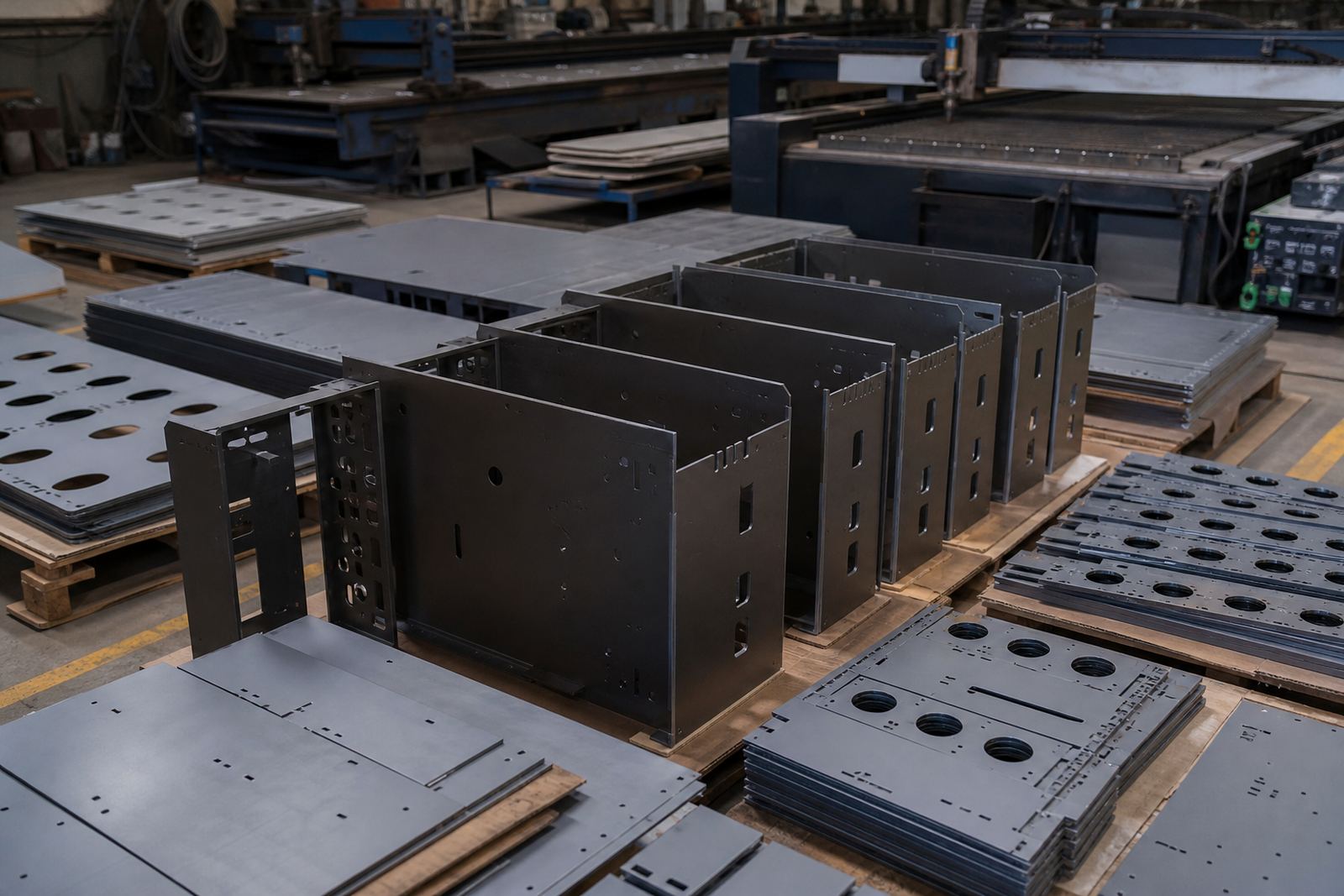
The client is a cabinet and fitted-furniture producer in Bellville making repeat batches of mild steel components for carcasses, brackets, trims and mounting parts. Their parts were laser cut in mixed thicknesses and then folded, with the same part number often running week after week for different job cards. The brief was simple on paper: improve finish consistency, remove sharp edges before packing, and stop operators having to hand touch the same parts twice.
The challenge was that the line had to keep moving. Production runs were scheduled around installer deadlines and dispatch windows, so any extra finishing step had to fit inside normal shift flow. The team also wanted a process that could handle both flat blanks and folded components without changing the line over and over. In Bellville, where many fabricators work with tight floor space and shared handling areas, the equipment had to be compact, stable and easy to keep clean.
- Part mix: repeat batches of laser-cut flat blanks and folded cabinet components
- Typical material: 1.0 mm to 3.0 mm mild steel
- Finish goal: safer edges, more uniform burr removal, less manual rework
- Operating need: consistent output across multiple shifts
What was affecting finish quality
The main issue was not just burr height. The client was also dealing with small edge inconsistencies from heat affected zones, oxide on cut edges and the odd raised corner where sheet movement during cutting caused slight variation. Some parts came off the laser clean enough for folding, while others needed a second pass before they could be packed. That made the process hard to plan and the quality check sat too far down the line.
There were also practical site constraints. Like many Gauteng factories, the Bellville operation had to work around load-shedding, so the finishing area needed predictable power draw and a sensible startup routine. The floor space near packing was limited, dust extraction had to be kept in mind, and the team wanted a setup that would not create unnecessary noise or a bottleneck. The brief was not about polishing for appearance alone, it was about making sure every part met the same handling standard before assembly.
- Variation in burr size across different laser programs
- Mixed part geometries, including flat blanks and folded components
- Limited floor space beside packing and dispatch
- Need to keep downtime low during peak production periods
The machine solution we supplied
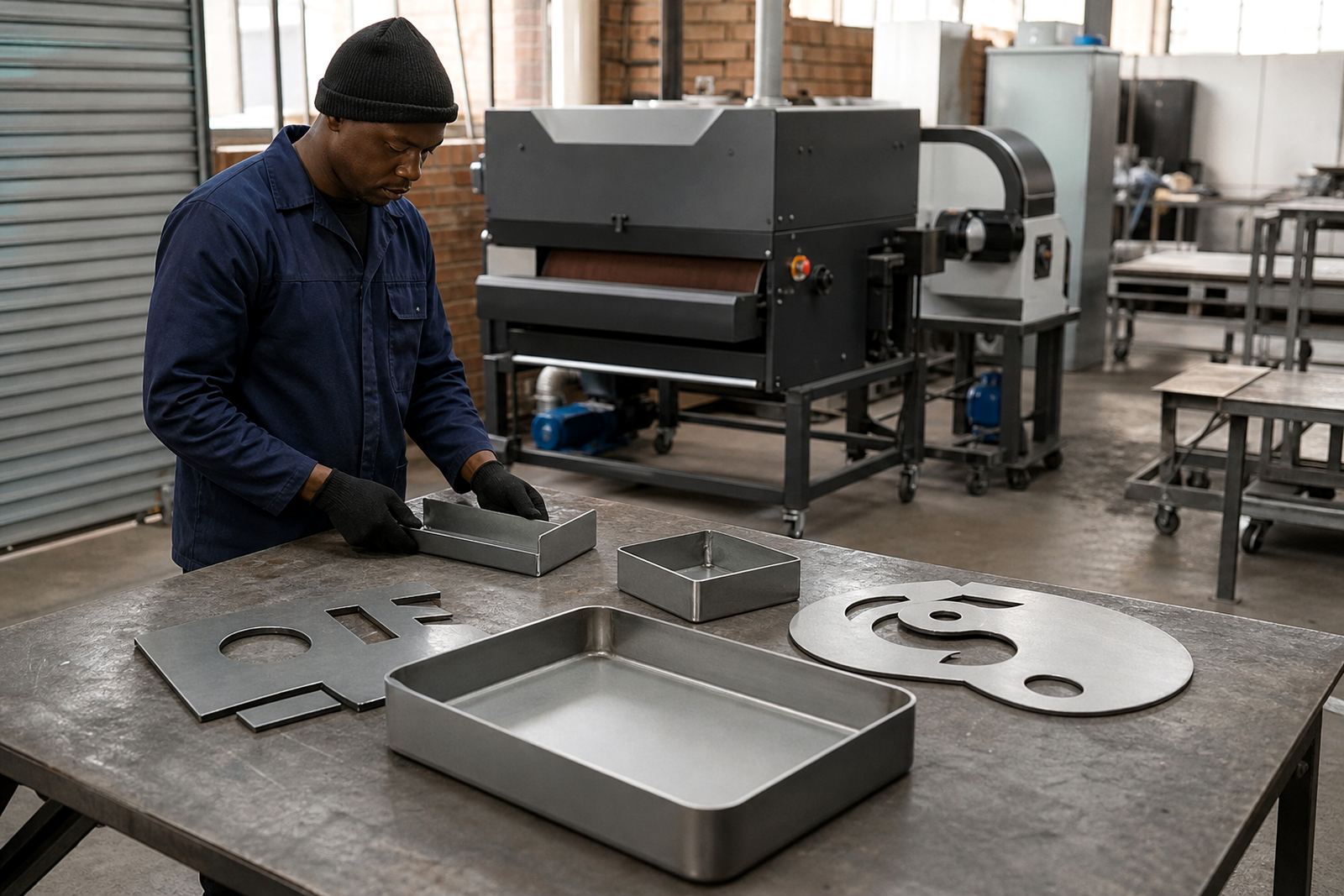
We supplied an edge-finishing and deburring machine suited to laser-cut sheet metal, set up for repeat cabinet production rather than occasional use. The configuration was chosen for controlled stock removal across common sheet thicknesses used in cabinet manufacturing. It was sized to handle recurring batches without constant manual adjustment, and to give the operators a clear, repeatable process from first part to last.
Key specifications for the installed solution included a working width suited to typical cabinet components, variable feed control for different materials, and a finishing head arrangement that could address both burr removal and edge smoothing in a single pass. The machine was positioned to support in-line handling from cutting to finishing to folding and packing. We also covered safe operation, daily cleaning points and how to recognise when abrasive components needed replacement.
What we supplied and set up included:
- Machine installation and start-up support
- Operator training for day shift and relief staff
- Process settings for mild steel flat and folded parts
- Abrasive replacement guidance and wear checks
- Sample part testing using the client’s own repeat components
Commissioning in Bellville over three weeks
The project ran over three weeks from site assessment to final handover. In week one we reviewed sample parts, checked the common thickness range and looked at the client’s current handling sequence from laser to folding. That gave us the baseline for the machine configuration and the finishing expectations for each batch type.
Week two covered delivery, positioning and first commissioning. We aligned the infeed and outfeed, checked the electrical connection points and tested the machine on sample runs. During this stage we worked through a few setting changes because the client had more variation in folded returns than first expected. Once those were sorted, the operator team could run the machine with steady output and minimal intervention.
In week three we focused on training and production handover. The team was shown how to set up for common jobs, how to inspect parts after finishing, and how to keep throughput steady during longer runs. We also recorded the machine settings for repeat work so the same cabinet parts could be processed with the same finish next time. The client wanted practical support, not a once-off install, so we left them with a clear routine and support pathway for future jobs.
Results on repeat batches
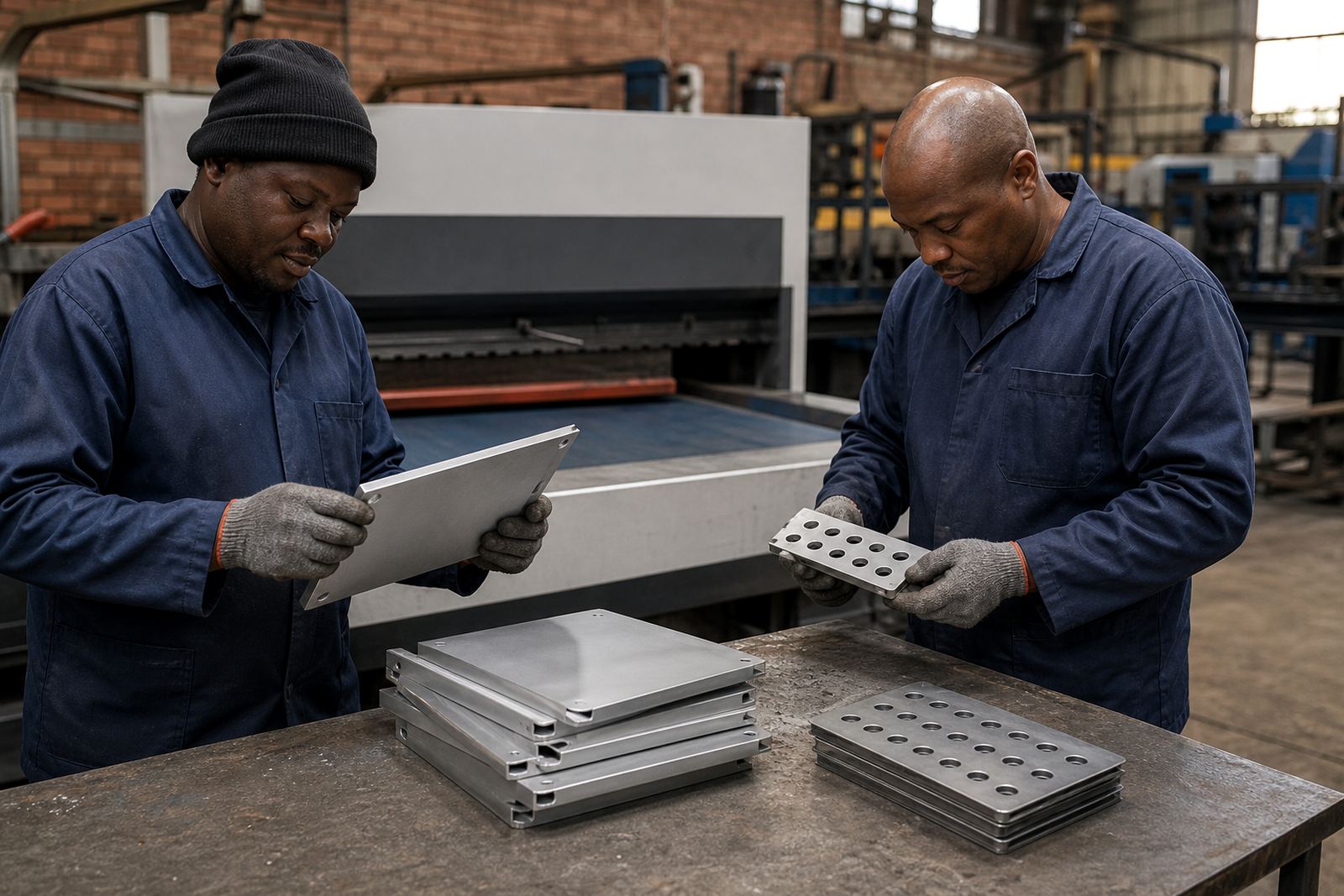
The biggest change was consistency. Repeat batches of flat and folded parts now come through with a more even finish, which reduced the number of pieces going back for hand deburring. The client reported fewer sharp edges at packing, cleaner handling during folding and better visual consistency across matched parts in the same job. That matters in cabinet production, where parts may be fitted by different installers but still need to feel the same in the hand.
There was also a practical gain in scheduling. Because the machine took over the repetitive edge work, supervisors could plan production more confidently and keep the laser and folding sections moving. The finishing step became easier to time around the rest of the line, and the team did not have to rely on one experienced operator to catch every problem piece. On the cost side, the client reduced manual touch-up time and cut down on scrap caused by rough edges during handling.
- Improved finish consistency across repeat jobs
- Less manual rework before packing and assembly
- Better handling safety for operators and installers
- More predictable production planning across shift cycles
What we would repeat on the next cabinet line
If we were doing the same project again, we would follow the same sequence: sample testing with the client’s own parts, set-up around the actual job mix, then operator training once the machine is on site and proven. That approach works because cabinet producers often have similar laser-cut parts but different line layouts, storage habits and shift patterns. A machine only helps if it matches the way the factory really runs.
We would also keep the focus on simple maintenance from day one. In South African workshops, where production can be affected by power interruptions, dust, and long operating hours, the cleaning and wear checks need to be easy enough to keep up every shift. The Bellville team responded well to a process that was practical, repeatable and not over complicated. That is the same standard we would apply at any other cabinet line in Johannesburg, Pretoria, Durban, Cape Town or Rustenburg.
For producers working with laser-cut sheet metal, the lesson was clear: if finish quality matters every week, the deburring step should be treated as part of production planning, not as an afterthought.
Key facts
| Project location | Bellville, Western Cape |
|---|---|
| Client type | Cabinet and fitted-furniture producer |
| Material range | 1.0 mm to 3.0 mm mild steel |
| Project duration | 3 weeks |
| Main outcome | More consistent finish on repeat flat and folded parts |
| Support included | Installation, training, testing and process setup |