What the fabricator needed in Wadeville
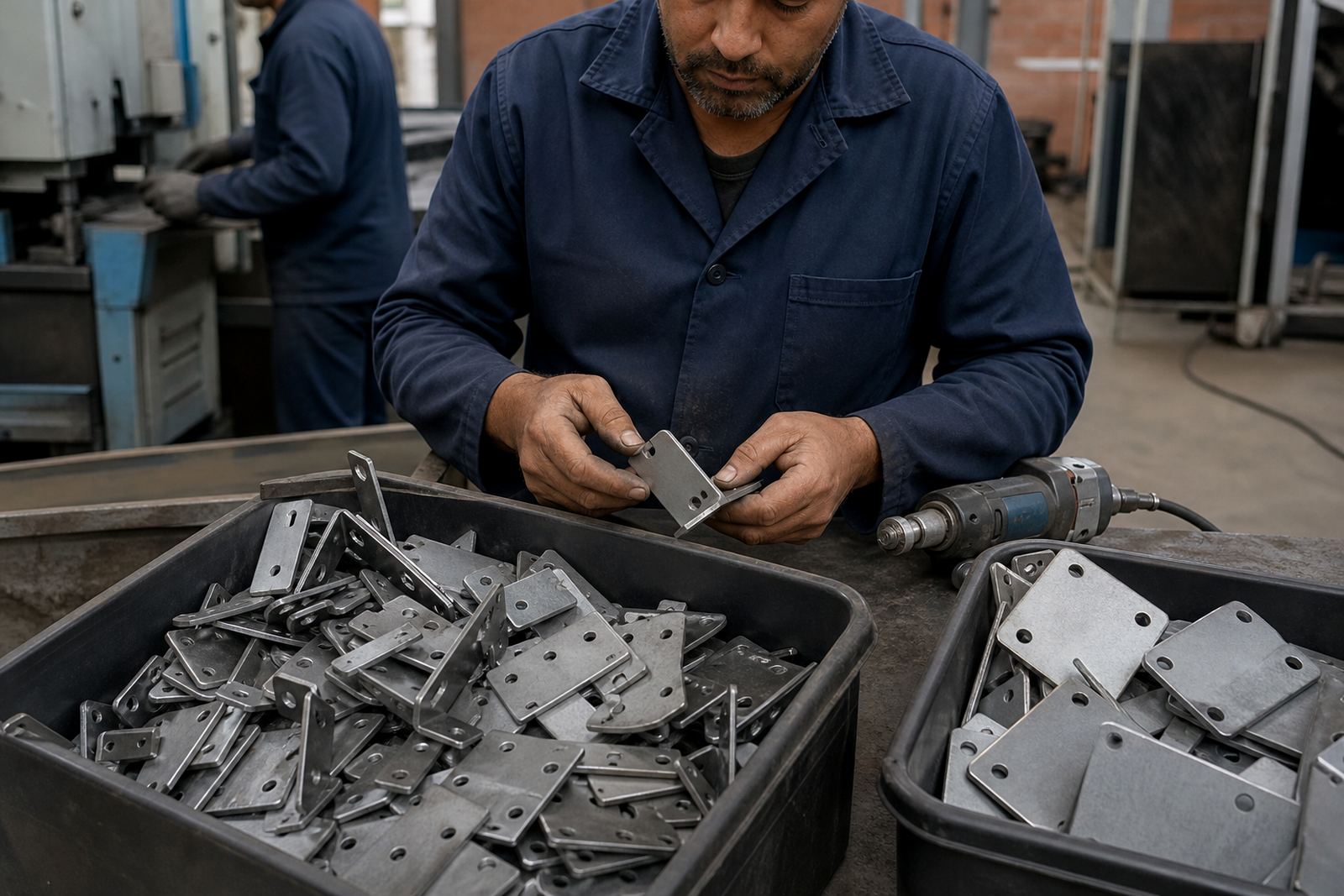
The client was a metal enclosure fabricator in Wadeville, Germiston, working on repeat panel runs for electrical and control housing work. Their laser-cut parts were coming off the table with sharp edges, light slag and the odd heavy burr on cut-outs, which meant extra sanding and edge clean-up before the next process.
The brief was simple enough: improve edge quality, keep the panels moving, and reduce the amount of manual finishing done by the team each day. They needed a machine that could handle mixed sheet sizes, cope with powdery dust from dry weather and still deliver a consistent finish on carbon steel panels between 1.0 mm and 3.0 mm. Power stability was also a concern, so the process had to suit planned production around load-shedding windows.
Constraints on the shop floor
The enclosure shop did not have spare floor space for a long and complicated line, so the machine footprint had to stay compact. There was also a steady flow of small batches and repeat orders, which meant setup time had to stay low. The team could not afford a system that needed constant fiddling when switching between 300 mm x 300 mm parts and larger flat blanks up to 1200 mm wide.
- Limited floor space in a busy fabrication area
- Mixed part sizes from small covers to full panels
- Daily production that had to keep moving, even during planned power cuts
- Need for a cleaner edge without sending every part back to hand finishing
- Operator training had to be practical and short, not a long theory session
Because the job involved enclosure panels, appearance mattered too. A rough edge on one door or side panel can hold up assembly, damage coating later on, or cause needless touch-ups. The client wanted a process that would fit into their normal sheet metal route, not something that sat outside it.
The machine and process we supplied
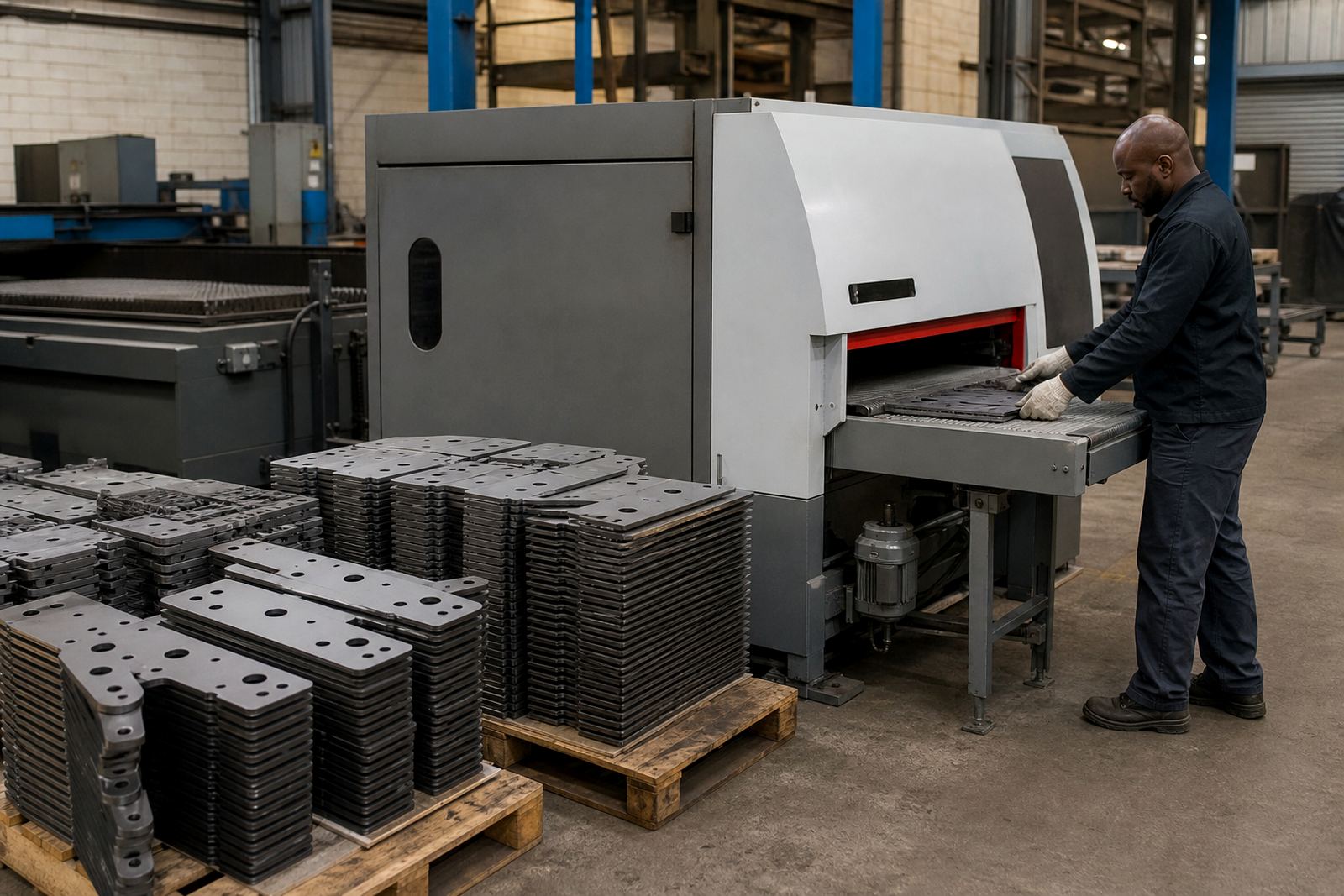
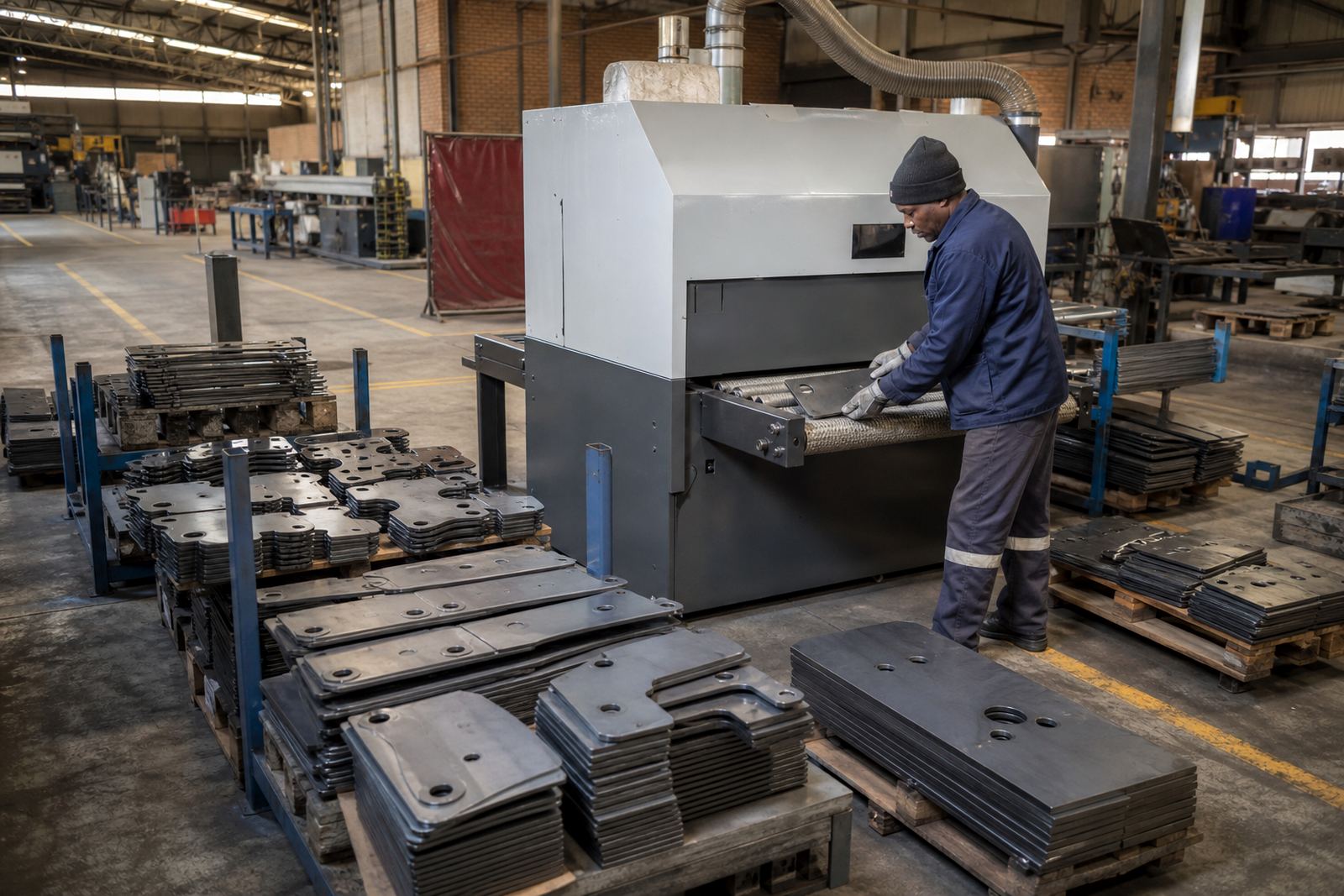
We supplied and commissioned a deburring and edge-finishing setup matched to laser-cut sheet metal. The machine was configured for dry processing with adjustable contact pressure, variable feed speed and consistent edge treatment across straight cuts and internal cut-outs. It was set up to work on mild steel sheet and common enclosure parts, with enough width for daily production batches and enough control to avoid overworking thin material.
Key setup points included a stable infeed, dust extraction connection, repeatable height control and operator-accessible settings. The team needed to move from raw laser-cut parts to finished panels in one pass where possible, then use light secondary clean-up only on the worst edges. The result was a more predictable finish and less time lost on grinders and files. In practice, that is what mattered most.
- Suitable for laser-cut sheet metal parts and enclosure panels
- Set for routine work on 1.0 mm to 3.0 mm material
- Compact footprint for a busy Wadeville workshop
- Variable settings for different part thicknesses and burr levels
- Dust control tied into the local extraction system
Installation and operator handover in 2 weeks
The project ran over 2 weeks from delivery to handover. In week one, we placed the machine, checked the power and extraction connections, and walked the team through the first setup steps. In week two, we fine-tuned the feed rate and contact settings on real production parts, then trained operators and the workshop lead on daily checks, cleaning and changeover. Nothing fancy, just a proper working handover.
The service team also covered preventive care points so the machine would keep performing on a normal maintenance cycle. That included belt wear checks, brush condition, dust removal and what to watch for when cutting heavier gauge batches. The client appreciated that the training was tied to their own panels, not a generic demo part.
- Delivery and placement completed in week 1
- Commissioning and process tuning completed in week 2
- Operator training done on actual enclosure panels
- Maintenance points explained for daily and weekly checks
Results on daily panel batches
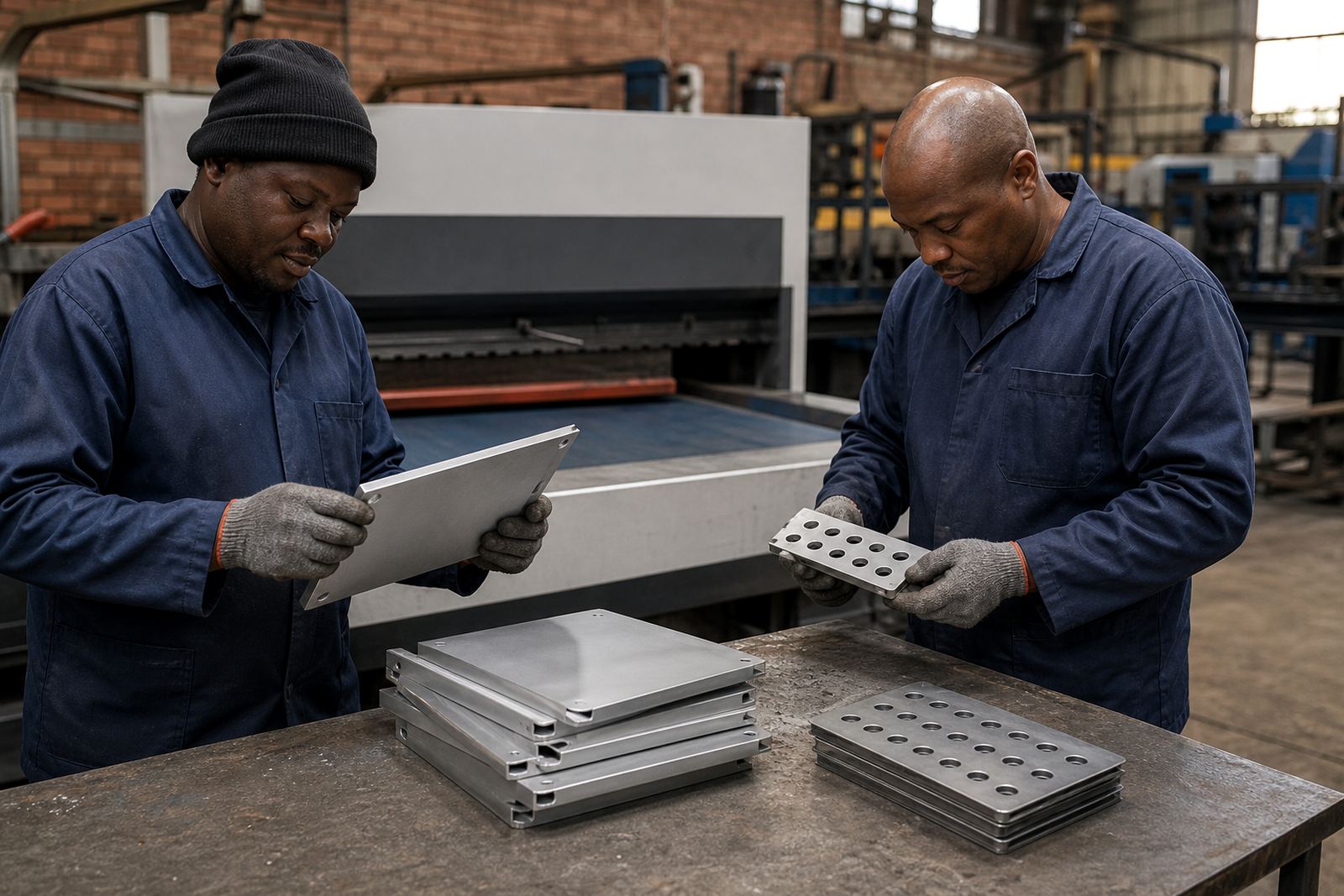
Once the line settled in, the fabricator saw better edge consistency across daily batches and far less manual finishing before assembly. Burrs and sharp edges were reduced to a level the team could manage with only light touch-up on selected parts. That saved time, but it also improved the feel and fit of the panels going into assembly and coating.
The biggest gain was consistency. A batch of 40 or 60 panels no longer needed the same amount of hand work from start to finish, which made planning easier for the floor supervisor. They also noticed that operators could keep pace during busy days without stacking unfinished work at the back of the shop. Small improvement, but it added up quickly.
After the first production runs, the client reported less rework and a cleaner edge on repeat orders for enclosure doors, side panels and mounting plates. That meant fewer delays between laser cutting and the next process, which is exactly where a good deburring machine should earn its keep.
What we would do again for a similar shop
If we were doing the same job again for another enclosure fabricator, we would take the same practical route: keep the machine matched to the sheet thickness range, test on real parts first, and tune the process around the team’s actual daily output. That approach saves time and avoids over-specifying equipment that never gets used properly.
We would also build in a clear maintenance plan from the start. In a South African workshop, especially where dust, heat and power interruptions are part of life, regular checks matter. The machine works best when operators know what normal sounds and finishes look like, and when support is close enough to act before a small issue becomes downtime. That is where our Wadeville base helps, with support into Johannesburg, Pretoria, Durban, Cape Town and Rustenburg when needed.
For this client, the outcome was straightforward: cleaner edges, less hand finishing and a smoother daily flow. That is the kind of result that keeps production steady without making life harder for the team.
Key facts
| Client type | Local enclosure fabricator in Wadeville, Germiston |
|---|---|
| Project scope | Deburring and edge-finishing for laser-cut sheet metal panels |
| Material range | 1.0 mm to 3.0 mm mild steel sheet |
| Timeline | 2 weeks from delivery to handover |
| Main outcome | Reduced manual finishing and improved edge consistency |
| Support areas | Wadeville, Germiston, Johannesburg, Pretoria, Durban, Cape Town, Rustenburg |