What the Jet Park team needed to solve
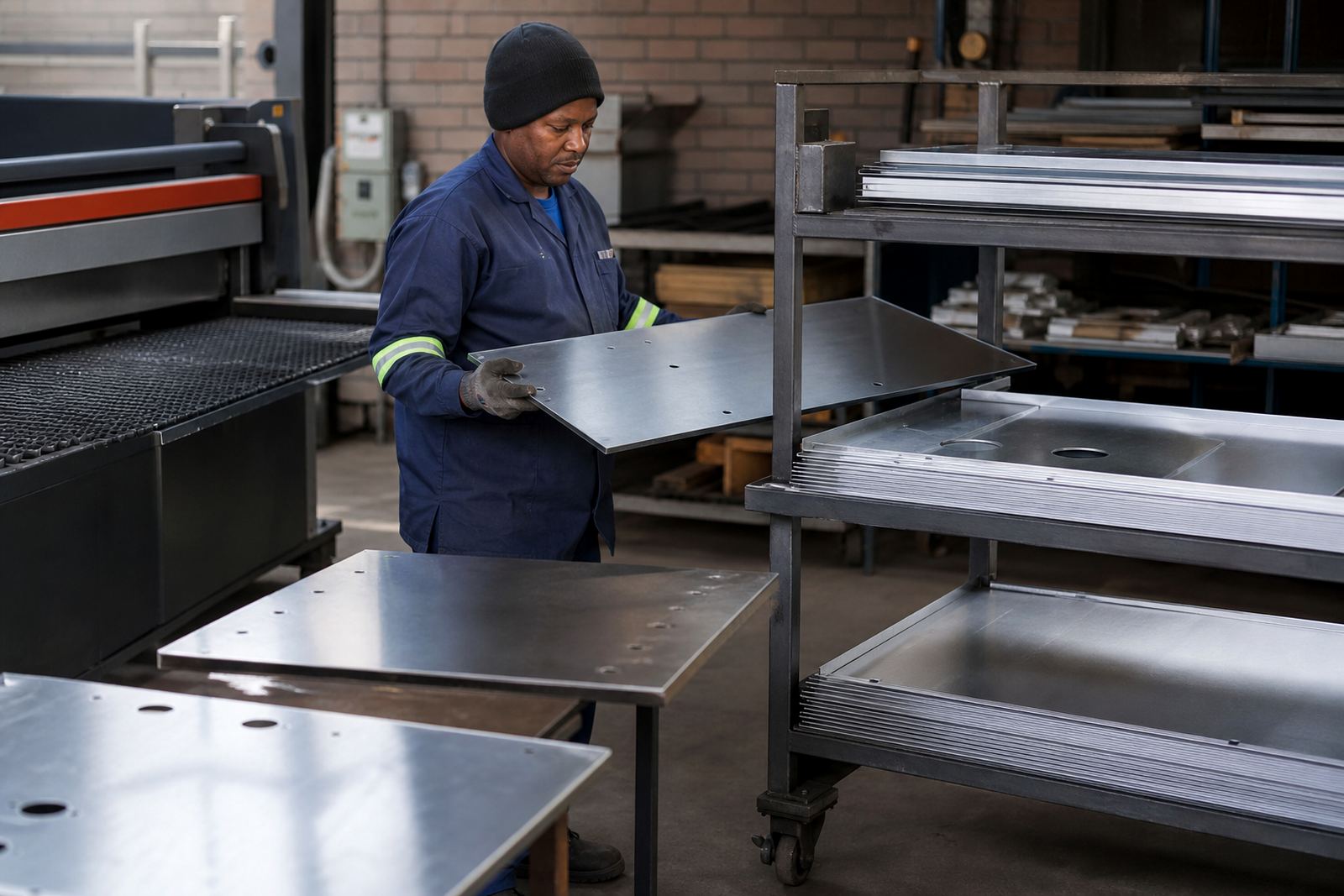
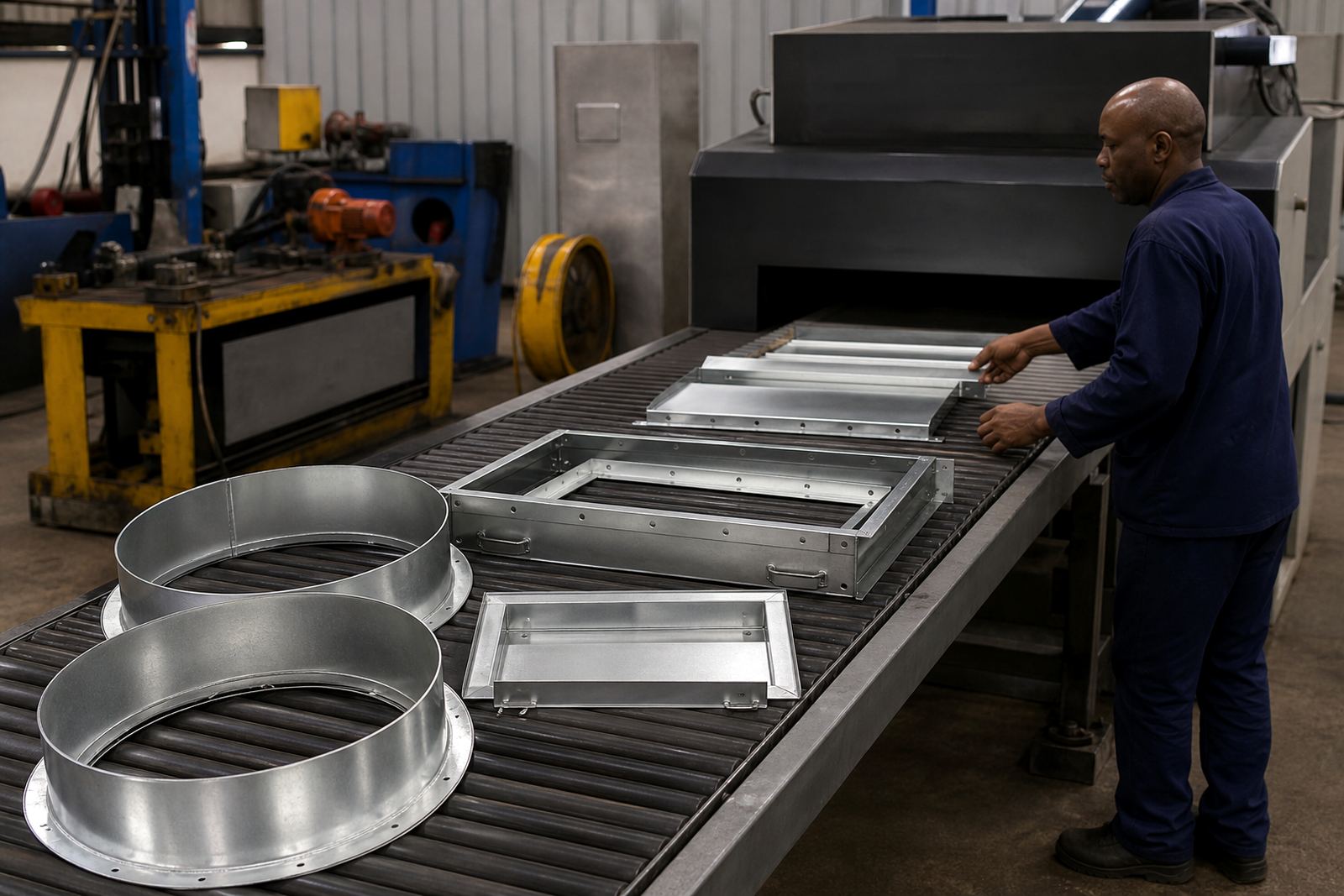
The client was a cabinet and component fabricator in Jet Park, working with laser-cut sheet metal for panels, brackets, frames and small assembly parts. Their issue was not cutting accuracy, it was what happened after the laser. Burrs, sharp edges and light heat marks were leading to extra hand work before powder coating and spray paint. On repetitive parts the finish varied from batch to batch, and the team was spending too many hours on files, pads and edge clean-up.
The brief was clear: reduce hand finishing, keep the edges paint-ready, and do it on a machine that could handle repeat jobs without slowing the line. They also needed a practical solution for an industrial site with normal South African conditions to contend with, including power interruptions, dust in the workshop and a steady mix of short runs and repeat work. The line had to suit a team that wanted simple controls, quick changeover and dependable output.
- Client type: cabinet fabricator using laser-cut sheet metal
- Location: Jet Park, Germiston
- Primary pain point: manual deburring and inconsistent edge quality
- Goal: faster paint-ready finishing with less rework
The finish spec we worked to
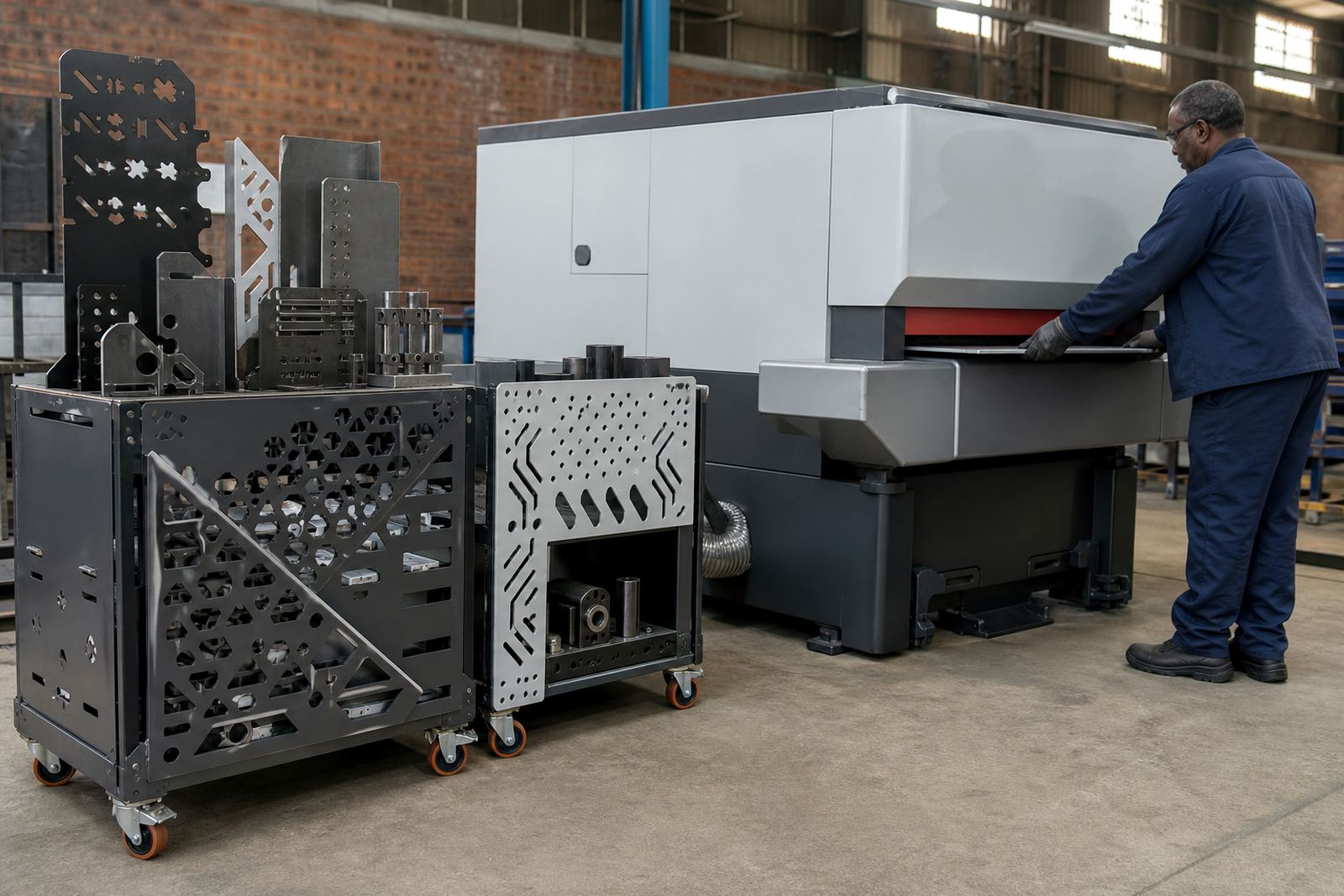
The parts were mainly mild steel panels and formed components, with some batches needing a cleaner edge for coating and safe handling. We looked closely at the cut edge quality, burr height, part size range and the volume of repetitive pieces moving through the workshop. The answer was a deburring and edge-finishing machine set up for sheet metal after laser cutting, with a stable feed and a finish that stayed consistent from the first part to the last.
We focused on practical settings rather than complicated options. The machine was configured to handle common cabinet parts, smaller brackets and flat sheet components without excessive setup time. It was also important that the line could sit within an existing workflow, so the operator could move from cutting to finishing to coating with less handling. In a plant where shift timing matters, even small delays can throw off the day, so the process needed to be predictable.
- Material focus: laser-cut mild steel sheet metal
- Typical part range: panels, brackets, flat components
- Target outcome: paint-ready edge quality and fewer sharp edges
- Operating need: repeatable finishing on batches and short runs
What we supplied and how it was set up
We supplied a deburring and edge-finishing machine matched to the workshop's part mix, along with installation support and operator training. The installation was planned around their production space in Jet Park so the machine could be placed close to the laser output and near the coating preparation area. That reduced unnecessary movement and kept parts flowing in one direction instead of criss-crossing the floor.
Our team also checked the practical side of the setup: power supply stability, extraction needs, safe loading space and the working height for operators who would be using the machine every day. We spent time on the first test parts, checking whether the edge was clean enough for coating without a second manual pass. Once the settings were locked in, the team had a clear standard for their repeat jobs.
- Machine installation with production-floor layout support
- Operator training for daily use and changeover
- Sample part testing before full production use
- Process checks for safe loading, finish quality and throughput
Timeline from first sample to full production
The project ran over four weeks from initial review to stable production use. Week one covered the brief, part samples and a check of the material types and volumes. Week two was used for final machine selection, layout planning and preparation on site. Week three covered delivery, installation and initial operator training. Week four was the important one, where the team ran repeat jobs and confirmed the settings on their usual cabinet parts.
Because the client was processing the same part families often, the learning curve was short. The main focus was on getting the settings right for each thickness and keeping the finish consistent through the batch. There was no need for a long trial period. The team wanted a practical result quickly and that is what they got, with the machine moving into daily work shortly after commissioning.
- Week 1: brief, samples and process review
- Week 2: final selection and layout planning
- Week 3: delivery, installation and training
- Week 4: repeat runs and production sign-off
What changed on the shop floor
After installation, the biggest change was the drop in hand-finishing time. Parts came off the machine with cleaner edges, so the team no longer needed to spend as long removing burrs before coating. That improved output on the main cabinet runs and reduced the amount of touch-up work going to the next process. It also helped the finish look more even, which mattered on visible parts that had to go out paint-ready.
The other benefit was consistency. Instead of relying on how hard one operator filed an edge on a given day, the machine delivered a more even result across a batch. For a fabricator working to deadlines and repeat orders, that means fewer hold-ups, less scrap risk and better planning around the coating team. It also made training easier because the process became a defined step, not a judgement call.
- Less hand deburring after laser cutting
- Cleaner, more uniform edges before paint
- Better batch consistency across repetitive parts
- Reduced rework between cutting and coating
Why this setup worked for a South African fabricator
This type of line suits local workshop conditions because it is built for real production, not one-off testing. Cabinet fabricators in Johannesburg and the East Rand often need a machine that can keep up when orders come in fast and electricity supply is not always ideal. We looked for a setup that was simple to run, easy to maintain and suitable for a busy team working normal shifts.
The client also needed a solution that would not add more admin to the day. With planned maintenance, spare parts support and training, the machine could be folded into normal workshop routines. That matters in a place like Jet Park where floor space is valuable and production changes can happen quickly. The right finishing step can save hours each week, and in a tight workshop that is real value.
- Suitable for busy workshop conditions and repeat work
- Simple operation for day-to-day production teams
- Easy to include in maintenance planning
- Practical for Gauteng fabrication sites with limited spare time
What we would do again on the next similar job
If we were doing a similar cabinet project again, we would take the same approach: review the parts first, test samples early and set the machine up around the actual flow of the workshop. That keeps the install practical and avoids buying a finish process that looks good on paper but slows the plant down. We would also spend time on the repeat parts first because that is where the fastest gain usually sits.
For this kind of job, the result comes from matching the finishing step to the part mix, not just choosing a machine size. The Jet Park team needed cleaner edges, better paint readiness and less time on hand work. The setup delivered that, and it gave them a more predictable process for the batches that move through the shop every week.
- Start with sample parts and real production needs
- Plan the machine around the workshop flow
- Train operators on repeat jobs first
- Focus on consistency before chasing extra complexity
Key facts
| Project location | Jet Park, Germiston |
|---|---|
| Client type | Cabinet and component fabricator |
| Material processed | Laser-cut sheet metal |
| Main issue | Hand-finishing time and inconsistent burr removal |
| Solution supplied | Deburring and edge-finishing machine with installation and training |
| Implementation time | 4 weeks from brief to production use |