
The brief from a busy Centurion panel shop
The client was a panel fabrication shop in Centurion handling mixed production for electrical enclosures, covers and light structural sheet metal. Their laser department was keeping pace, but the parts were arriving at the press brake with sharp burrs, heat marks and the odd raised edge that caused handling problems and finish defects later in the line. They wanted a cleaner handover from laser cutting to bending and coating, plus a process that did not slow the shop down during peak runs.
The brief was clear: improve edge quality on laser-cut mild steel and stainless steel, reduce manual filing, and keep the floor team moving. They also needed something practical for a local workshop, with straightforward controls, manageable consumables, and support that would not leave them waiting when production was already behind. In Centurion that matters because many shops are running on tight delivery windows and every delayed batch pushes the rest of the week slighlty off balance.
- Typical material: mild steel and stainless steel sheet
- Thickness range: 1 mm to 6 mm
- Output need: faster flow into bending and coating
- Goal: less hand finishing and fewer edge-related faults
What was getting in the way on the shop floor
The main constraints were not unusual, but they were serious enough to affect throughput. Parts were cut accurately on the laser, then paused for deburring by hand when the team found burrs on long edges, small tabs and internal cut-outs. That manual step created inconsistent results, especially on batches with mixed part sizes. It also tied up skilled staff who should have been on pressing, folding or assembly.
There was also the issue of coating preparation. The client wanted a cleaner edge before powder coating so they could avoid sharp points telegraphing through the finish, and reduce the chance of chips or flaking around the corners. On top of that, the workshop had to work through load-shedding periods and local power interruptions, so they needed equipment that could be planned into the day without constant stop-start surprises. The machine had to fit neatly into the existing route from cutting to bending, with enough capacity to keep up when the laser was busy.
- Manual deburring was slowing the line
- Edge inconsistency was affecting coating quality
- Skilled labour was being used on repetitive finishing work
- Production had to remain manageable during power interruptions
The machine and process we supplied
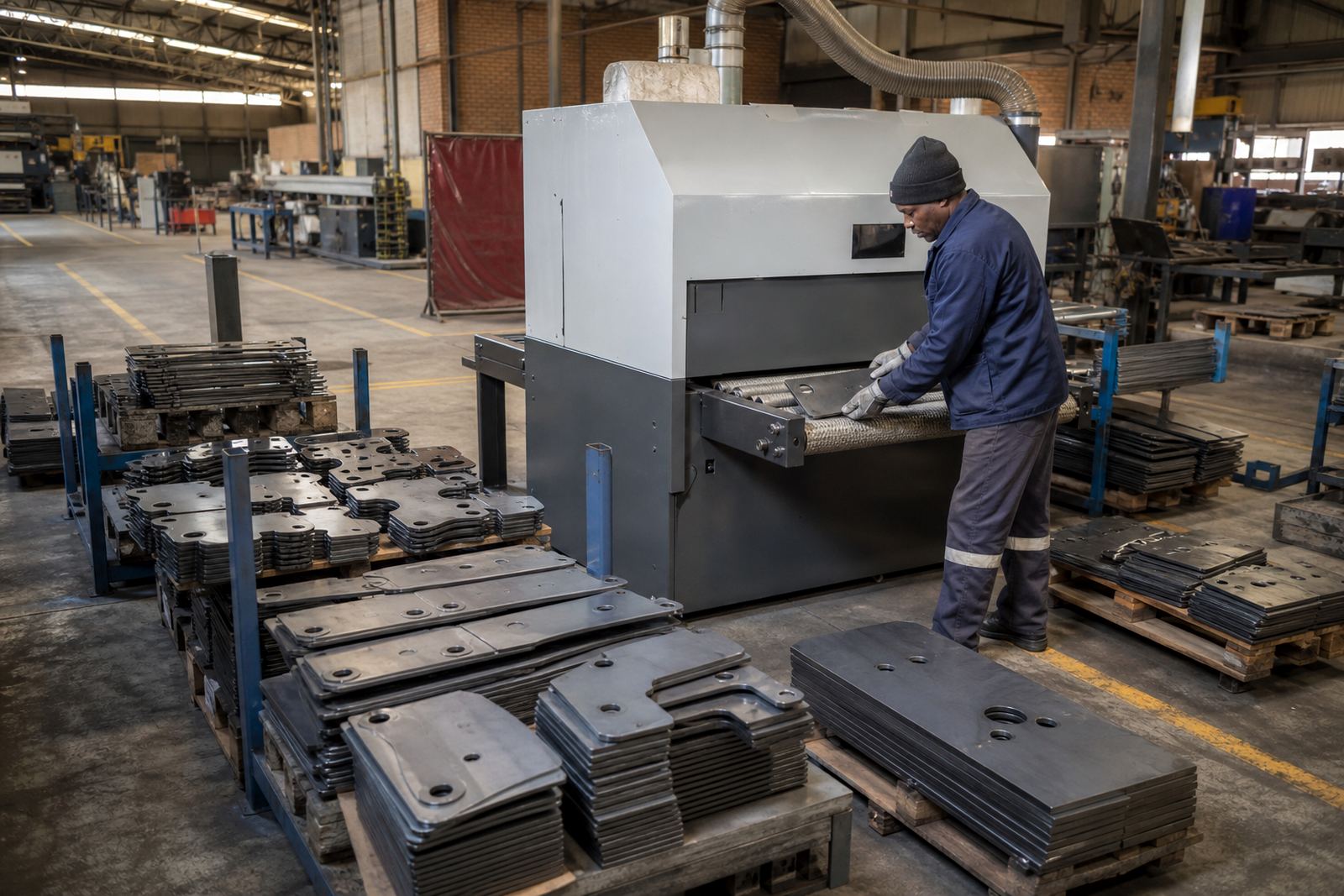
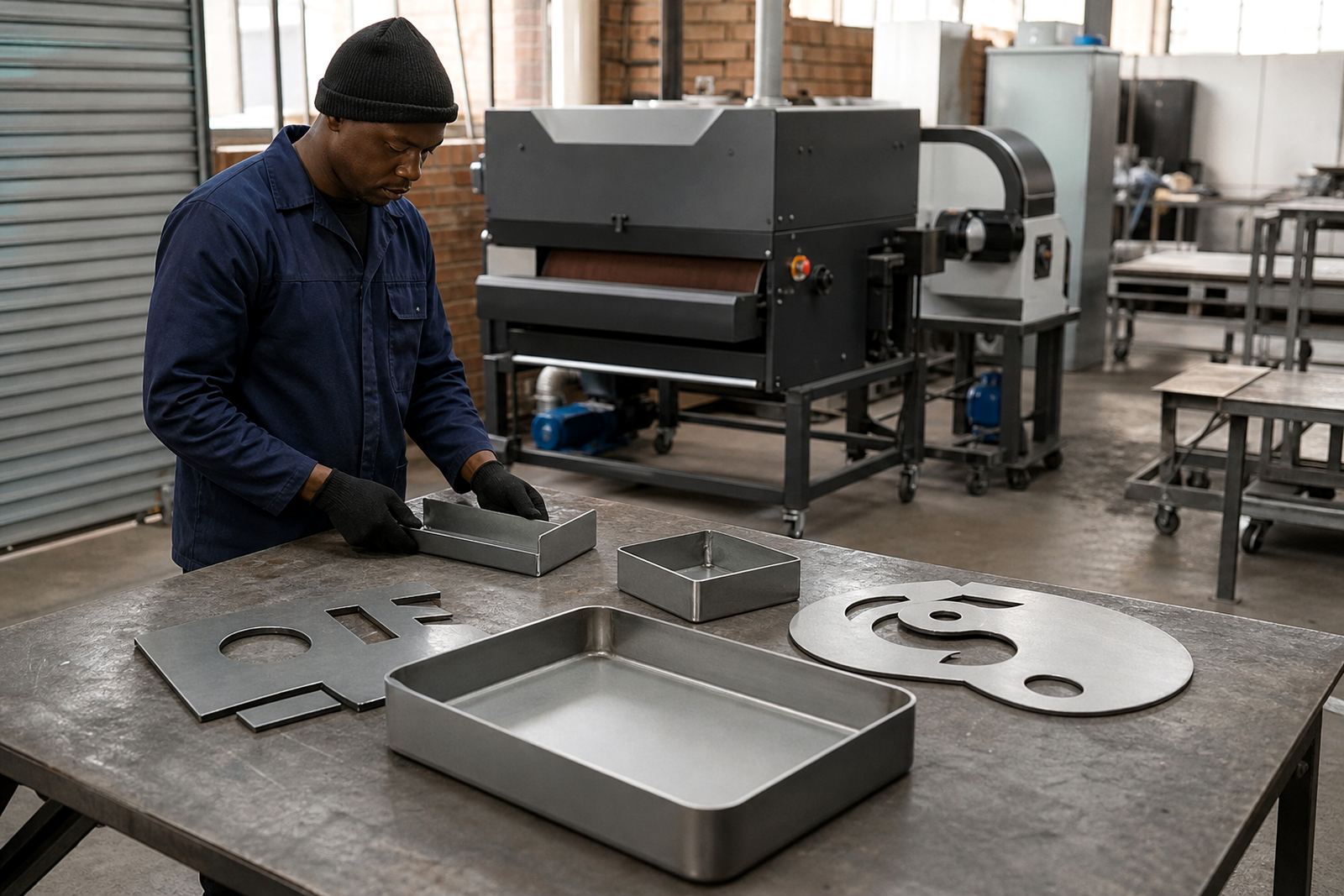
We supplied a deburring and edge-finishing machine suited to laser-cut sheet metal, configured for a Centurion production environment where the same line may handle short runs and repeat work in the same shift. The machine was set up to remove burrs, soften sharp edges and create a more consistent finish before bending or coating. We focused on a practical setup rather than an overcomplicated one, with controls the operators could learn quickly.
The key technical points were matched to the client’s material mix and part sizes. The machine handled flat sheet parts from 1 mm to 6 mm thickness, with enough table support for common panel dimensions. We also set process expectations around part handling, feed direction and finish targets, because edge-finishing is only as good as the discipline around it. The workshop team wanted something that could be used every day without constant adjustment, and that is exactly how we approached the install.
- Designed for laser-cut sheet metal parts
- Suitable for mild steel and stainless steel
- Consistent edge softening before bending and coating
- Simple operating sequence for shop-floor staff
Installation, testing and operator training
The installation was completed in stages over two weeks. First we positioned the machine in line with the existing laser output and finishing area, then we checked material flow from the laser to the deburring station and onward to bending. After that we ran sample parts, adjusted feed settings and reviewed the finish on long straight edges, internal cut-outs and heavier burr zones. The final step was operator training for the day shift and the supervisors who would handle changeovers.
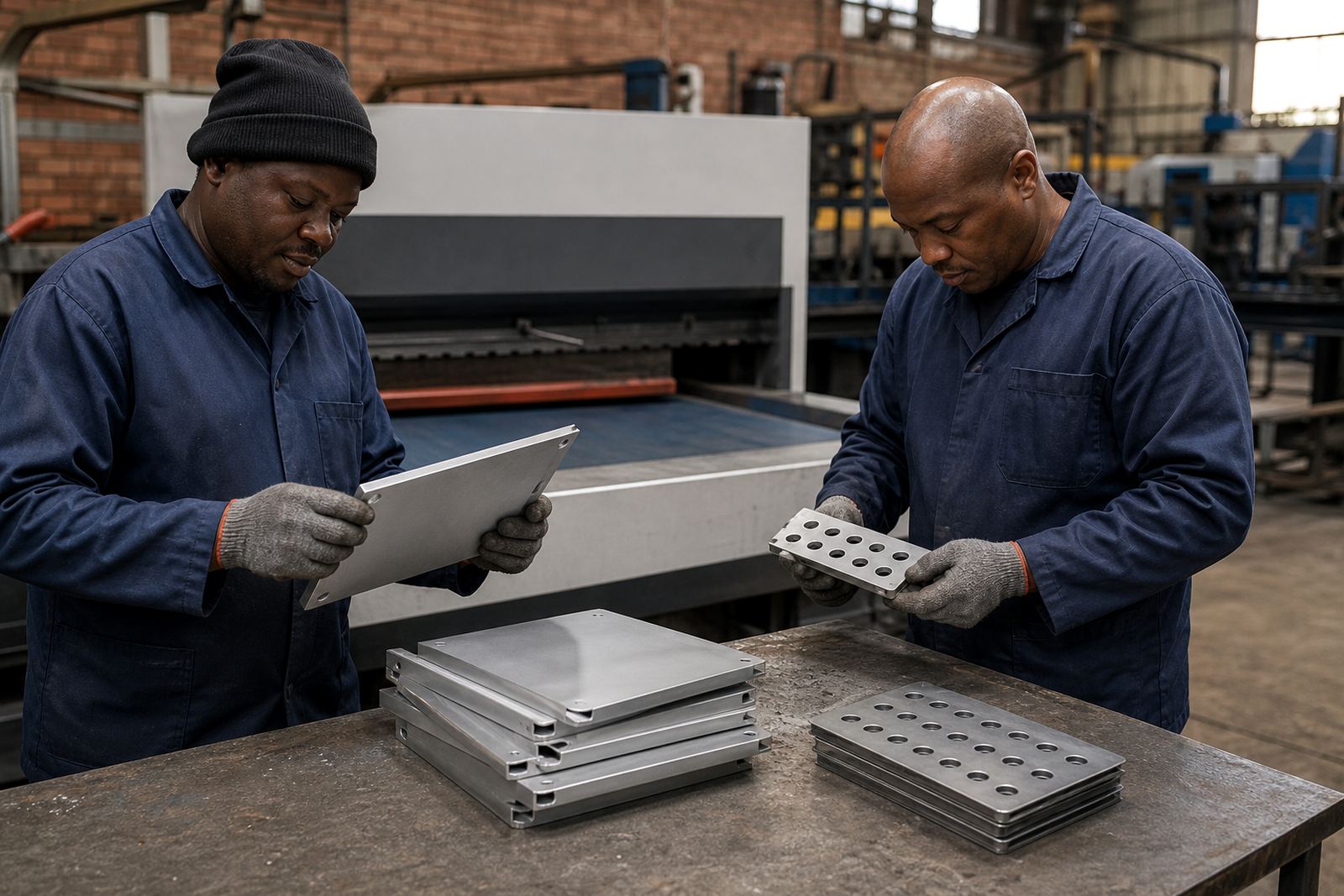
Training covered safe loading, basic cleaning, wear inspection and when to replace abrasive tooling. We also showed the team how to spot the difference between a burr that needed a second pass and a part that was already ready for the brake. That sounds simple, but in a busy panel shop it saves time and keeps the finish consistent. Ayshea, one of our applications team members, worked through the sample parts with the client so the setup matched their own production mix, not a generic test piece.
- Installation and commissioning: 2 weeks
- Sample part testing: same week as install
- Training: operators and supervisors
- Checks covered finish, handling and repeatability
Results seen after the first production runs
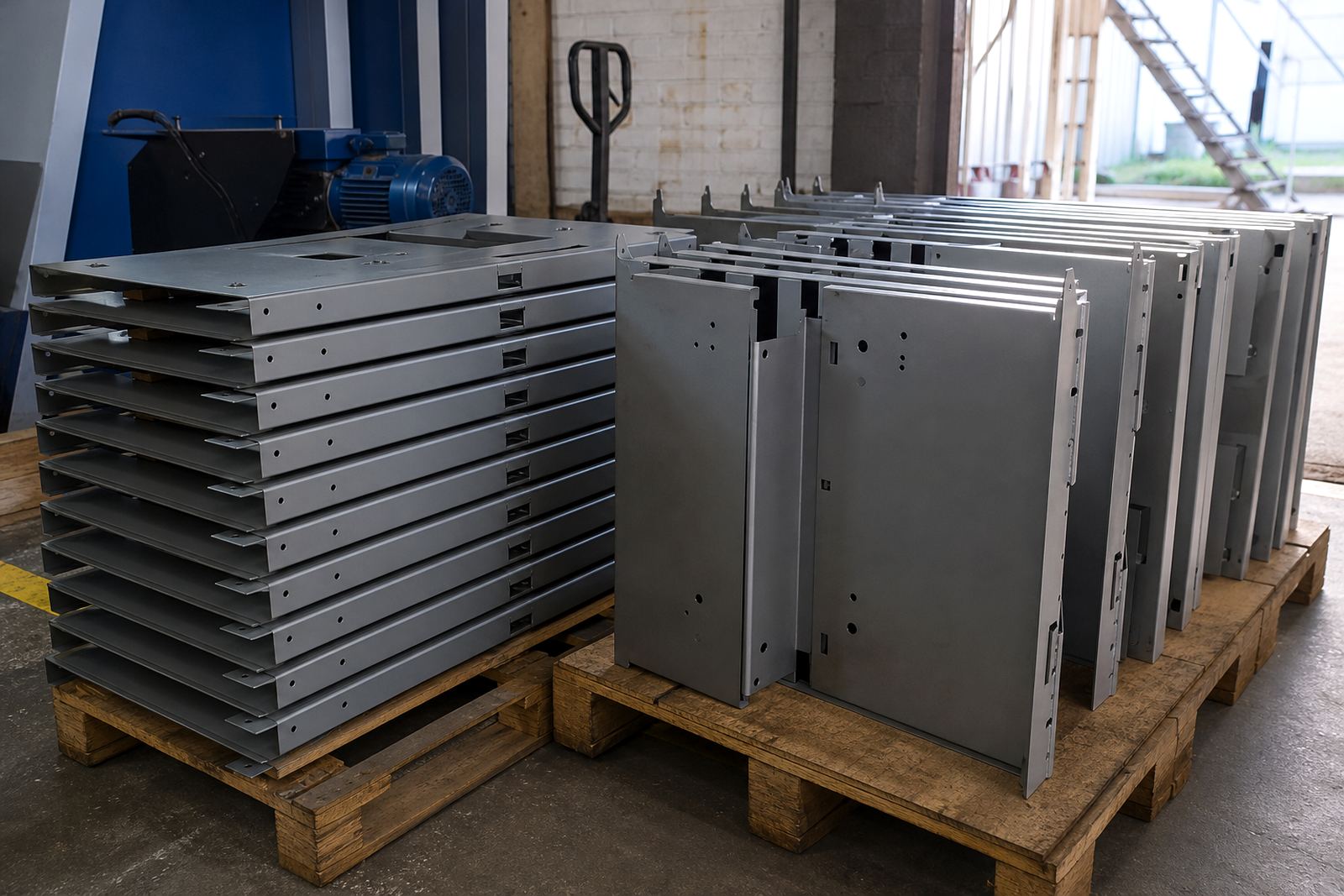
Once the machine was in daily use, the change was visible in the flow of work. Parts moved faster from laser cutting into bending because the manual clean-up step was reduced. The press brake team reported fewer issues with sharp edges while handling smaller components, and the coating side saw fewer touch-up requests linked to edge defects. That meant less rework, fewer interruptions and a cleaner handover from one department to the next.
The client also gained more predictable output. Instead of waiting for individual parts to be filed by hand, batches could be processed through the same finishing route and released to the next stage with a similar surface condition. In practical terms, that helped the panel shop plan the day better and use labour where it adds the most value. They were not chasing every burr by hand anymore, and that made a real difference to the pace of the shop.
- Faster part flow from laser to bending
- Less manual filing and hand finishing
- Better consistency before coating
- Lower rework on sharp edges and burrs
What we would repeat on another panel line
If we were doing the same job again, we would follow the same sequence: check the sheet mix, test sample parts early, and place the machine so it sits naturally between laser output and downstream bending. That layout works well in panel shops because the finishing step becomes part of the normal route rather than a separate bottleneck. We would also keep a close eye on abrasive life during the first month, then set a maintenance rhythm based on actual production, not guesswork.
For shops in Centurion, Johannesburg or Pretoria, the lesson is simple. If your laser is producing accurate parts but your finishing area is holding them back, the fix needs to be practical, not flashy. A good deburring setup should reduce handling time, protect the coating process and keep the team moving. This project did exactly that, and it is the kind of result we aim for on every panel shop installation.
Key facts
| Project location | Centurion, Gauteng |
|---|---|
| Client type | Panel shop for fabricated sheet metal |
| Material range | Laser-cut mild steel and stainless steel, 1 mm to 6 mm |
| Timeline | 2 weeks from install to commissioning |
| Main outcome | Faster flow from laser cutting to bending and coating |
| Core supply | Deburring and edge-finishing machine with training and setup support |