The Springs brief and what was slowing production
The client was a medium-sized steel fabricator in Springs, supplying cut parts for general metalwork and light assembly. Their laser work was sound, but the finishing stage was holding the job back. Staff were spending too much time on manual grinding, edge knock-off and cleanup, which meant the laser bed was not the only bottleneck, finishing was too.
The brief was straightforward. They wanted a repeatable finish on daily sheet runs, less variation between operators and a process that would not slow down when orders came in late. They also needed to keep the line practical for South African workshop conditions, including load-shedding planning, dust control and enough throughput for mixed jobs rather than one product all day.
- Client type: production fabricator
- Town: Springs, Gauteng
- Work mix: laser-cut mild steel sheets and parts
- Main pain point: manual grinding taking up labour and time
Constraints on the floor and in the shift plan
The workshop had limited space between cutting, sorting and dispatch, so any new machine had to fit into a tight flow without forcing a full layout change. They also wanted a machine that could be run by trained operators, not only senior tradesmen, because the finishing station needed to work across shifts. Like many sites in Gauteng, they had to plan around power interruptions and keep a clear eye on maintenance windows.
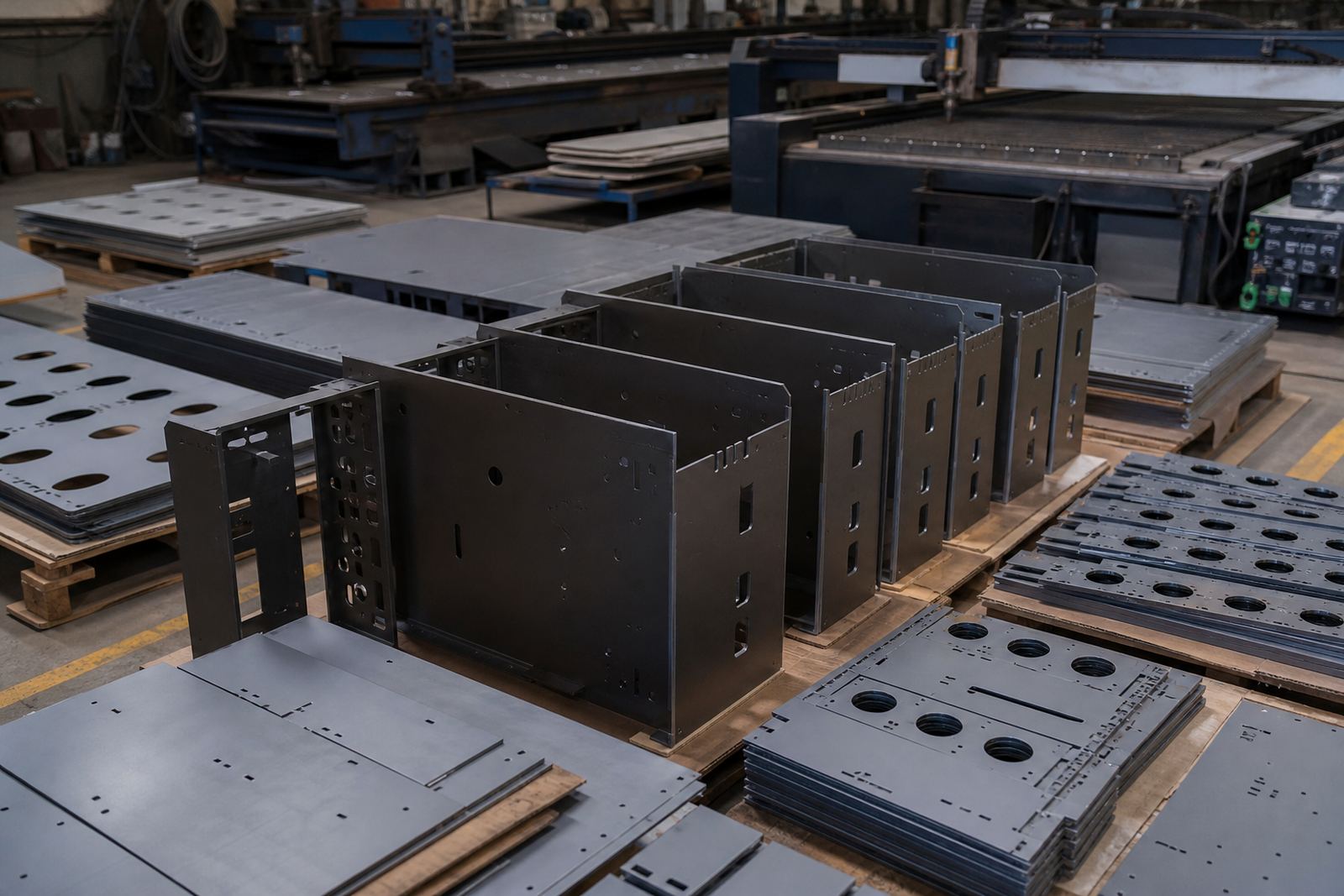
Another issue was part variation. Their sheets included different thicknesses, edge conditions and hole patterns, so the finishing process had to cope with a wide mix of flat components without damaging the part or chasing every piece by hand. Because the site handled regular daily production, uptime mattered more than fancy extras. What they needed was steady output, not a machine that only works well on one special sample.
- Space available was tight and had to stay close to the laser output area
- Operators needed a short learning curve
- Process had to handle mixed sheet sizes and part shapes
- Downtime had to be planned around production runs and power events
What we supplied and how we set it up
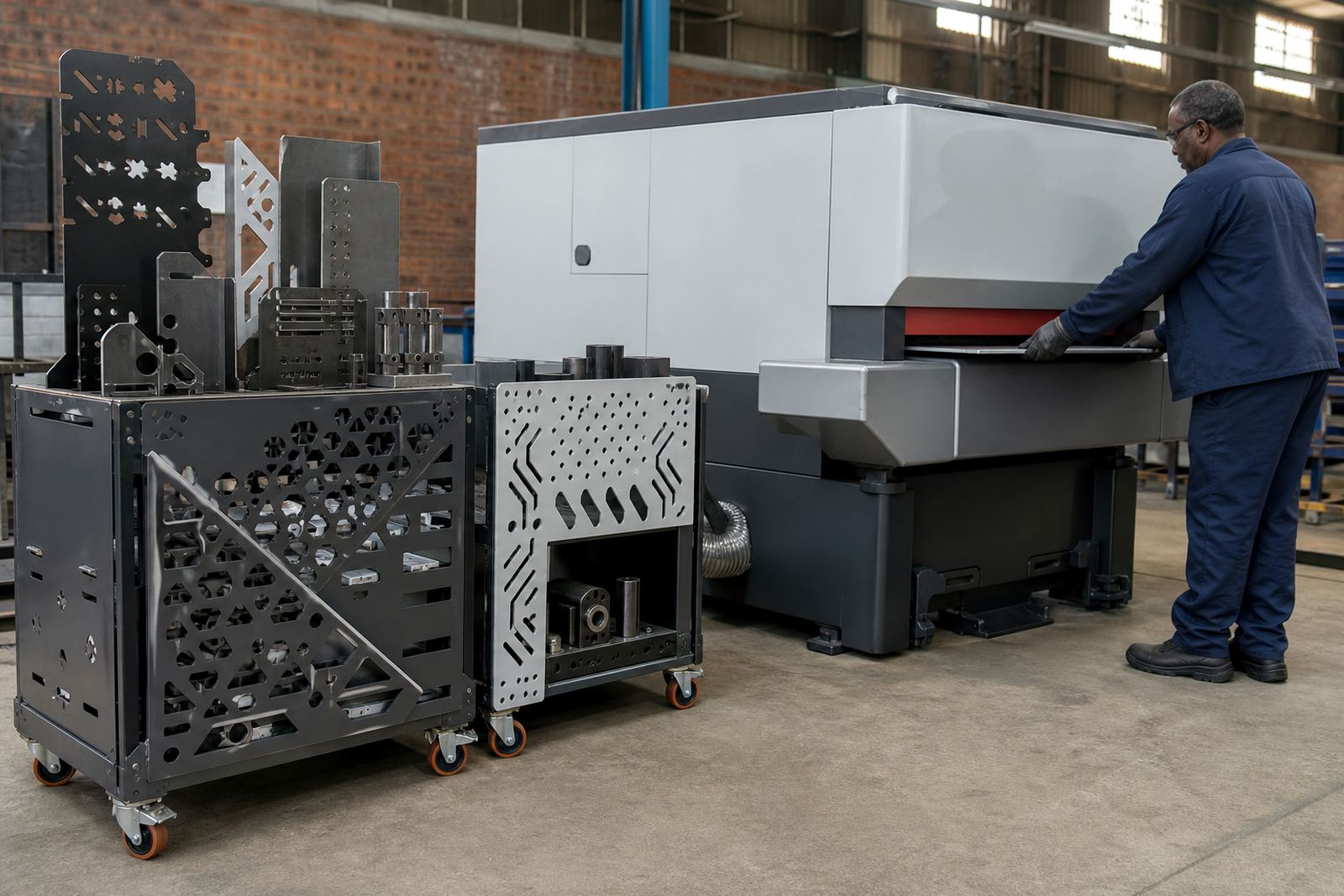
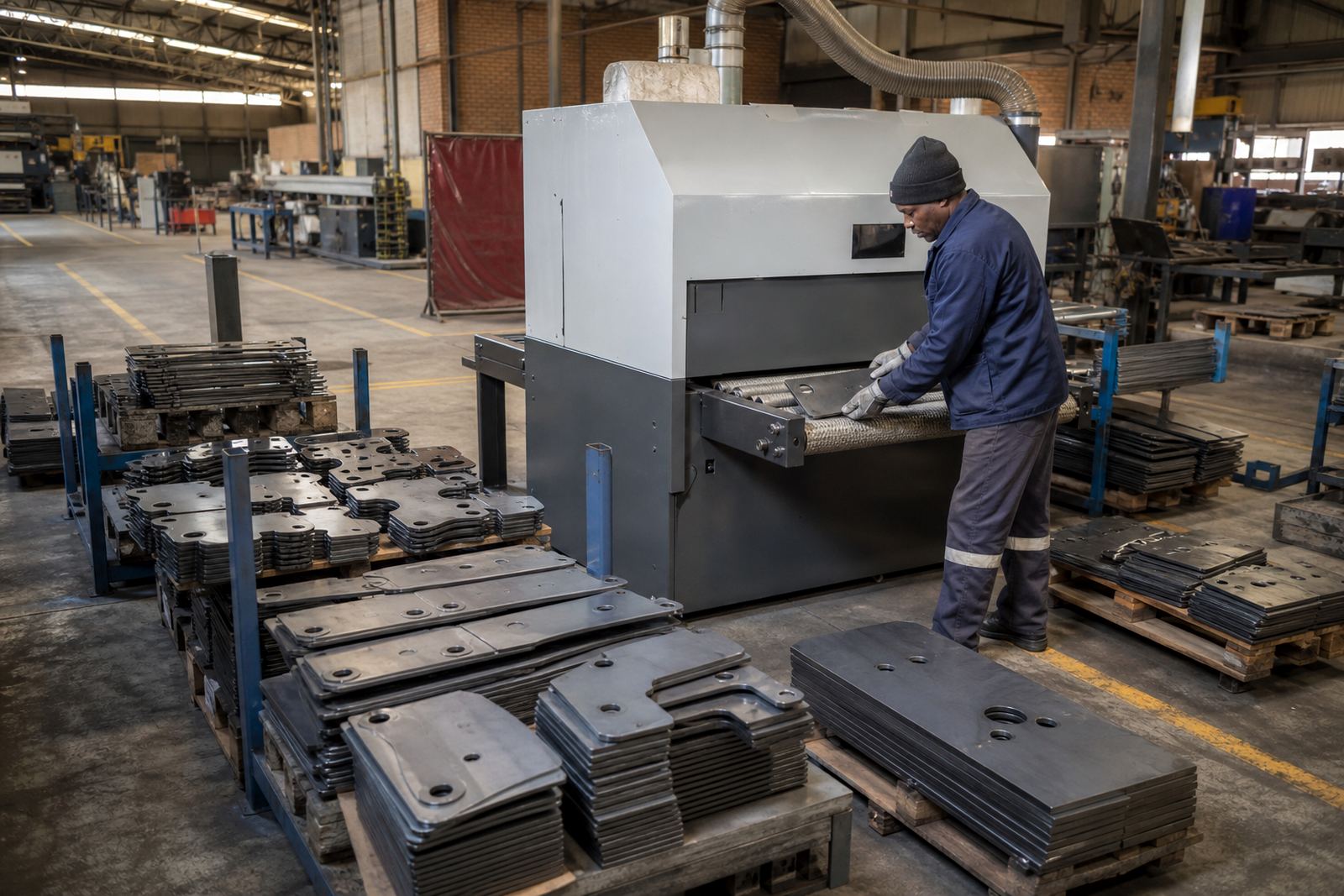
We supplied a deburring and edge-finishing machine selected for laser-cut sheet metal, along with the practical setup work needed to get it running in the line. The machine was specified for flat sheet parts with consistent feed, and the finishing action was set to remove burrs, soften sharp edges and improve surface feel before downstream handling. For a fabricator working in daily batches, that means fewer sharp edges going into packing, welding or assembly.
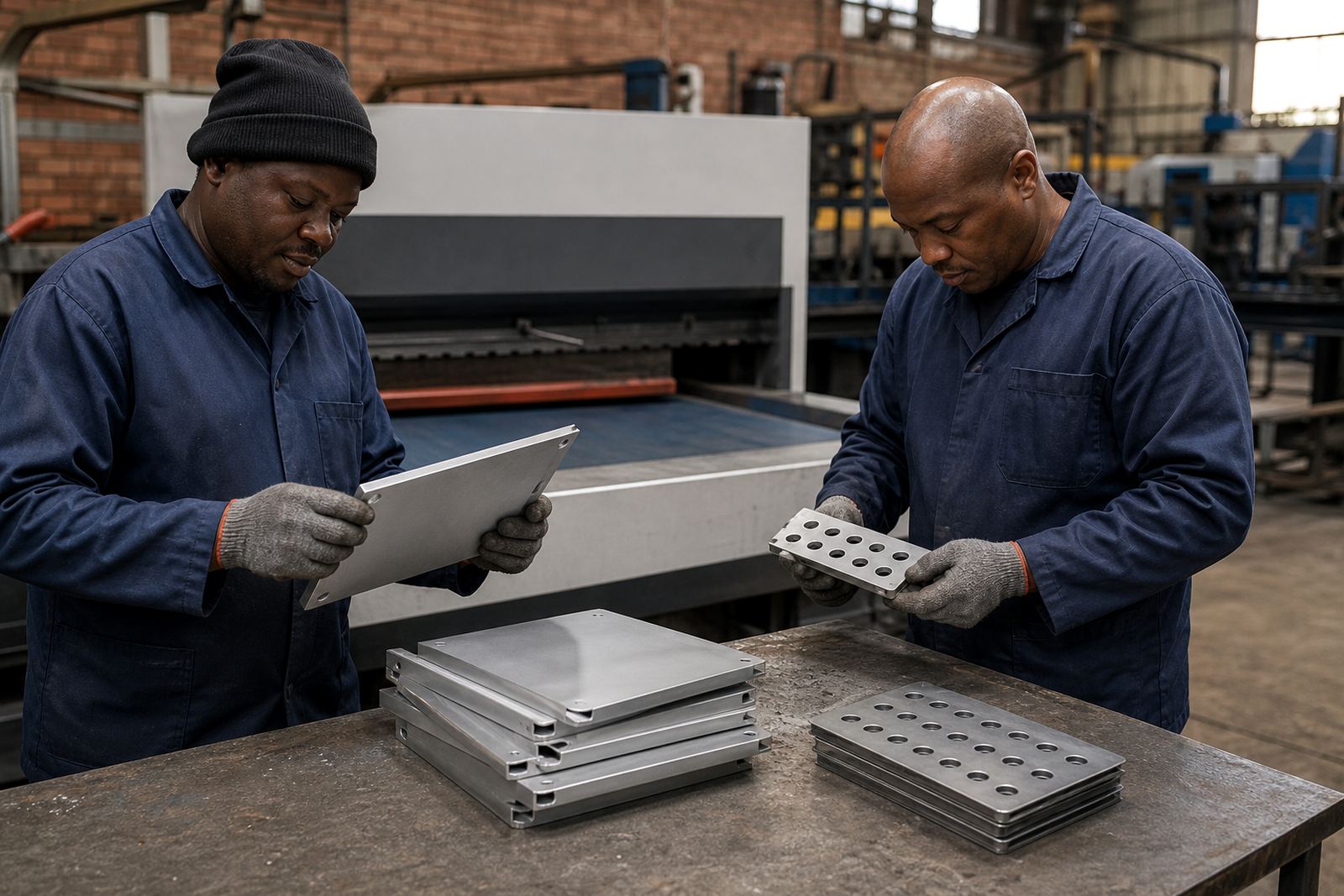
We also carried out sample part testing using the client’s own laser-cut components. That let us check how the machine handled clean cuts, heavier burrs and thin sections before final sign-off. Once the machine was confirmed, we completed installation, operator training and basic production guidance so the team could start with the right settings from day one.
- Machine supplied for laser-cut sheet metal finishing
- Sample part testing completed before handover
- Operator training done on site
- Basic production settings matched to their daily run sizes
Project timeline from first test to handover
The project moved over four weeks from first discussion to live production use. Week one covered the brief, site review and sample parts. Week two was used to confirm machine specification and floor positioning. Week three covered installation, electrical readiness checks and operator training. In week four the line was put into production use and the client started finishing normal daily work through the machine.
This pace suited the site because it kept disruption low. The fabricator did not need a long shutdown, and the finishing station was changed over in a controlled way. That matters in a busy plant where sheet flow, cut sorting and dispatch all depend on one another. If the finishing step slips, the whole order can slip and that quickly shows up in missed loads or late collections.
- Week 1: brief, site review and sample testing
- Week 2: machine selection and floor planning
- Week 3: installation and training
- Week 4: production handover and run-in support
Results after the first production runs
After changeover, the workshop moved from manual grinding to a repeatable machine process for daily sheet runs. The most immediate result was consistency. Edges looked more even across batches, and the team spent less time reworking parts that had come off the laser with small burrs or sharp corners. That reduced the amount of touch labour needed before parts could move to the next stage.
The second result was throughput. With finishing taken out of the hands of general workshop labour, the fabricator could keep people on higher-value tasks while one operator handled the finishing station. In practical terms, that helped them smooth the day’s work instead of building a pile of unfinished cut parts. It also improved control over quality, because the same process was being used on every shift rather than relying on individual grinding habits.
- Cleaner, more consistent edge finish across daily runs
- Less manual grinding and less operator fatigue
- Better flow between laser cutting and downstream work
- Improved control over part quality before packing and assembly
What we would do again for a similar Springs site
We would approach a similar project the same way. Start with the client’s own parts, test them before commitment, and make sure the machine matches the real work rather than a perfect sample. For production fabricators, that is the difference between a machine that sits idle and one that becomes part of the daily routine. It also helps to keep the install simple, especially where power stability and floor space are both tight.
For a site like this in Springs, we would again recommend early operator training, a clear maintenance plan and a realistic run-in period after handover. That gives the team time to settle on settings, understand material variation and build a proper finishing rhythm. If the client wants to scale later, the same process can be extended with preventive maintenance, spares supply and production planning support. That way the finishing station stays useful long after the first week of production.
- Test the client’s own parts first
- Keep the installation simple and practical
- Train operators early and properly
- Plan maintenance before the first busy month
Key facts
| Client type | Production fabricator |
|---|---|
| Town | Springs, Gauteng |
| Application | Laser-cut sheet metal deburring and edge finishing |
| Timeline | 4 weeks from first sample test to production handover |
| Machine focus | Flat sheet parts with mixed thicknesses and daily batch runs |
| Key outcome | Reduced manual grinding and improved finish consistency |