
What the Midrand team needed from the line
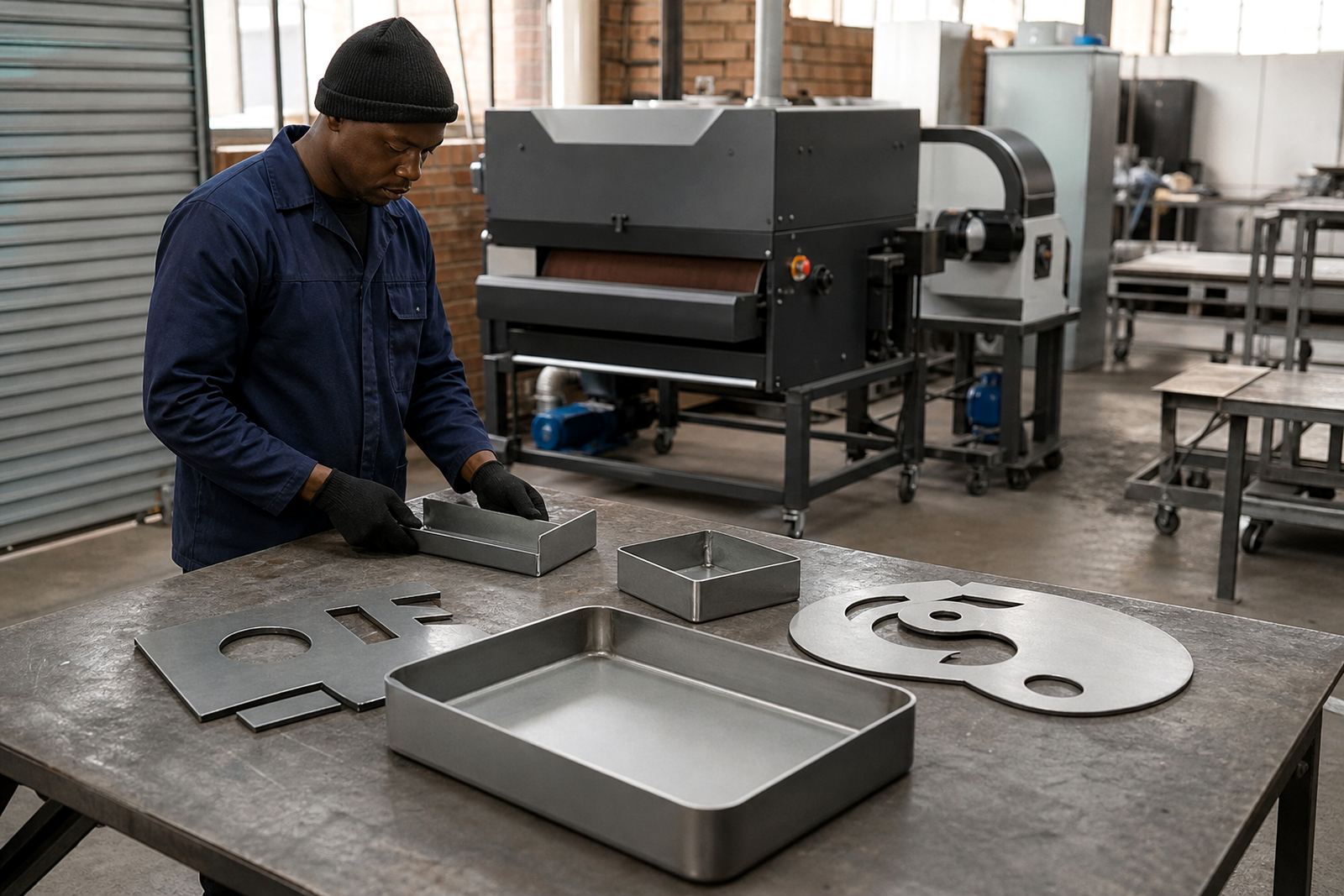
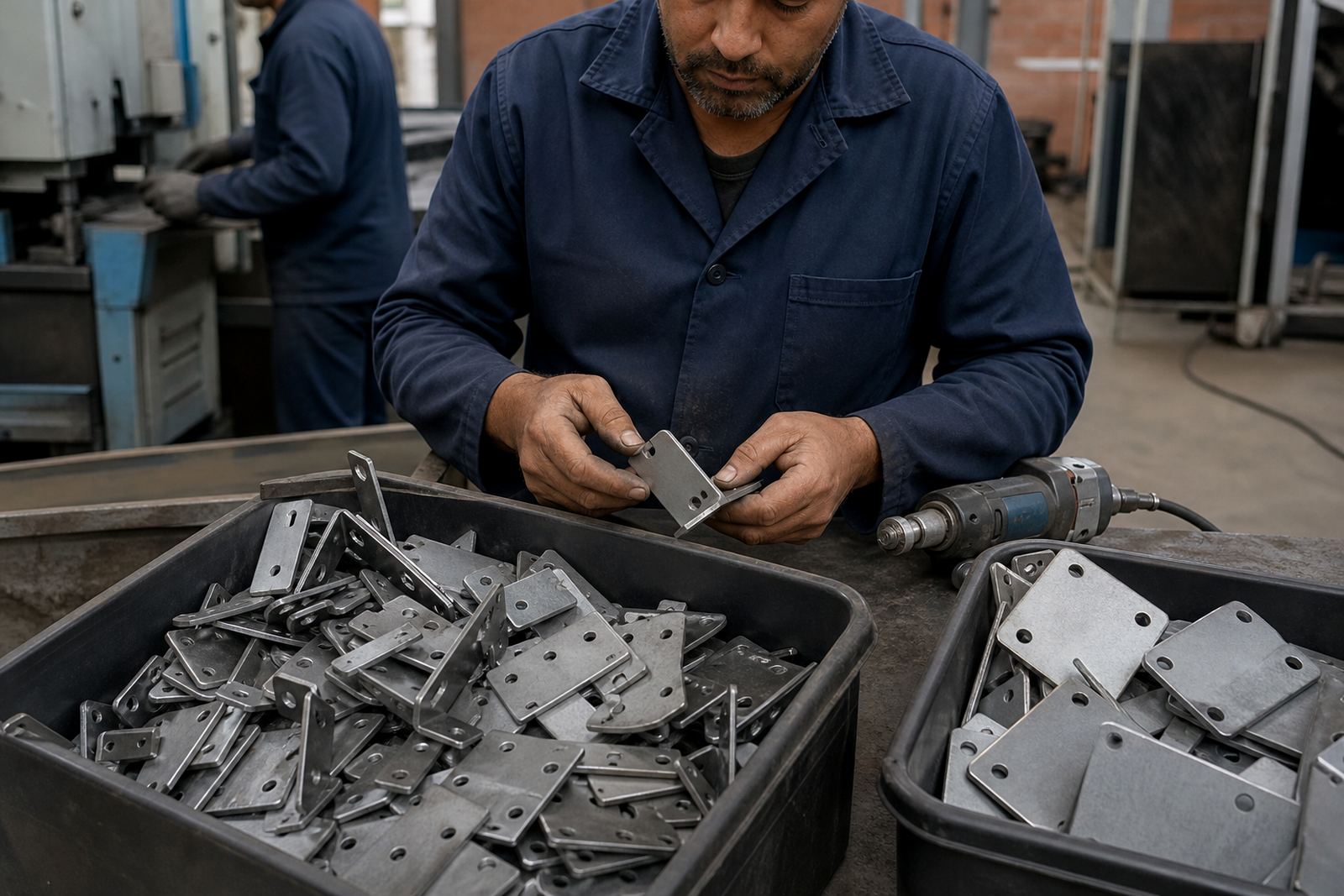
The client is a solar hardware producer in Midrand making mounting brackets, clamp plates, joiner pieces and related sheet metal parts for commercial and residential installations. Their cutting room was already producing clean laser-cut blanks, but the sharp edges, dross and light oxide left too much manual work before parts could go to bending, packing or final assembly. On busy days that extra handling slowed dispatch and created uneven edge quality from shift to shift.
The brief was straightforward: increase daily output, reduce hand-finishing, and keep a more consistent edge on parts ranging from 1.5 mm to 6 mm mild steel and coated sheet. They also needed a process that could suit different part sizes, from small clamp plates to wider mounting sections, without creating new bottlenecks in a small production bay.
- Material mix: 1.5 mm to 6 mm sheet metal
- Parts: mounting brackets, clamp plates and small formed components
- Goal: less manual deburring, better edge consistency, higher throughput
The production constraints we had to work around
The main constraint was floor space. The plant needed a machine that could be positioned close to the laser cutting area and still leave clear access for trolleys, offload tables and pallet movement. Power stability was another consideration. Like many Gauteng factories, the site has to manage load-shedding and voltage dips, so the equipment had to be practical to restart and simple for operators to keep running without constant adjustments.
Dust control and coastal humidity were less of a concern than in Durban or Cape Town, but the team still wanted reliable finish quality across changing weather and long shifts. There was also a strong requirement for safety and housekeeping, because the parts flow included frequent sorting and stacking. The customer did not want a machine that needed specialist handling for every changeover. It had to be simple, repeatable and suited to a busy line.
- Limited floor space near the cutting and packing area
- Need for simple restart after power interruptions
- Operator-friendly changeover for mixed part batches
The machine setup and process we supplied
We supplied a deburring and edge-finishing machine matched to laser-cut sheet metal work, set up for a wide range of flat parts with varying burr height and edge condition. The line was configured to handle both light finishing and more aggressive edge clean-up, so the client could process different cut qualities without sending parts back for touch-up. The working width was suited to common solar hardware sheet sizes, and the feed speed could be adjusted to suit the part mix.
We also helped position the machine in the production flow so parts could move from laser cutting to finishing, then straight on to inspection and packing. That reduced unnecessary lifting and kept the handling sequence clean. The setup included practical support on abrasive replacement, consumable tracking, and daily checks so the team could keep output steady. It is a simple thing, but when part sizes change through the day it matters a lot.
- Suitable for laser-cut mild steel and coated sheet metal
- Variable feed speed for mixed part batches
- Configured for edge finishing and burr removal in one pass
- Support included setup, operator handover and consumable planning
Training, commissioning and the first three weeks
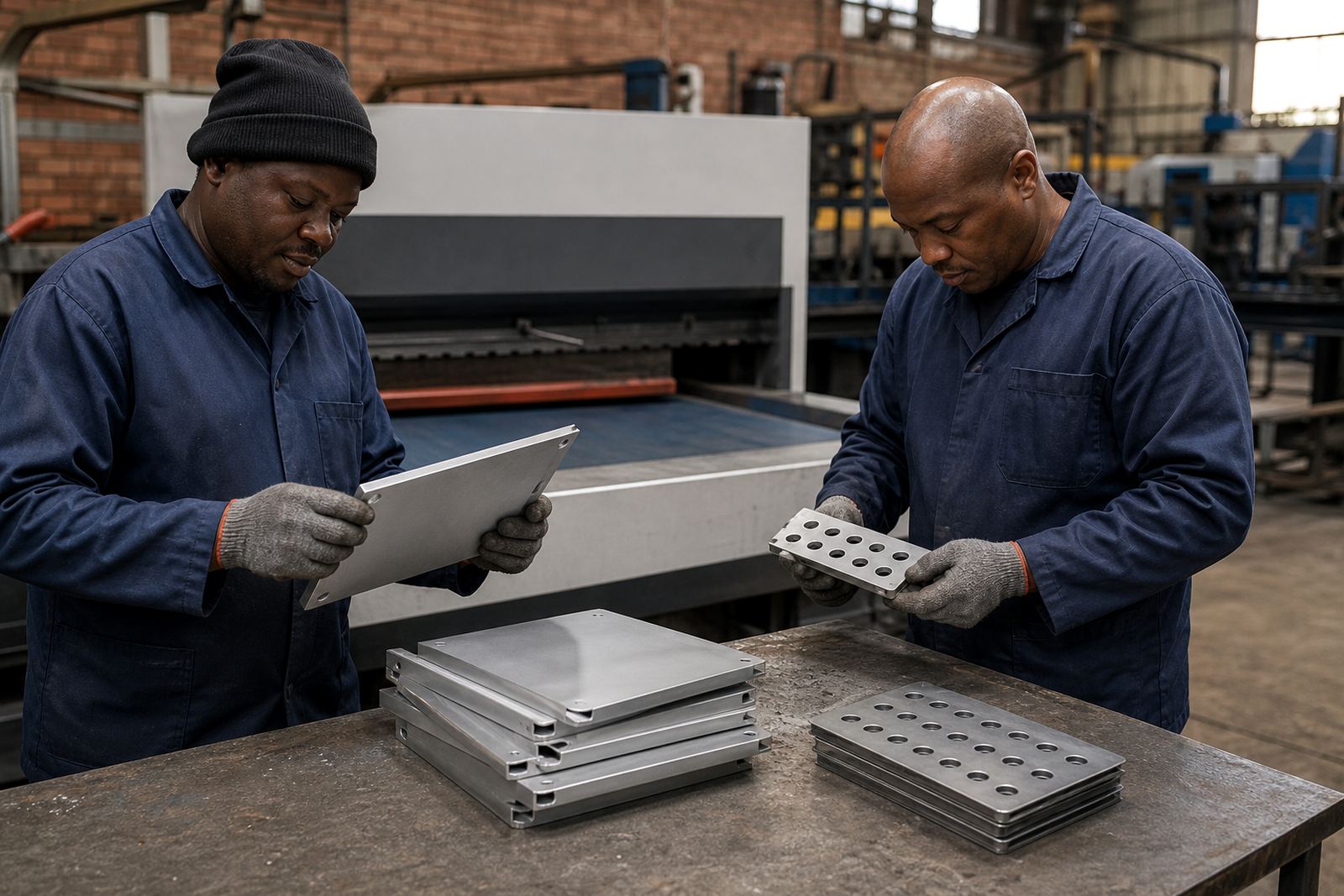
Commissioning and operator training were completed over three weeks. In week one we handled delivery coordination, machine placement and initial start-up checks. Week two focused on operator training, part setup and quality checks on the different bracket and plate types. Week three was used to tune the process for production targets, including the right feed settings for the more common cut sizes and the most efficient way to batch similar parts.
The workshop team picked up the routine quickly because the process was practical and predictable. That helped avoid the common problem of one experienced operator carrying all the know-how. We also set out a preventive maintenance plan for bearings, abrasives and cleaning points, so the machine could keep its finish quality without last-minute surprises. The client wanted a solution that fit a real factory rhythm and not a training room ideal, which is what we aimed for.
- Week 1: delivery, positioning and start-up checks
- Week 2: operator training and part qualification
- Week 3: process tuning and output stabilisation
What changed on the shop floor
After the new finishing process was in place, the team saw a clear improvement in daily output because less time was spent on hand sanding and edge touch-up. The parts also looked more consistent from batch to batch, which made inspection quicker and reduced rework before bending. For a solar hardware producer, that matters because bracket fit and edge quality both affect how smoothly the final install parts go together on site.
The client reported shorter queues between laser cutting and packing, plus better control over work in progress. That is important in a market where project orders can change fast and lead times are watched closely. The line also became easier to schedule because the finishing step no longer depended on a couple of manual operators with different working styles. Daily output on the brackets and clamp plates increased, and the factory could keep up with a steadier release pattern.
We have found this is usually where the value shows first: not only in the cleaner edge, but in the calmer shop floor. The process stops being a problem area and becomes a normal step in production, which is where it should be.
What we would do again on a similar solar hardware line
If we were setting up a similar line again, we would start by mapping the part mix before choosing the finishing settings. That includes checking sheet thickness, burr type, the amount of oxide, and how many parts must move through the line every shift. A solar hardware producer often has a wide spread of shapes and batch sizes, so the best result comes from matching the machine to the real production pattern, not just to a catalogue line.
We would also keep maintenance simple from day one. In a plant that runs through load-shedding and irregular schedules, the best solution is usually the one that can be cleaned, checked and restarted quickly. The Midrand project showed that with the right machine choice and proper handover, a team can improve output without complicating the workshop. That is the kind of change that holds up when orders get busy.
For manufacturers in Midrand, Johannesburg, Pretoria and the East Rand, the lesson is the same: better edge finishing gives you more than a neater part. It saves time, lowers rework and helps the whole line move with less friction.
Key facts
| Project town | Midrand, Gauteng |
|---|---|
| Client type | Solar hardware producer |
| Material range | 1.5 mm to 6 mm sheet metal |
| Primary parts | Mounting brackets and clamp plates |
| Timeline | 3 weeks from delivery to production tuning |
| Outcome | Higher daily output with less manual finishing |