
What Our Relocation Support Covers
Relocation support is for fabricators who need their deburring or edge-finishing machine moved from one site to another, then put back into production with minimal interruption. We assist with planning, dismantling, safe lifting, transport coordination, re-installation, levelling, connection checks and recommissioning. If a machine is going from Wadeville to Pretoria, or from Durban back inland, the same goal applies, get it running correctly at the new address with as little downtime as possible.
We work with equipment used on laser-cut sheet metal from 1.0 mm to 20 mm, depending on the machine configuration and the parts being processed. This includes compact single-station units and wider feed machines used for higher throughput lines. We also review the site conditions before the move, because floor strength, access doors, loading bays and three-phase supply all affect the final result.
- Dismantling of removable guarding, feeders and extraction connections
- Labelling of cables, hoses and mechanical settings before transit
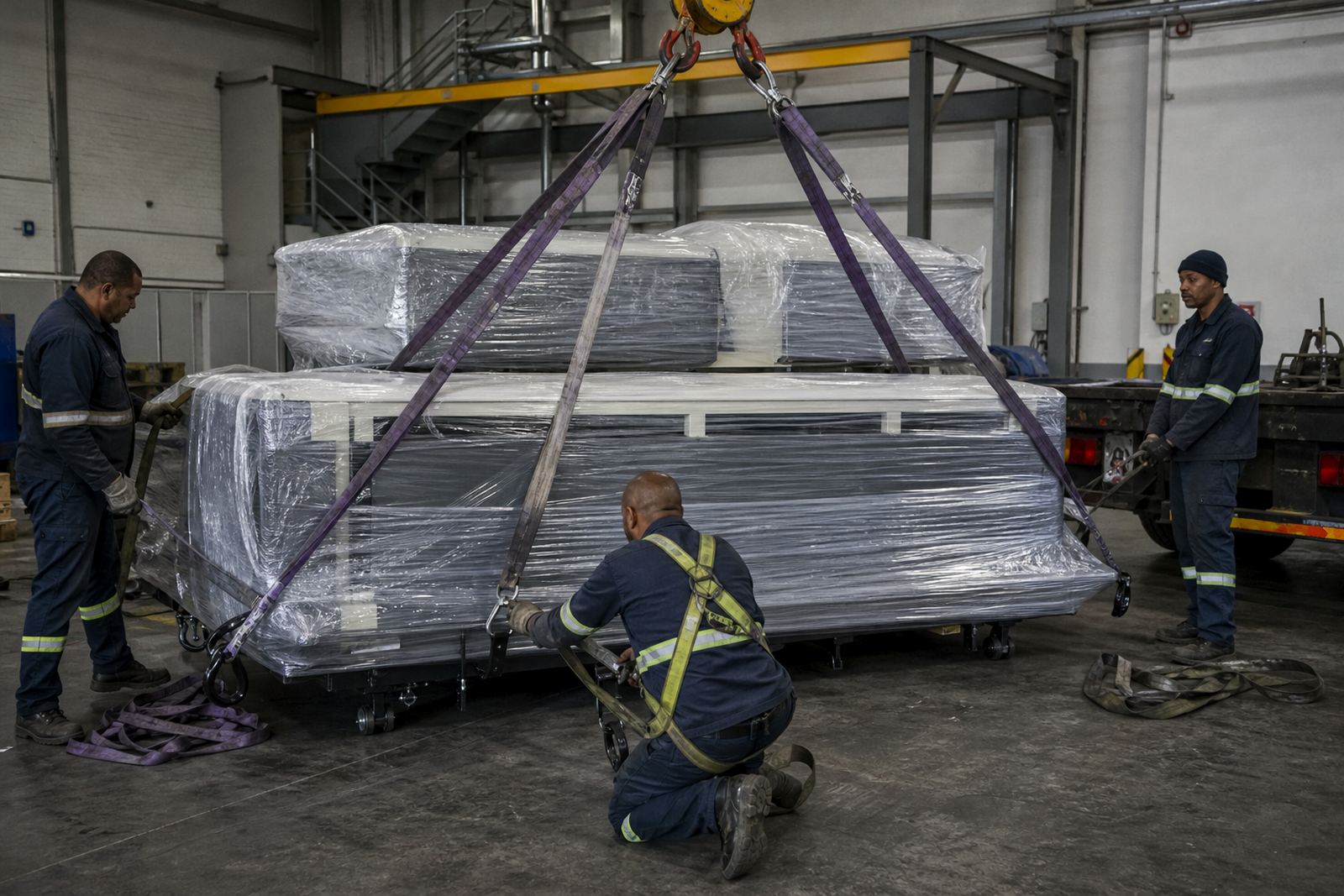
- Support for rigging, lifting and loading into the transport vehicle
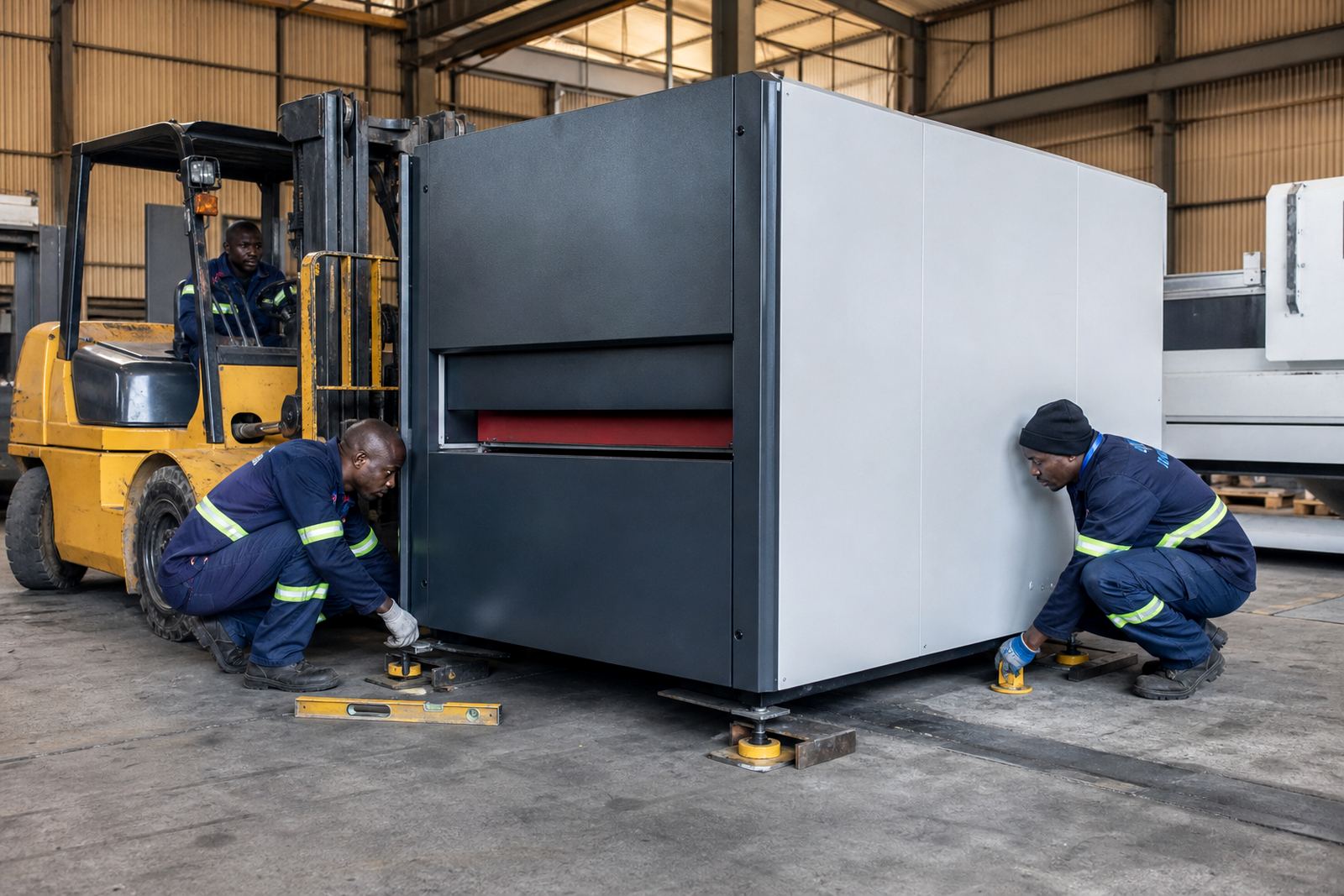
- Re-installation, levelling and alignment at the receiving site
- Initial test runs with sample parts and thickness checks
Before The Move, We Check The New Site First
Good relocation work starts before the machine leaves the old site. We ask for photos, layout dimensions and basic utility details so we can spot problems early. In many Gauteng plants the issue is not the machine itself, it is the doorway, a low beam, or a tight turning circle near the press shop. Coastal sites can add another layer, with humidity and salt air affecting electrics and mild steel surfaces, so we plan the packing and re-installation accordingly.
Our site check usually covers machine footprint, service access around the unit, electrical supply, earthing, dust extraction position and operator flow. If a machine needs to sit on a new concrete plinth or be levelled on existing flooring, that is included in the planning stage. This reduces the risk of uneven feed, vibration, or edge finish inconsistency after the move.
- Confirm machine dimensions and transport route
- Check three-phase power, isolators and cable lengths
- Measure clearance for loading and final placement
- Review air, extraction and compressed supply points where relevant
Dismantling, Transport And Reinstallation
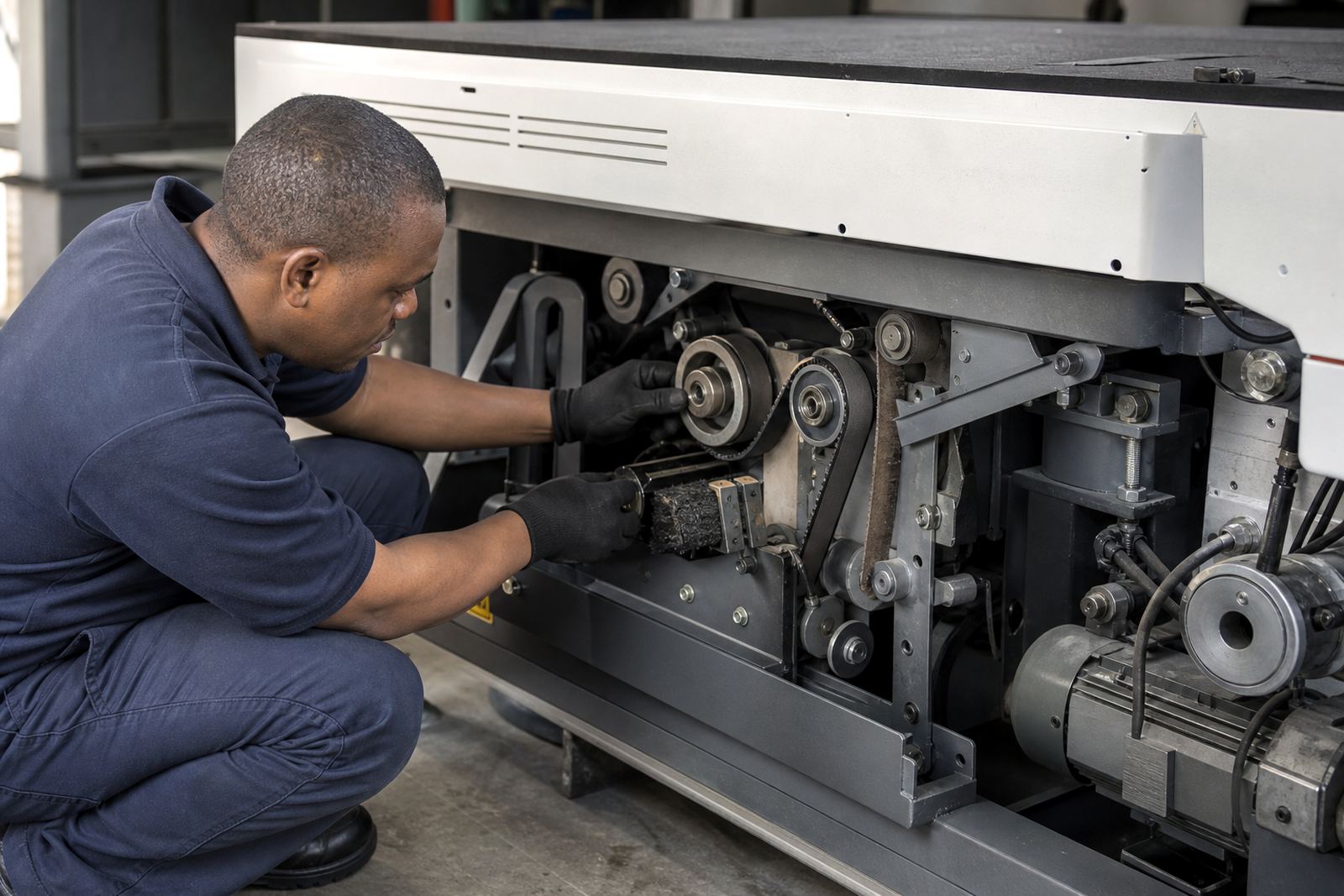
We guide the dismantling so the machine can be moved without damage to rollers, conveyors, abrasive heads, control panels or guarding. Loose tooling and wear parts are removed, packed and marked. Critical settings are recorded before disconnection, including height references, belt tension points and any operator-set parameters that must be restored later. That little bit of record keeping saves time later, especially where the same machine is expected to process mixed batches after the move.
Transport is arranged to suit the machine size and the road distance. For most relocations inside Gauteng, North West, KZN or the Western Cape, turnaround depends on access, rigging and the transport booking window. Once the machine is at the new site, we position it, level it and reconnect the required services. We then run a dry check and a loaded check with sample parts. If the machine has a conveyor system or extraction interface, those points are verified before handover.
- Machine stripped down only as far as needed for safe movement
- Parts packed and labelled for quick reassembly
- Re-installation carried out to the original layout, where possible
- Functional test with sheet metal samples after power-up
Turnaround Times And Production Planning
Most customers want one thing, the shortest possible interruption to production. We help plan the move around shift patterns, delivery dates and customer deadlines, so the transfer does not clash with a rush order or a weekend maintenance window. Small machines can often be moved and recommissioned quickly if the new site is ready. Larger systems may need a phased approach, especially where lifting equipment has to be booked in advance or floor modifications are still underway.
Typical relocation work can be completed in stages over one to three days for straightforward moves, while more complex transfers may take longer if transport distances are greater or the receiving site needs extra prep. We also take load-shedding into account. If the new site has unstable power, we recommend waiting for a proper power check before final commissioning so the machine does not start life on an unsafe supply.
- Short local moves can often be finished within 1 to 3 working days
- Long-distance relocations depend on road transport and site readiness
- Weekend work can be arranged where production cannot stop mid-week
- Commissioning is only signed off once sample parts run cleanly
Pricing Approach For Relocation Work
Relocation pricing is based on the actual scope, not a flat guess. We look at machine size, distance between sites, how much dismantling is needed, whether rigging is required, and whether recommissioning will include fresh setup or fault finding. A machine moving from Germiston to another East Rand site is priced differently from a full transfer to Cape Town with extra packing and on-site support. The more accurate the brief, the tighter the quotation.
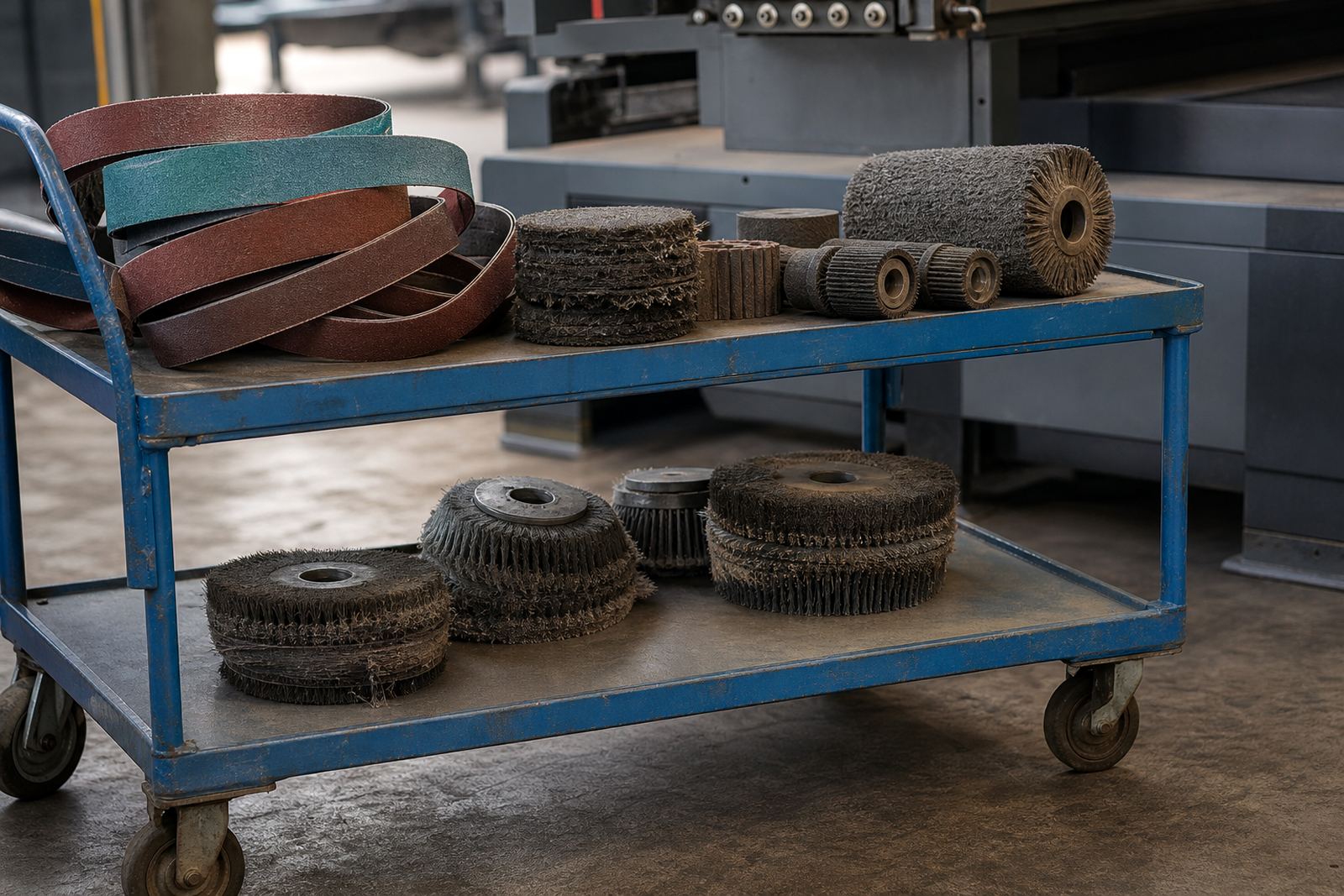
In most cases we separate the work into labour, transport coordination, consumables, recommissioning and any replacement parts identified during the move. If worn belts, abrasive media or electrical components need replacement during re-installation, we quote those separately so there are no surprises. It is better to budget for the whole move properly than to discover missing parts when the line should already be running.
For customers with more than one machine, we can also phase the work so the highest priority unit is moved first. That helps protect output when one site is closing and another is opening up.
Aftercare, Maintenance Intervals And Handover
Once the machine is back in production, we recommend a follow-up check after the first few shifts. This confirms that fasteners remain tight, the feed is tracking correctly and there are no vibration-related issues from the move. For many installations, a 1 week check and then a 3 month service review is a practical starting point, especially if the machine runs daily on mixed laser-cut parts. In coastal towns, more frequent inspection of exposed surfaces and electrical enclosures may be worth the effort.
We also advise customers to update their preventive maintenance schedule after relocation. A machine that has just been moved should not wait for its next routine service without a look-over. If the production environment is dusty, humid or heavily loaded, the first service interval may need to be brought forward. That kind of adjustment is normal, and it usually pays for itself by reducing unplanned stoppages later on.
- Post-move verification after the first shifts
- Inspect alignment, belts, brushes and extraction points
- Reset the maintenance calendar for the new operating conditions
- Plan service intervals around actual production hours, not only calendar months
Key facts
| Machine types | Deburring and edge-finishing machines for laser-cut sheet metal |
|---|---|
| Sheet thickness range | Typically 1.0 mm to 20 mm, subject to machine configuration |
| Relocation scope | Dismantling, transport support, re-installation and recommissioning |
| Site coverage | Wadeville, Germiston, Johannesburg, Pretoria, Durban, Cape Town and Rustenburg |
| Power requirements | Three-phase supply checks, earthing and isolator verification at the new site |
| Typical turnaround | 1 to 3 working days for straightforward local relocations, longer for complex moves |