What our installation service covers
Our machine installation service is set up for manufacturers and fabricators who need a deburring line installed properly the first time. We handle the physical placement of the machine, levelling, power connection checks, safety checks, commissioning and the first production run so your team can start work with confidence. For sheet metal shops running laser-cut parts, the difference between a rushed setup and a proper installation shows up quickly in edge quality, belt wear and downtime.
We work with laser-cut steel, stainless steel and aluminium parts, including flat sheets and nested components. Where required, we check infeed and outfeed flow, dust extraction position, air supply, and workshop access around the machine. If your floor is slightly uneven or the loading path is tight, we plan for that before the machine arrives. That saves time, and keeps the install clean.
- Machine placement and levelling
- Electrical and utility checks before start-up
- Commissioning and functional testing
- Operator handover and basic safety walk-through
- First run support on your own parts
How the installation process works
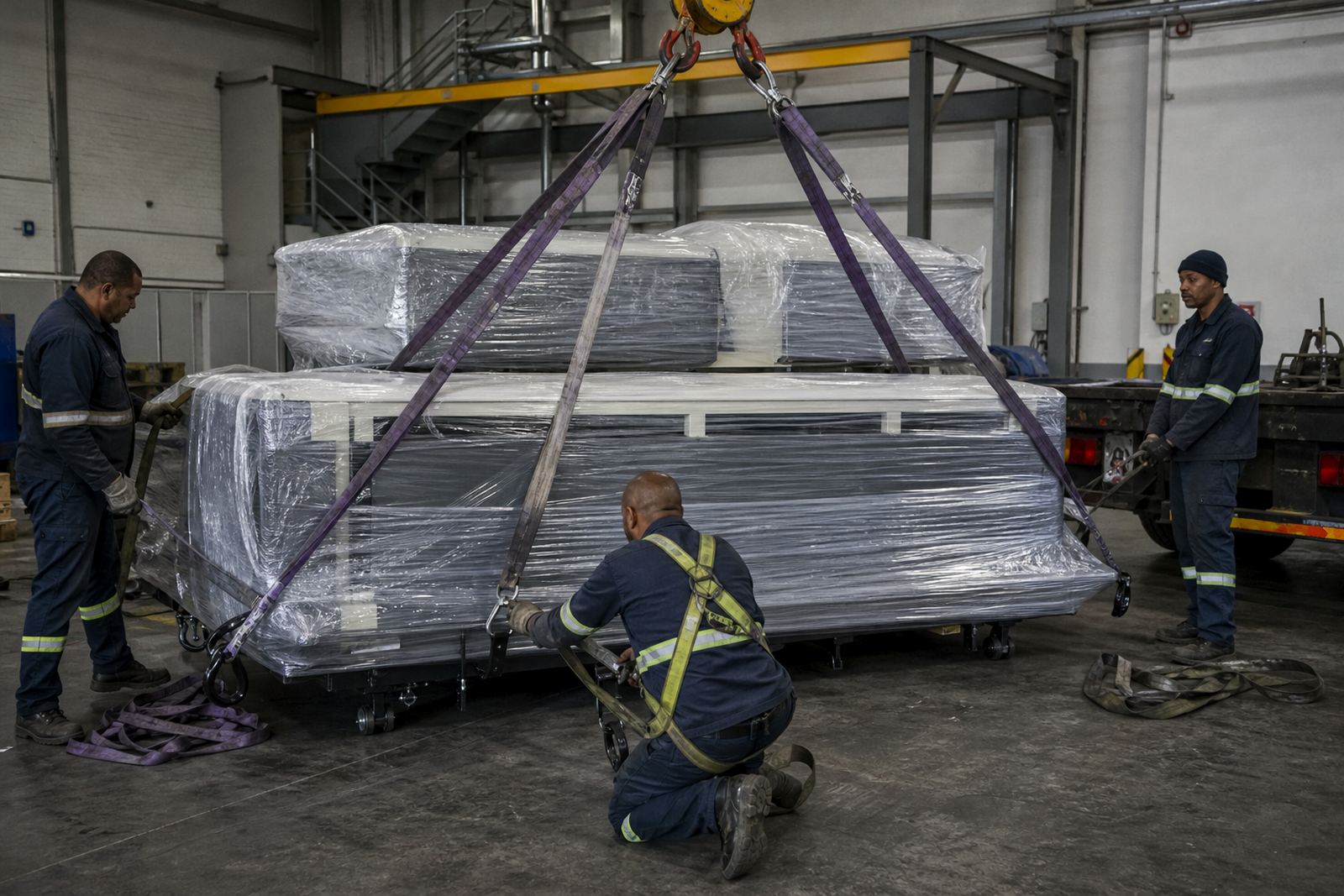
We follow a simple process that keeps disruption low. First, we confirm the machine model, layout, power requirements and access conditions at your premises. Then we plan the delivery window, lifting method and installation sequence. In Wadeville, Germiston and the East Rand, many workshops have limited yard space or shared loading areas, so this planning matters. For Durban and Cape Town sites, we also factor in humidity and corrosion protection around stored accessories and consumables.
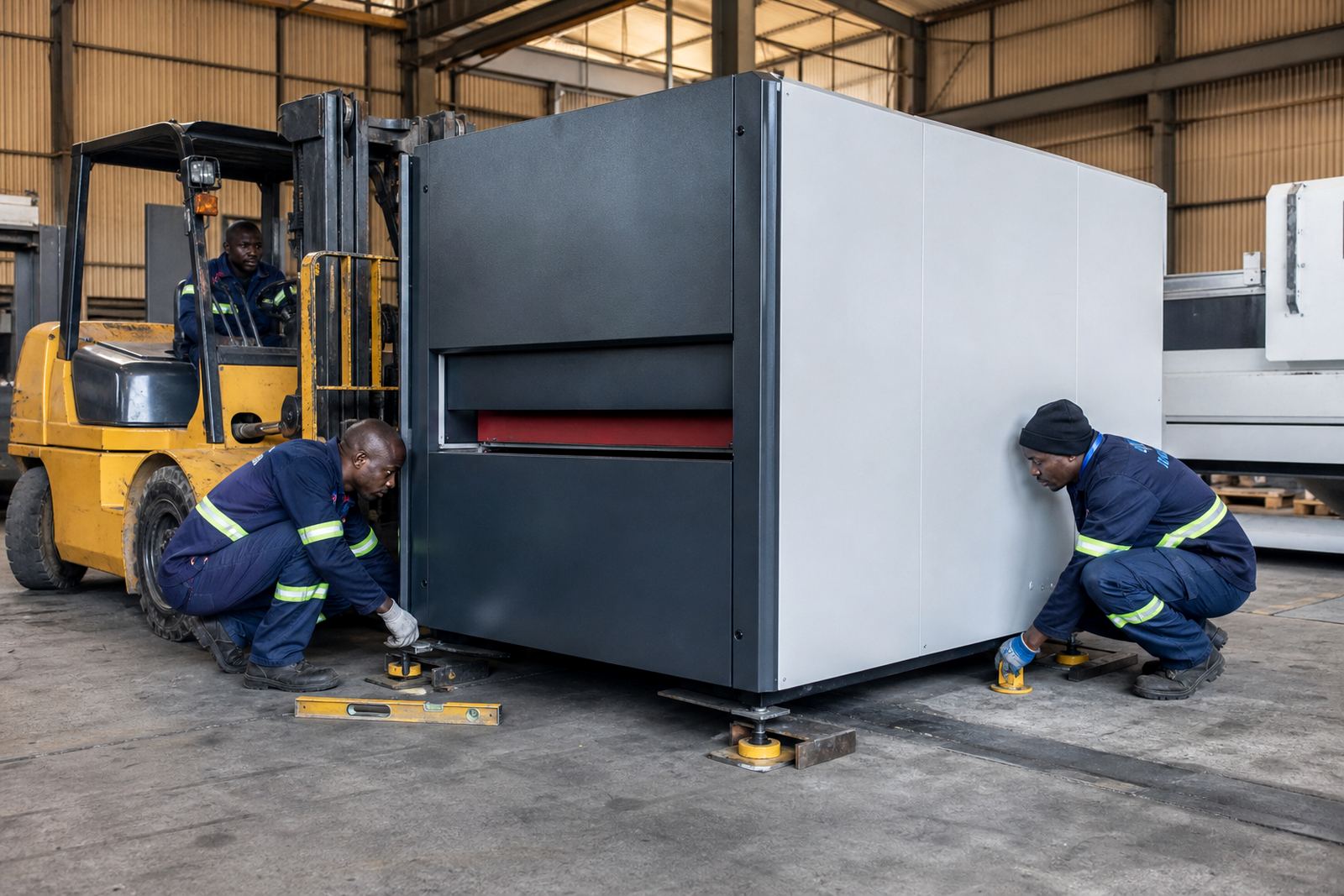
On site, our team positions the machine, checks the floor, connects or verifies utilities, then runs a full commissioning sequence. This includes emergency stop checks, belt tracking checks, feed speed control, pressure settings where applicable, and a test pass on sample parts. We do not leave the machine until it is running safely and producing consistent results.
- Pre-install survey and requirement confirmation
- Delivery coordination and site access planning
- Placement, levelling and utility connection checks
- Commissioning, sample testing and sign-off
- Operator briefing before handover
Typical installation timing and site readiness
Most standard installations are completed in one day once the machine is on site and the area is ready. Larger lines, or sites that need floor preparation, extraction adjustments or electrical changes, can take longer. We prefer to arrive to a clear area with the final machine position marked, power available, and any compressed air or extraction lines already close to hand. That keeps the process moving and avoids unnecessary downtime.
If your workshop is in Johannesburg, Pretoria, Rustenburg or Durban, we can coordinate around production shifts and delivery times. For factories working under load-shedding, we recommend scheduling the commissioning run when backup power is stable, because start-up checks are best done with consistent supply. A machine can be installed in the morning but if the power keeps dipping, it is better to wait and do the final run properly.
Where production urgency is high, we can prioritise same-week or next available installation depending on the route and the workshop setup. We do not promise rushed work, because a machine that is out of level or poorly aligned will cost more later in wear, vibration and poor finish quality.
Machine specifications we confirm before install
Before the installation date, we confirm the key specifications needed for safe placement and operation. This includes machine footprint, total mass, working width, power supply, extraction requirements and floor loading. If the machine will be used on small batch work one day and high-volume production the next, we also look at throughput expectations so the team understands what to expect from the first shift.
These checks help prevent avoidable issues on site, especially in older factories where power distribution has changed over time or where the floor is not perfectly even. We also check door clearances, roller table alignment, and service access around the machine so maintenance can be done without cramped movement.
- Footprint and access clearance
- Machine weight and floor loading
- Working width and part size range
- Electrical supply and breaker capacity
- Extraction and compressed air needs
Commissioning, testing and handover
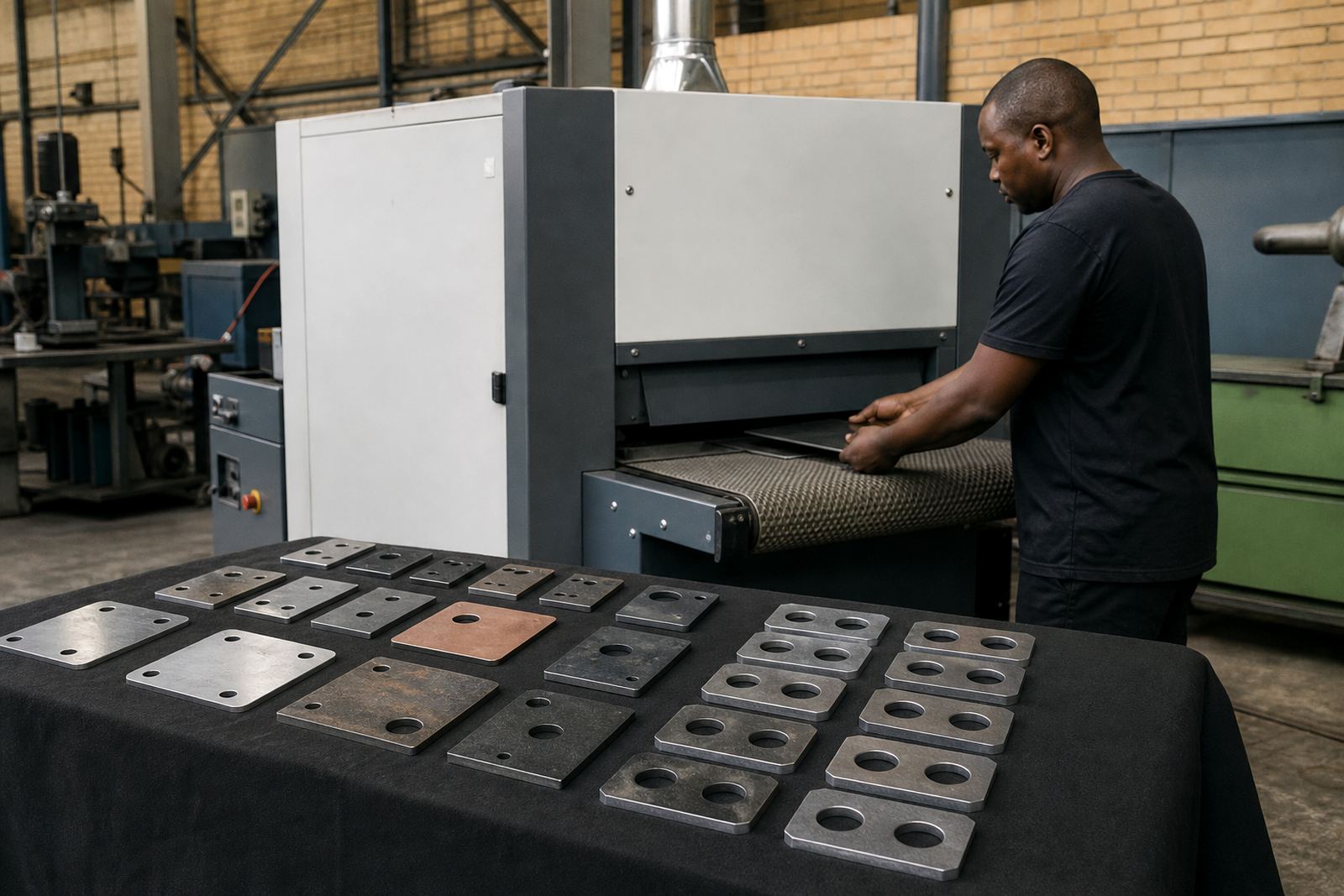
Commissioning is more than switching the unit on. We run the machine through its operating sequence, verify control settings, and test with parts representative of your normal work. That may include laser-cut mild steel, stainless steel, thinner gauge material, or parts with burr-heavy edges from repeated nesting. We look for consistent edge finish, smooth feed, stable belt tracking and clean part transfer through the machine.
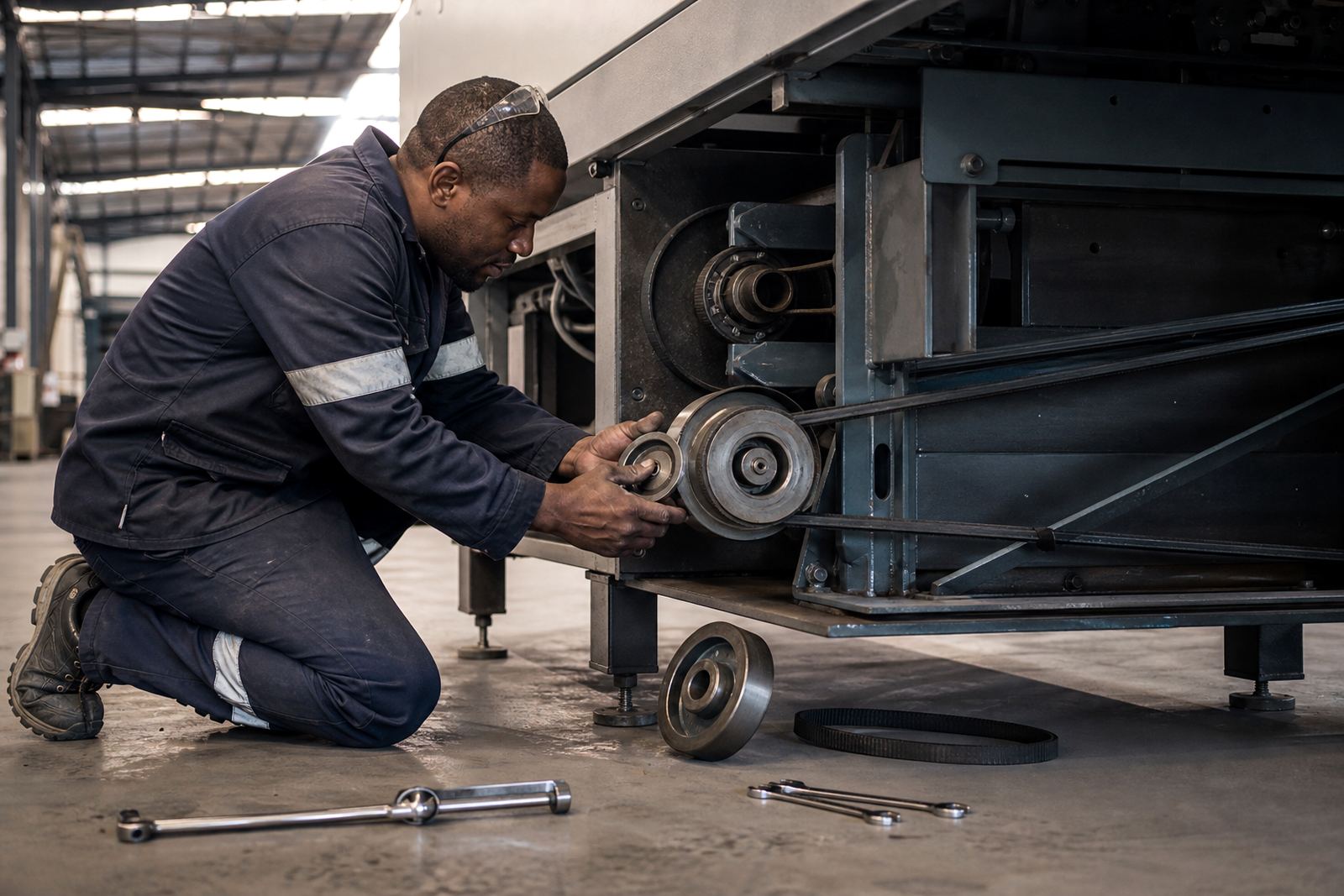
At handover, we show the operator how to start, stop, adjust and inspect the machine, and how to recognise early signs of wear. We also cover what to do if the finish changes, if the belt loads up, or if the part size mix changes during the shift. A short, practical handover on the day often prevents calls later on.
- Control checks and safety function tests
- Sample part testing and finish inspection
- Operator handover with basic adjustments
- Job setup notes for your common part types
Pricing approach and support after installation
Our pricing is based on the machine type, site location, access conditions and any extra work needed for placement or commissioning. A straightforward installation at a ready site in Germiston is different from a more complex job in a busy plant with restricted access, night work or utility changes. We quote clearly, so you know what is included before the team arrives.
We can also include preventive maintenance intervals from the start. For most workshops, a first service check is sensible after the initial running period, then at planned intervals depending on production hours and material mix. Heavy laser-cut volume, stainless work and 24-hour shifts usually need more frequent checks than light batch work. As a guide, many clients schedule a review after the first few weeks, then every 3 to 6 months. That helps keep the machine in line and reduces surprise stoppages.
If you want annual service contracts, we can build installation and maintenance into the same support plan so the machine stays productive through the year. It is a practical way to protect your production line and keep spare parts, belts and wear items under control.
Key facts
| Typical installation time | 1 day for a standard ready site; longer if floor, power or access work is needed |
|---|---|
| Machine types | Deburring and edge-finishing equipment for laser-cut sheet metal |
| Materials handled | Mild steel, stainless steel and aluminium |
| Site areas covered | Wadeville, Germiston, Johannesburg, Pretoria, Durban, Cape Town, Rustenburg and the East Rand |
| Key checks | Levelling, power, extraction, feed settings, belt tracking and safety functions |
| Maintenance interval guidance | Initial review after first running period, then every 3 to 6 months depending on use |