What abrasive replacement covers on your machine
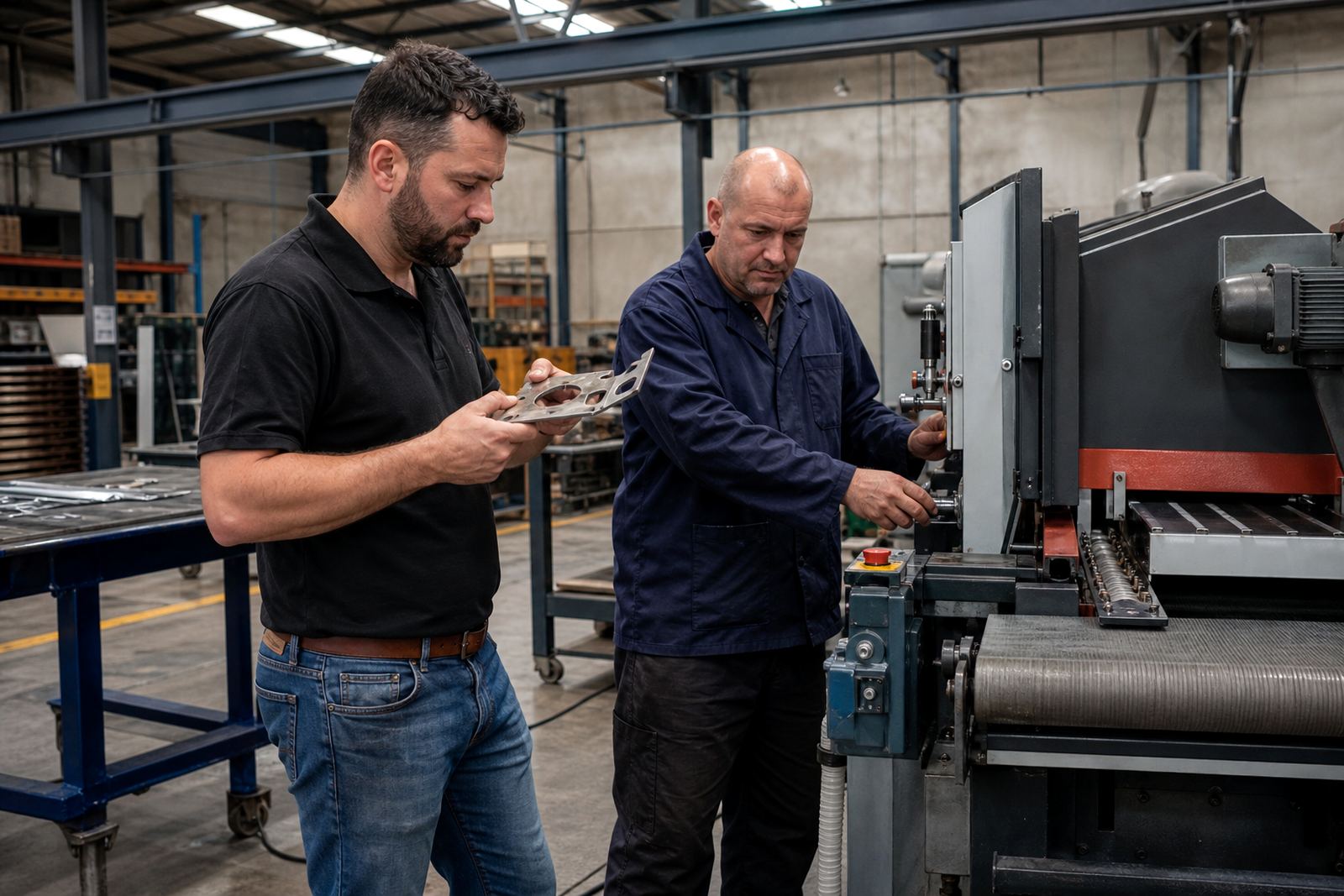
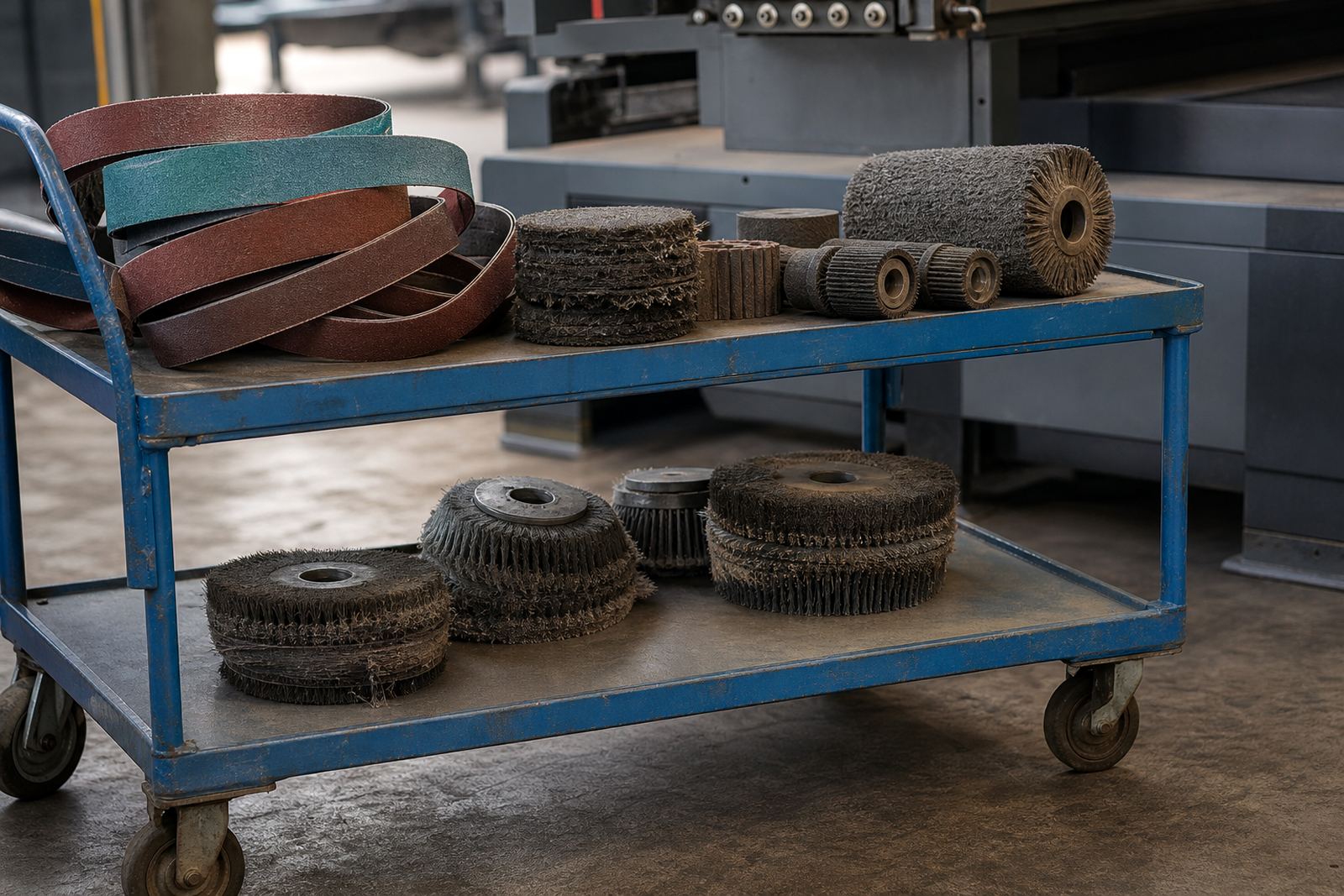
Abrasive replacement covers the consumables and wear parts that do the actual finishing work on your edge-finishing machine. In day-to-day production, that usually means worn abrasive belts, grinding heads, brushes, contact wheels, pressure rollers and any related items that affect cut edge quality. When these parts start to glaze, crack, shed too quickly or lose shape, the machine can still run but the finish changes and operators must slow down to compensate.
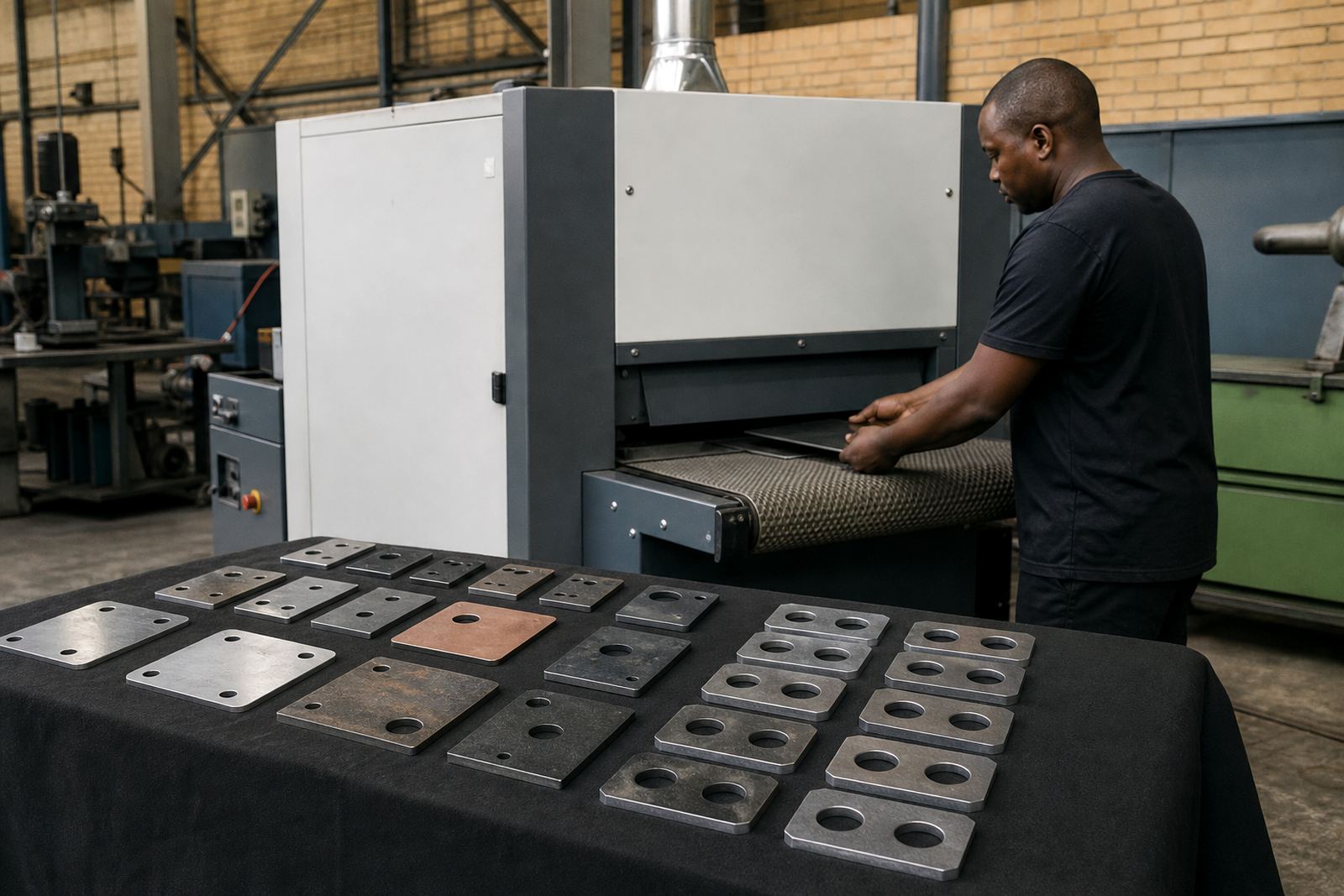
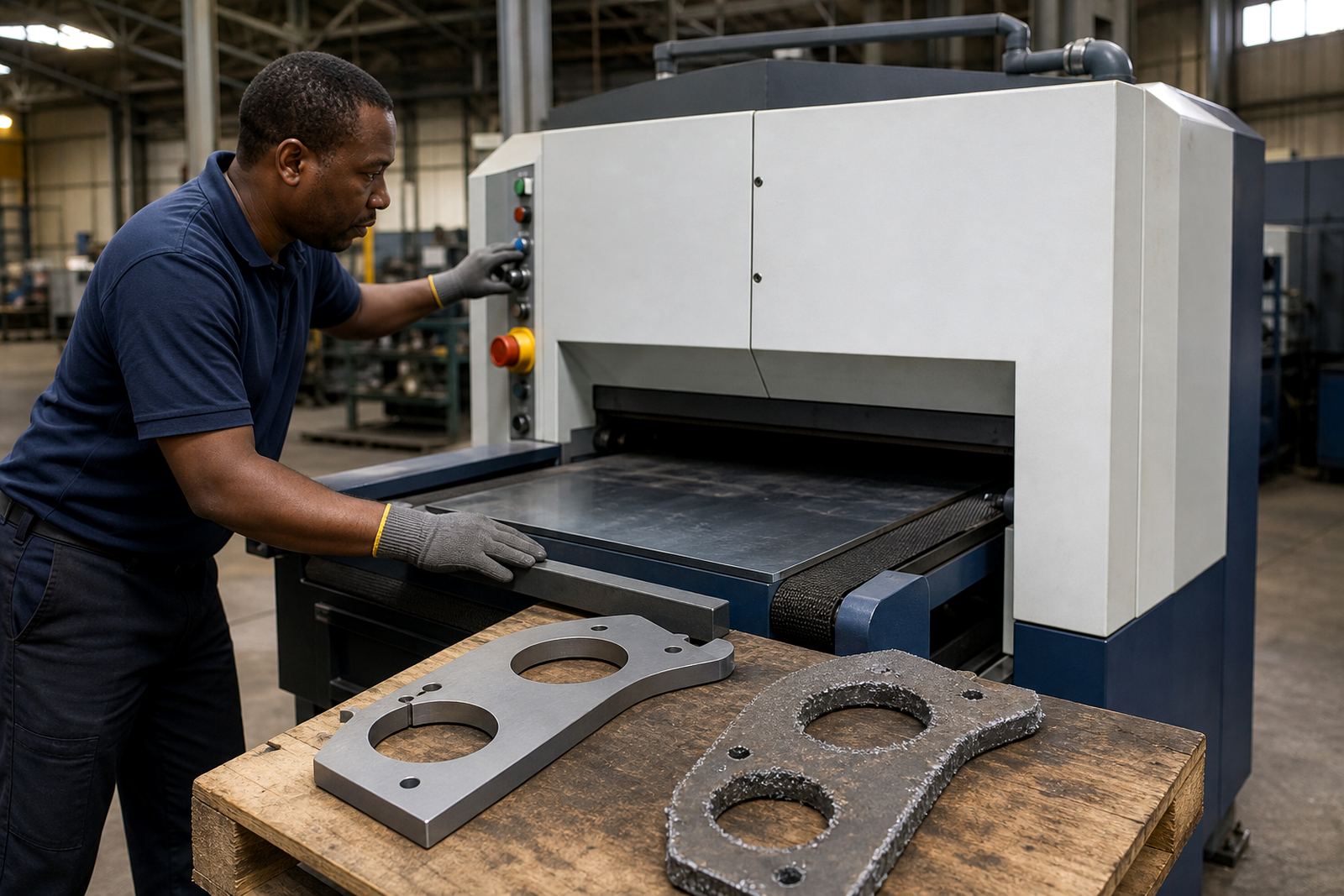
For laser-cut sheet metal, the goal is to remove burrs cleanly without damaging the flat face, upsetting the edge radius or creating extra heat on thinner material. We help identify which parts need replacing, match the correct grit or brush type to the material, and fit the parts so the machine returns to a consistent finish. That includes advice for stainless steel, mild steel and aluminium, where wear patterns are often differant from one another.
- Replacement of worn abrasive belts and discs
- Brush set changes for edge softening and light deburring
- Pressure and contact component checks
- Setup adjustment after fitting
Signs the abrasive system needs attention
Most workshops notice the need before the machine stops completely. The edge starts feeling sharp in some areas and overworked in others, or the machine needs extra passes to reach the same result. On busy lines, that can become a quiet drain on output because operators keep compensating by slowing feed speed or increasing pressure. In Gauteng, especially where dust and temperature shifts are common, worn consumables can also load up faster than expected.
Look out for these signs during normal production:
- Visible burr remaining after the first pass
- Uneven finish from left to right across the sheet
- Burn marks, chatter lines or scratch marks
- Belts or brushes wearing out too quickly on one side
- More noise or vibration than usual during operation
If your parts are coming off laser cutting in batches and the finish changes from batch to batch, the abrasive system may be past its useful setting. A quick inspection often shows whether the issue is wear, incorrect consumable selection, or a setup that needs to be reset after a production change.
How we handle supply and fitting
We keep the process straightforward so production teams can plan around it. First we identify the machine type, current consumable dimensions and the material mix you are running. Then we check the worn parts, confirm the replacement spec and fit the new items with the correct tension, alignment and pressure settings. If needed, we also check the feed direction and speed settings so the new consumables are not damaged in the first shift.
Where possible, replacement is done on site at your Germiston, Johannesburg or East Rand operation. For fabricators outside Gauteng, we can coordinate support around your shutdown window and assist with part selection before the machine comes back into service. In many cases the work is done during a planned break, which helps avoid lost production later in the week.
- Machine identification and wear assessment
- Consumable matching for the material being processed
- Removal of worn abrasive or brush components
- Fitting, alignment and test run
- Operator handover with practical settings advice
Turnaround times for planned and urgent work
Turnaround depends on the condition of the machine, the parts required and whether the replacement is part of a planned service or an urgent call-out. For standard wear items we usually aim to turn around support quickly, provided the machine model and dimensions are confirmed. If the abrasive set is unusual or the machine has been run with incorrect settings, we may need to inspect the system first to avoid repeated failure.
For planned maintenance, many clients prefer to book the work just before a production peak, or after a run of thinner material that tends to wear the system harder. If a line has stopped because the abrasive components are finished, we prioritise the call based on the effect on production and the availability of the right consumables. In practice, that means a simple replacement can be handled fast, while a full re-setup may need a longer slot.
We also keep in mind local working realities, including load-shedding, shift changes and weekend shutdowns. The best result is often a short scheduled stop rather than a long unplanned one.
Pricing based on wear, quantity and fitting time
Pricing is quoted according to the parts needed, the machine condition and the time required to fit and set up the replacement. A straightforward belt or brush change will cost less than a full consumable set with adjustment and test work. Where a machine has run for too long on worn components, there may also be follow-up setup work to restore the correct finish and we quote that seperately where needed.
We do not work on one-size-fits-all pricing because the wear rate changes with material thickness, edge quality target and production volume. A workshop processing short runs of 1.6 mm mild steel will see a different wear profile from a plant finishing heavier plate or mixed material jobs. Quotes are based on the actual machine, the component count and the level of support required, so you know what the replacement will cost before work starts.
If you are budgeting for a regular service plan, we can also help estimate the consumable spend over a year. That is useful for annual service contracts and for plants that want fewer surprises on monthly maintenance spend.
Maintenance intervals that keep finish quality steady
There is no single interval that suits every workshop, but most edge-finishing systems benefit from a regular wear check. Heavier daily production, stainless work and abrasive-dust conditions usually call for more frequent inspection than light duty work. A practical rule is to inspect consumables at set production milestones, not only when quality drops. That helps you replace parts before they start affecting downstream work like folding, welding or powder coating.
Typical maintenance actions include:
- Checking belt condition and loading after each production run
- Inspecting brushes for splay, breakage or uneven wear
- Verifying pressure settings after a material change
- Cleaning dust buildup from the work area and guards
- Recording run hours so replacement can be planned
For many South African fabricators, a monthly visual inspection and a more detailed quarterly check is enough to keep finish quality stable, but high-output plants may need shorter intervals. Coastal humidity in places like Durban and Cape Town can also affect storage and wear, so spare components should be kept dry and sealed until use.
Why operators call us before a bigger breakdown
Replacing worn abrasive parts early is usually cheaper than recovering from a poor finish across a whole batch. It also helps protect motors, bearings and drive parts from extra strain caused by blocked or misaligned consumables. When the system is set correctly, operators spend less time reworking parts and more time keeping the line moving.
Our support from Wadeville, Germiston is practical and site-focused. We work with production teams that need clean edges on laser-cut sheet metal and do not have time for guesswork. Whether the job is a single replacement or a full consumable refresh, the aim is the same: keep the machine producing a consistent edge finish with less waste and less downtime.
Key facts
| Service type | Abrasive replacement and fitting for edge-finishing machines |
|---|---|
| Material focus | Laser-cut sheet metal, including mild steel, stainless steel and aluminium |
| Common components | Belts, brushes, contact wheels, rollers and pressure parts |
| Support areas | Wadeville, Germiston, Johannesburg, Pretoria, Durban, Cape Town and Rustenburg |
| Typical response | Planned replacements or urgent call-outs arranged to suit production shutdowns |
| Pricing method | Quoted by machine condition, consumable type, quantity and fitting time |