Start With the Parts Your Team Runs Every Day
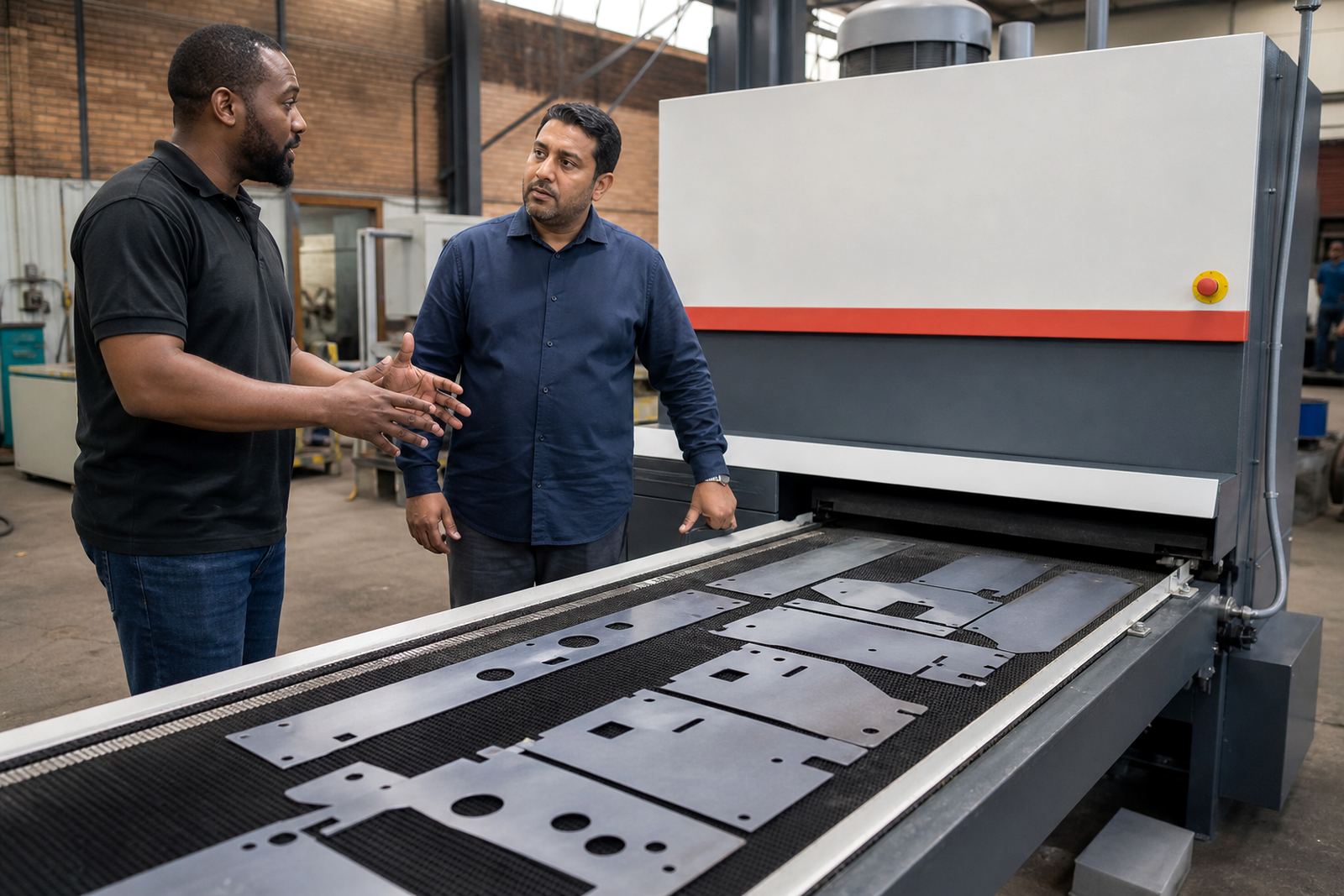
The best training starts with the actual parts leaving your laser. If your shop handles brackets, enclosures, panels, frames or small batch work, we plan the session around those components and the finish standard you need to meet. That keeps the training practical and focused on the machines your operators use most.
When we set up a session, we first look at material type, thickness ranges, burr size, cut quality and the output target for each line. A shop doing mild steel panels in Germiston will often need a different approach from a Cape Town operation handling mixed stainless and aluminium. The aim is not just to show the controls, but to help operators understand why a setting gives a better finish.
- Material types and thicknesses in daily production
- Common burr patterns from the laser process
- Finish targets for visible and hidden edges
- Shift patterns, operator experience and production pressure
If the machine is running near its limit, or the team is split across shifts, we can plan training in stages so the whole crew gets covered without stopping production for too long.
What Operators Learn During the Session
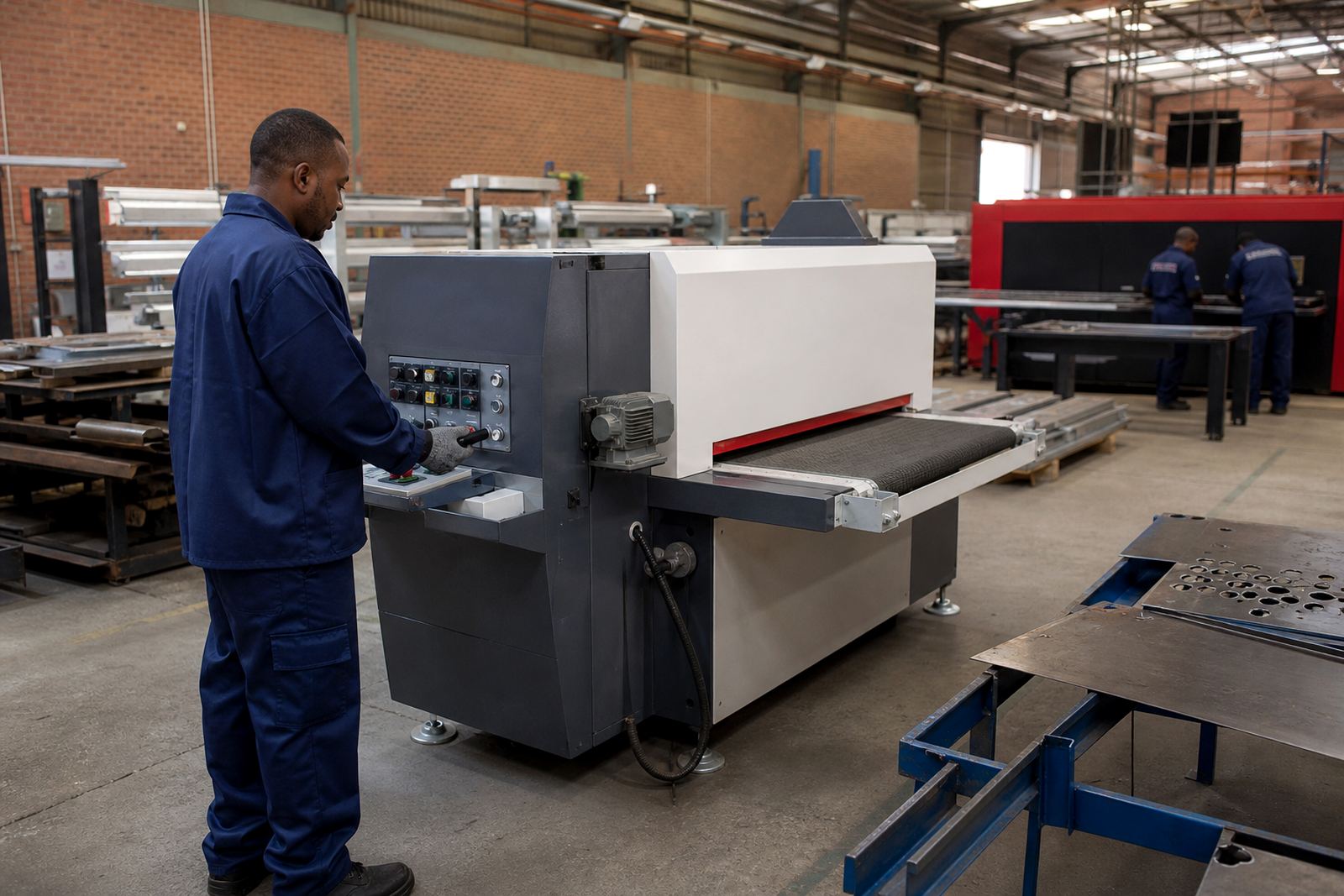
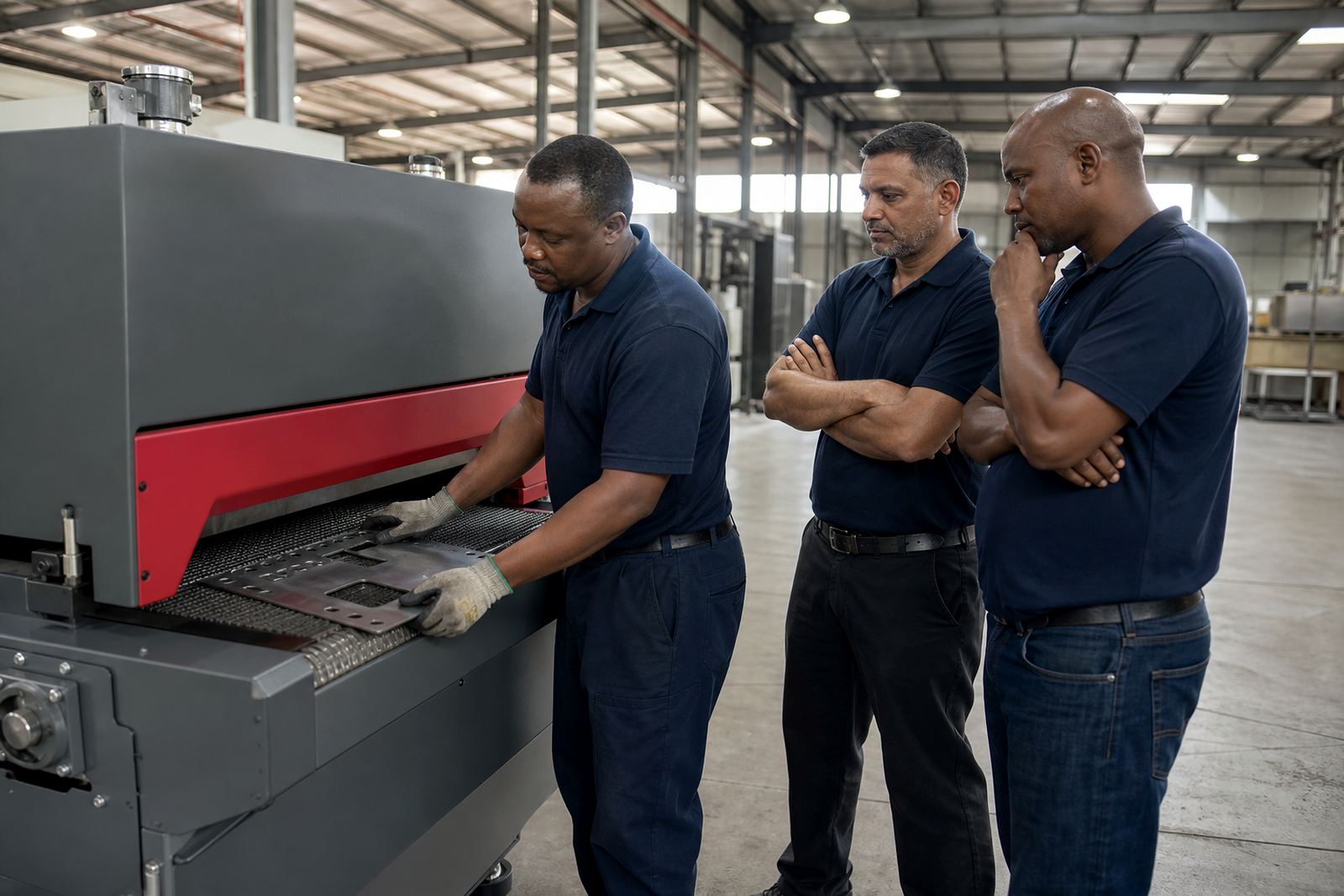
Training covers safe start-up, correct loading, edge-handling checks and shutdown routines. We also show operators how to identify when a part needs a second pass and when a simple setting change can improve the finish immediately. That kind of judgement saves time and cuts down on scrap.
We keep the session hands-on. Operators learn where to check for wear, how to listen for changes in the machine, and what to do if a part starts feeding unevenly. For plants in load-shedding affected areas, we also cover safe restart routines after power interruptions, because a clean restart matters as much as the cut itself.
- Safe machine use and guarding checks
- Loading and part orientation
- Setting changes for finish control
- Recognising wear on abrasive and contact parts
- Simple fault reporting before small issues become downtime
We can also include supervisors in the session so they understand what to watch for on the floor. That helps with shift handovers and reduces the chances of one team running the machine differently from another.
Prepare the Workshop Before Training Day
A bit of prep makes the session smoother and gets better value from the time on site. We usually ask clients to have the machine installed, powered and ready with the normal consumables on hand. The floor should be clear around the machine and the parts waiting for training should be sorted by type if possible.
For coastal sites, especially where humidity is high, it helps to check storage conditions for abrasives and spare parts before the session. Damp consumables can affect performance and make it harder for operators to understand what a good result should look like. In inland workshops, dust build-up and air quality are often the bigger issue, so we adjust the preparation advice accordingly.
- Clear working space around the machine
- Have typical test parts ready for sample runs
- Check power supply stability and phase balance
- Keep spare abrasives, belts or finishing media nearby
- Assign the operators who will use the machine most often
If your workshop in Rustenburg, Pretoria or Johannesburg has multiple shifts, we can plan the session so each group gets the same instruction and no one is left guessing later.
Use Sample Parts to Prove the Settings
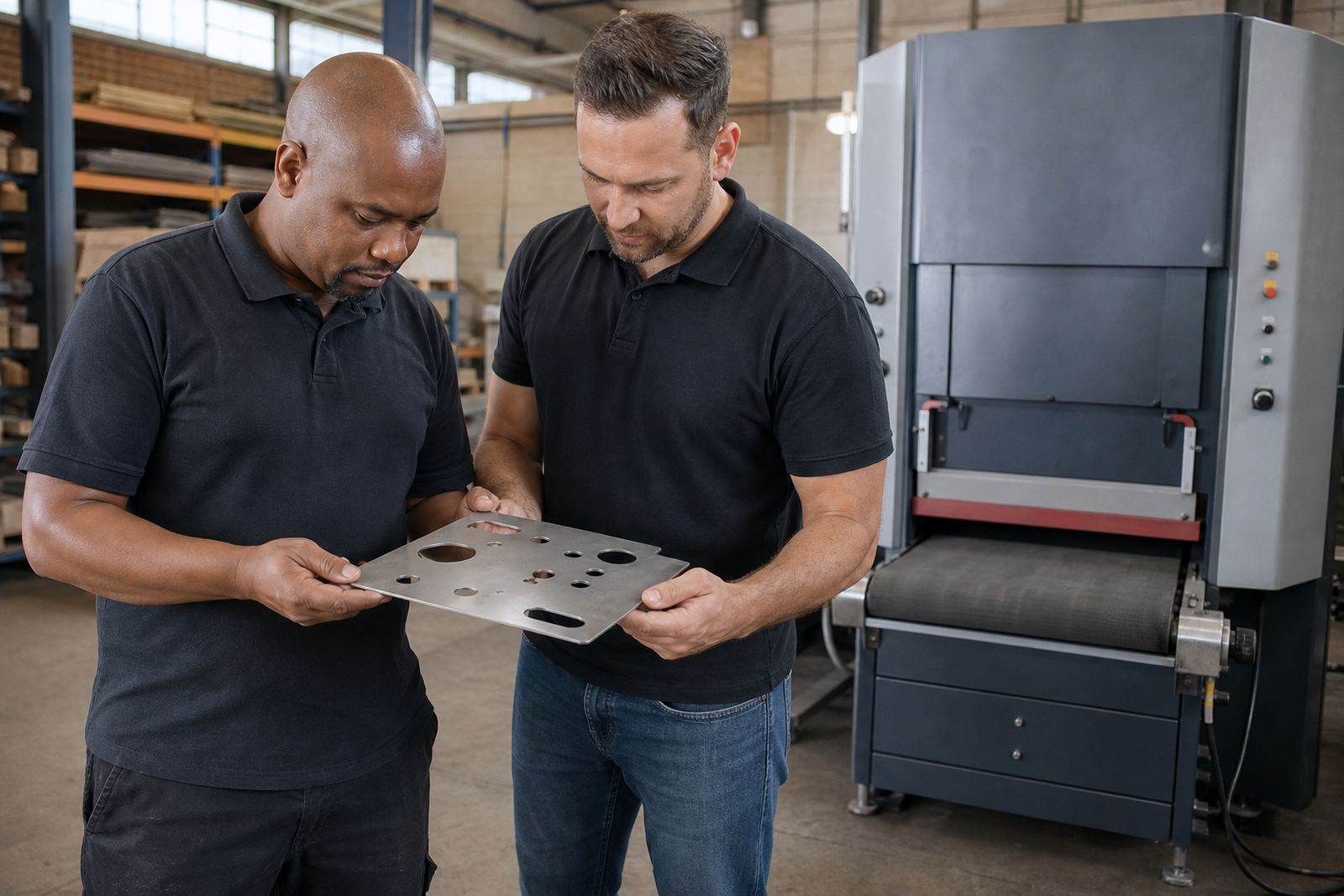
Sample part testing is one of the most useful parts of operator training. Rather than relying on theory, we run real parts through the machine and compare the before and after finish. That gives the team a clear reference for what proper deburring should look like on your products.
We look at edge quality, corner consistency, surface marks and whether the part remains flat after finishing. If a part needs a lighter touch, a different feed speed or a change in abrasive sequence, we show the operators how to make that adjustment and test it again. The goal is repeatability, not guesswork.
In many shops, the first training run also exposes bottlenecks in upstream cutting or sorting. If parts are arriving mixed, stacked poorly or with excessive slag, we can flag that during the session so the production team knows where the real problem starts.
Train Supervisors to Keep the Standard Steady
Good training should not end when the machine stops. Supervisors need a simple way to check whether the finish is holding up across shifts and whether the operator is using the same method every day. We help set that standard during the session so it can be repeated without drama.
This is also where production planning help becomes useful. If the machine is being used for high volume work, the team may need a cleaner schedule for part flow, maintenance stops and abrasive replacement. A small change in planning can prevent a rushed shift from causing a poor finish on a full batch.
- Set a clear visual standard for finished parts
- Use the same check points on each shift
- Record abrasive changes and wear trends
- Flag faults early instead of running through them
For larger sites in Durban or Cape Town, we often recommend assigning one trained operator per line and one relief person who understands the basics. That keeps production moving when someone is absent or when orders spike unexpectedly.
Book Follow-Up Support and Refresher Training
Even a strong first session benefits from follow-up. Once the team has used the machine for a few weeks, we can review settings, check finish results and correct any habits that have crept in. This is especially useful after a move, a breakdown repair, or when a new operator joins the line.
We also support annual service contracts, preventive maintenance and breakdown repairs if your training uncovers a machine issue rather than an operator issue. If the machine is underperforming because of worn parts, poor alignment or inconsistent power supply, we can help trace the cause and get it back on track.
To plan training, send an enquiry through our contact page with your machine type, material range, site location and the number of operators who need training. We work with manufacturers and fabricators across South Africa from Wadeville and the East Rand to Johannesburg, Pretoria, Durban, Cape Town and Rustenburg.