Start with the biggest part you need to finish
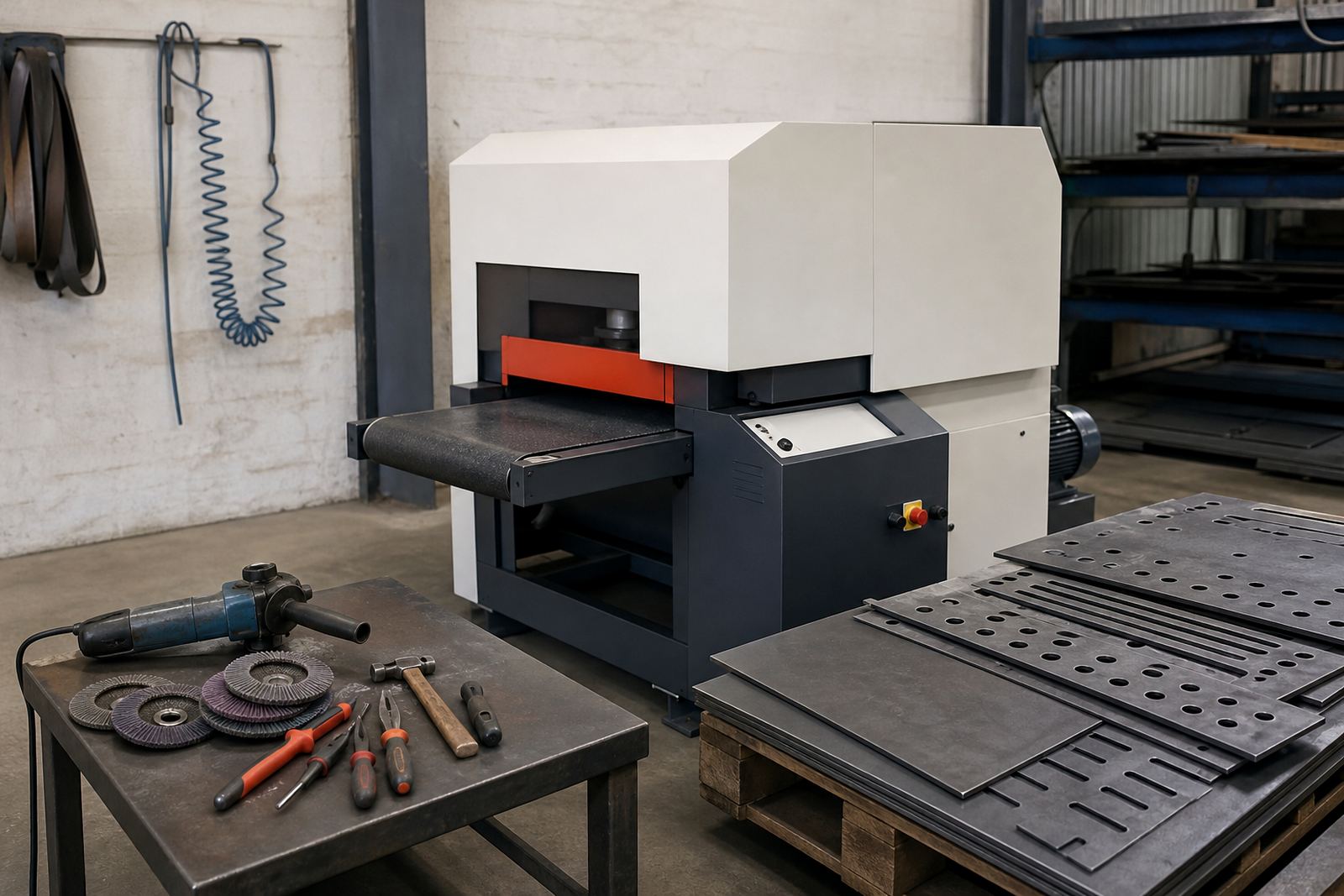
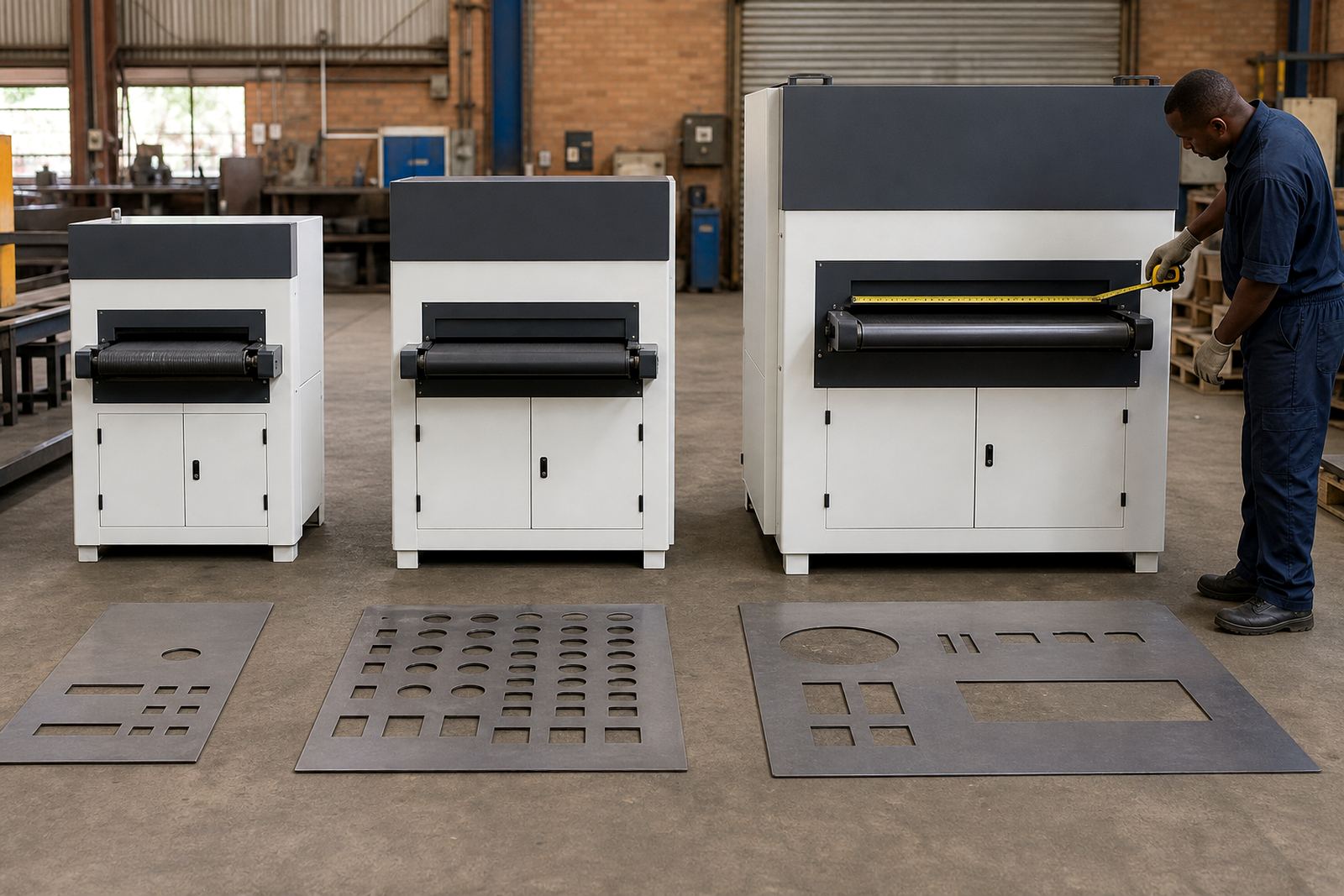
The first check is simple: measure the largest laser-cut sheet or component you need to deburr on a normal production week. Work from finished part size, not only raw sheet size, because parts often come off the laser nested and then separated before finishing. A machine that handles 1 250 mm by 2 500 mm sheets may still be too tight if your longest parts need extra infeed and outfeed room for safe handling.
On lighter jobs, smaller machines can work well for brackets, flanges and panels. For larger fabricators in Johannesburg, Pretoria or Durban, a wider machine often reduces manual lifting and keeps operators moving. If you deal with mixed batches, leave allowance for clamps, edge guides and the way operators load material under real shop conditions, not the brochure conditions.
Match machine size to your daily throughput
Throughput is where machine size becomes a production decision. A compact machine may suit a workshop running short batches, but if you process repeated laser-cut parts all day, the feed width and table length should support faster loading and fewer stops. If the machine is undersized, operators spend more time shifting workpieces and less time finishing metal.
Ask how many parts must pass through in one shift, and whether the finishing step is a bottleneck after cutting. In many South African workshops load-shedding already disrupts flow, so it helps to choose a size that lets you catch up quickly when power returns. A machine with the right working width and stable feed system can reduce overtime and help keep delivery dates under control.
- Count the average number of laser-cut parts finished per shift.
- Note peak days versus quiet days, not only monthly totals.
- Check if the machine can handle mixed part sizes without constant changeover.
- Allow for future growth of at least one production step, not just current volumes.
Check your floor space before you choose
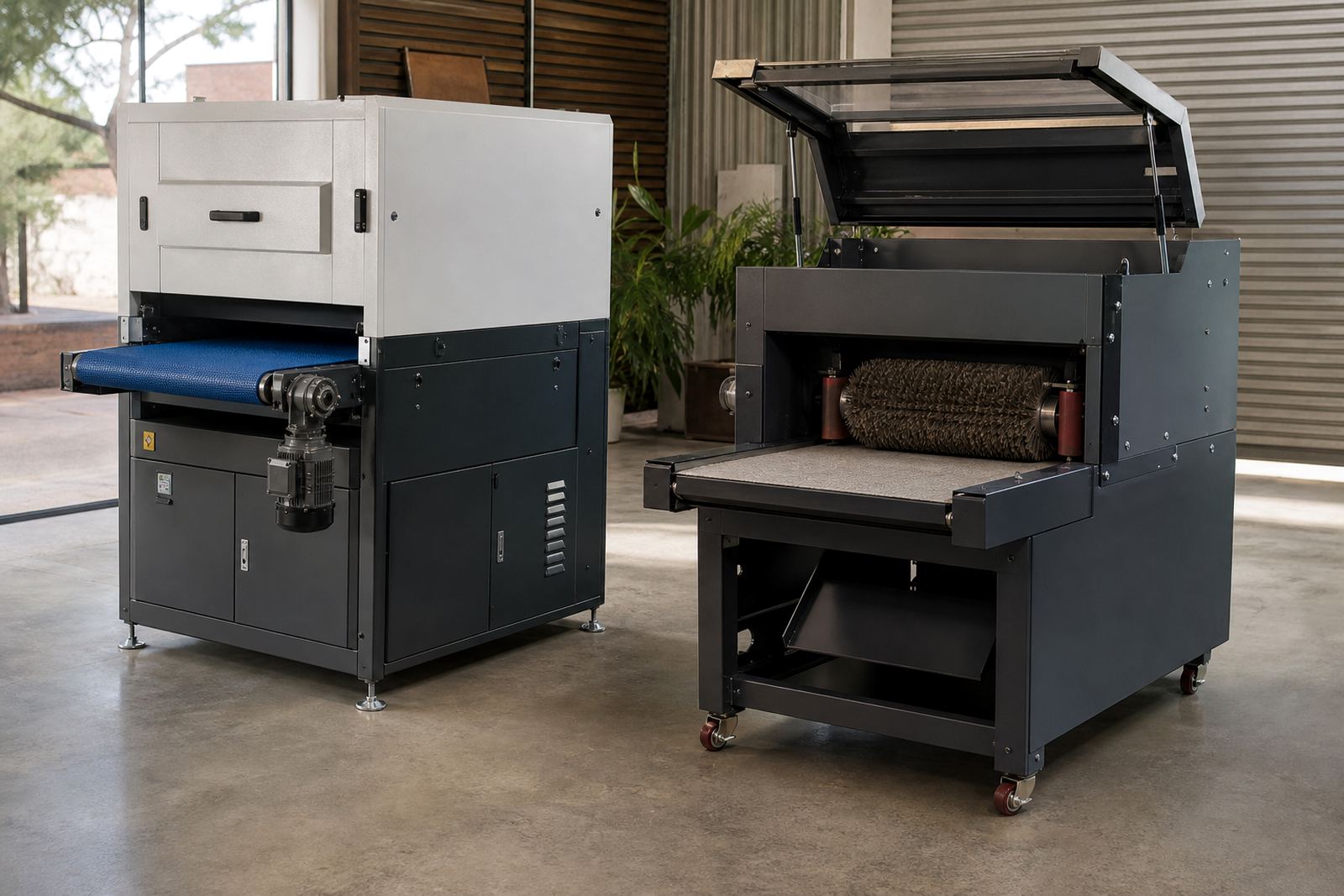
Floor space is often tighter than expected, especially in busy workshops around Wadeville, Germiston and the East Rand. A machine can fit on paper and still cause trouble in practice if operators cannot walk around it, move trolleys past it, or bring in sheets from the laser area. Leave room for loading, maintenance access and safe exit paths.
Also think about service access and housekeeping. Dust, abrasive waste and offcuts build up quickly in metalworking shops, so the machine needs space for cleaning and routine checks. In coastal areas like Durban or Cape Town, humidity can also affect stored material and machine condition, so the layout should support dry, organised storage nearby. A crowded layout may look efficient but it usually slows things down.
Use a simple size checklist before you order
Before you commit to a machine, run through a practical checklist with your team. This helps avoid buying a unit that is too small for your parts, or too large for the workshop you have. It also makes it easier to compare options if you are planning installation, relocation or an annual service contract.
- Largest sheet or part length and width.
- Average batch size per job.
- Number of shifts per day.
- Available floor area and doorway access.
- Power supply stability and backup arrangements.
- Operator skill level and training needs.
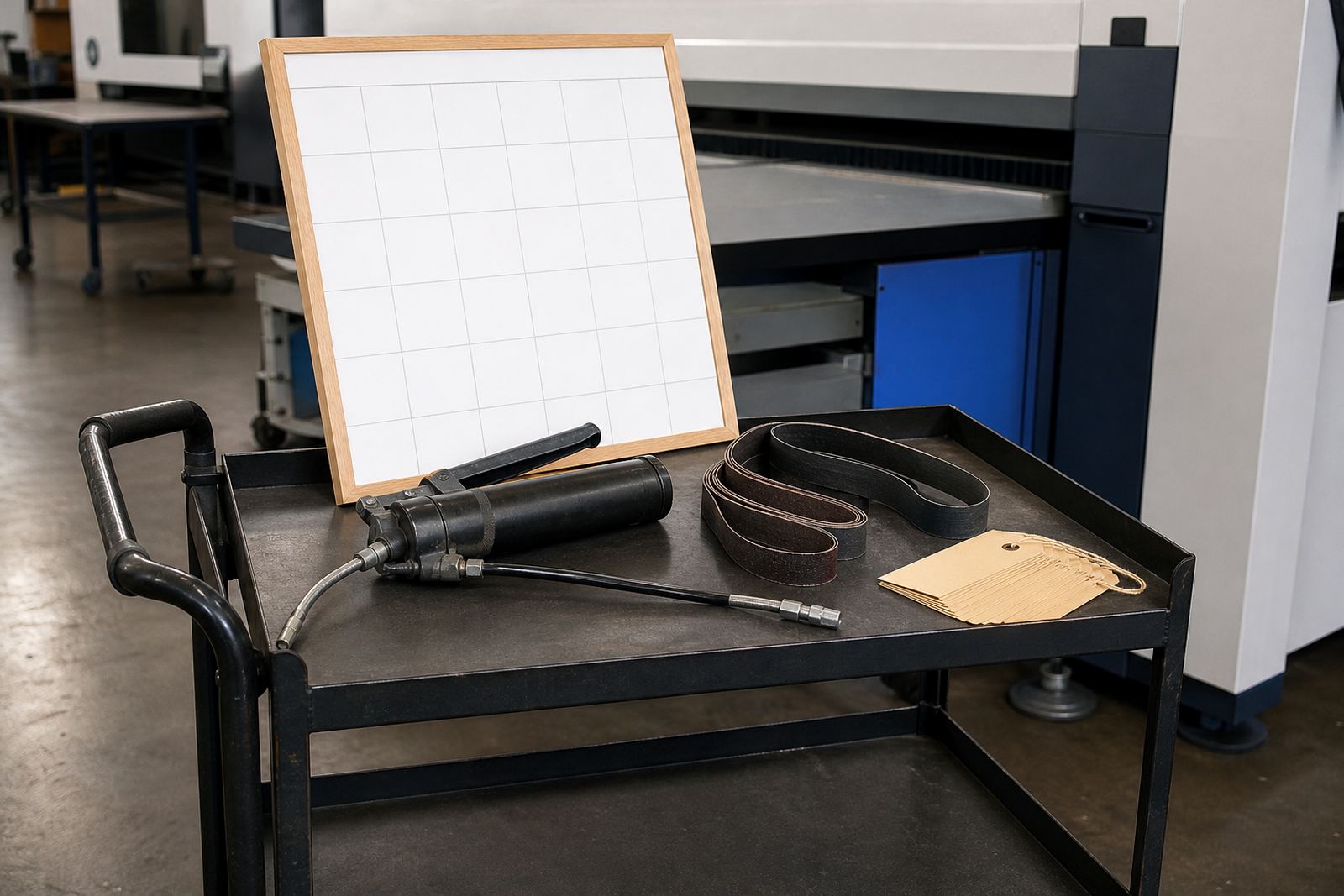
- Space for abrasive replacement, cleaning and spares storage.
If more than one item on the list is uncertain, it is usually better to test sample parts first. That gives you a clearer picture of handling time, finish quality and how the machine fits into your current production flow.
Plan for part mix, not only one job type
Many fabricators do not run one product all day. You may finish small laser-cut brackets in the morning and larger panels after lunch. That means the right machine size should suit a varied workload, not only your heaviest item. A machine that handles only one part format can create delays when the job mix changes, which it often does in jobbing shops.
Think about minimum and maximum part sizes, thickness ranges and how often the work changes over. If you often switch between mild steel, stainless steel and coated sheet, process consistency matters as much as physical size. An applications check or sample part testing can show whether the machine size and setup will handle the full range without slowing production or causing unnecessary rework.
Choose a size that can grow with your workshop
Buying for today only is risky if your output is already climbing. A slightly larger machine can make sense if you expect more laser cutting, more shifts or new contracts in Gauteng, KwaZulu-Natal or the Western Cape. The aim is not to overspend, but to avoid replacing the machine too soon because the original size was too tight.
At Deburring, we work with fabricators who need practical guidance on machine installation, operator training, preventive maintenance and process optimisation. If your team is unsure about sizing, bring the part dimensions, weekly volumes and available floor plan together first. That gives you a proper basis for choosing a machine that fits the job, the space and the long term production plan.