Start With the Machine’s Real Workload
A maintenance plan only works if it matches how the machine is actually used. A unit that processes light batches a few times a week in Wadeville will need a different schedule from one running full shifts for laser-cut parts in Johannesburg, Durban or Cape Town. Start by noting the number of hours per day, the type of steel being processed, the thickness range and how often abrasive components are changed.
Do not build the plan around ideal conditions. Coastal humidity, fine dust, heavy production days and load-shedding interruptions all affect wear. If power cuts are common at your site, add a restart check after every outage so belts, brushes, electrical settings and safety stops are verified before production resumes.
Set a Simple Daily Routine for Operators
Daily checks keep machine time steady and help the operator spot problems before they become breakdowns. These checks should take only a few minutes at the start of shift, after lunch and at the end of the day if the machine is busy.
- Check that guards, covers and emergency stops are working properly.
- Inspect abrasive heads, belts, brushes or finishing media for uneven wear.
- Remove offcuts, dust and metal fines from the working area.
- Look for unusual noise, vibration or heat around drive parts.
- Confirm that parts are feeding squarely and the finish is even across the sheet.
- Record any faults in a simple logbook before the next shift starts.
Keep this routine visible next to the machine. When the team follows the same steps every day, small issues are easier to catch and production stoppages stay shorter.
Weekly Checks That Protect Finish Quality
Weekly upkeep is where you move beyond cleaning and into basic condition control. This is the time to check alignment, tension, fasteners and consumable wear. If the machine is running abrasive systems, edge-finishing heads or multiple passes on heavy sheet, weekly inspection matters even more.
A good weekly routine should include a close look at settings that affect part quality. If edges are starting to show burrs again, or the finish looks uneven from one side of the sheet to the other, do not assume the machine is fine because it still runs. Small setup drift can quietly affect output for days.
- Check tension on belts and drive components.
- Inspect contact rollers, guides and finishing heads for wear.
- Clean filters, extraction points and dust collection areas.
- Verify safety labels, switches and electrical cables.
- Test a sample part and compare it to the normal finish standard.
Build a Monthly Service Window Into Production
Monthly maintenance should be planned into the calendar, not squeezed in when the machine happens to be idle. Set aside a service window during a slower production period, month end changeovers or planned downtime. For many South African fabricators, that may be a Saturday morning or a midweek slot after the main shift is done.
This is the right time for deeper inspection, parts replacement and a proper functional check. Service work should include lubrication where required, a review of electrical connections, calibration checks and replacement of worn consumables. If your plant runs in a high humidity area, also check for corrosion on exposed metal parts and connectors. Coastal sites often need extra attention, since salt in the air can shorten component life if left unattended.
Use the monthly window to compare actual downtime against planned downtime. If the same fault keeps returning, the issue may be process related rather than mechanical, so the maintenance plan should be adjusted.
Keep Spares and Consumables Ready Before You Need Them
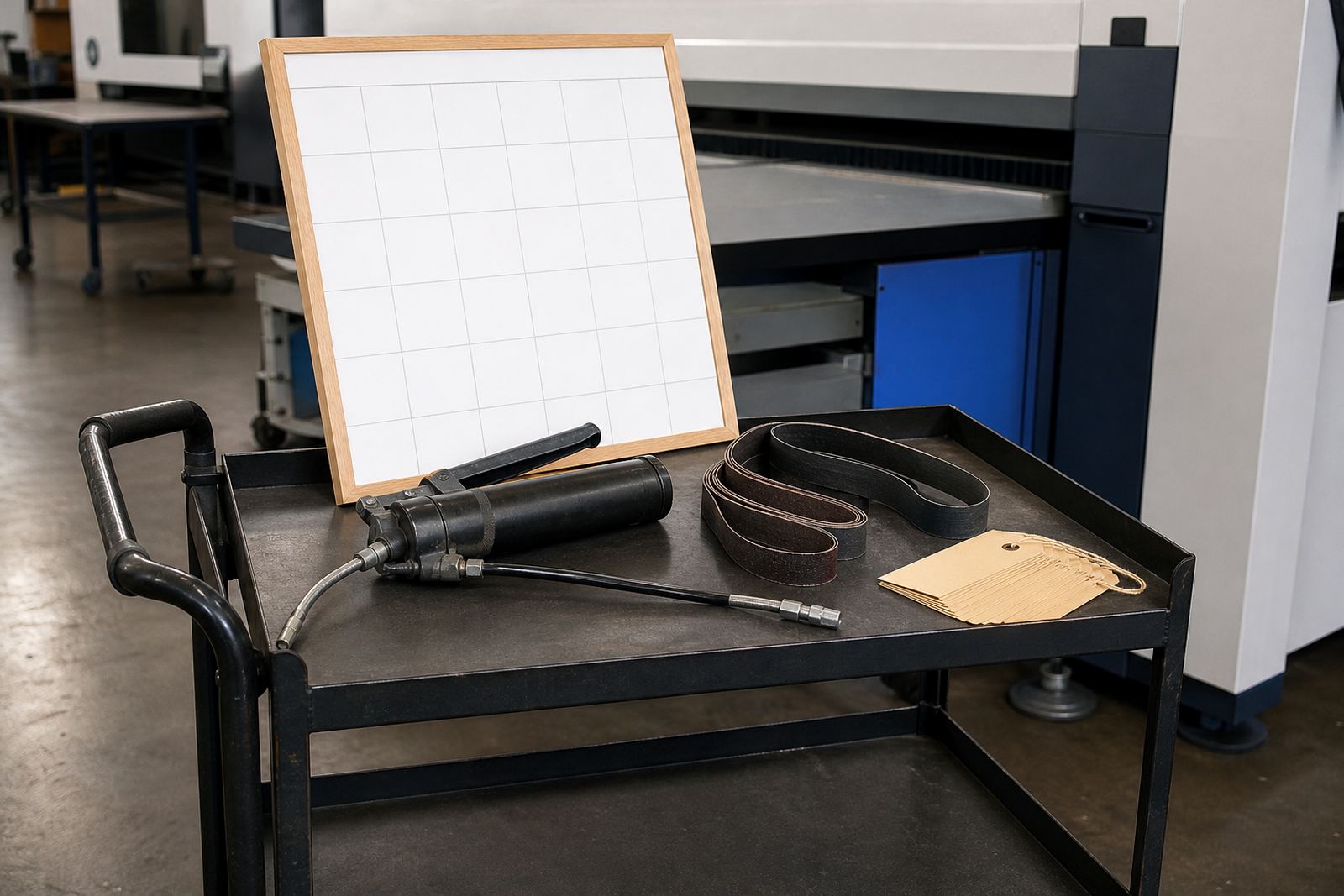
Waiting for a worn item to fail before ordering a replacement creates unnecessary pressure. A practical maintenance plan includes a small stock of the items that wear most often, especially if your production is tied to delivery dates for local fabricators and OEM work. The exact list depends on the machine and the materials being processed, but the aim is the same: avoid idle time.
Store spares in a clean, dry place and label them clearly. If multiple operators use the same machine, make sure they know which items are approved for replacement and which parts must be fitted by a technician or service supervisor.
- Keep fast-moving consumables on hand.
- Track part numbers and replacement dates.
- Check stock levels before long weekends and shutdown periods.
- Protect electrical spares from dust and moisture.
- Match replacement parts to the machine’s current setup, not an old configuration.
Use Records to Improve the Plan Over Time
Maintenance records should be short, practical and easy to keep up. A page in a logbook or a simple maintenance sheet is enough if it is used properly. Record the date, the fault found, the action taken, who carried out the work and whether the machine returned to normal output.
After a few months, the records will show patterns. You may notice that a certain abrasive wears faster on thicker material, or that a particular shift has more cleaning misses. That information helps you plan training, spare parts and service intervals more accurately. It also helps when a machine audit is needed before a move, expansion or annual service contract review.
When the same issue appears more than once, treat it as a process issue as well as a maintenance issue. That may mean changing the inspection timing, adjusting production planning or bringing in support for sample part testing and process optimisation.
A Practical Checklist for the Next 30 Days
If you want to get started without overcomplicating things, use a 30-day planning cycle. Split the work into daily checks, weekly checks and one planned service window. Keep it simple enough that the team can follow it even during busy periods and power interruptions.
- Confirm the daily inspection list is posted at the machine.
- Schedule one weekly inspection slot and protect it in the shift plan.
- Set a monthly service date before the calendar fills up.
- Review the spares list and replace any low items.
- Check whether current production volumes still match the maintenance routine.
- Capture faults and repeat issues for the next review meeting.
A maintenance plan should support production, not interrupt it. When the routine is realistic, the machine stays cleaner, the finish is more consistent and the team spends less time reacting to preventable stoppages.