
1. Confirm the machine footprint and moving route
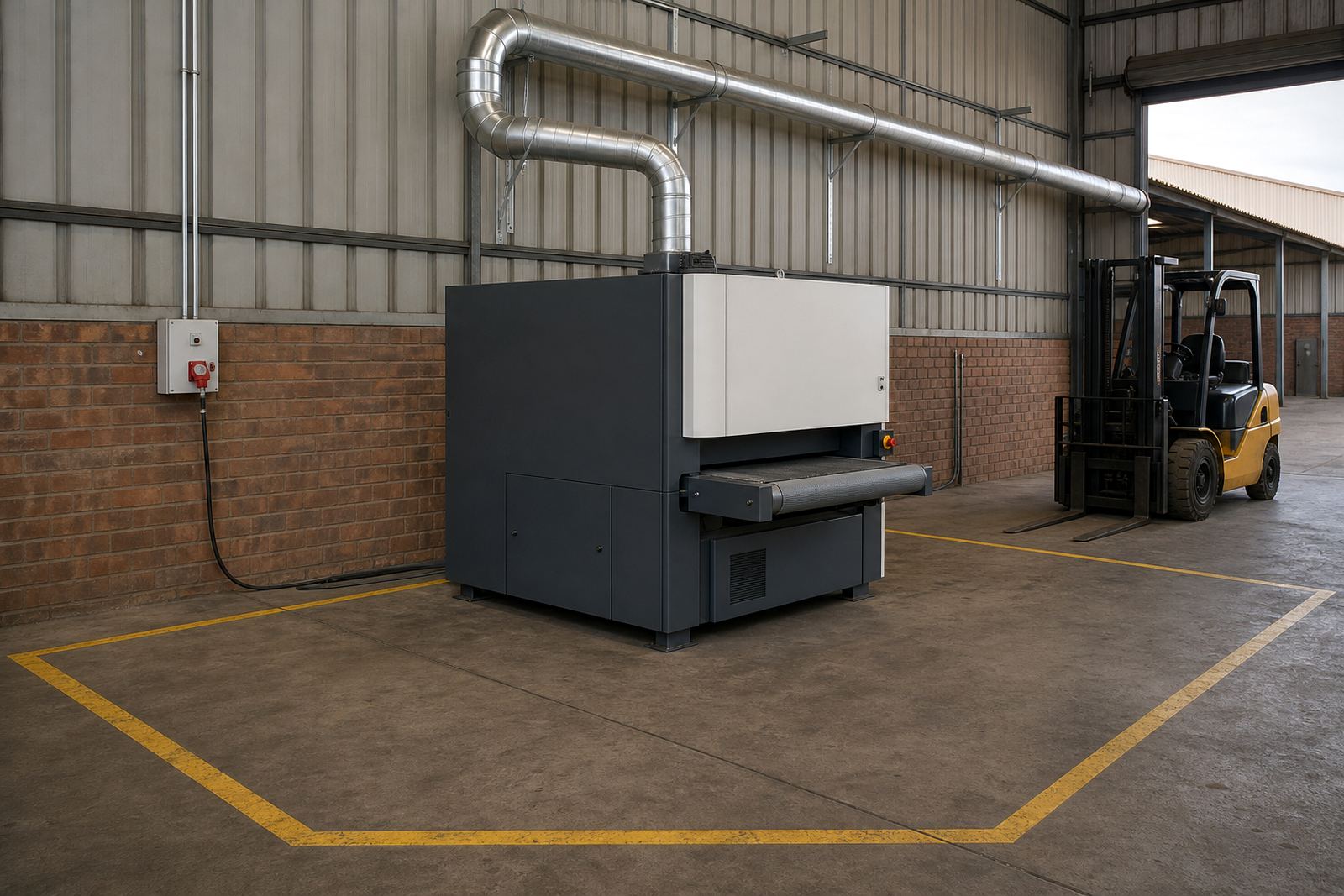
Start with the exact machine size and weight, then measure the route from the delivery point to the final position. In Wadeville, Germiston and other industrial areas, it is common to have narrow gates, low lintels or shared yard access, so the full path must be checked before delivery day.
Make sure the floor area leaves enough space for loading and unloading of sheets, normal operator movement and routine cleaning. A machine that is squeezed too tightly becomes hard to service and slows production, especially when you are running mixed batches of laser-cut parts.
- Measure door widths, gate openings and turning circles.
- Check overhead height for forklifts, slings or gantries.
- Confirm the final position allows access to all service panels.
- Leave space for infeed, outfeed and stack trolleys.
2. Check floor strength, level and anchoring points
Edge-finishing equipment needs a firm, level base. Uneven floors can cause vibration, tracking issues and early wear on rollers and tooling. In older workshops, cracked slabs or patched concrete should be inspected before installation so any repairs can be done first.
If the machine will be fixed in position, confirm anchor points and slab thickness early. This matters for production stability and also for safety when operators are feeding heavy sheet material through the line.
- Confirm the floor is level across the full machine footprint.
- Inspect for cracks, hollow spots and weak joints.
- Verify slab thickness for anchor bolts where required.
- Allow for forklift traffic, pallet jacks and maintenance access.
3. Prepare electrical supply and backup power
Before commissioning, confirm the correct power supply, isolation point and protection devices. South African workshops often deal with load-shedding, so it is worth checking how the machine will behave during interruptions and restart conditions. A clean supply helps protect drives, controls and sensors.
Have a qualified electrician confirm the installation against the machine requirements. If the site uses a generator or inverter backup, check that it can handle the starting and running load. Poor supply quality can cause nuisance trips and inconsistent finishing results, which slows the whole line.
- Check voltage, phase and frequency at the supply point.
- Confirm the main isolator is accessible and clearly labelled.
- Fit the correct protection and earthing arrangement.
- Test backup power arrangements before the machine arrives.
4. Set up compressed air, dust control and clean working conditions
Many finishing processes rely on compressed air for cleaning, actuation or chip removal. If the air is wet or dirty, it can affect performance and shorten component life. On the coast, humidity in places like Durban and Cape Town can be a real problem, so air treatment and proper drainage need attention.
Also look at dust and swarf control. Laser-cut sheet metal often carries fine burrs, oxide and abrasive residue, so the work area should be kept tidy. Clean conditions help protect moving parts and make operator training easier.
- Confirm air pressure and flow at the point of use.
- Check filters, water traps and drain points.
- Provide space for dust extraction or waste removal where needed.
- Keep the floor dry and clear of offcuts, oil and packaging.
5. Plan material flow, safety and operator access
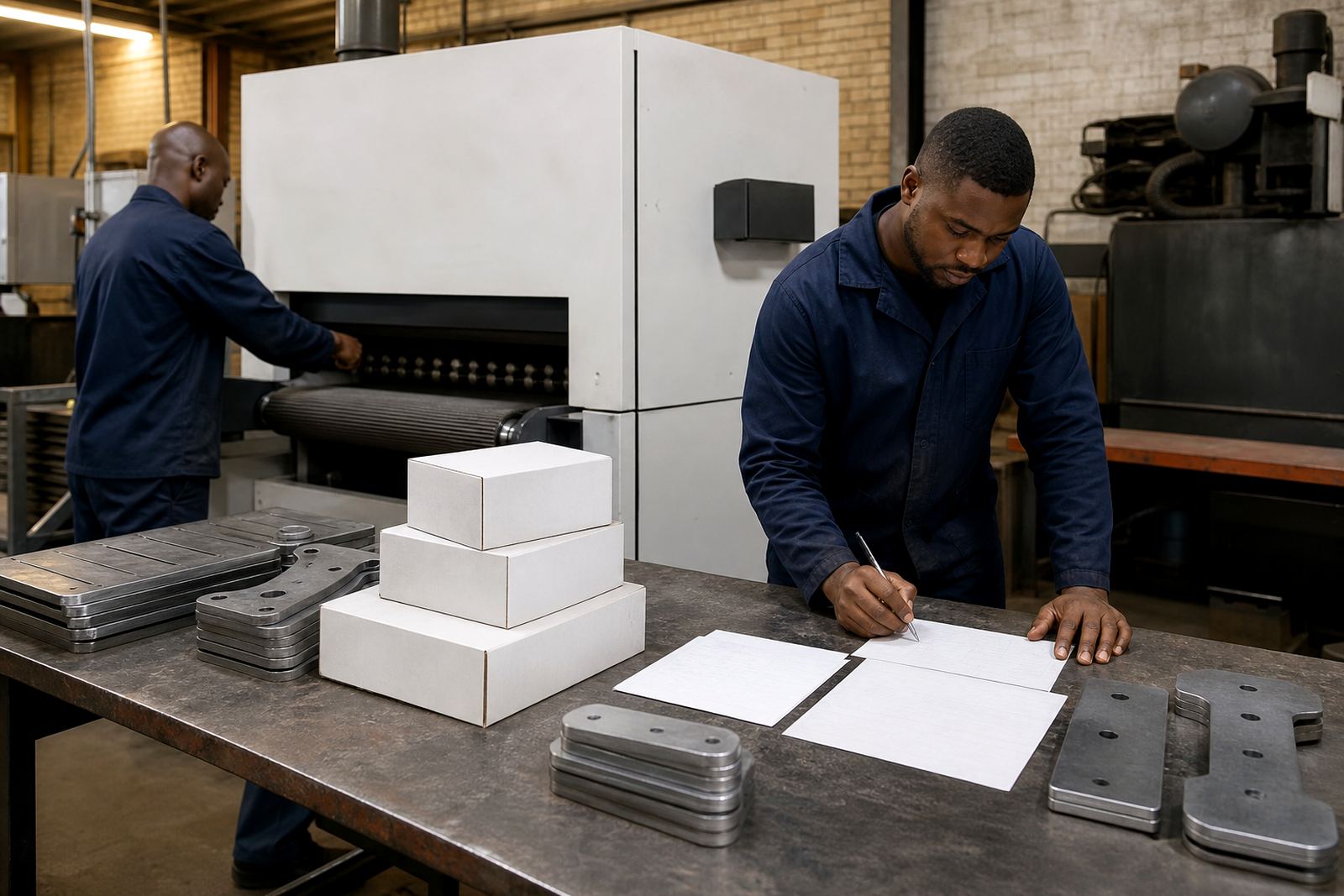
Think through how sheet metal will move into the machine and how finished parts will leave it. If the route is awkward, operators lose time and the risk of damage goes up. This is especially important for busy plants in Johannesburg, Pretoria and Rustenburg where multiple jobs may run through the same bay.
Safety should be checked before the first sheet goes through. Guarding, emergency stops, signage and access control all need to be in place. Municipal or site safety rules may also apply, so it is best to confirm these before installation day rather than after the machine is parked in place.
- Mark pedestrian and forklift routes clearly.
- Confirm emergency stop positions are visible and reachable.
- Provide safe stacking areas for raw and finished parts.
- Make sure operators can load material without strain or awkward lifting.
6. Final readiness check before commissioning
Once the site is prepared, do a last walk-through with the installation team and your production lead. This is the time to check services, access, housekeeping and the details that are easy to miss. A good handover starts with a clean site and the right people on hand.
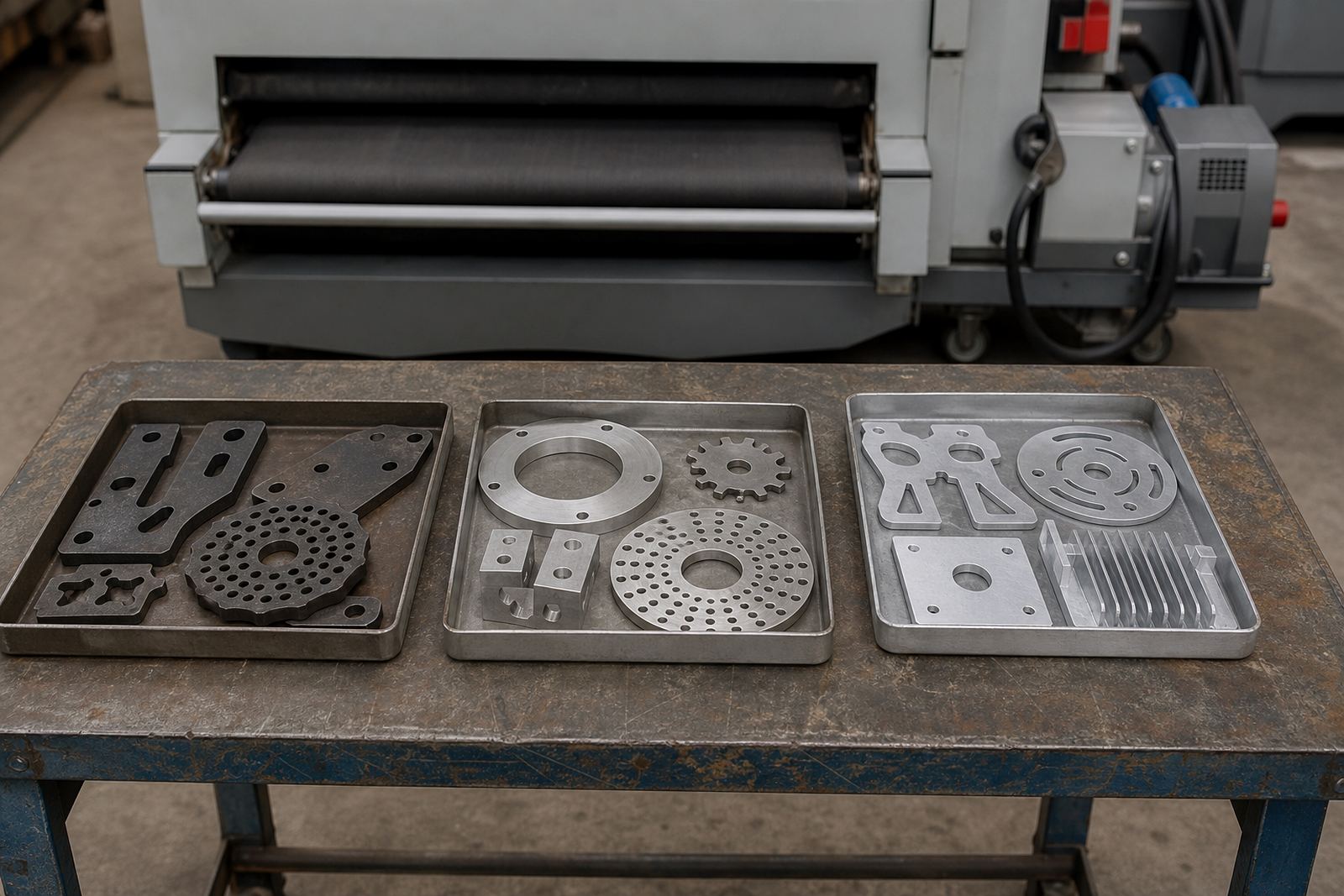
It also helps to have sample parts ready for testing. That way the team can check finish quality, feed settings and process flow before regular production starts. Small issues are easier to solve on the day than after a full shift has started.
- Confirm power, air and floor conditions are ready.
- Clear the delivery route and the working bay.
- Have the first jobs, drawings and sample parts on site.
- Nominate one site contact for approvals and questions.
Keep this checklist close and you will avoid delays, missed connections and unnecessary downtime. A properly prepared site makes installation smoother and helps the machine start earning its keep from day one, not after a week of sorting out avoidable problems.
What happens when the site is not ready
If the site is not ready, delivery may need to be postponed, which can affect production planning and labour schedules. In many workshops, one delayed machine can hold up downstream work, especially when finishing is the last step before packing or dispatch. It also creates extra handling, which increases the chance of surface damage.
Use the checklist early enough to fix problems before the equipment arrives. That usually means confirming the site at least a few days in advance, and sooner if there are floor repairs, electrical upgrades or access restrictions to sort out.