
What edge rounding means on cut sheet metal
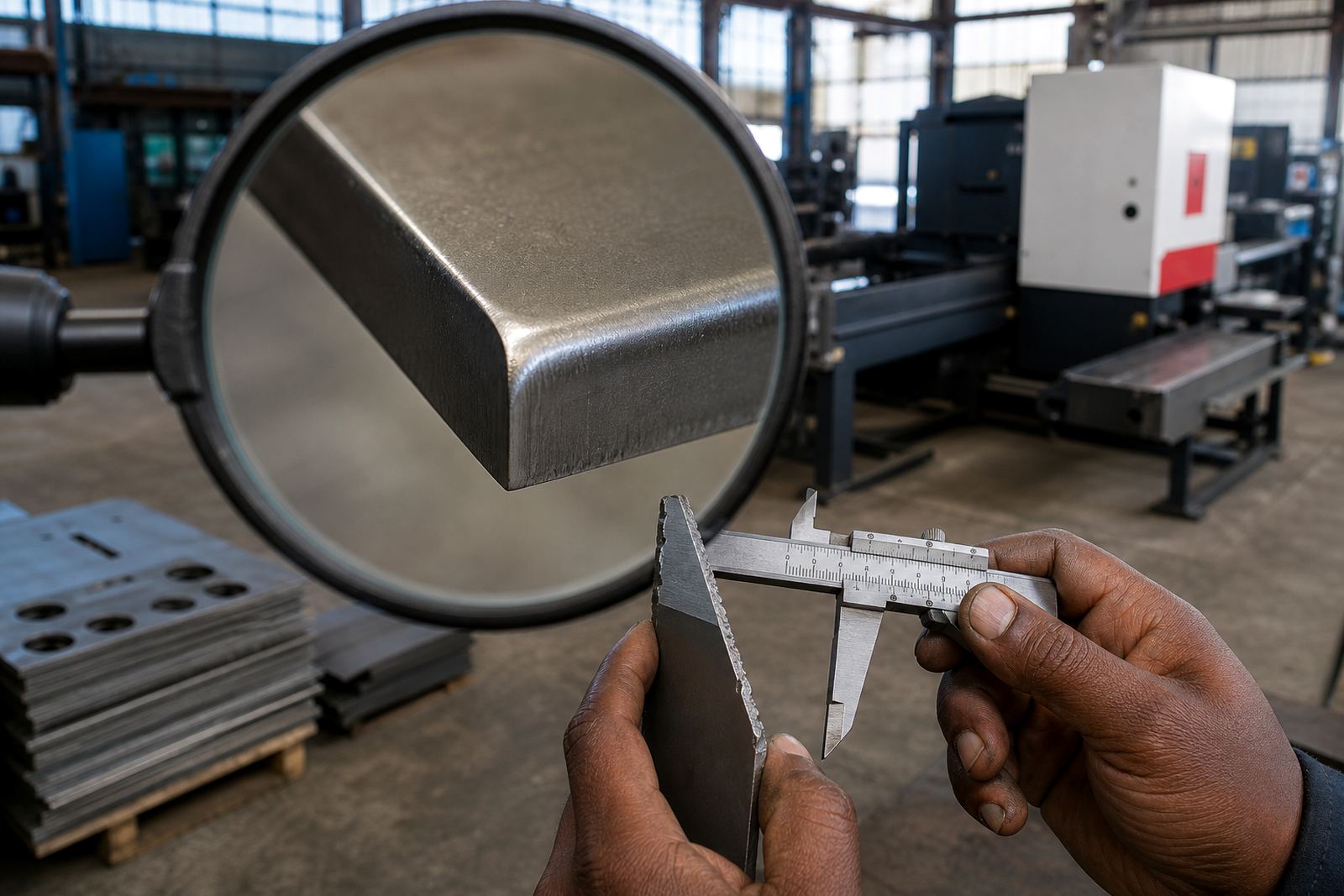
After laser cutting, the edge is usually sharp enough to catch a hand, mark a glove or interfere with the next process. Edge rounding removes that sharp peak and leaves a more even edge radius, without changing the part dimensions in a way that affects fit. On sheet metal jobs, this is usually done as part of a deburring and edge-finishing cycle, especially where parts are handled by operators or moved through powder coating, welding and assembly.
In practice, edge rounding is not just about making a part feel safer. It also reduces the small burrs and raised slivers that can cause problems later in production. If a part is going for folding, fastening or coating, those edges can become a nuisance very quickly. For fabricators working in Gauteng, KZN and the Western Cape, the need is often the same: cleaner parts, less rework and more predictable throughput.
Where edge rounding adds real value in a workshop
Edge rounding is most useful on parts that are touched often, stacked tightly or installed by hand. It can also help when parts move from laser cutting straight into welding, powder coating or final assembly. A consistent edge finish reduces cut risk for staff and makes the batch look more uniform when it leaves the floor.
It is especially useful on parts with lots of internal cut-outs, slots, tabs and small radii. These areas often hold tiny burrs that are hard to remove by hand. In coastal areas like Durban and Cape Town, a cleaner edge can also help with coating consistency, since sharp burrs and loose particles can affect how the surface takes paint or powder.
- Panels and covers handled by installers
- Frames and brackets going to assembly lines
- Parts that must be powder coated or painted
- Stainless items used in food, medical or hygiene sensitive spaces
- Components with tight nesting and high part counts
A practical edge rounding workflow
A reliable process starts with the laser cut part itself. Check the cut quality first, because heavy dross or severe heat marks may need more than light edge finishing. The machine setup should match the material type, thickness and the finish required. Mild steel, stainless steel and aluminium do not behave the same, so the finishing approach needs to suit the job.
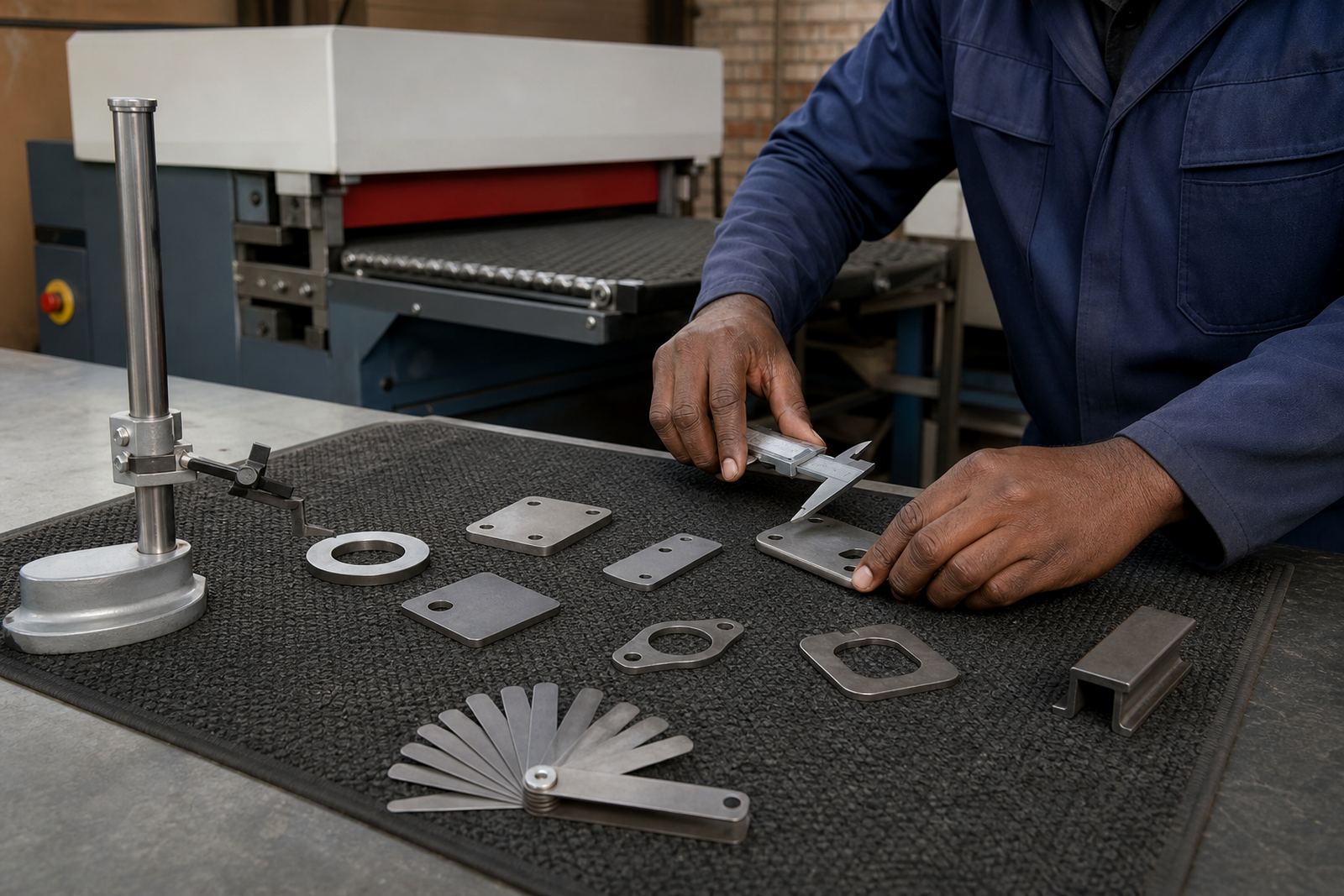
The basic workflow is usually simple: inspect the cut part, remove loose burrs, round the edge to the target finish, and then check the part again before packing or moving it to the next operation. If the shop is running long shifts or dealing with load-shedding, it helps to plan the order of work so the parts that need the most consistent finish are done first. That keeps the process stable if production time gets interrupted.
- Confirm material grade and thickness
- Check for dross, slag and sharp points
- Set the finishing level for the part type
- Test one or two sample parts before bulk running
- Measure the result against the required finish
- Record the setup for repeat jobs
What to check before you choose a finishing method
Not every job needs the same level of edge rounding. Some parts only need a light burr removal, while others need a more consistent rounded edge across all exposed faces. The right choice depends on how the part will be used, who will handle it and what comes next in the process. If the part is going for coating, the finish must support that stage. If it is a hand-held component, safety and feel matter more.
Before choosing a method, look at the batch size, thickness range and target output per hour. A small job with mixed part geometry may need careful setup, while a repeat production run may benefit from a more fixed process and scheduled maintenance. In larger plants around Johannesburg, Pretoria and Rustenburg, this usually means balancing finish quality with cycle time so the line does not slow down.
- Will the edge be exposed after installation?
- Is the part handled repeatedly by operators?
- Does the next process need a clean surface?
- Are there sharp internal cut-outs or narrow slots?
- Is the job a one-off sample or a repeat batch?
Common problems when edge rounding is skipped
Skipping edge rounding can lead to more than a rough finish. Sharp burrs can cut gloves, scratch adjacent parts and create a poor first impression when a customer inspects a batch. In some cases, the issue only shows up later, when parts do not sit neatly in assembly or when coating is uneven around the cut edge.
Another common problem is rework. A fabricator may finish cutting a batch, then discover that the parts need hand deburring before they can move on. That adds labour and slows the whole schedule. It also makes planning harder, especially when the same team is trying to keep up with delivery dates and machine uptime. Good edge rounding from the start reduces these surprises and keeps production flow more steady.
On stainless and aluminium work, poor edge finish can be more visible because the final appearance matters. On mild steel, the issue may be less obvious at first but still affect handling and coating later on. Either way, the cost of sorting it out after the fact is usually higher than getting the edge finish right early.
A simple checklist for better results on every batch
For South African fabricators, the easiest way to keep edge quality under control is to treat it as part of the standard production route, not an afterthought. Keep one checklist for setup, one for in-process checks and one for final inspection. That makes it easier for shift teams and new operators to keep the same standard across different jobs.
When the machine is properly set, the part type is known and the operator knows what finish is expected, edge rounding becomes a repeatable step. It supports better output, fewer handling issues and less rework after laser cutting. For plants that serve Johannesburg, Pretoria, Durban, Cape Town and Rustenburg, that consistency is often what keeps orders moving on time.
- Confirm the required finish before starting
- Test the first parts from each batch
- Check both external edges and internal cut-outs
- Keep the machine clean and the consumables in good condition
- Record any changes in material or thickness
- Review the finish after coating or assembly if needed
When to ask for support on edge finishing
If your parts are still coming out with sharp edges, visible burrs or inconsistent results, it is worth reviewing the process from cut quality through to final finish. The issue may be machine setup, wear on abrasive components, or a mismatch between the part type and the finishing method. A proper sample test can show where the bottleneck is and what needs adjusting.
At Deburring in Wadeville, Germiston, the focus is on helping fabricators choose the right process for their metalwork, then keeping that process dependable in day-to-day production. That can include sample part testing, operator training, preventive maintenance and production planning help. For teams working under pressure, especially where uptime matters and every extra rework step costs time, that support can make a practical difference.