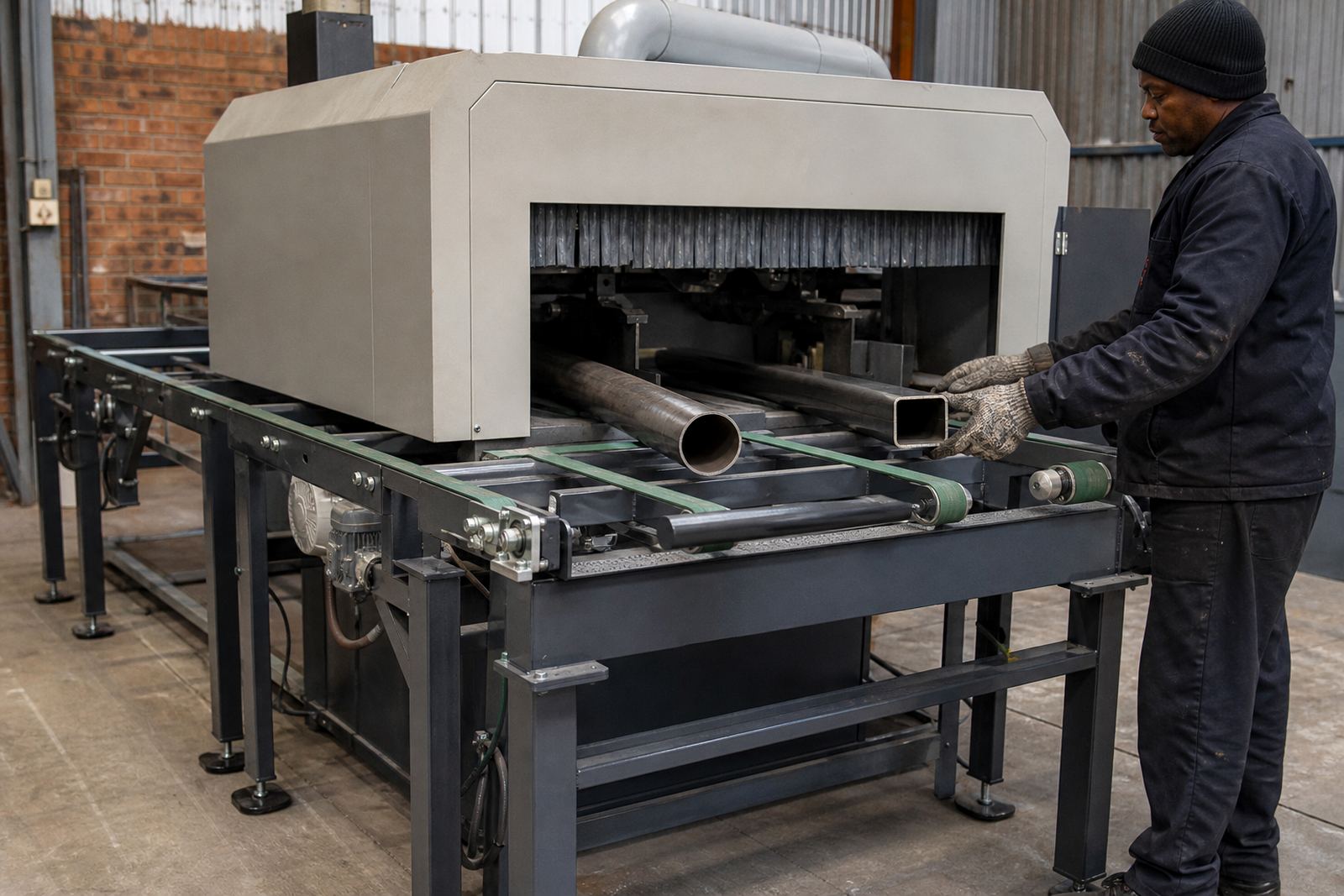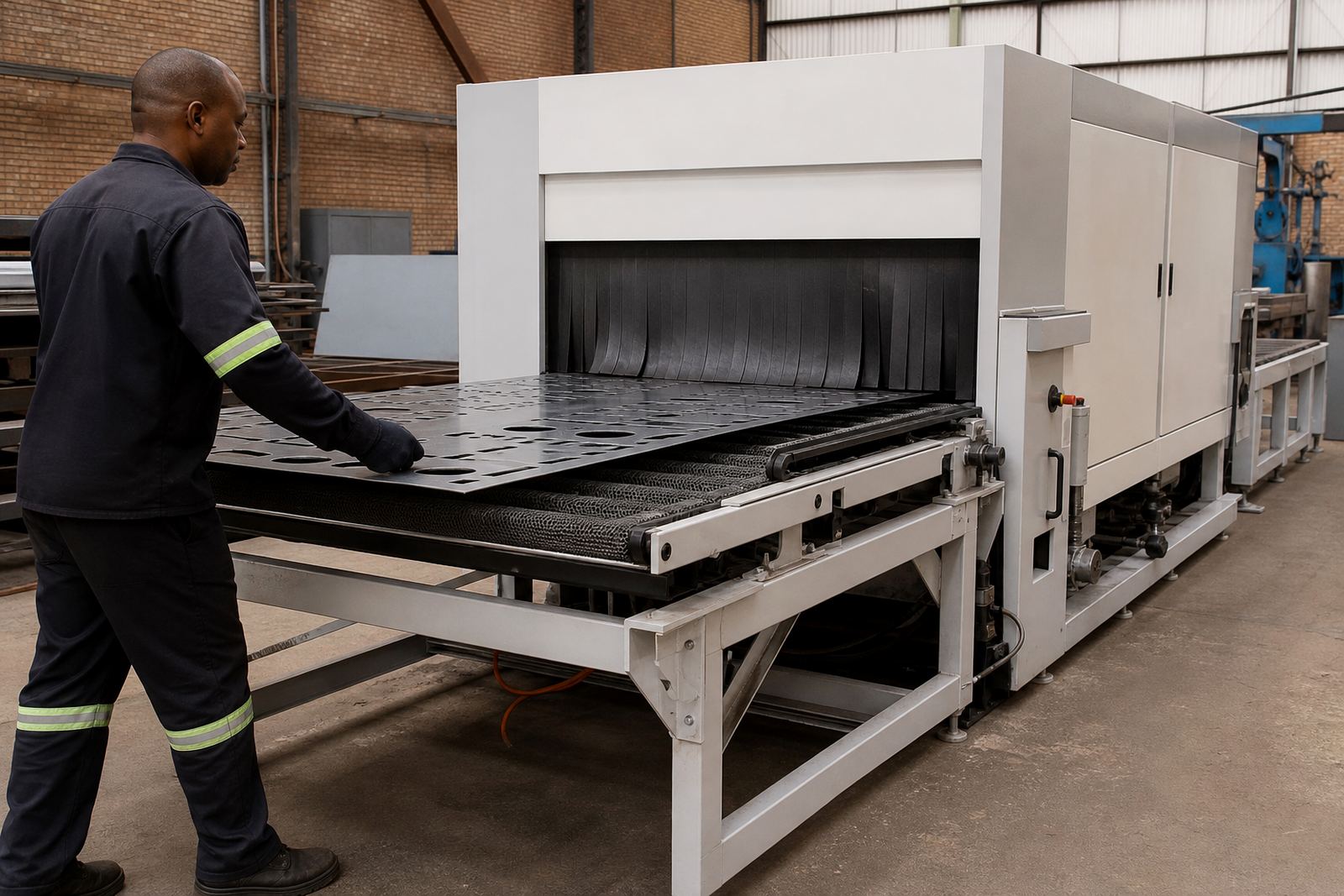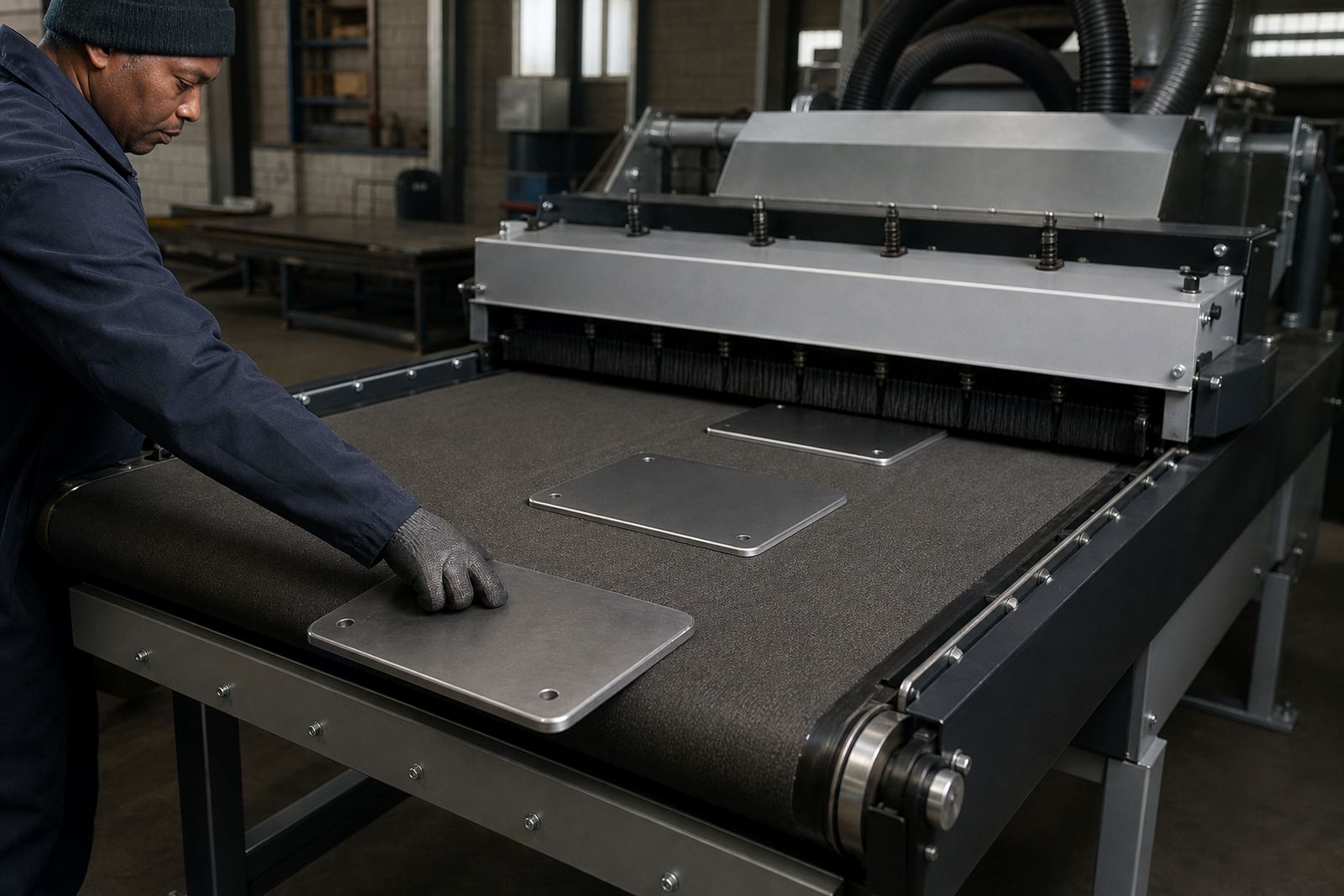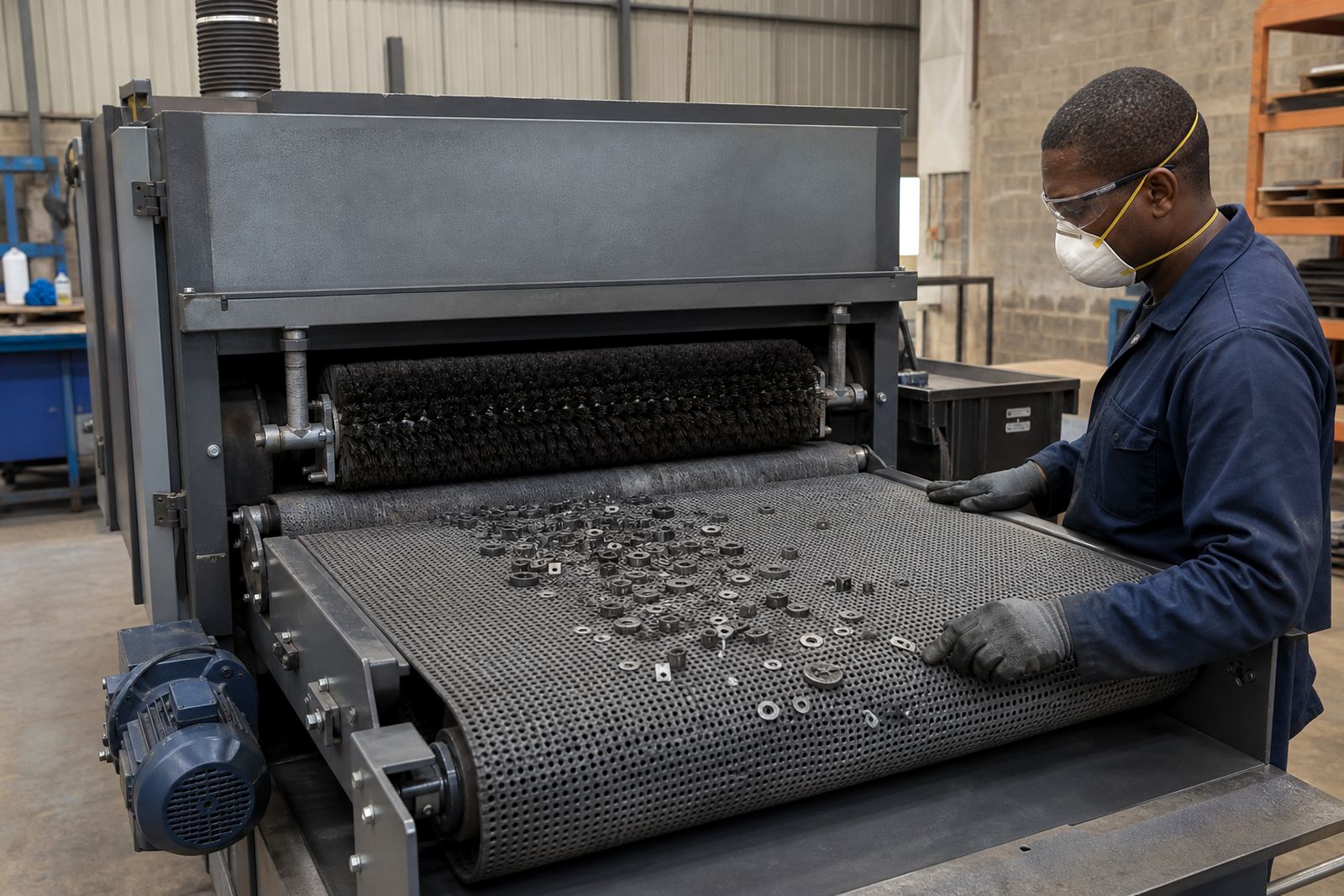
Purpose-built for smaller cut parts
The Small Parts Cell is made for laser-cut sheet metal pieces that are too small, light, or awkward to process well on a standard finishing line. Once cut parts start tipping, overlapping, or skating across the feed path, edge quality becomes uneven and operators spend too much time sorting by hand. This cell keeps those parts moving in a controlled way so the batch is treated more consistently.
It suits workshops that handle brackets, plates, covers, gussets, tabs, and other small components in repeat runs. Instead of sending a mixed pile through a general-purpose machine, the cell manages the parts in a tighter working zone where the finishing media and transport are matched to smaller workpieces. That gives steadier results and less rework after processing.
- Suitable for small flat laser-cut parts
- Helps reduce part-to-part variation
- Improves handling where manual finishing is slow
- Useful for batches with many similar components
Sizes, layouts, and finishing options
Small Parts Cells are generally specified around the size of the parts you run most often, not only the largest sheet you cut. The working width, feed system, and discharge arrangement can be matched to your part size range so the machine does not waste time or media on parts that are already small. For many South African workshops, this is the difference between a machine that simply runs and one that actually suits production.
Options can include different conveyor or handling widths, adjustable feed control, and finishing media selected for light deburring or stronger edge softening. If your work includes both mild steel and stainless steel, the setup needs to take the finish requirement into account, especially where the last operation before packing is edge treatment. Some users also want a compact footprint for tighter factory floors in Wadeville, Germiston, or Johannesburg industrial areas.
- Working width matched to the part range
- Option for light deburring or more pronounced edge finishing
- Compact footprint available for space-conscious workshops
- Suitable for mixed batches when parts are sorted by size
As a guide, smaller cells are commonly selected for parts in the 20 mm to 300 mm range, although the exact usable size depends on the cut geometry, thickness, and how the batch is loaded. Thin offcuts and nested parts may need extra care because they can move differently under load.
Where the cell fits into production
This product suits laser-cutting operations that want a cleaner post-cut process without tying up skilled staff on manual edge work. It is a practical choice for job shops, panel fabricators, enclosure makers, shelving producers, and component manufacturers that run repeat batches. If your team is finishing the same kinds of parts every day, a dedicated cell can shorten the route from cutting to packing.
It also helps where customers expect more uniform handling before welding, coating, powder coating, or assembly. Burrs left on small parts can damage gloves, slow fit-up, and create issues during stacking. A controlled finishing step before the next process can save time further down the line, especially when load-shedding or production interruptions already make planning harder.
For coastal users in Durban or Cape Town, keeping parts moving cleanly through the process also matters because humidity can affect storage and surface condition if parts sit too long after cutting. The cell supports quicker turnaround, which helps reduce that exposure.
Installation, space, and utility needs
Installation should be planned around floor space, access for loading and unloading, and the direction of material flow through the workshop. The cell needs a level industrial floor, enough clearance for operators to work safely, and space for maintenance access on the service side. If your factory is already tight on room, measure the loading area properly and leave space for trolleys, pallets, or bins of cut components.
Power supply requirements depend on the final specification, but most installations will need a stable three-phase supply and proper isolation. We recommend checking your site electrical capacity before delivery, especially in areas where supply quality varies or where backup power is already shared with other equipment. If the machine is to be used alongside extraction or ancillary handling, that load should also be included in the planning.
- Level floor and clear access required
- Three-phase power usually needed
- Electrical isolation and safe lock-out points should be planned
- Check local site capacity if backup power is in use
Where parts are oily or coated with cutting residue, keep the loading area clean and dry. A tidy feed area helps the machine handle small components more consistently and reduces the chance of slip or clumping during batch processing.
Care, servicing, and uptime planning
Like any production machine, the Small Parts Cell gives better results when it is checked regularly. Daily cleaning around the feed and discharge area keeps fine dust and metal residue from building up. Operators should also watch for worn consumables, unusual noise, vibration, or uneven finishing across the batch. Small issues on smaller parts can become obvious quickly because the batch size is usually high.
Preventive maintenance is worth planning into the month, not left until a breakdown interrupts a run. Regular checks on moving parts, abrasive condition, settings, drive components, and safety devices help keep the machine stable. For sites in Germiston, Johannesburg, Pretoria, Rustenburg, Durban, and Cape Town, we can support scheduled servicing, breakdown repairs, and annual service contracts where needed.
- Clean the machine each shift where fine dust collects
- Replace abrasive media before finish quality drops
- Check guards, stops, and controls regularly
- Record changes in finish quality from batch to batch
If you are running multiple shifts or working around load-shedding, it is wise to plan service windows and batch release times carefully. That keeps the cell available when you need it most, rather than waiting for maintenance after a fault has already affected output.
What to confirm before you order
Before placing an order, define the parts you cut most often and be specific about thickness, size range, burr type, and material. A small stainless component may need a different finish approach from a mild steel tab or a thicker bracket. The right setup depends on the exact production mix, not just the sheet size on the laser table.
It also helps to confirm output target, loading method, and whether parts will arrive loose, nested, or sorted. If you need sample part testing, send typical parts so the finishing process can be matched to your actual work. That is often the quickest way to avoid choosing the wrong size or media combination. Please also confirm whether the cell must fit through a narrow doorway, shared passage, or existing production line. Small access details can cause real delays if they are missed.
- Typical part sizes and thicknesses
- Material mix, including mild steel or stainless steel
- Desired finish level after processing
- Available floor space and access route
- Power supply on site and any backup arrangement
- Target output per hour or per shift
Our Wadeville, Germiston team can help you review the options, then advise on installation, operator training, and process optimisation so the cell fits the way your workshop actually runs.
Key facts
| Application | Small laser-cut sheet metal parts needing controlled movement and even finishing |
|---|---|
| Typical part size range | About 20 mm to 300 mm, subject to shape, thickness, and loading method |
| Material suitability | Mild steel, stainless steel, and other common laser-cut sheet metal |
| Power requirement | Usually three-phase industrial supply, final spec to be confirmed on order |
| Footprint | Compact industrial layout, sized to the selected working width and handling option |
| Support available | Installation, operator training, maintenance, breakdown repairs, and sample part testing |