What the Double Sided Finisher does in a sheet metal line
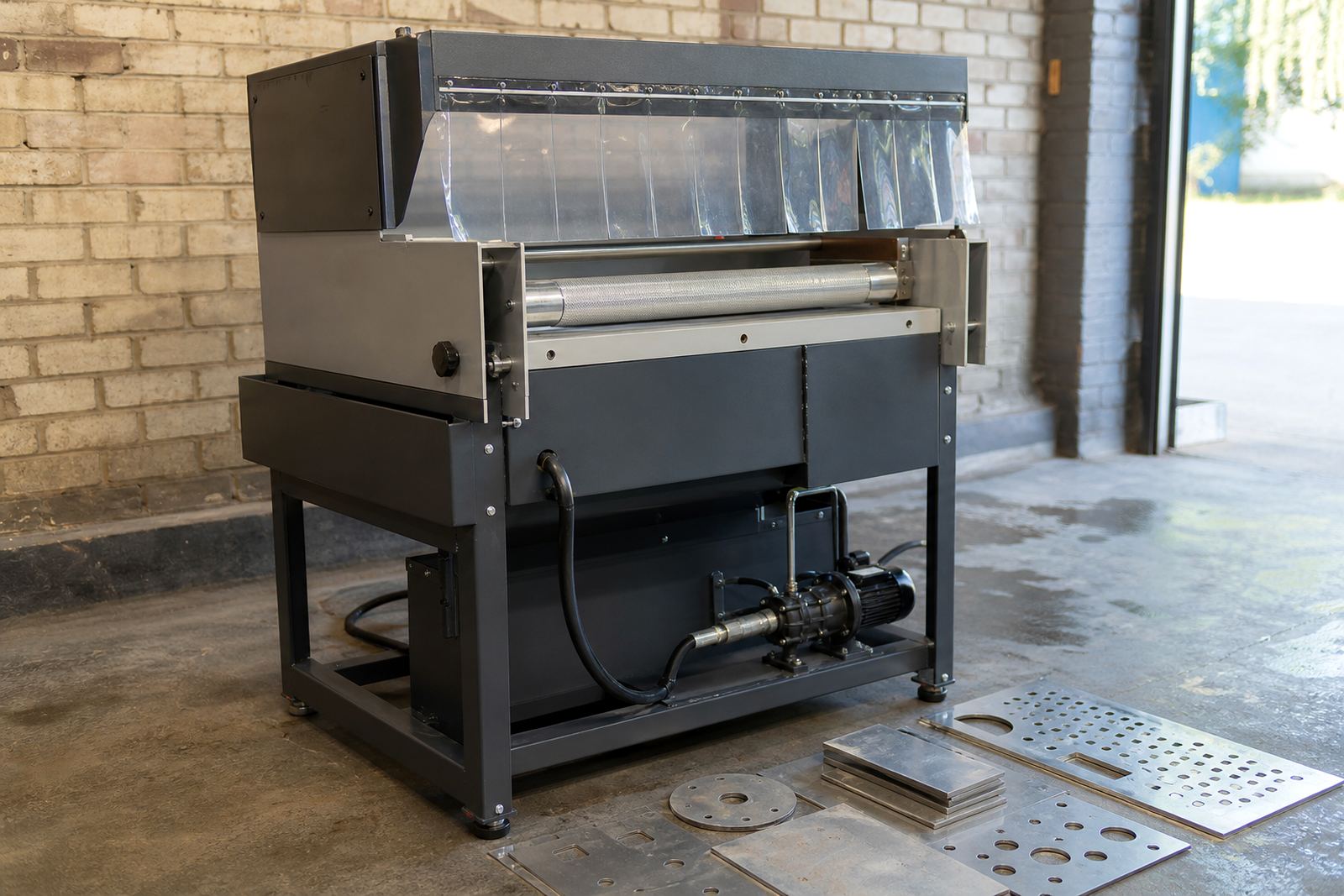
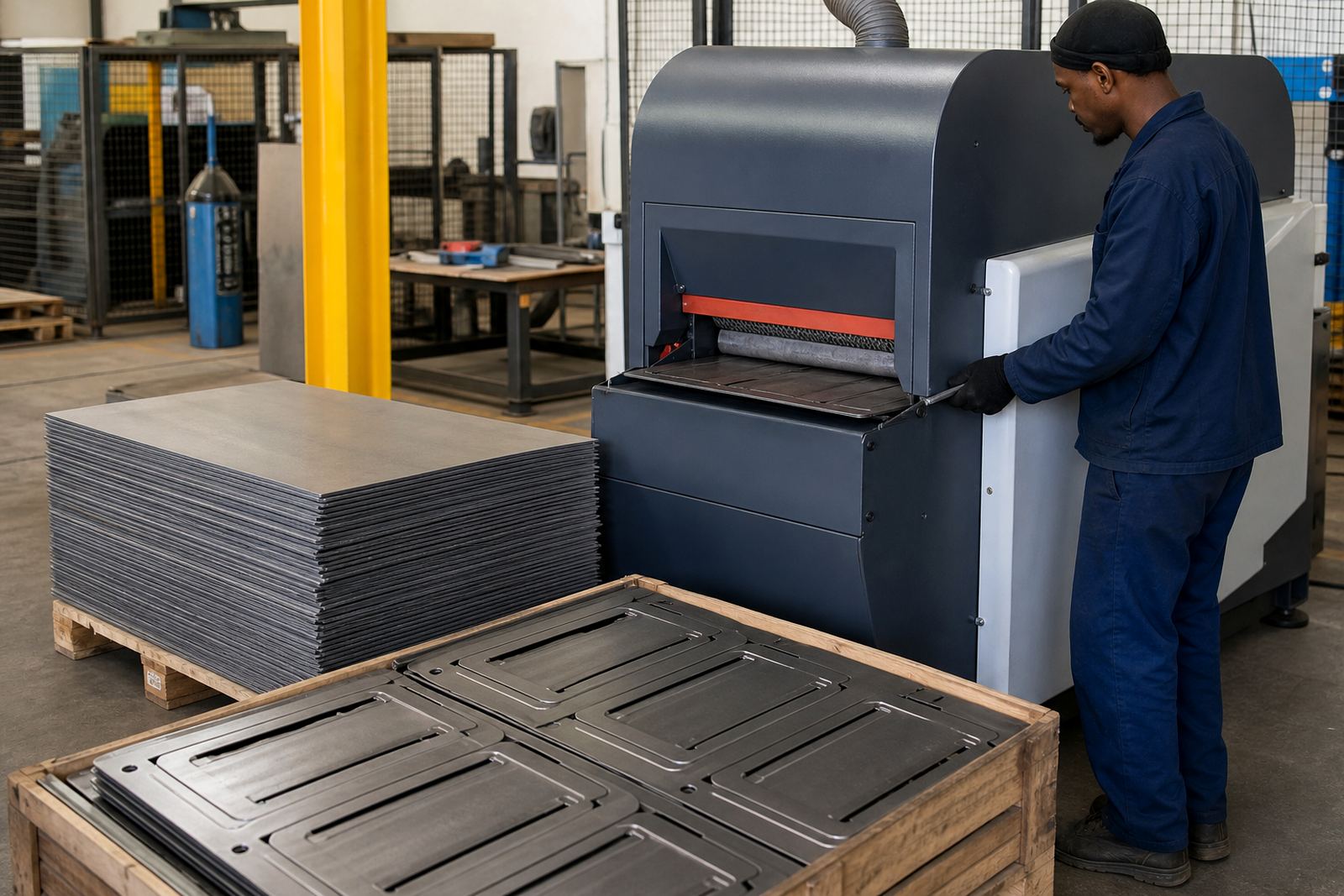
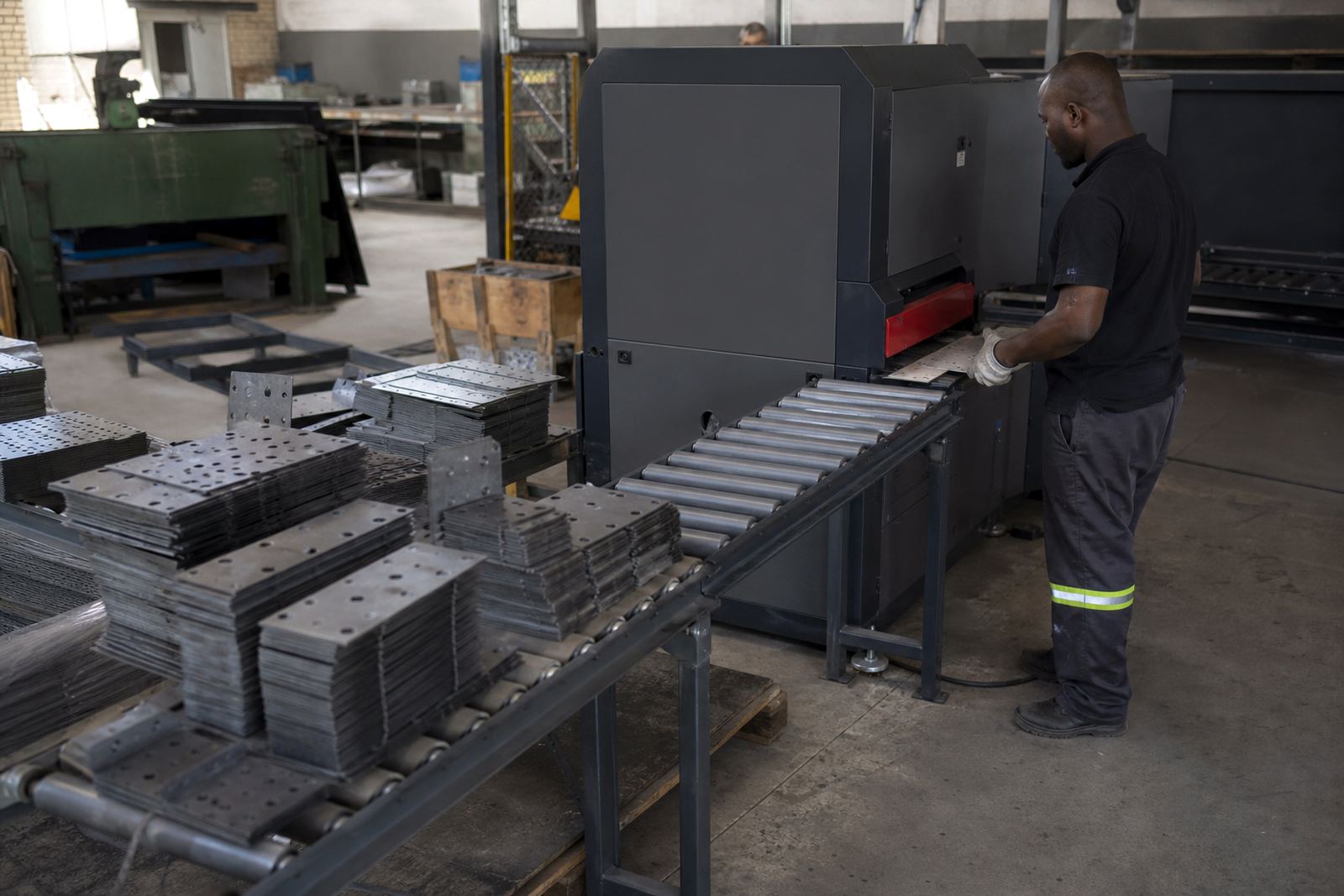
A Double Sided Finisher is used after laser cutting to remove burrs, soften sharp edges, and give both sides of a part a more uniform finish. Instead of flipping panels by hand and sending them through separate stations, the machine works both faces efficiently in one controlled process. That makes it a practical choice where repeatability, safer handling, and reduced labour are important.
It is commonly used on mild steel, stainless steel, aluminium, and other flat sheet metal parts that come off laser tables with cut-edge marks or small burrs. The aim is not cosmetic polishing only, but a consistent edge condition that supports folding, assembly, coating and final handling. In busy Gauteng workshops, that can mean fewer reworks and less stopping and starting during a shift.
- Processes both sides to reduce manual turning and re-handling
- Improves edge consistency before bending, welding or coating
- Suitable for production batches and mixed part sizes
- Helps reduce operator exposure to sharp edges
Typical sizes, configurations and finishing options
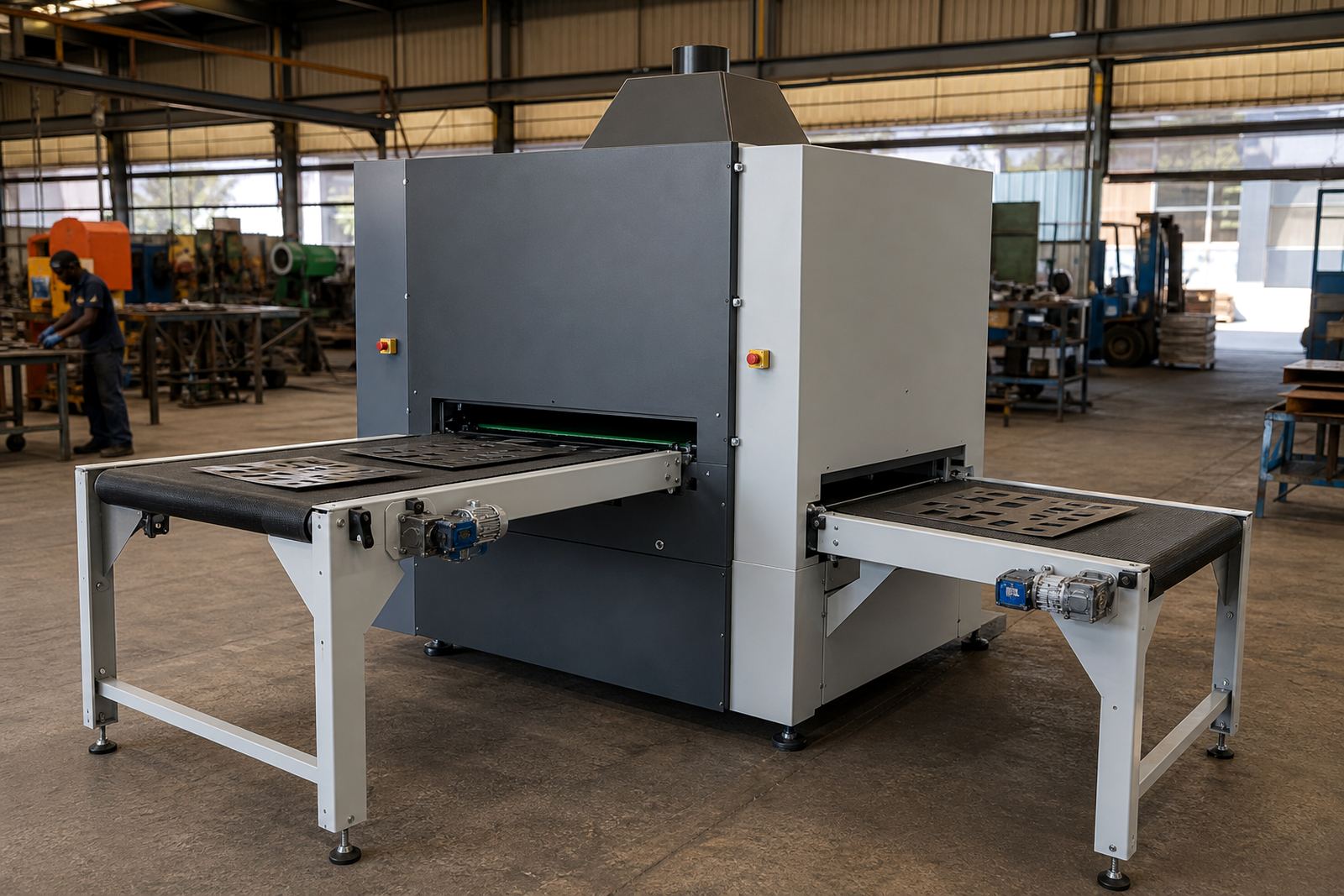
The right configuration depends on sheet size, thickness range, daily output and how much edge rounding is required. Machines can be specified with different working widths, conveyor arrangements and finishing heads to suit light production or higher throughput lines. In most South African fabrication shops, the best fit is the one that matches your laser output and not only the biggest machine on the market.
Common options include variable feed speed, abrasive or brush based finishing stations, and dust extraction connection points for cleaner operation. Some shops want a lighter pass for fine parts, while others need a more noticeable edge break on parts that will be handled often. If you process mixed orders for jobbing work, it is useful to have quick adjustment between material types and thicknesses.
- Working widths available for compact and wide-format sheet metal
- Adjustable feed speed for different cut conditions
- Finishing heads selected for light deburring or stronger edge break
- Dust control points to support a cleaner workshop
Where this machine suits best in South African fabrication
This machine suits laser-cutting operations that need reliable edge finishing without sending parts to a separate manual station for each face. It is a good fit for manufacturers in Johannesburg, Pretoria, Durban, Cape Town and Rustenburg that work with repeat parts, cabinet components, enclosure panels, brackets, covers, and flat laser-cut items. Where consistency matters, the machine helps keep the finishing result closer from one batch to the next.
It is also useful for plants that face high labour pressure or need to keep up with tighter delivery windows. If your team is losing time to hand deburring or sorting sharp parts after laser cutting, a Double Sided Finisher can help stabilise the process. Coastal customers should also consider humidity and dust control, because both can affect finished sheet quality and machine care over time.
- Laser-cut job shops and production fabricators
- Electrical enclosure and panel manufacturers
- Commercial kitchen and stainless steel workshops
- General metalworking plants with repetitive flat parts
Installation, floor space and power needs
Installation should be planned around floor space, infeed and outfeed access, extraction routing, and the movement of trolleys or pallets. A flat, level floor is important so the machine feeds parts evenly. In Wadeville and other East Rand industrial areas, it is common to reserve enough space for operators to load safely and for maintenance access around the drive side and finishing side.
Power requirements vary by model and application, so the supply must be checked before delivery. Many workshops use a three phase electrical supply, and stable power is important when load-shedding recovery or voltage dips are part of daily operations. If compressed air is needed for certain adjustments or extraction components, that should also be planned in advance. For larger setups, we recommend checking the incoming supply, breaker sizing and any local electrical compliance requirements before install.
- Level floor with clear loading space at both ends
- Three phase power often required, depending on specification
- Compressed air may be needed for some functions
- Extraction and dust collection should be set up before commissioning
Care, servicing and keeping the finish consistent
Like any finishing machine, performance depends on regular care. Abrasive elements, brushes, belts and contact parts wear over time and need inspection before quality drifts. Daily cleaning keeps swarf and dust from building up in the working area, and scheduled checks help prevent avoidable stoppages. On the shop floor, small things like a worn belt or loose setting can show up quickly in the final edge result.
Preventive maintenance is especially useful where production runs are long or where the machine handles stainless material and sharp cut geometry. We recommend keeping a simple service log, checking feed consistency, and replacing consumables before they are fully spent. If your team is running different materials in the same week, regular setup checks matter even more, because the finish can change if the machine is not set correctly. Our service team supports breakdown repairs, preventive maintenance, annual service contracts and spares supply.
- Inspect abrasive or brush wear daily or weekly, depending on volume
- Clean out dust and cut residue before every shift where possible
- Check feed settings after material or thickness changes
- Book scheduled servicing before quality starts to drift
What to confirm before you place an order
Before ordering, it helps to confirm the widest part size, the minimum and maximum thickness, the materials you run most often, and the finish you need on both sides. You should also check whether the machine will sit next to a laser line, a press brake area, or a separate finishing cell. The more clearly the process is defined, the easier it is to match the machine to your output.
Please also consider the following points when you enquire:
- Sheet size and typical part dimensions
- Material types and thickness range
- Required finish level on each side
- Available power supply and floor space
- Need for extraction, relocation, training or production support
We can assist with sample part testing, machine audits, production planning help and operator training so the specification fits your actual work, not only the catalogue description. That usually saves time later, especially if your team handles mixed batches and tight delivery dates.
Local support from Wadeville, Germiston to major centres
Deburring is based in Wadeville, Germiston and supports customers across South Africa through the enquiry form on our contact page. We work with fabricators in Johannesburg, Pretoria, Durban, Cape Town and Rustenburg, and we also support East Rand operations that need quick attention for service, spares or installation planning. Our team includes sales, workshop, applications, support and service staff who understand day-to-day metalworking requirements.
If you need a Double Sided Finisher for laser-cut sheet metal, we can help with demos, setup planning, preventive maintenance, breakdown repairs and relocation support. The goal is to put the right machine into the right production line and keep it working properly after commissioning.
For busy shops, the best finishing machine is the one that holds its settings, fits the space and does not create extra handling.
Key facts
| Machine type | Double sided deburring and edge-finishing machine |
|---|---|
| Material suitability | Laser-cut sheet metal in mild steel, stainless steel and aluminium |
| Processing method | Both sides finished in one controlled pass |
| Working width | Model dependent, specified to match sheet and part size |
| Power supply | Typically three phase electrical supply, confirm by model |
| Options | Variable feed, dust extraction connection, different finishing heads, training and service support |