Wet Finishing For Cleaner Edges
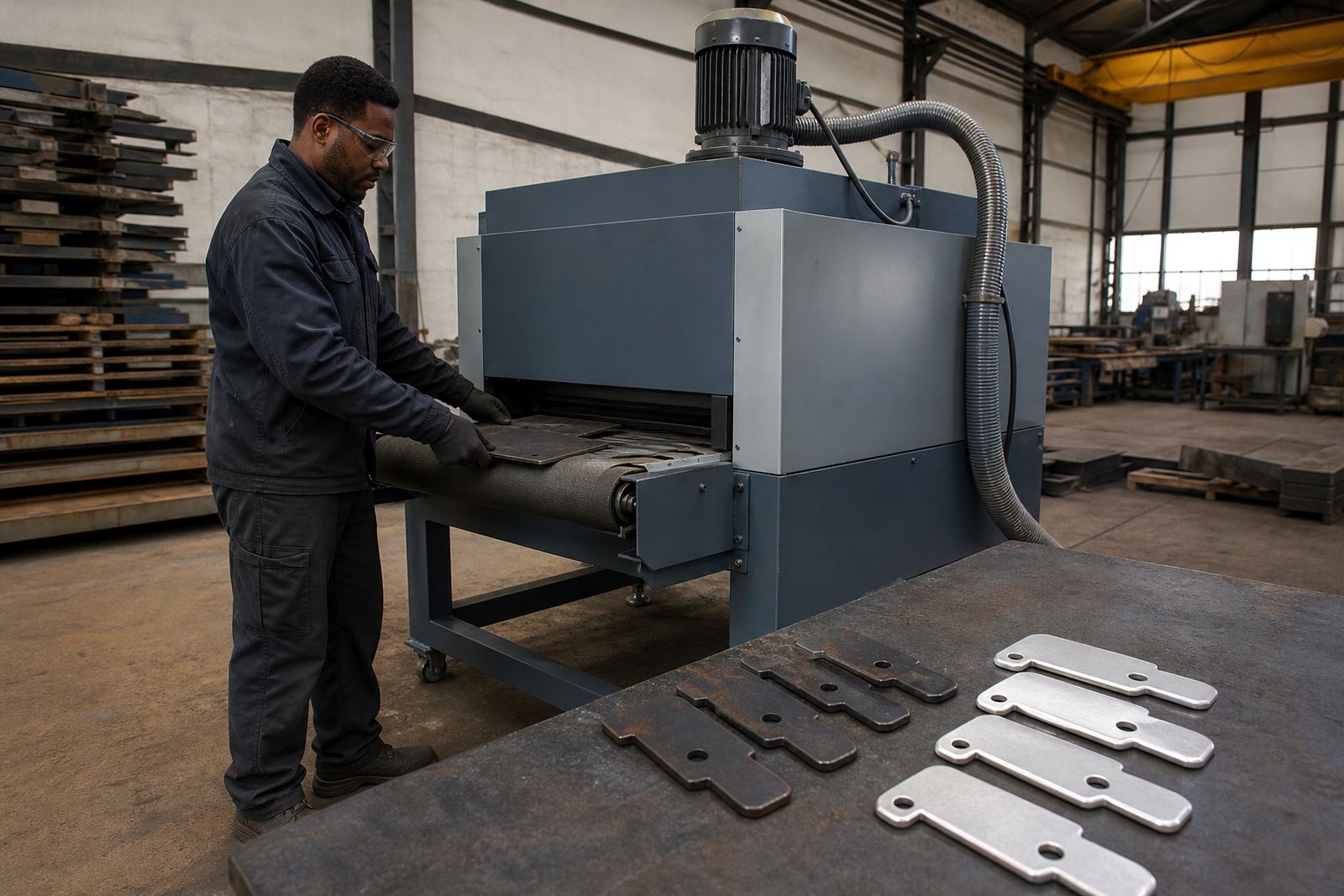
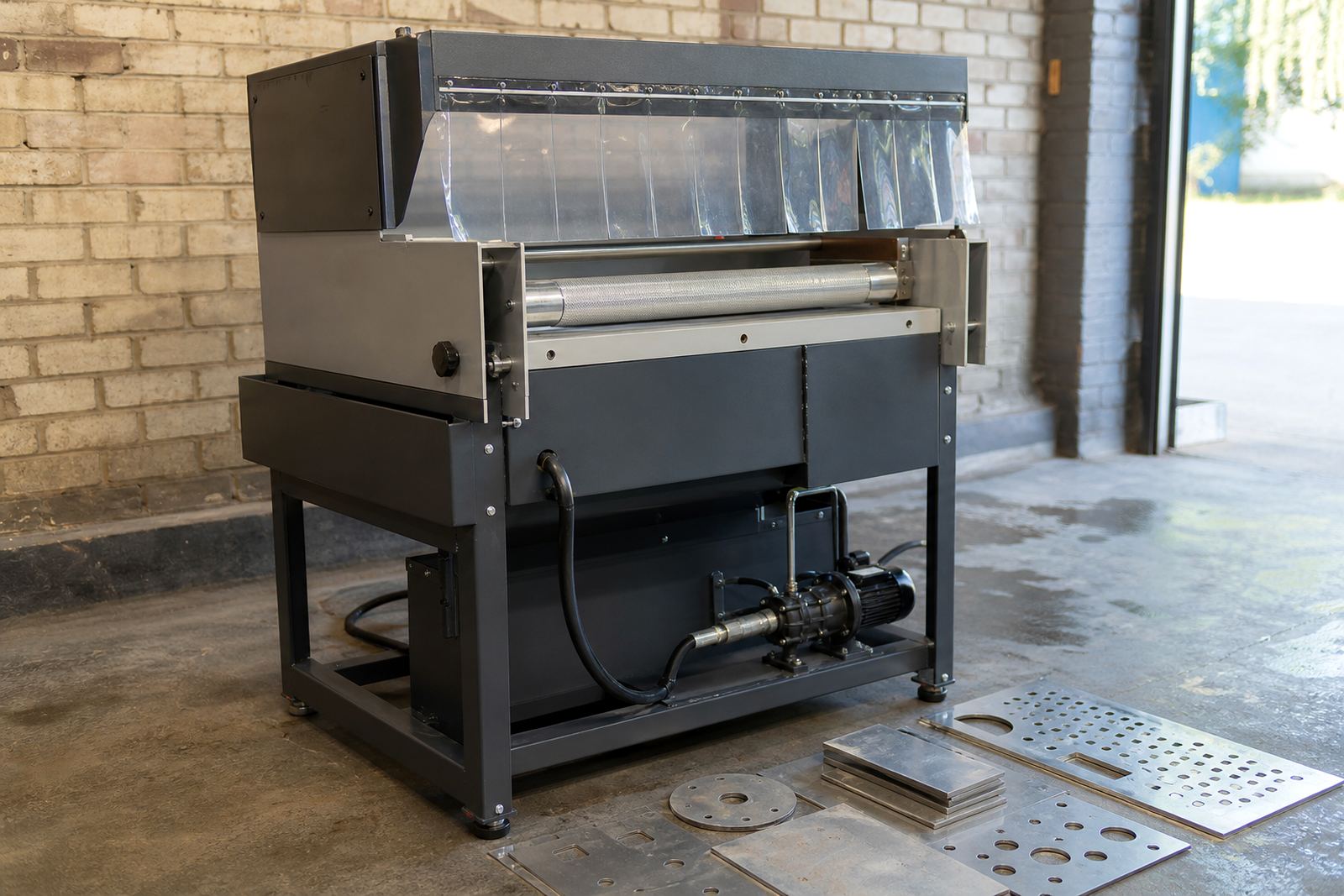
The Compact Wet Unit uses a wet-processing method to reduce airborne dust while finishing laser-cut sheet metal edges. It is suited to parts that need a cleaner surface after cutting, especially where fine burr removal, edge smoothing and a more controlled finish are needed on thin to medium gauge material.
Because the process keeps dust down, it is a practical option for workshops handling parts for electrical cabinets, precision panels, stainless components and other jobs where residue can cause problems later on. It also helps when the site has strict housekeeping rules or when work is carried out near other finishing stations.
Sizes, Build Options And Throughput
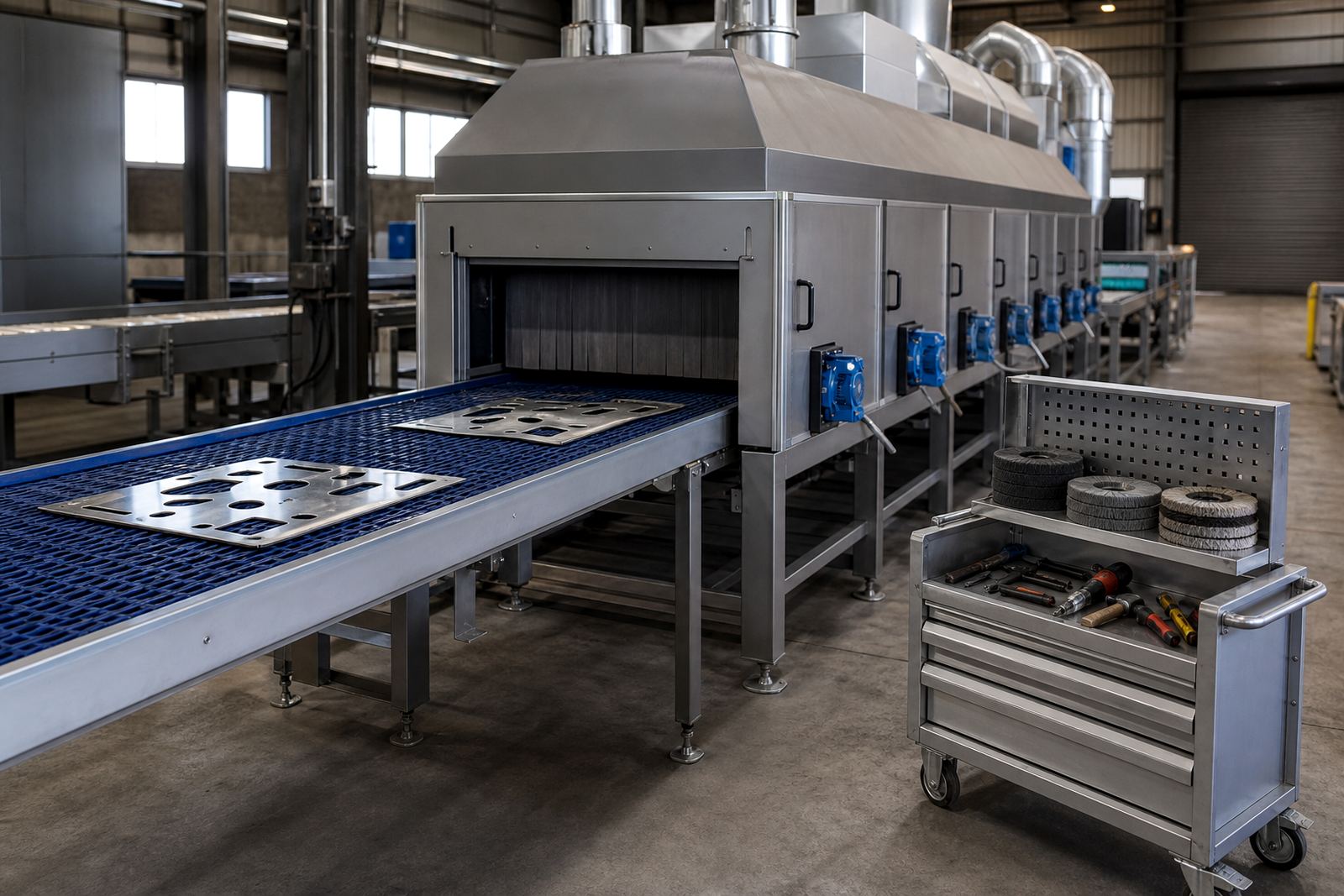
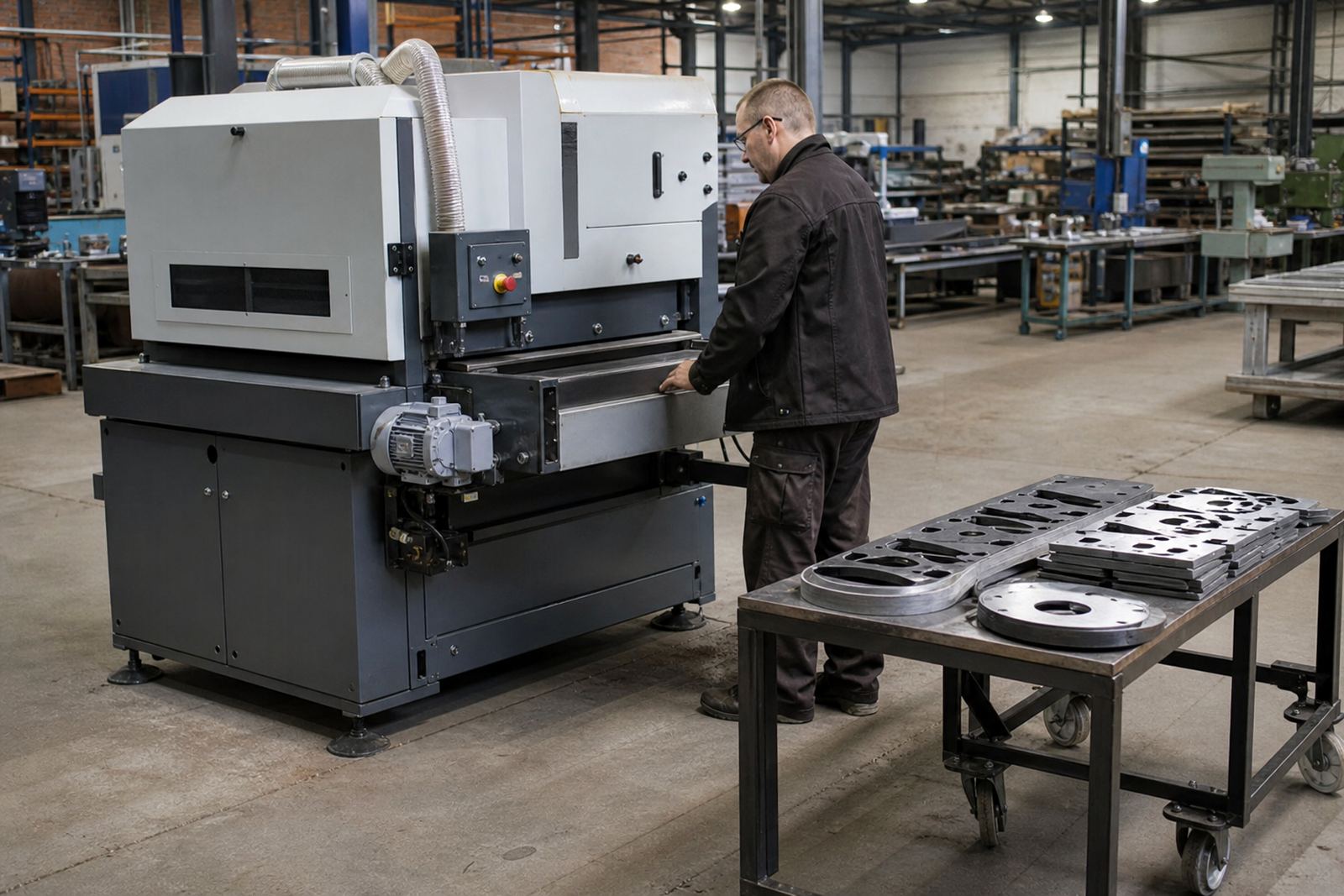
The Compact Wet Unit is available in single-station and extended-table configurations, with the exact setup selected around sheet size, part volume and the amount of edge work required. Compact models are suitable for smaller fabrication rooms in Wadeville, Germiston and other busy industrial areas where floor space is limited.
- Working width options for narrow and medium sheet jobs
- Single pass or repeat-pass finishing depending on the burr level
- Manual feed assistance or conveyor-style handling on selected setups
- Wet collection and filtration arrangement matched to the dust load
For repetitive laser-cut parts, the unit can be set up to support a steady batch flow rather than one-off work. That helps when a shop is handling recurring jobs for furniture frames, control panels, brackets and cut parts with tight edge tolerances.
Where The Compact Wet Unit Works Best
This machine suits fabricators who need cleaner edge-finishing on parts that are too delicate for aggressive dry processing. It is commonly used for stainless steel, mild steel and coated sheet where keeping the surface clean matters before folding, welding or assembly.
It also fits sites that work in coastal humidity or dusty inland conditions, because the wet process helps limit fine particles settling back onto the workpiece. In Pretoria, Durban, Cape Town and Rustenburg, it is a sensible choice for shops that want more control over finish quality without opening up another dry dust problem.
- Laser-cut components with fine burrs and light oxidation
- Parts needing cleaner handling before powder coating or assembly
- Workshops where dust control is important for staff and nearby equipment
- Batch production where repeatable edge quality matters
Installation, Power And Site Requirements
The Compact Wet Unit needs a level floor, reasonable access for loading and a planned drainage or collection arrangement for the wet process. Installation is normally done with the machine placed close to the laser cutting and downstream folding area so parts do not spend time moving around the shop.
Power requirements vary by configuration, but most installations need a standard three phase supply with suitable protection and isolator arrangements. If the site has load-shedding interruptions, it is worth planning how parts will be left in process and how the unit will restart after a power dip. On some sites a water supply, drain point and filtration connection will also need to be confirmed before delivery.
- Three phase electrical supply, final load depends on chosen model
- Level concrete floor with enough clearance for maintenance access
- Water fill, drain or filtration setup depending on the option selected
- Safe material handling path for incoming and finished parts
Care, Servicing And Daily Checks
Regular care keeps the unit performing properly and reduces unplanned downtime. Operators should check the water condition, filter status and machine cleanliness at the start of each shift, especially when the workshop is running long production days or dealing with heavy dust loads. A small bit of neglect can quickly affect finish consistency.
Scheduled preventive maintenance should include inspection of moving parts, wear items, collection components and any spray or circulation parts used in the wet system. Our team can support machine installation, operator training, preventive maintenance, breakdown repairs, abrasive replacement and annual service contracts for sites across South Africa.
- Daily check of water level, filters and visible buildup
- Routine inspection of wear parts and feed components
- Clean down after shifts to prevent sludge build-up
- Planned service visits to reduce stoppages and poor finish
What To Confirm Before You Order
Before ordering a Compact Wet Unit, it helps to confirm the material types, average sheet sizes, burr level and daily output you need to process. If your parts include mixed thicknesses or different metals, the setup may need adjustment so the finish stays consistent across the range.
Also check the available floor space, power supply, water access and whether the site needs any local drainage or waste handling arrangements. For many South African workshops, the practical questions are simple: can the machine fit, can it be powered reliably, and will the process suit the way the shop already runs. If you are not sure, we can review a sample part and advise on the best setup.
- Material type and thickness range
- Typical part size and daily volume
- Available power, water and floor space
- Need for sample part testing or process optimisation
Key facts
| Machine type | Compact wet-processing edge-finishing unit |
|---|---|
| Primary use | Cleaner deburring and fine edge-finishing for laser-cut sheet metal |
| Material range | Mild steel, stainless steel and coated sheet, subject to setup |
| Configuration | Single-station or extended-table options |
| Utilities | Three phase power, water and drainage or filtration arrangement |
| Typical users | Fabricators, laser cutting shops and precision sheet metal manufacturers |