Built For Stainless Parts That Must Leave The Shop Clean
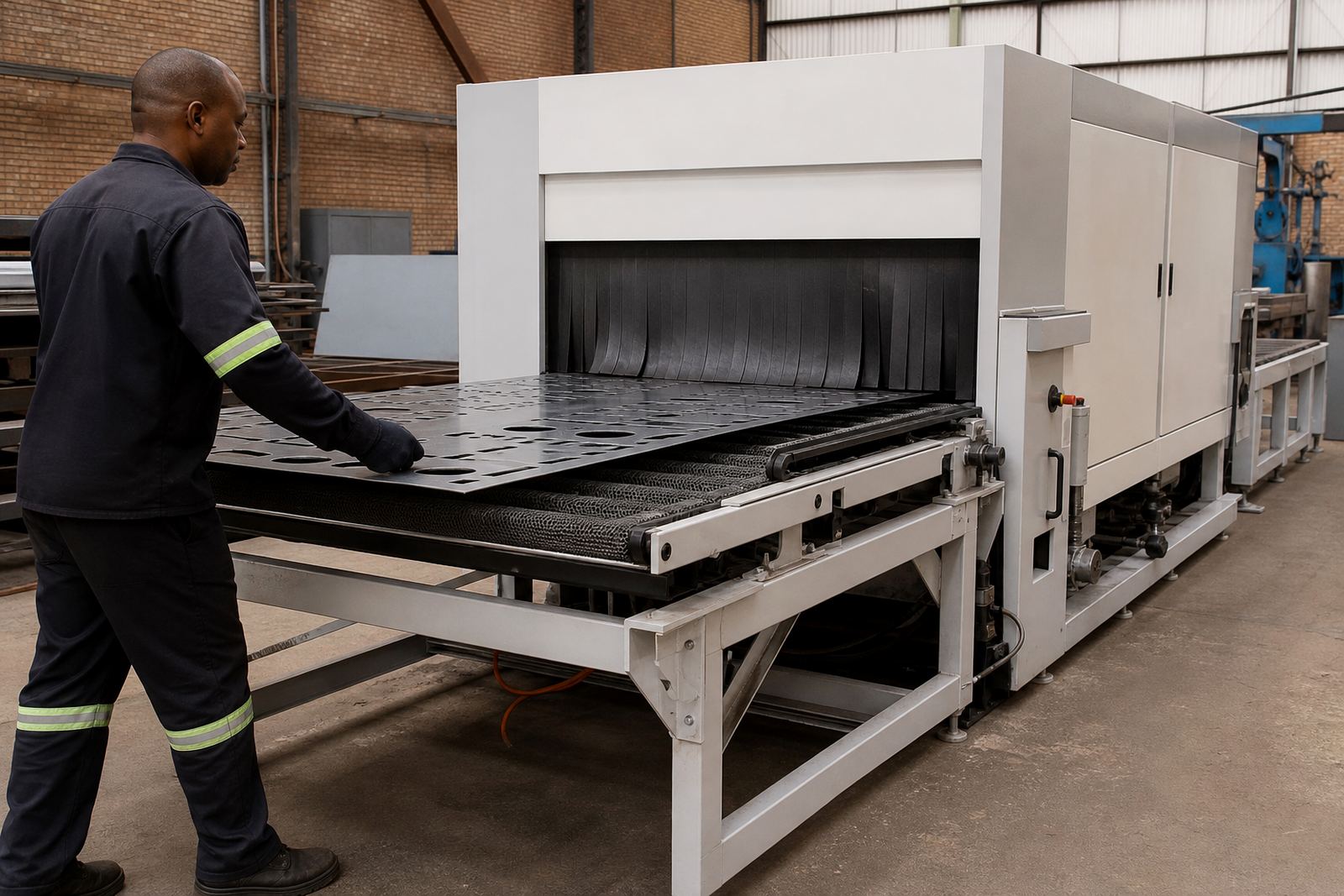
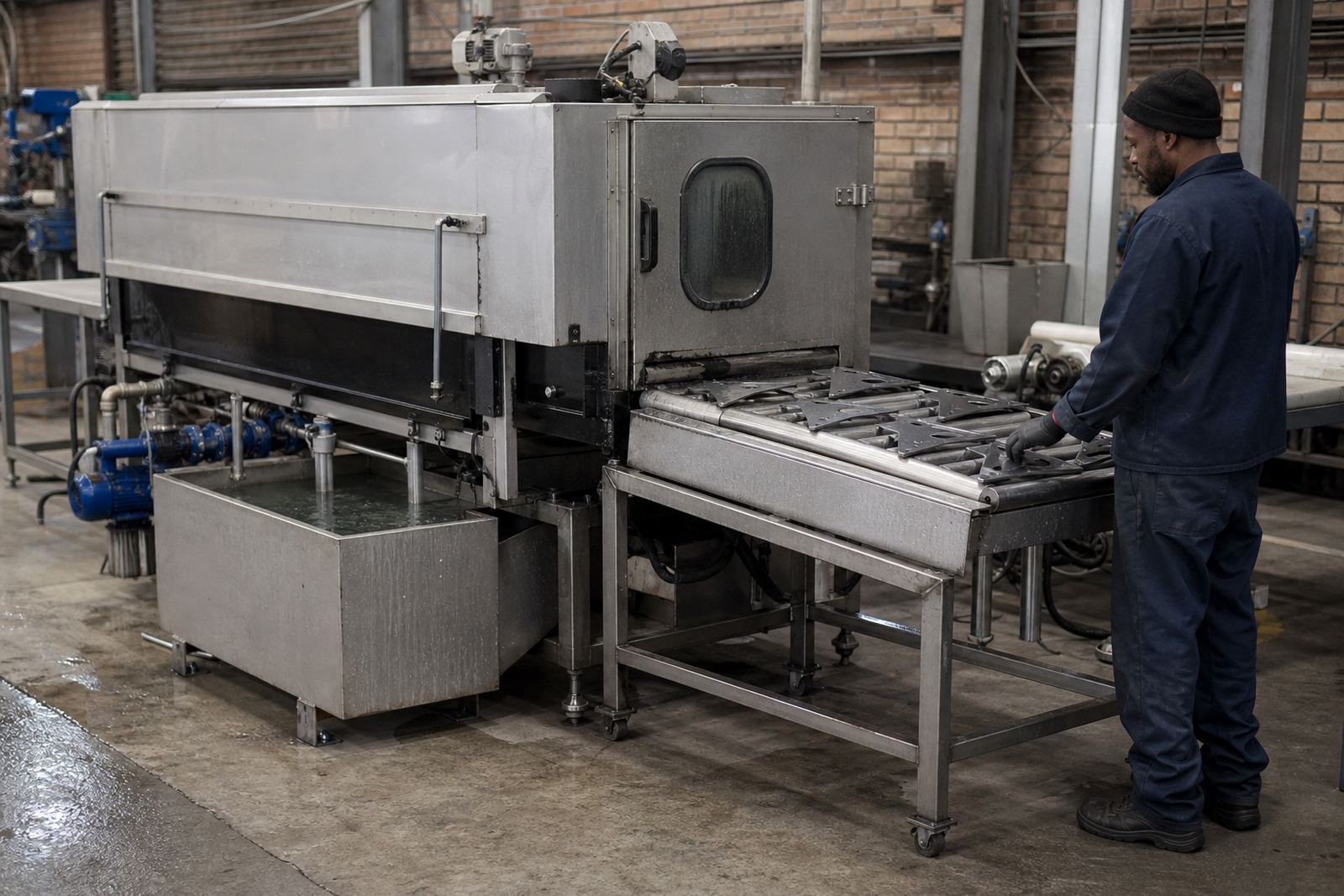
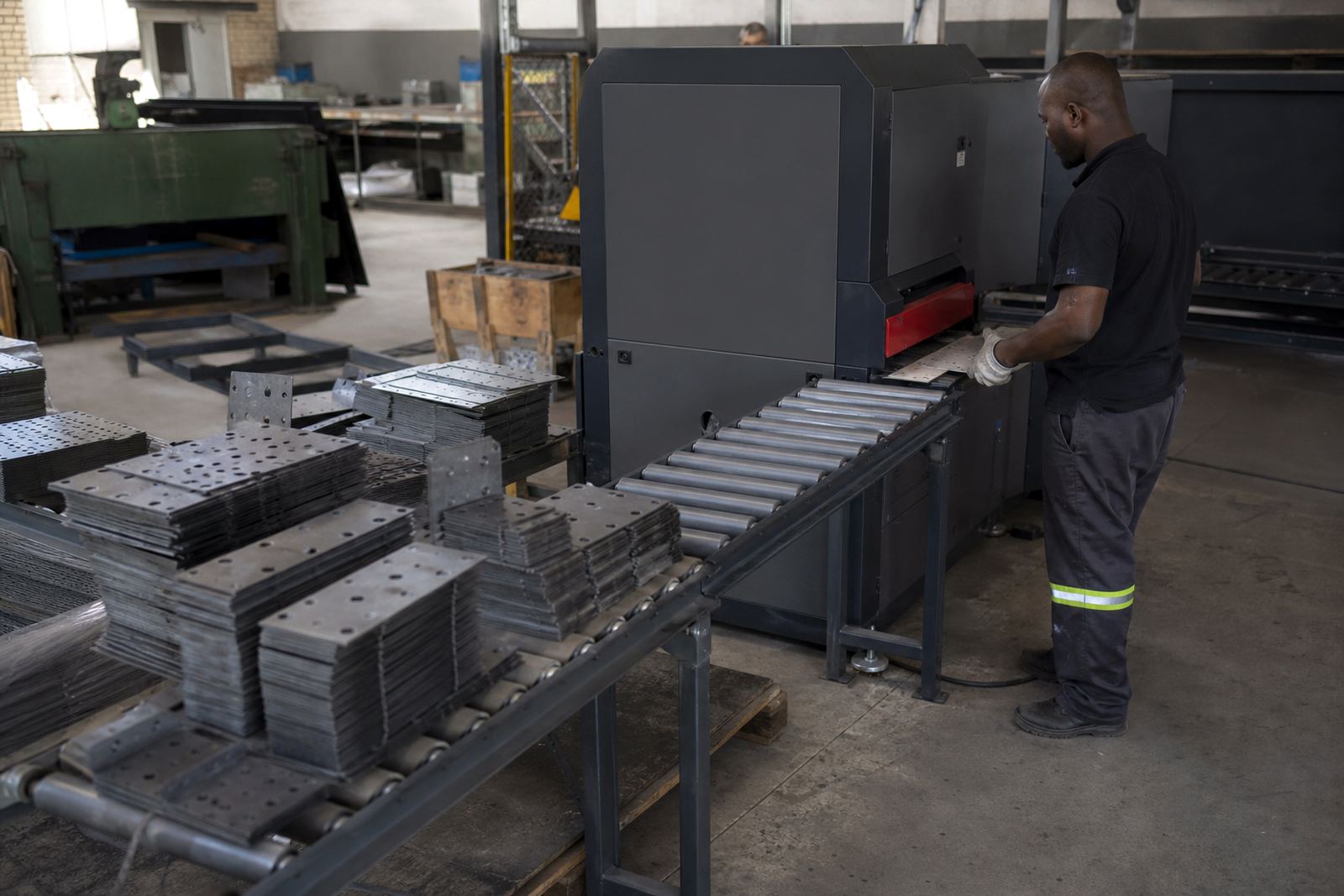
This cell is set up for laser-cut stainless sheet metal, where the finish has to look right on the first pass. It is used after cutting and before folding, welding or final assembly, so burrs, sharp edges and light oxide from cutting can be removed in a controlled way. For food equipment, architectural parts, commercial kitchens and medical fabrication, the main aim is a clean edge with low contamination risk and a consistent brushed or uniform finish.
The layout suits workshops that process repeated parts in batches, as well as jobbing shops that handle mixed panel sizes. Because stainless shows fingerprints, heat tint and scratch marks very easily, the machine arrangement is chosen to reduce unnecessary handling. That means less carrying between stations, fewer marks from stacked parts, and a better chance of keeping the surface acceptable for customer inspection without extra manual touch-ups.
- Configured for laser-cut stainless sheet and plate parts
- Helps reduce burrs, sharp edges and loose oxide
- Supports cleaner handling before welding, bending or assembly
- Suitable for visible panels, covers, trims and enclosures
Common Sizes, Options And Process Layouts
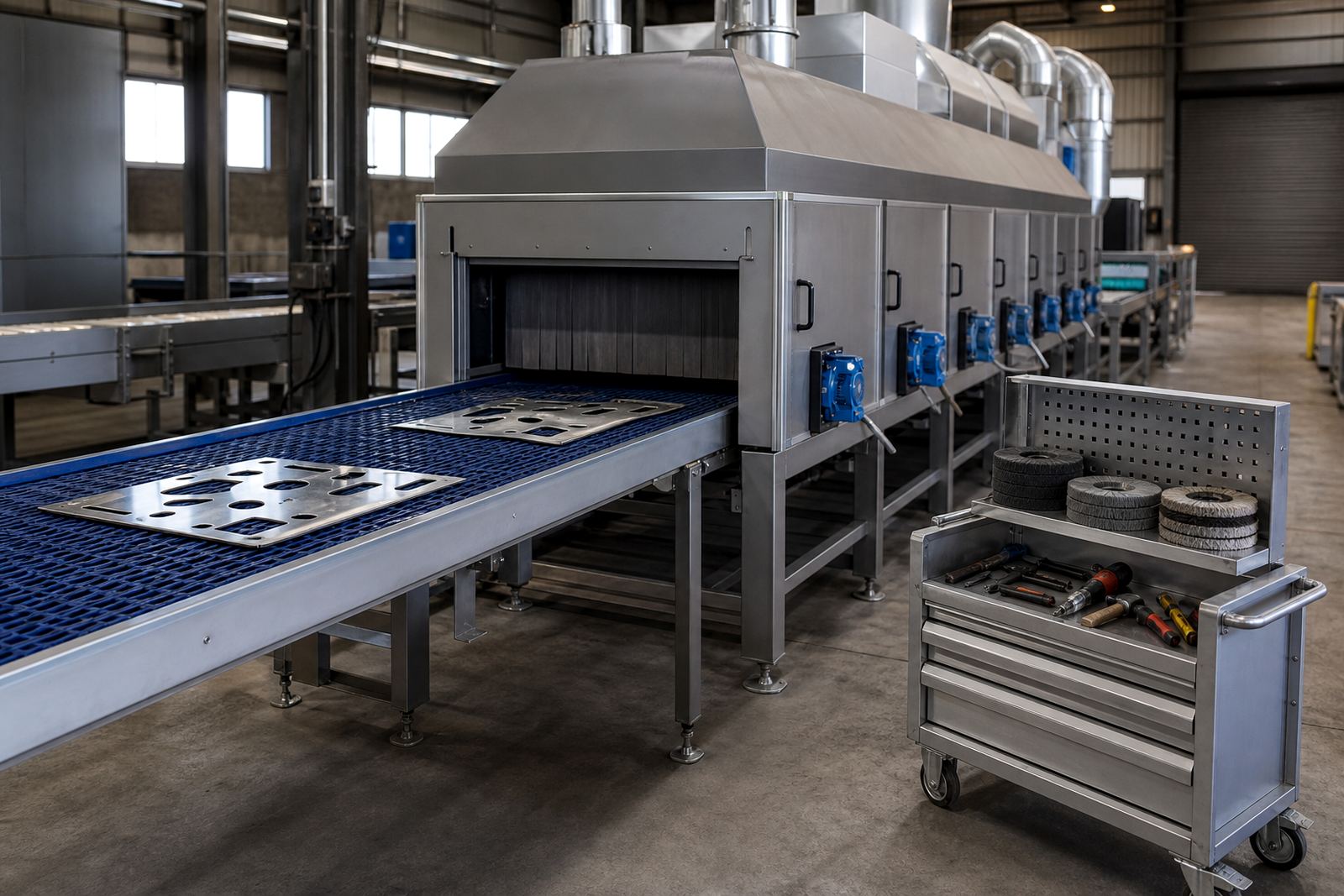
We supply stainless finish cells in practical widths for small, medium and larger production runs. The exact configuration depends on your cutting bed size, part envelope and the finish you want to achieve. Typical setups are built to accept flat sheet components from one side, process them in a stable pass, then discharge to a clean stacking point. That helps keep flow simple, especially where floor space is tight in Wadeville, Germiston or other busy industrial areas.
Options can include dry abrasive finishing, edge rounding, oxide removal, brushing, and combined passes where more than one finish is required. Some fabricators want a light cosmetic finish only, while others need more aggressive edge work on thicker stainless. We also factor in whether the machine will be used for single sheets, nested parts or mixed batches from several laser tables. One setup is not right for every shop, so the cell should match the work you actually run day to day.
- Working widths commonly selected from 650 mm to 1350 mm
- Single-pass or multi-pass finishing depending on part condition
- Dry process options for cleaner shop floors and less waste handling
- Optional dust extraction and spark control for safer operation
Where The Stainless Finish Cell Fits Best
This product is a strong fit for manufacturers that cut stainless for visible or hygiene-sensitive applications. Typical users include kitchen equipment makers, enclosure builders, retail fit-out suppliers, process equipment fabricators and workshops serving coastal customers where corrosion resistance matters. In Durban and Cape Town, many shops also want a finish that stands up better to humid air and frequent cleaning. The cell helps prepare parts that must look consistent across an entire order, not just on one sample.
It also suits operations trying to reduce manual grinding. Hand work is hard to standardise and it can create uneven pressure marks, especially on thinner stainless. A dedicated finishing cell gives you more repeatable edge quality and lets the operator work at a controlled pace. For Gauteng fabricators carrying high volumes from Johannesburg, Pretoria and Rustenburg, that extra repeatability can make planning easier and cuts down on rework after inspection.
- Best for stainless parts that are visible, hygienic or customer-facing
- Useful where repeatability matters more than one-off manual finishing
- Fits fabrication shops near laser cutting, folding and welding lines
- Helps reduce variation between different operators and shifts
Installation, Power Supply And Workshop Requirements
Installation should be planned around available floor space, material flow and service access. The machine needs a level base, enough infeed and outfeed space for your longest parts, and room for operators to move safely around the cell. If the workshop runs on back-up power during load-shedding, the supply must be checked against the machine load and any extraction equipment. On stainless work, clean air and stable power both matter, because stops and restarts can interrupt production flow and create handling delays.
Depending on the selected configuration, the machine can be supplied for 3 phase power with the correct motor and control arrangement for South African workshop conditions. If the cell includes extraction, compressed air or other auxiliaries, those requirements are confirmed before final ordering. We also look at dust collection, earthing, and access for maintenance. In some plants the machine sits close to a laser cutter, while in others it is placed in a separate finishing bay to keep traffic more controlled.
- 3 phase power setup commonly required
- Allow space for infeed, outfeed and maintenance access
- Check compressed air and extraction requirements before ordering
- Plan around load-shedding, transfer times and safe restart procedures
Care, Servicing And Ongoing Support
Stainless finishing machines work best when they are kept clean and checked often. Wear parts, abrasive media and contact surfaces need regular inspection, especially on busy lines where the same machine runs every day. Operators should remove built-up dust, check tracking and pressure settings, and watch for any change in finish quality. A small change in feed pressure can make the difference between a consistent edge and a patchy result, so routine checks are worth the time.
We support installation, operator training, preventive maintenance, breakdown repairs, abrasive replacement and annual service contracts. For workshops in Germiston, Johannesburg, Pretoria, Durban, Cape Town and Rustenburg, support can be arranged around production windows to reduce downtime. If a line includes more than one finishing step, we can also help with process audits and production planning so the machine works as part of the full sheet metal route, not as a stand-alone unit that sits idle.
- Daily cleaning helps keep the finish consistent
- Inspect wear parts and abrasive condition on a set schedule
- Preventive maintenance reduces unplanned stops
- Service plans can be matched to one or multiple shifts
What To Check Before You Order
Before placing an order, it helps to confirm the material grades, thickness range and the finish standard your customers expect. Stainless can behave differently across thicknesses and cut conditions, so the machine should match the work you run most often. You should also check the size of the largest part, the minimum part size, and whether parts come flat from the laser or already handled through other steps. If your shop handles small offcuts as well as large panels, that changes the setup.
Other points include daily output, operator experience, extraction needs, space for material storage and whether you want a standard finish or a more visible cosmetic result. If you need sample part testing, bring cut samples so we can check the edge and decide on the best process. A clear spec sheet saves time and helps avoid ordering a cell that is either too small or more machine than your shop needs.
- Confirm stainless grade, thickness range and cut quality
- Check maximum part width and longest component length
- Decide on finish type: edge rounding, deburring or brushing
- Bring sample parts for testing where possible
Key facts
| Product type | Stainless finish cell for laser-cut sheet metal |
|---|---|
| Typical material | Stainless steel sheet and flat laser-cut parts |
| Working width | 650 mm to 1350 mm options |
| Power supply | 3 phase, final rating depends on configuration |
| Installation space | Allow infeed, outfeed and service clearance |
| Finish methods | Deburring, edge rounding, brushing and oxide reduction options |