Built for mixed work in busy fabrication shops
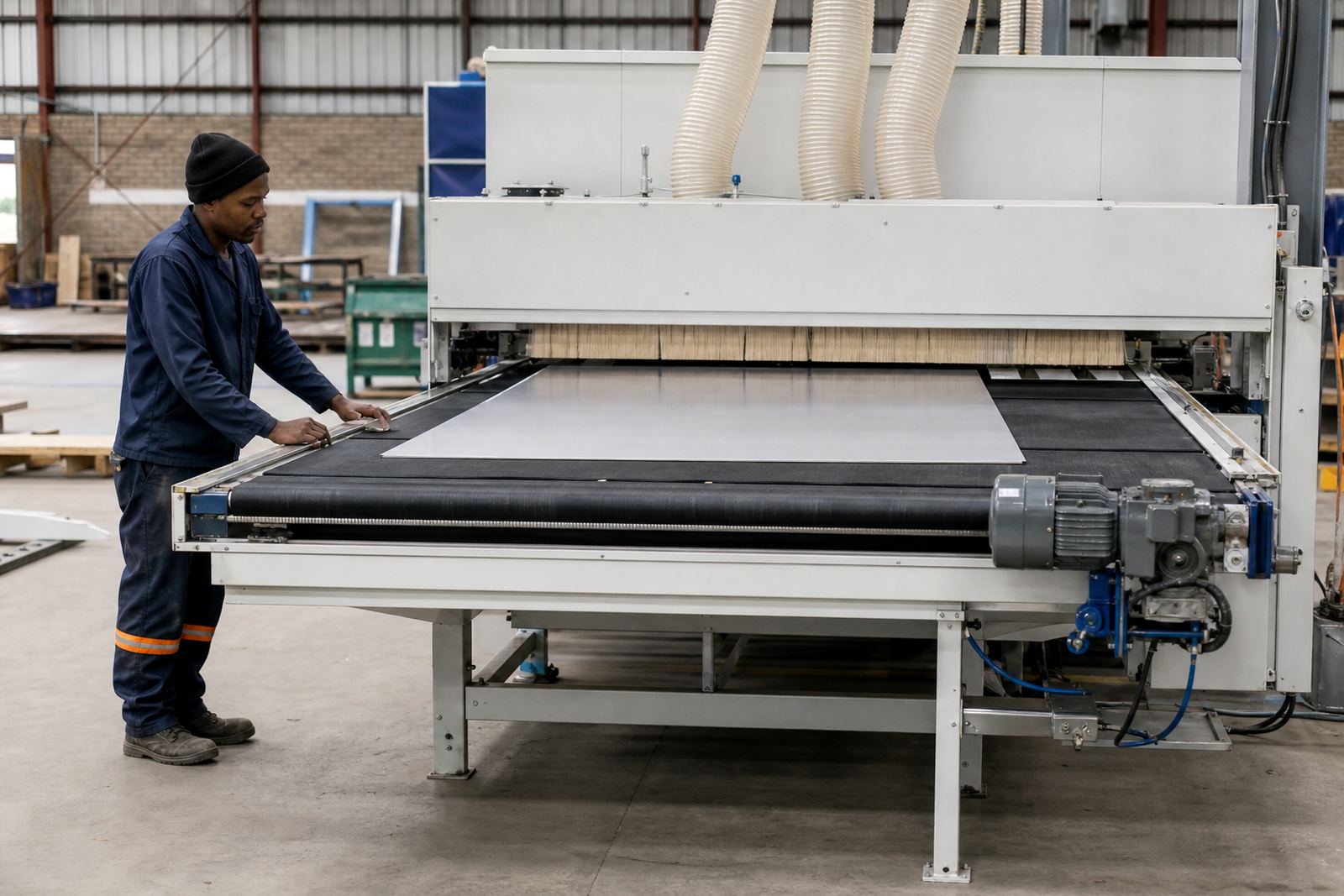
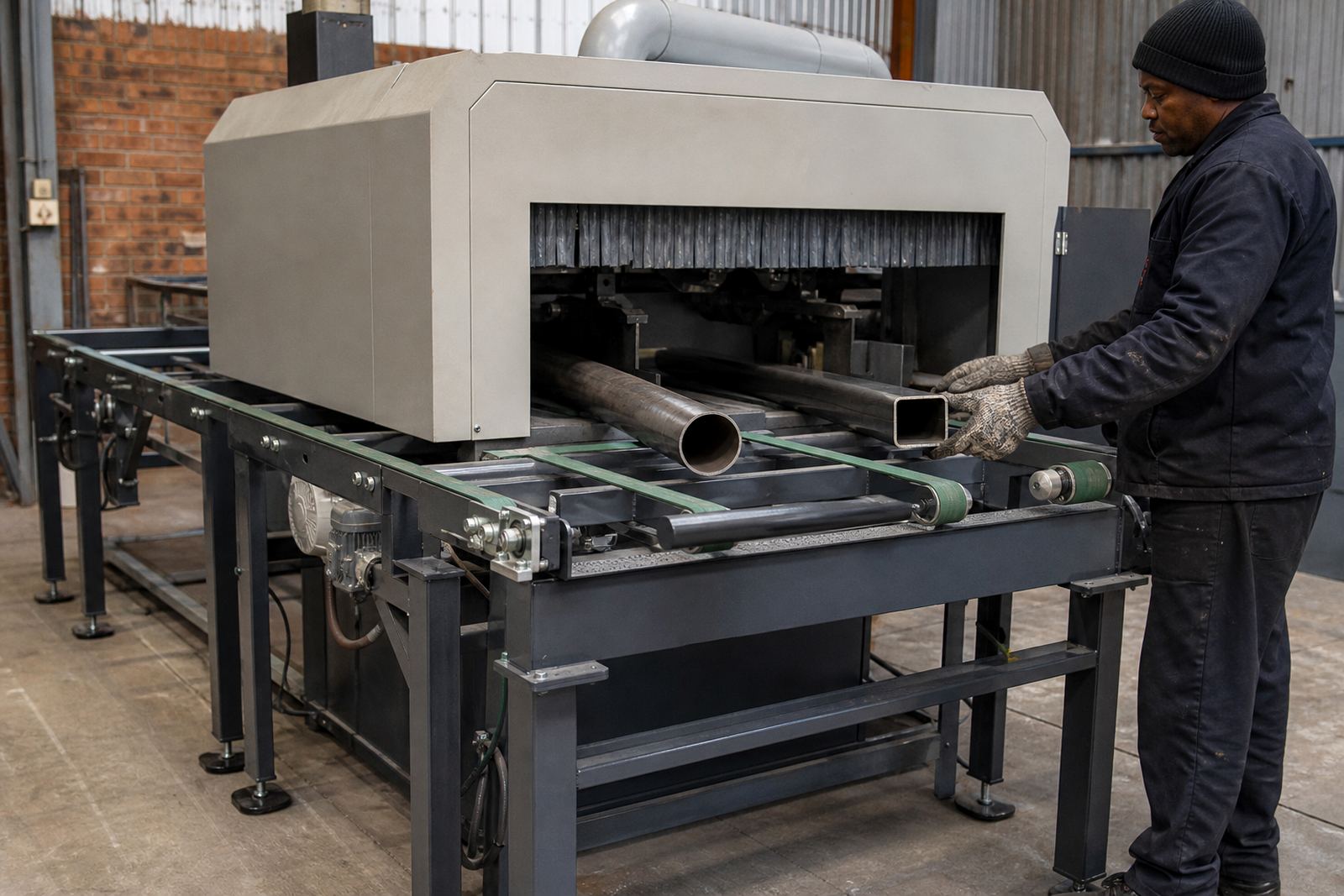
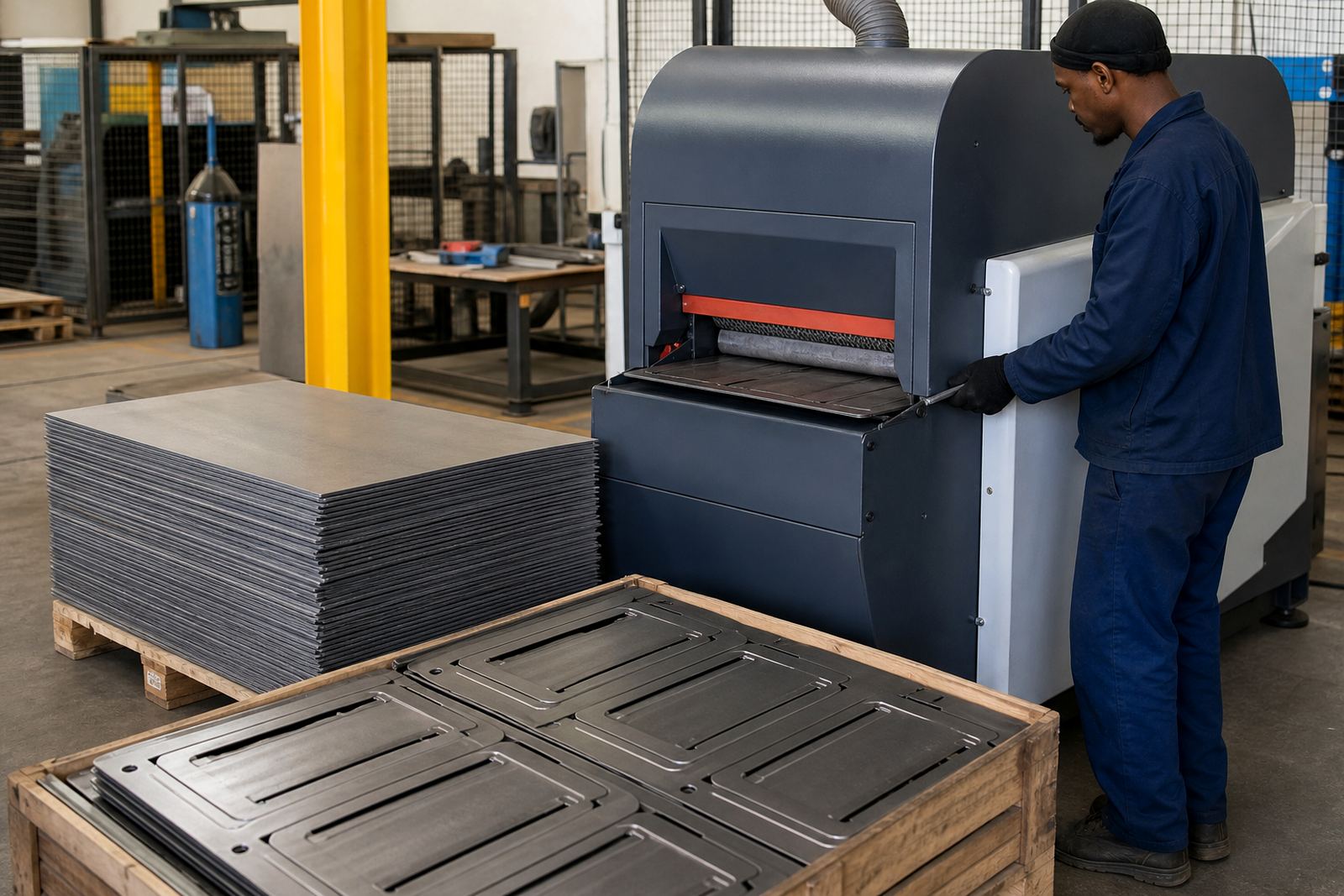
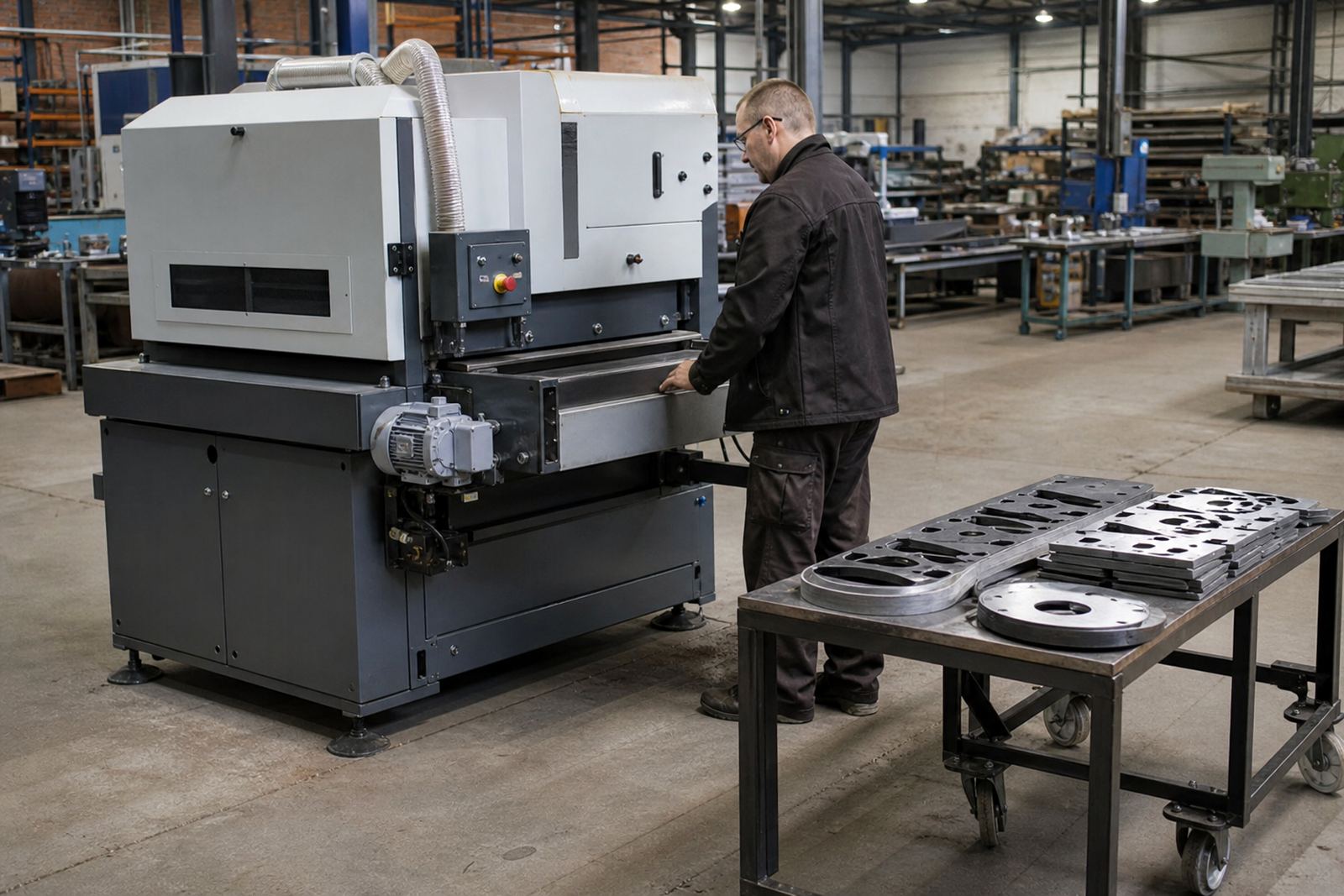
A jobbing shop lives on variety. One hour it is brackets, the next it is panels, guards or small assemblies that have to go out clean and on time. This machine is made for that kind of work. It handles laser-cut sheet metal that comes through in different sizes, thicknesses and shapes, and it helps take away burrs, sharp edges and light slag without turning every part into a hand-finishing job.
For shops in Wadeville, Germiston, Johannesburg and Pretoria, the main benefit is not only finish quality but flow. Parts move from cutting to deburring with less stoppage, fewer reworks and a more even handover to bending, welding or dispatch. In Durban and Cape Town, where coastal humidity can affect stored sheet metal and machine care, a controlled finishing step also helps keep edges more consistent before packing or further processing.
Sizes and options to match your workload
The Jobbing Shop Unit is supplied in practical widths and configuration options to suit compact workshops and larger production bays. Selection depends on the biggest sheet size you handle, the mix of light and heavier gauges, and whether you need one-sided or two-sided edge finishing in a single pass.
- Working widths: 650 mm, 1000 mm or 1300 mm
- Material thickness range: typically 0.5 mm to 12 mm, depending on part type and finish required
- Passes: single pass or multi-stage finishing setup
- Table and feed options: entry and exit support for flatter handling of cut parts
- Finish options: deburring, edge rounding and light oxide removal where required
- Extraction and dust control: available for shops that want cleaner air around the machine
Some shops prefer a compact unit for jobbing work and sample parts, while others choose a wider machine for mixed production batches. If your work changes often, the right option is the one that keeps setup time low while still handling the parts you see every day.
Where it suits best in South African production
This unit suits general fabricators, sheet metal shops, laser cutting businesses, jobbing workshops and subcontractors that must keep short runs moving. It is also useful where customers expect a neater finish before painting, powder coating, folding or final assembly.
It is a strong fit for parts that are handled often, passed from one operator to another, or sent out to clients who inspect the edge by hand. In Rustenburg and the East Rand, where many shops work across maintenance, mining support and custom fabrication, the machine helps standardise finishing without tying up skilled labour on manual deburring. It is also helpful where municipal site rules or customer specs require cleaner edges and safer handling before installation.
- General metal fabrication workshops
- Laser cutting service centres
- Maintenance and repair shops
- Custom enclosure and bracket makers
- Short-run contract manufacturers
Installation, power supply and workshop setup
Installation needs a level floor, sensible part flow and enough space for infeed, outfeed and operator movement. In most cases the machine is positioned so material can enter from cutting, be finished, then move directly to the next process without double handling. That saves time and reduces scratching on finished surfaces.
Power requirements depend on the selected configuration, but many units are supplied in three-phase format for workshop use. A clean, stable electrical supply is important, especially in areas affected by load-shedding and voltage fluctuation. Where power is not steady, shops often plan for proper protection and a controlled restart procedure after outages. If your site also uses compressed air for related equipment, that should be checked during setup although the exact need depends on the build.
Before ordering, confirm ceiling height, gate access, floor loading and how the machine will enter the building. Wadeville and Germiston workshops often have tight yard access or shared loading bays, so it pays to measure twice. A poor entry plan can slow down installation more than the machine itself.
Care, servicing and day-to-day reliability
Like any finishing machine, the unit performs best when it is kept clean and checked regularly. Fine metal dust, offcuts and abrasive residue should be removed before they build up around rollers, belts or working surfaces. In coastal areas, especially Durban and Cape Town, keeping the machine dry and wiped down matters because humidity can encourage surface corrosion on exposed parts.
Preventive maintenance also helps protect output quality. A dull abrasive, loose component or worn feed part can show up as uneven finishing long before a breakdown appears. That is why many shops set a simple routine for operator checks, weekly inspection and scheduled servicing. Our service team supports installations, operator training, preventive maintenance, breakdown repairs and annual service contracts across Johannesburg, Pretoria, Durban, Cape Town, Rustenburg and surrounding areas.
- Keep the machine free of metal dust and scrap buildup
- Check wear parts before they affect finish quality
- Replace abrasives before they go too far down
- Record run hours and service intervals
- Arrange planned maintenance before peak production periods
What to check before you place an order
The right machine depends on the parts you make most often, not only on the biggest job you have ever seen. Before ordering, measure your common sheet sizes, the typical thickness range and whether you need simple deburring or a finer edge-rounding result for handling or coating. It also helps to know how much manual finishing you want to remove from the process.
Other points to confirm are production speed, available floor space, power supply, and whether you need relocation support if the machine is moving between sites. If you are running sample parts, ask about testing first. That can show how the machine behaves on your own material and save surprises later. We also assist with process optimisation, spares supply, machine audits and production planning help for shops that want a more organised flow.
- Largest and smallest sheet sizes you handle
- Typical material type and thickness range
- Finish required after laser cutting
- Available power and floor space
- Need for extraction, training or service cover
- Whether you want one-off work support or higher-volume use
Clients in South Africa reach us through the enquiry form on our contact page, and our support teams in Wadeville, Germiston, Johannesburg, Pretoria, Durban, Cape Town, Rustenburg and the East Rand can help match the unit to your day-to-day work.
Key facts
| Machine type | Edge-finishing and deburring unit for laser-cut sheet metal |
|---|---|
| Working widths | 650 mm, 1000 mm, 1300 mm |
| Material thickness | 0.5 mm to 12 mm depending on part and finish |
| Finish range | Deburring, edge rounding, light oxide removal |
| Power supply | Usually three-phase workshop supply, configuration dependent |
| Typical use | One-off parts, short runs and mixed jobbing work |