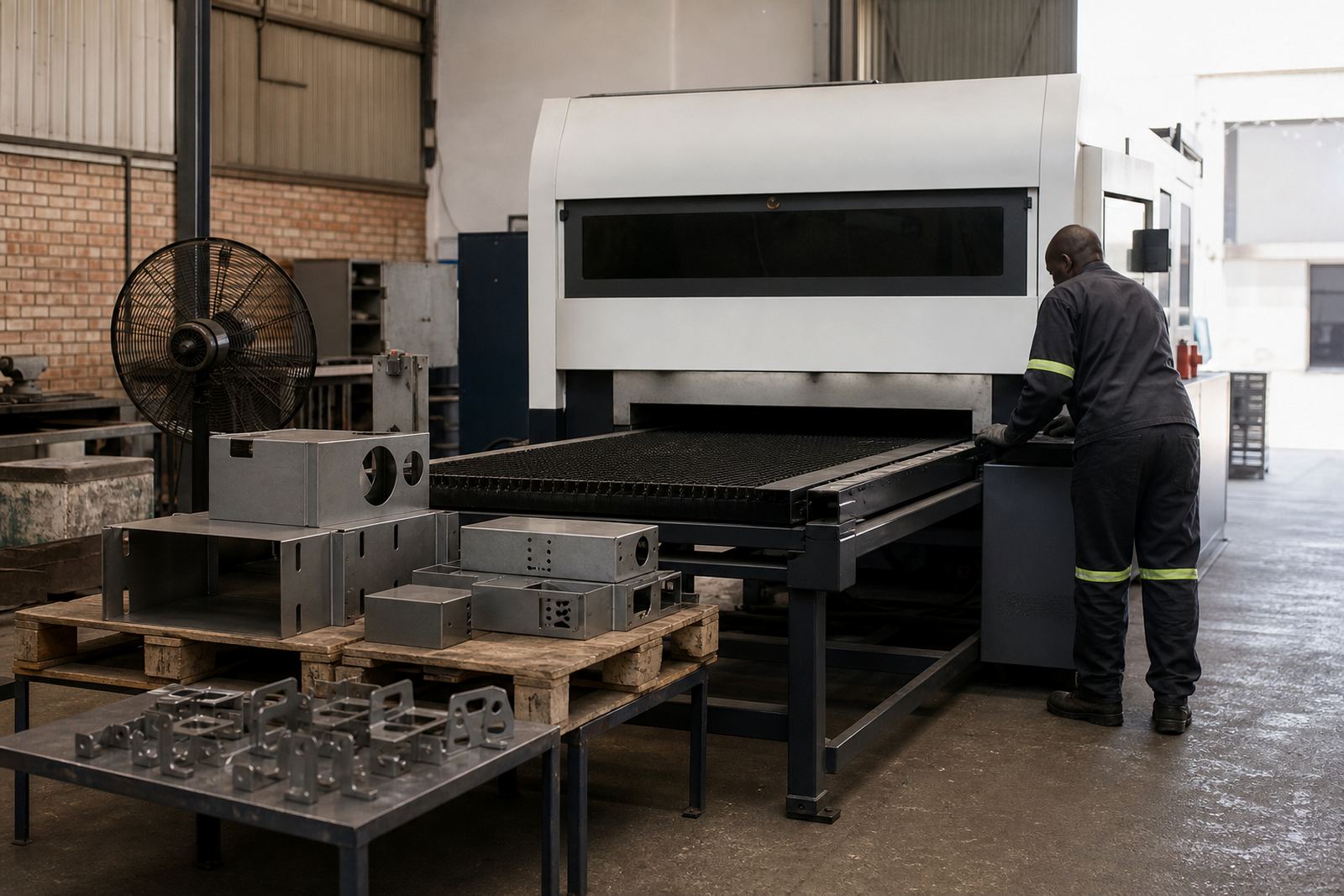
Built For Daily Laser-Cut Finishing
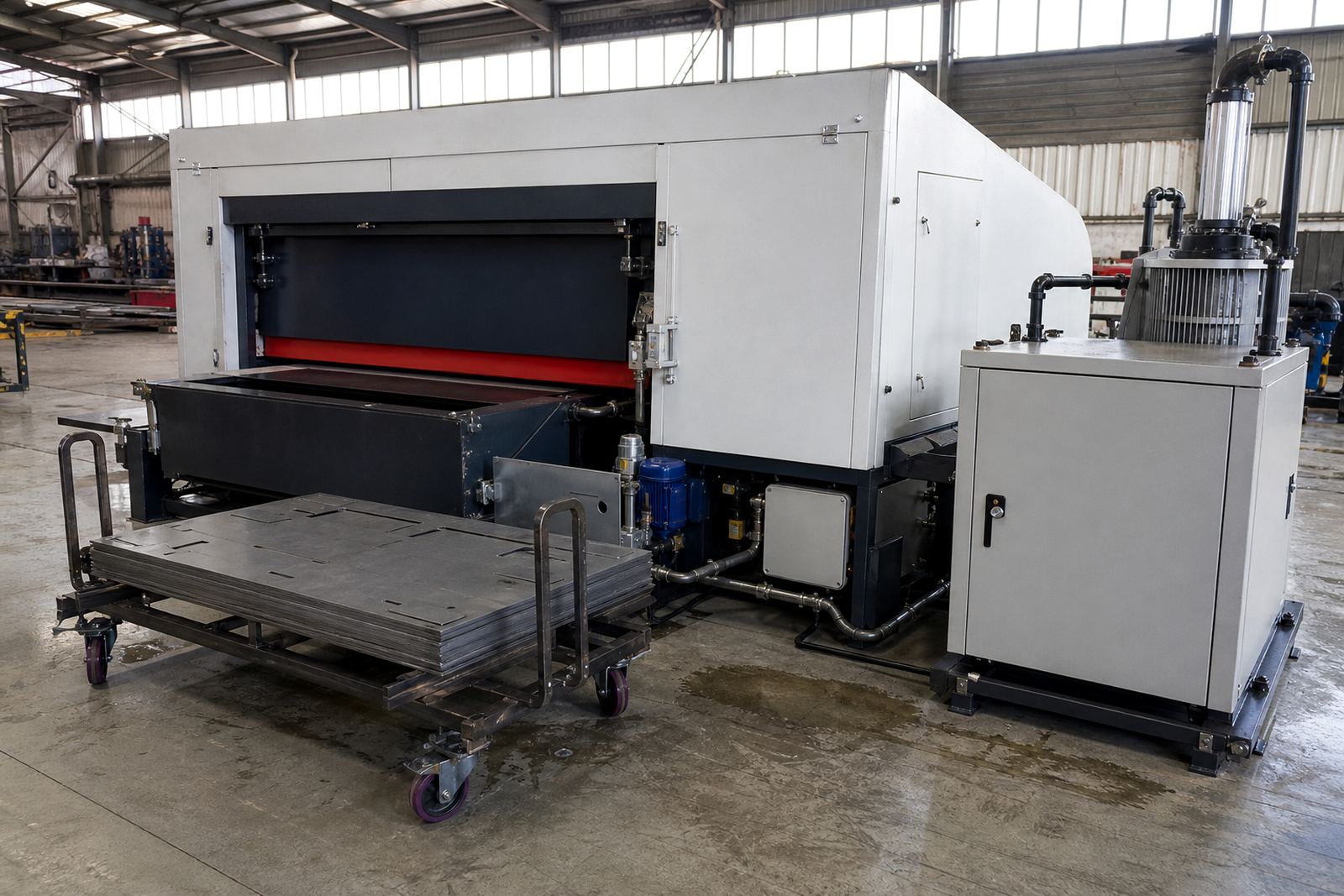
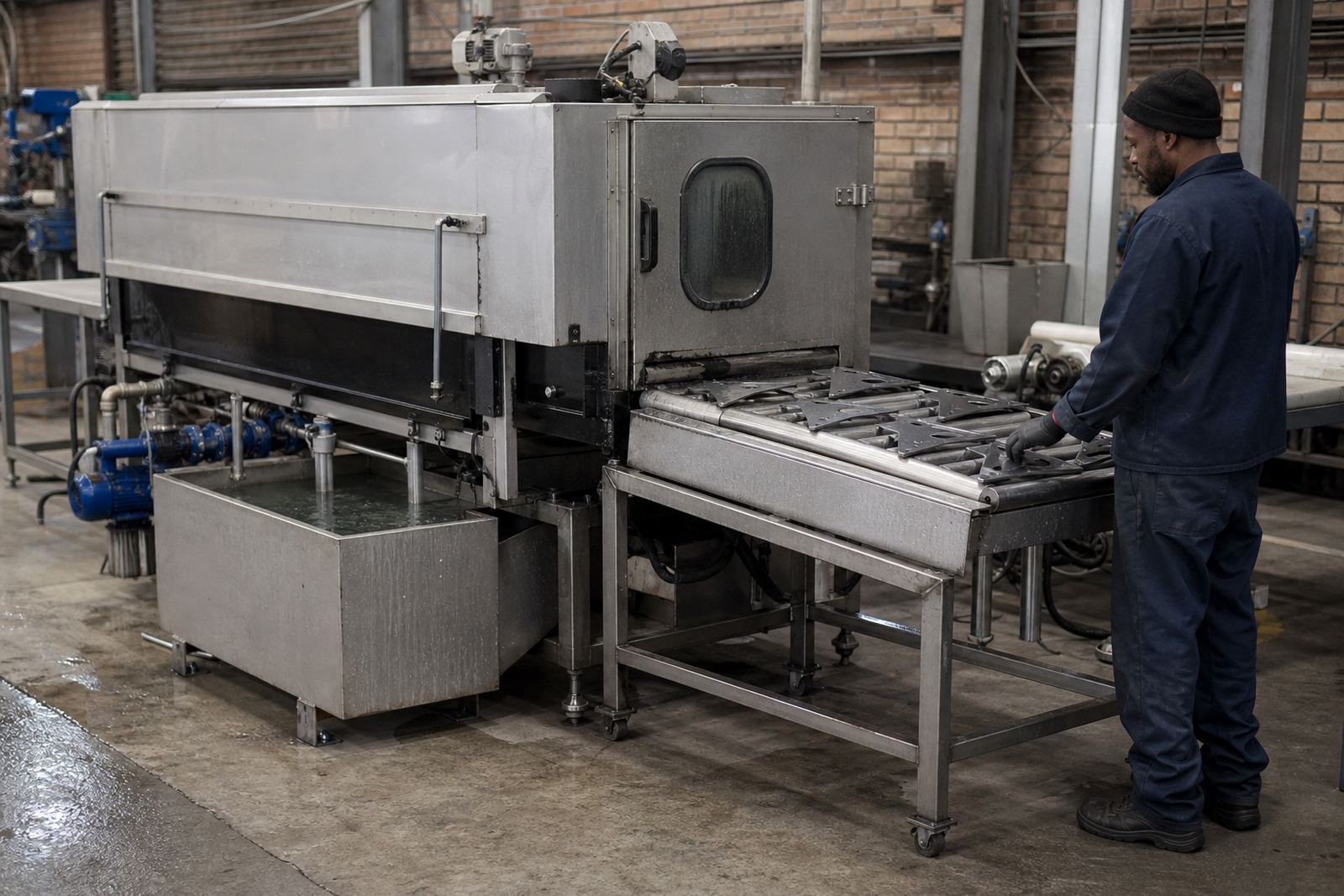
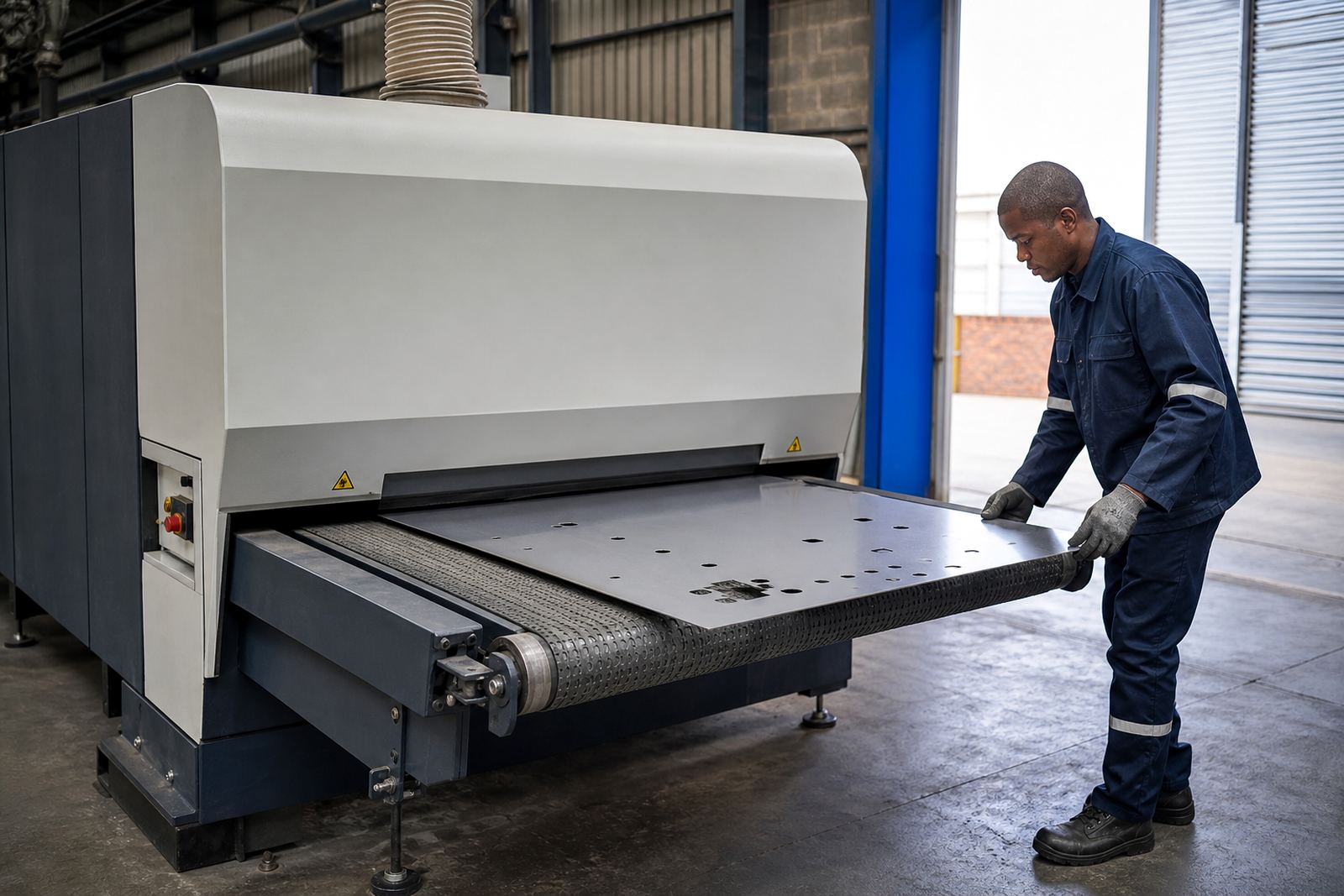
The Mid Volume Finisher is a practical machine for removing burrs, softening sharp edges and tidying laser-cut sheet metal before assembly, coating or packing. It is aimed at manufacturers who are past hand finishing, but do not need a full high-volume system with multiple process stations. On a busy floor in Wadeville, Germiston, or on a fabrication line in Johannesburg, it helps keep parts moving with less rework and fewer surprises at final inspection.
It is suited to steel, stainless steel and aluminium parts where edge quality matters for safety, fit-up and appearance. That includes panels, brackets, enclosures, covers, frames and repeated production parts. The machine gives a more even finish than manual grinding, and helps keep one operator productive across long shifts. For plants dealing with load-shedding and compressed deadlines, predictable throughput matters just as much as finish quality.
What You Can Expect From The Machine
The Mid Volume Finisher is specified for medium duty production. It handles varied part sizes and gives enough flexibility for mixed batches, which is useful when a fabricator is running several customers jobs in one day. The working width, conveyor speed and tooling combination can be matched to the type of sheet metal being processed, so the machine can be set up for lighter deburring or more aggressive edge treatment.
Typical features include adjustable feed speed, accessible tooling heads, dust extraction points and simple controls that a trained operator can manage without fuss. The design supports consistent edge finishing on cut parts with minimal handling. If your parts come off a laser with dross, sharp corners or light oxide, the machine helps reduce the time spent on secondary clean-up.
- Working width options for mixed sheet sizes
- Adjustable feed speed for different part types
- Suitable for steel, stainless steel and aluminium
- Tooling set-up for deburring and edge rounding
- Extraction provision for dust and fine particles
Where It Suits Best On A South African Floor
This model suits fabricators that process parts for cabinets, signage, mining equipment, HVAC, racking, automotive sub-assemblies and general metalwork. It is a good fit where the laser cutter is already producing regular volumes and the bottleneck has shifted to finishing. In places like Pretoria, Durban, Cape Town and Rustenburg, it is especially useful where customers expect clean edges and quick turnaround without paying for unnecessary rework.
The machine is a sensible step for businesses that want more control over finish quality, but still need a straightforward machine footprint. It works well in shops where operators may change between part families during the same shift. Because the finish is repeatable, supervisors can plan production better and spend less time chasing inconsistent hand work.
- Growing fabrication shops with daily finishing demand
- Production lines running varied part sizes and sheet thicknesses
- Metalwork suppliers needing neater edges before coating or assembly
- Sites looking to reduce manual grinding and hand finishing
Installation, Power And Workshop Requirements
Installation needs are usually straightforward, but the machine should still be placed on a level floor with enough access for loading, unloading and maintenance. A clear run in and out of the infeed zone makes a difference to output. We support installations from Wadeville, Germiston to sites across South Africa, including remote industrial areas where delivery timing and off-loading access need to be planned carefully.
Power requirements depend on the final specification, but a stable electrical supply is essential. Where the workshop experiences load-shedding, many clients plan for backup power or schedule production around the finishing line. If compressed air is part of the set-up, air quality and pressure should be checked before commissioning. Dust extraction should also be considered, particularly in enclosed workshops or where stainless work is common. Coastal humidity in Durban and Cape Town can also affect storage and workshop conditions, so placement and maintenance routines should be practical.
- Level floor and clear access around the machine
- Stable electrical supply matched to the specification
- Compressed air where required for the chosen set-up
- Dust extraction and housekeeping for safer operation
Care, Servicing And Keeping Output Steady
To keep finish quality consistent, the machine should be cleaned regularly and the consumable tools checked before they wear too far. On a daily basis, operators should remove build-up, inspect the belts or brushes and confirm that feed settings are correct for the next batch. Preventive maintenance is a better approach than waiting for a breakdown, especially when production is booked tight and customers are waiting for parts.
Our team provides preventive maintenance, breakdown repairs, abrasive replacement, machine audits and annual service contracts. We also assist with sample part testing and process optimisation, which is useful when a client changes material grade or part geometry. With regular care, the machine stays easier to run and the finish remains more predictable across different shifts. A short training refresh now and then can save a lot of wasted parts later.
What To Check Before You Order
Before you place an order, it helps to check the size of the parts you finish most often, the thickness range, the material mix and the output target for a normal shift. If you mostly run small brackets, your needs are different from a shop finishing large panels or enclosures. It is also worth checking how parts are loaded, whether they arrive flat or nested, and whether the line needs one pass or a finer final edge treatment.
We can help you compare the machine to your actual production needs from Johannesburg, Pretoria, Durban, Cape Town, Rustenburg and nearby industrial areas. Through the enquiry form on our contact page, our team can discuss machine installation, operator training, spares supply, relocation support and production planning help. If you send sample parts for testing, we can check how the finish performs before you commit. That makes the choice more practical and it reduces the risk of buying too much or too little machine for the job.
- Largest and smallest part sizes you finish regularly
- Material types and thickness range
- Daily output target and shift pattern
- Available floor space and access for delivery
- Power supply and compressed air availability
- Need for extraction, training and service cover
Key facts
| Working type | Deburring and edge-finishing for laser-cut sheet metal |
|---|---|
| Typical material range | Mild steel, stainless steel and aluminium |
| Output class | Mid volume production |
| Control style | Simple operator controls with adjustable settings |
| Service support | Installation, training, maintenance and repairs from Wadeville, Germiston |
| Best fit | Growing fabricators with daily mixed-part finishing demand |