What Wetline Pro Does on the Shop Floor
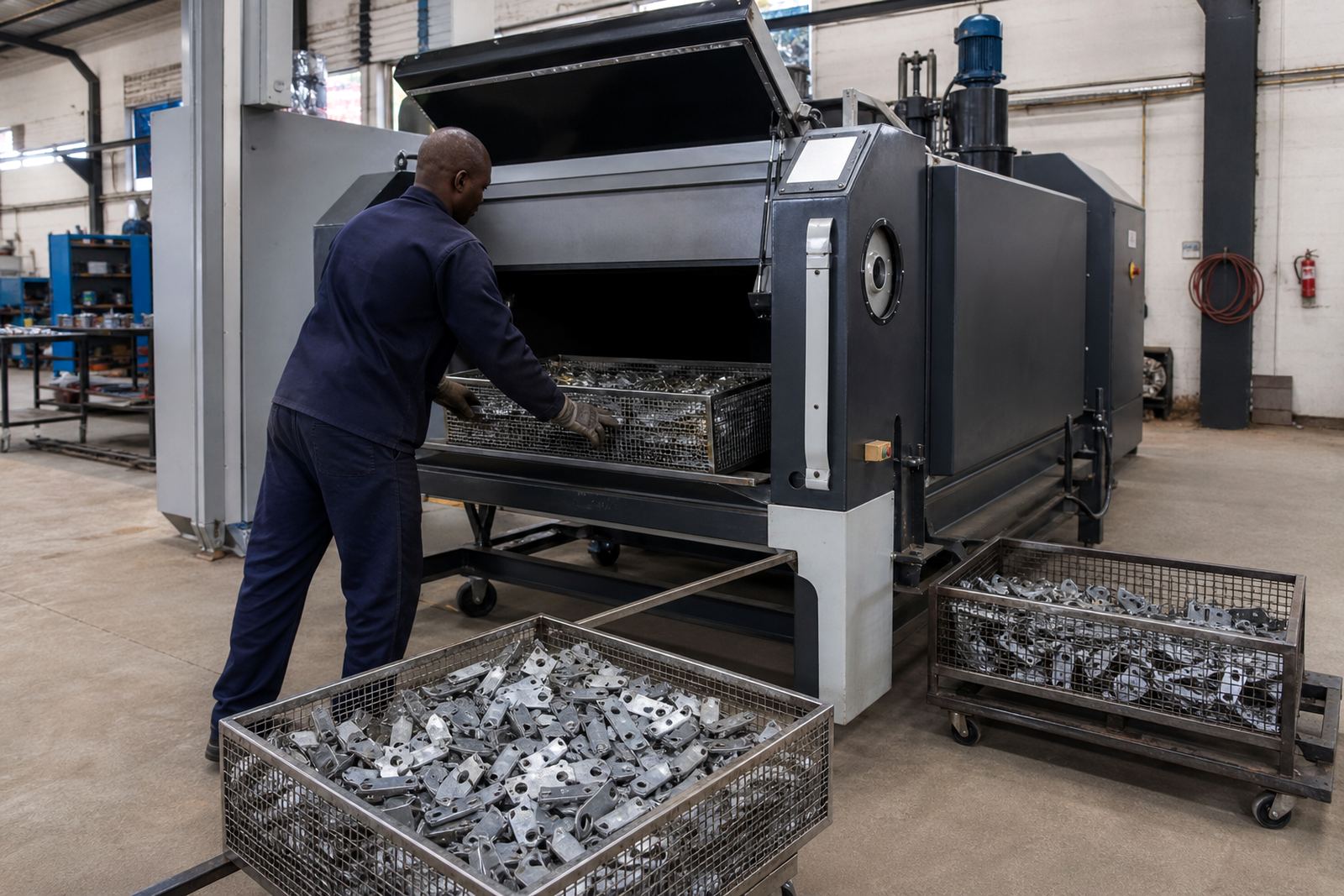
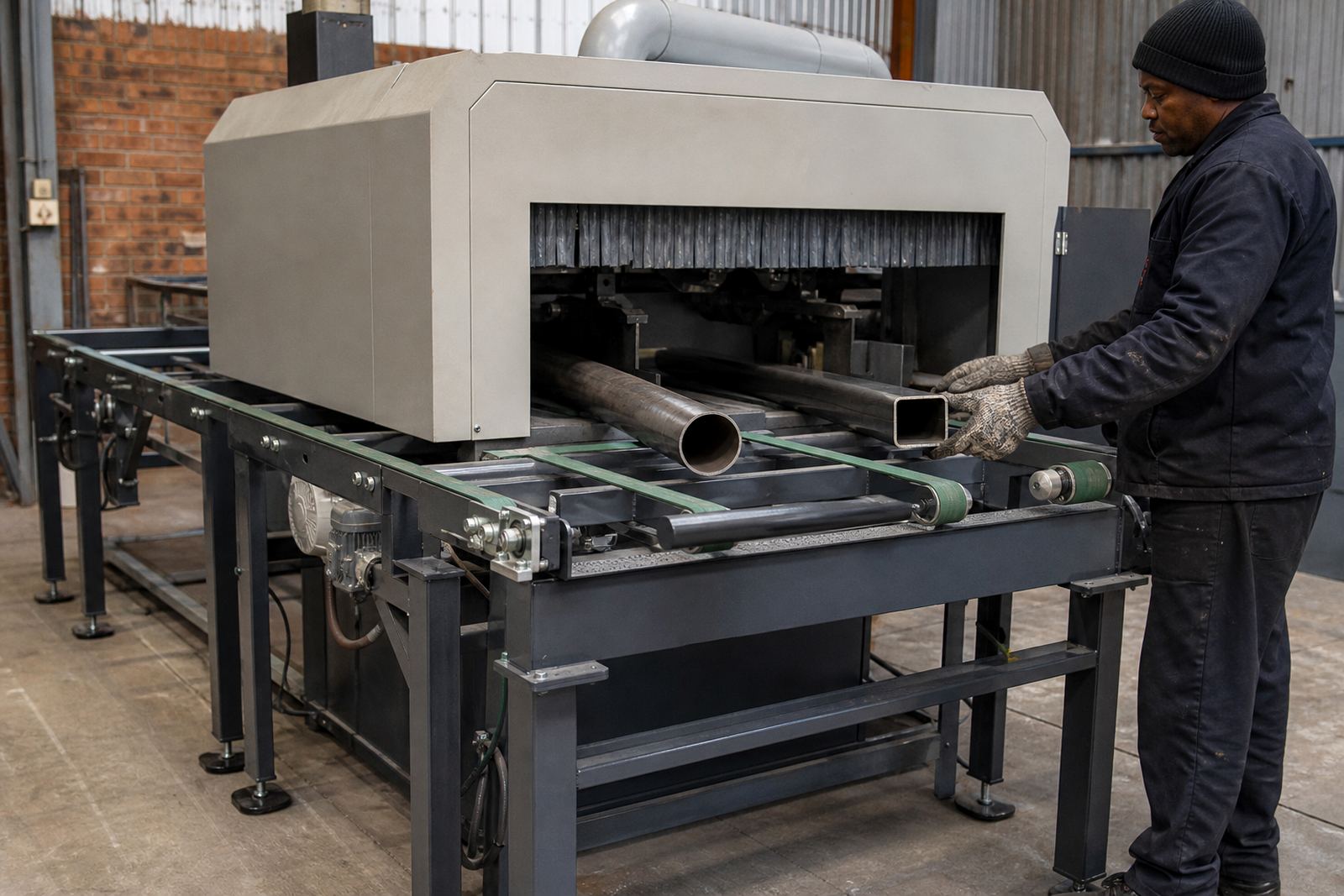
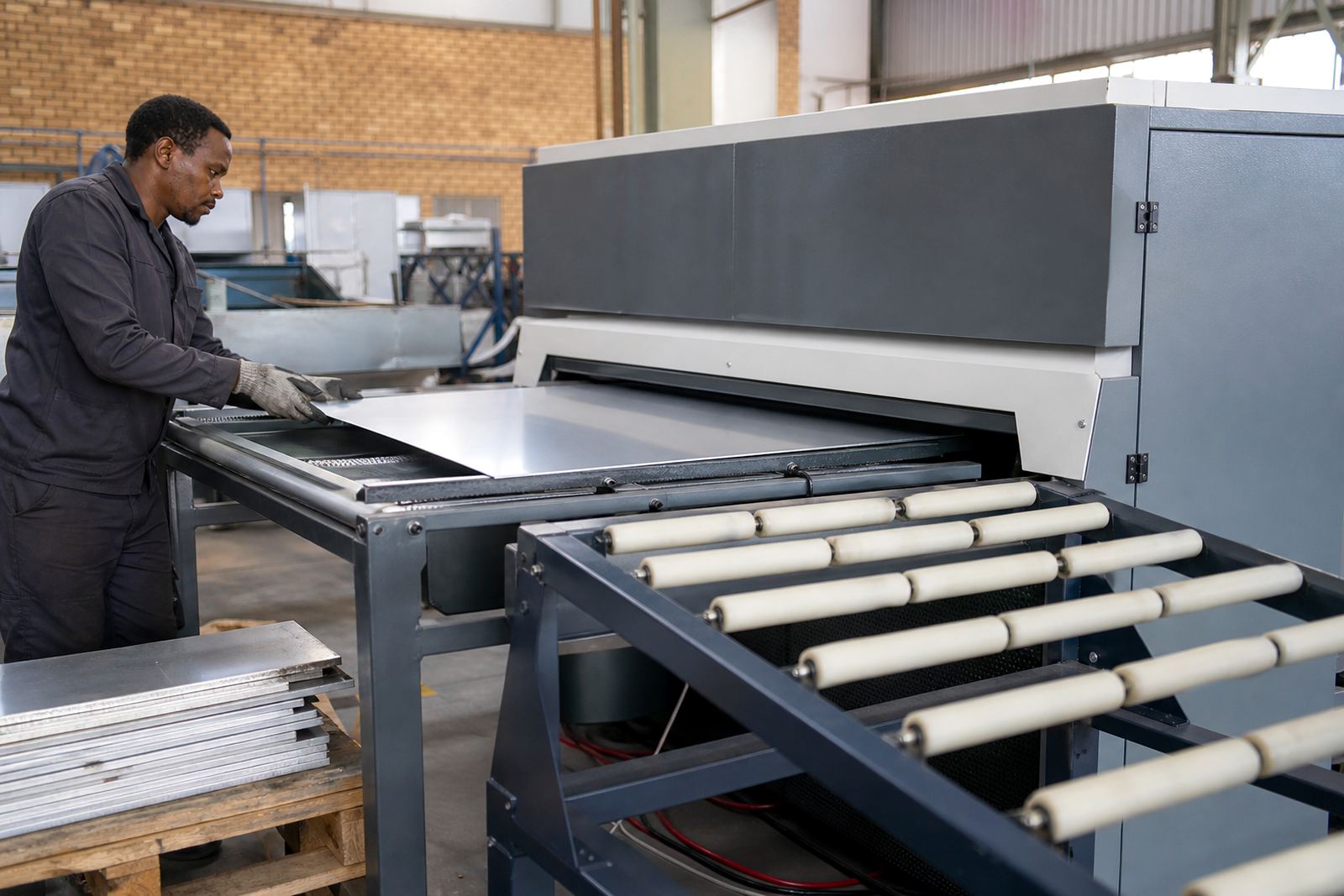
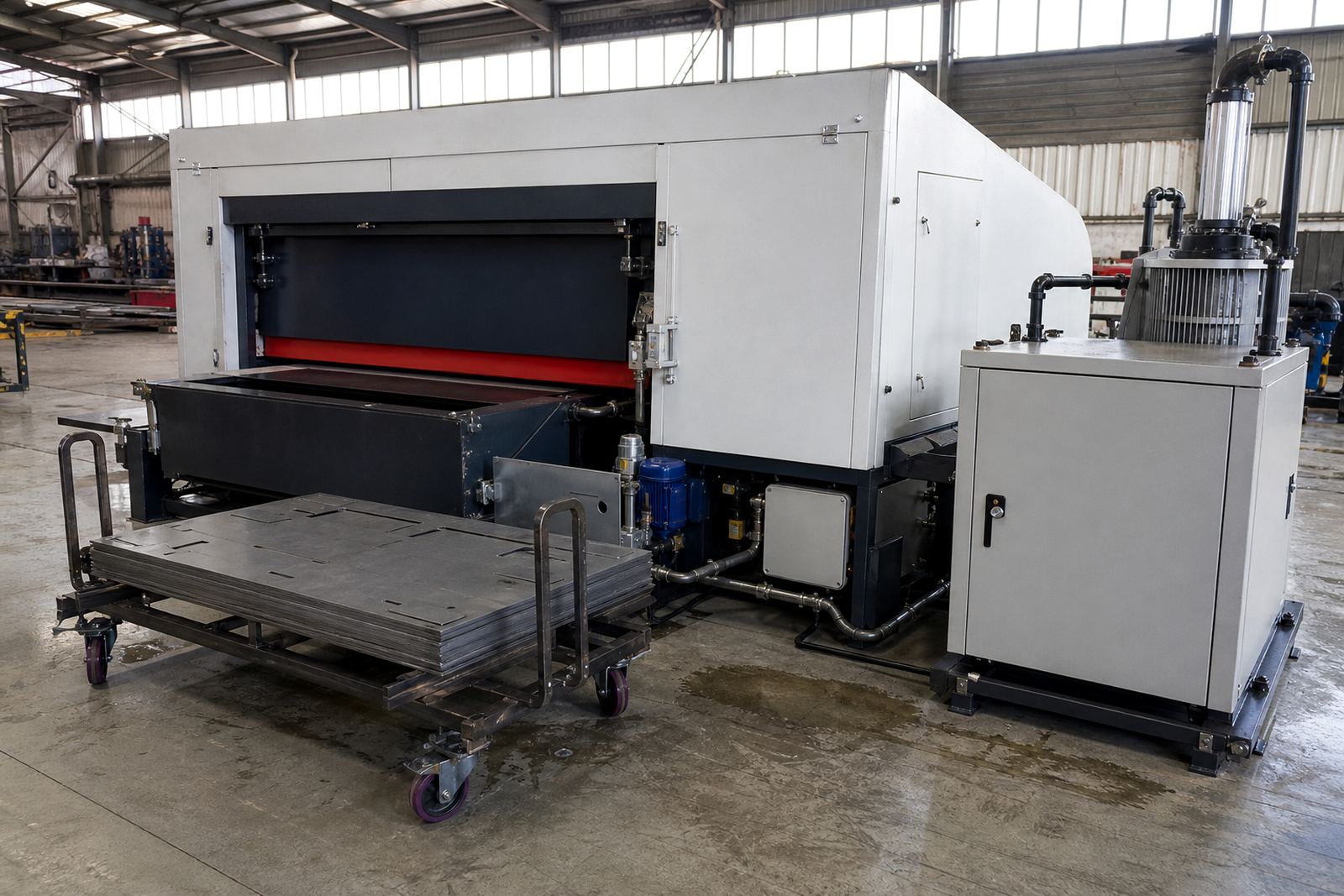
Wetline Pro is used after laser cutting to remove sharp edges, reduce burrs and improve the finish on sheet metal parts before they move to bending, welding, coating or assembly. The wet process helps keep heat down and controls dust, which is useful in busy workshops where the same line must run for long shifts without constant stop-start interruptions.
This machine suits parts that need a more even surface condition and a cleaner edge than basic hand finishing can deliver. It is often used on stainless steel, mild steel and coated sheet, depending on the part design and the required finish level. For shops in Wadeville, Germiston and across Johannesburg, Pretoria, Durban, Cape Town and Rustenburg, it is a practical option where repeatability matters more than quick one-off work.
- Designed for laser-cut sheet metal parts
- Supports continuous operation on production runs
- Helps improve edge consistency on premium parts
- Reduces manual rework and operator fatigue
Sizes and Build Options to Match Your Output
Wetline Pro is supplied in a larger format for higher volume shops, with options suited to different part widths and throughput needs. The exact working width, conveyor length and station layout depend on the material mix and the size of parts you process every day. If your workshop handles panels, brackets, covers or flat parts in batches, the machine can be set up to suit that flow.
When comparing options, it helps to look at the biggest part you process, not only the average job. A machine that is too small will slow the whole line, while an oversized unit can take up more floor space than needed. In Wadeville workshops where space is tight and floor loading matters, that balance is important.
- Working width matched to part size and batch volume
- Conveyor and station layout selected for production flow
- Suitable for standalone use or a linked finishing line
- Can be planned around available floor space and access routes
Where Wetline Pro Works Best
This machine suits fabricators that want better control on finished parts and need to keep production moving. It is a good fit for laser cutting shops, contract metalworkers, stainless fabricators and manufacturers supplying parts for enclosures, equipment frames, guards and sheet metal assemblies. Where the customer expects a cleaner edge and less variation from part to part, Wetline Pro helps keep the work consistent.
It is also useful where the same workshop handles a mix of materials and needs a proper finishing step before dispatch. In coastal areas like Durban and Cape Town, the wet process can help when parts go straight into packing or later coating, because surface contamination and fine dust are kept under control. For inland plants around Pretoria, Rustenburg and the East Rand, the machine helps manage high daily output without depending on manual filing or grinding. That saves time, and the team gets a steadier result.
- Laser-cut sheet metal production
- High-volume fabrication shops
- Premium parts needing cleaner edge finishing
- Workflows where dust control and repeatability matter
Installation, Power and Utility Requirements
Wetline Pro should be installed on a level concrete floor with enough access around the machine for loading, cleaning and service work. Before delivery, check aisle widths, roller door heights and the route from unloading point to final position. If the machine is going into a busy production area, it is best to plan for safe fork access and clear space for part handling.
Power needs depend on the selected configuration, but a suitable three-phase supply is generally required for a larger wet-processing machine. Water supply, drainage and slurry handling must also be planned properly. Some sites will need a nearby wash-down point and a practical way to collect residue. If your plant deals with load-shedding, ask about safe restart procedures and whether any linked equipment needs protection. Where compressed air is used for associated cleaning or part handling, stable air quality and pressure are important too.
- Level floor with safe access for delivery and service
- Three-phase electrical supply for larger configurations
- Water feed and drainage to suit the installation point
- Plan for slurry removal and cleaning routines
Care, Servicing and Daily Checks
Wetline Pro is built for regular use, but it still needs proper care to keep finishing quality steady. Operators should check fluid levels, inspect wear points, clean the working area and remove residue before it builds up. If the machine runs on multiple shifts, a set daily routine makes a real difference to output and helps avoid unnecessary stoppages.
Preventive maintenance should cover moving parts, filters, pumps and any abrasive or consumable systems linked to the process. In workshops where staff turnover is high, refresher training is worth it so each operator knows how to spot early warning signs. Our team in Germiston supports installation, operator training, preventive maintenance, breakdown repairs and annual service contracts, so the machine stays in good order. A small issue left too long can turn into a bigger one, especially when the line is already under pressure.
- Daily cleaning and residue removal
- Regular checks on wear parts and fluid condition
- Planned servicing for pumps, filters and moving components
- Operator training to reduce avoidable stoppages
What to Check Before You Order
Before ordering Wetline Pro, it helps to define the exact parts you want to process and the finish level you need. Bring a sample part if possible, along with material details, thickness ranges, daily output targets and any drawings or flat patterns. If your workshop processes both small brackets and larger panels, tell us the smallest and largest parts so the working width and handling arrangement can be matched properly.
You should also confirm the space available in the plant, the electrical supply, the water and drainage point, and whether the machine will sit near cutting, bending or packing stations. If the installation is for a busy site in Johannesburg, Pretoria, Durban, Cape Town or Rustenburg, it is worth planning delivery and setup around production hours so the move does not interrupt too much work. Our applications team can review sample parts, talk through process flow and help you decide whether the machine should be paired with other finishing steps. That way you order the right setup the first time, not a machine that needs changing later.
- Part sizes, material types and thickness range
- Daily throughput and shift pattern
- Available floor space and access for installation
- Power, water and drainage points at the site
Key facts
| Machine type | Wet-processing edge-finishing machine for laser-cut sheet metal |
|---|---|
| Operation | Continuous production use with controlled finishing |
| Typical materials | Mild steel, stainless steel and coated sheet, subject to application |
| Power | Three-phase supply required, final load depends on configuration |
| Utilities | Water supply and drainage required, with residue management |
| Best fit | High-volume fabricators needing cleaner, more consistent finished parts |