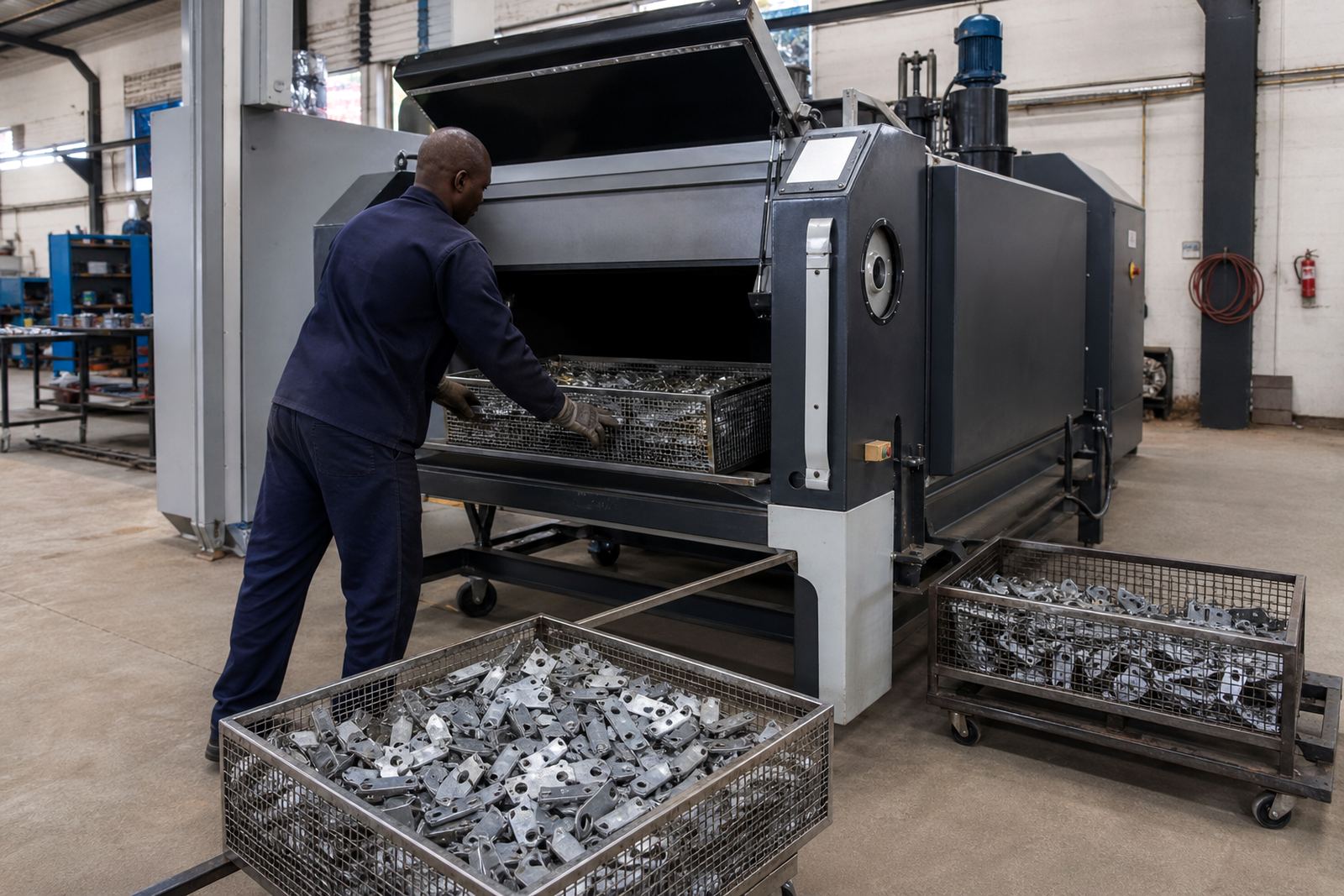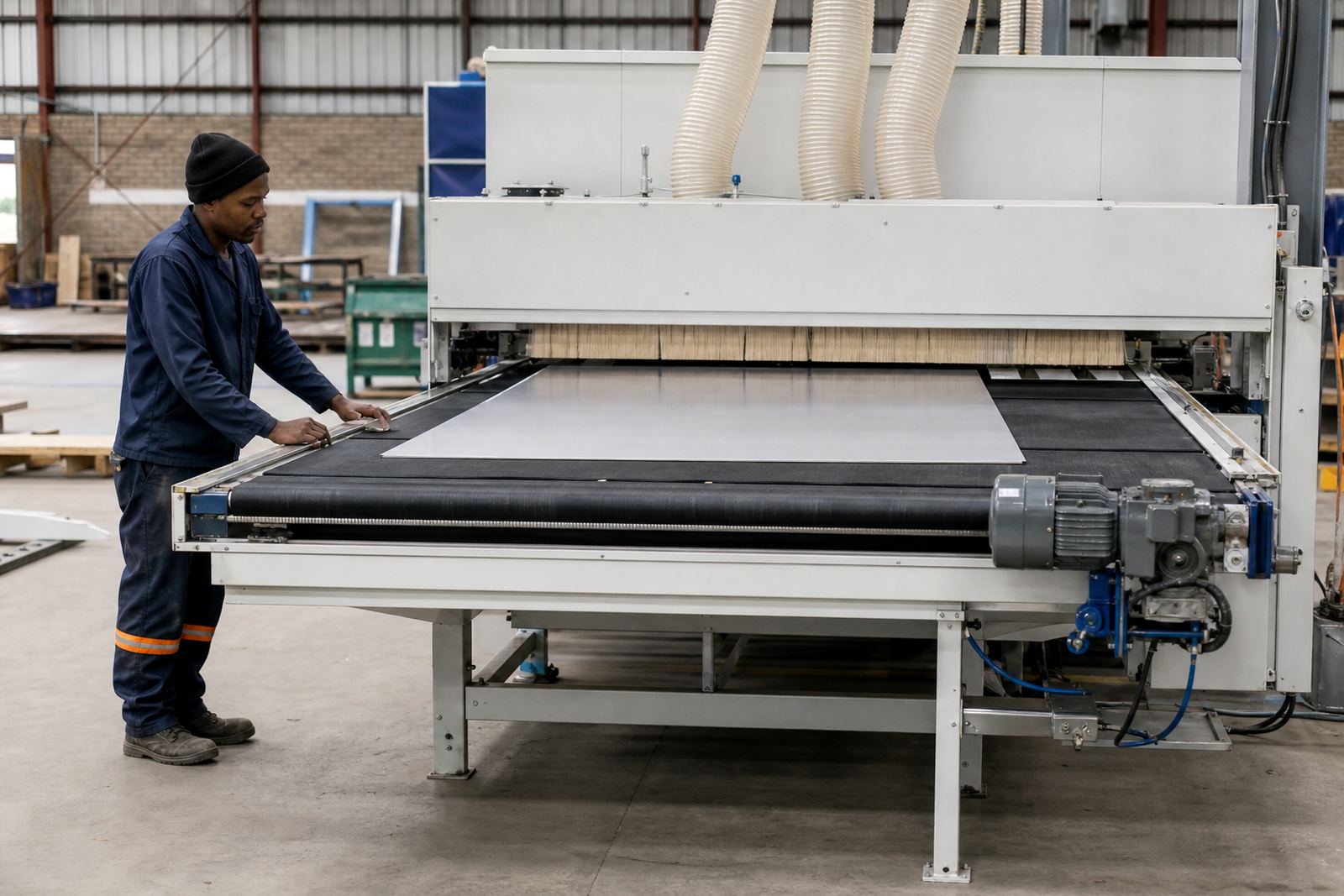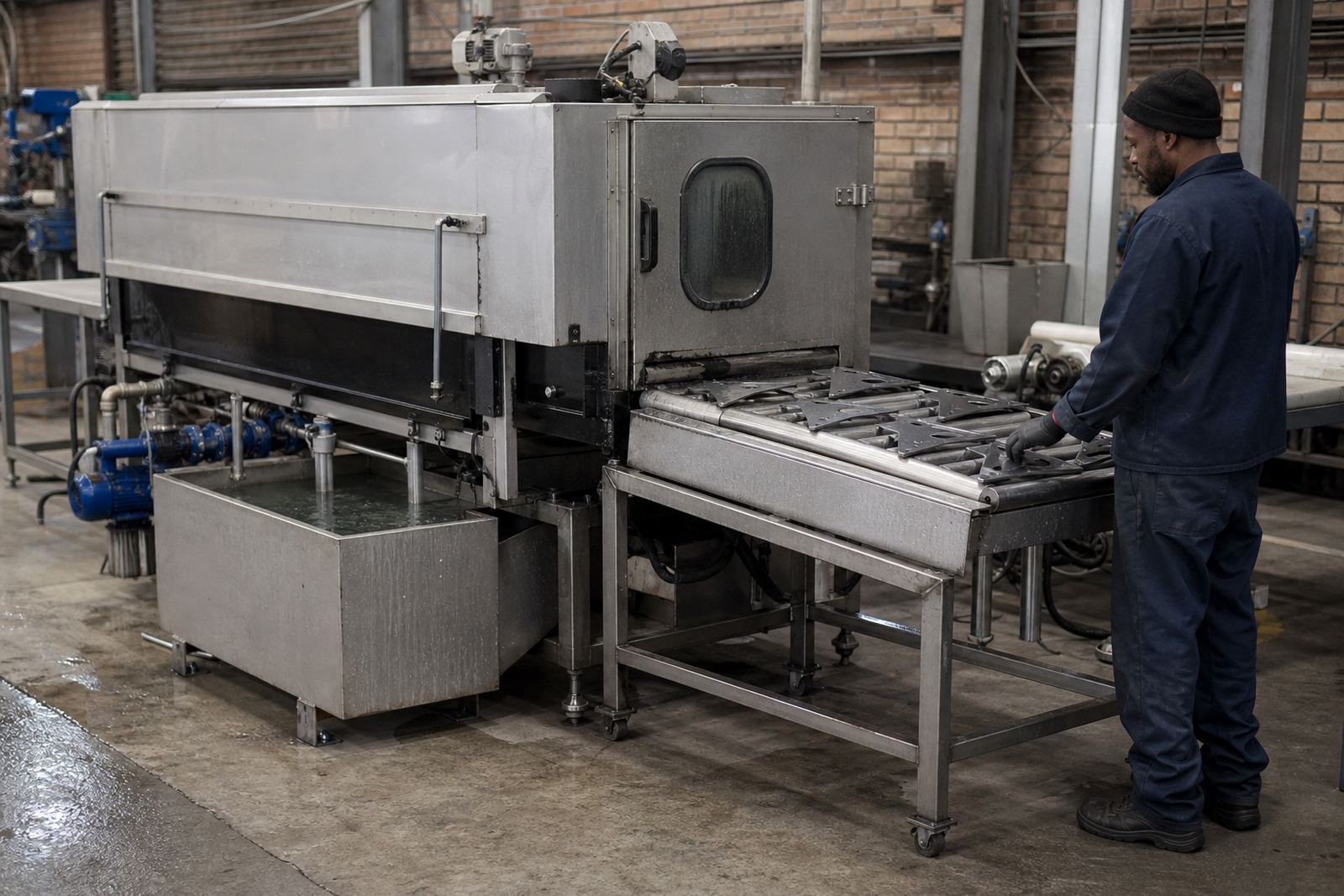

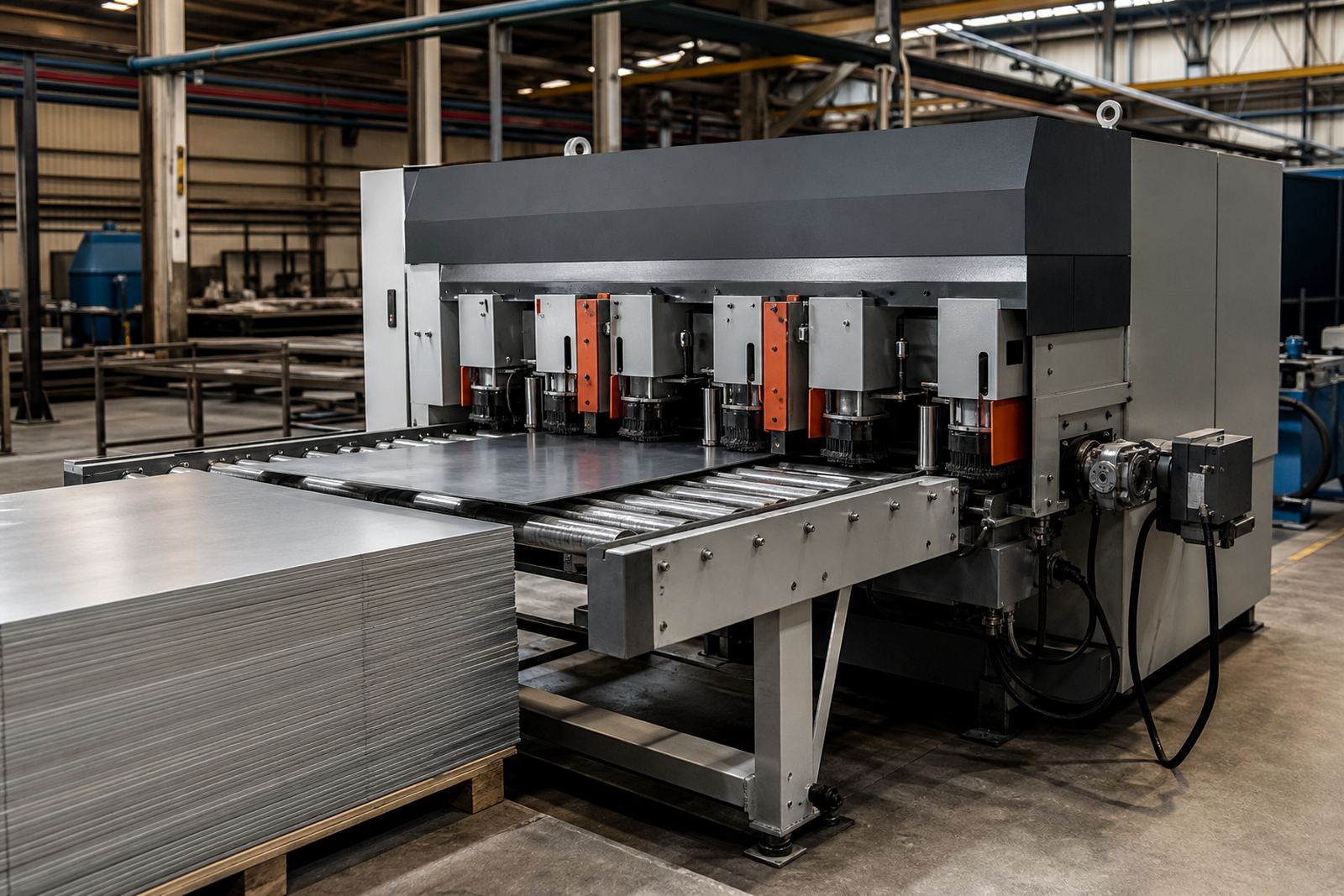
Built for continuous edge finishing after laser cutting
This machine is set up for manufacturers and fabricators who process large batches of laser-cut parts every day. Instead of sending sheet after sheet to manual finishing, the High Volume Finisher removes burrs and sharp edges in a controlled pass, giving you a more even result across the job. That matters when parts must fit first time, especially on repeat work and tight production schedules.
The machine is designed for steel, stainless steel and aluminium sheet that comes straight off the laser. It helps reduce handling time between cutting, deburring and downstream operations like bending, welding or packing. For plants running long shifts in Johannesburg, Pretoria, Durban, Cape Town or Rustenburg, the main gain is simple: more consistent parts with fewer delays.
Sizes and options for different sheet metal lines
The standard configuration suits compact production areas as well as larger fabrication lines, with working width options typically ranging from 650 mm to 1350 mm. That gives you room to match the machine to your sheet sizes and the part mix you process most often. A single pass line can be set up for finishing only, or combined with a second stage for heavier edge work.
- Working width: 650 mm, 1000 mm or 1350 mm depending on line layout
- Pass direction: left to right or right to left for plant flow
- Feed system: variable speed for different part sizes and material mixes
- Finishing heads: abrasive belt, edge rounding or combined setup
- Extraction connection: for dust and fine metal particulate control
- Infeed and outfeed tables: manual or powered, based on production volume
Where parts are smaller and output is high, a narrower machine can be a smart fit. For larger sheets or mixed production, the wider format cuts handling and keeps the line moving.
Where the machine fits best in South African workshops
This product suits laser cutting shops, jobbing fabricators, sheet metal specialists and equipment suppliers that need repeatable edge quality. It is also a strong fit for teams supplying parts to mining, security, construction, electrical enclosure and general manufacturing sectors, where burrs can slow assembly or create safety issues. In coastal areas, especially around Durban and Cape Town, proper care matters because humidity can affect exposed metal and consumables if the machine is left idle too long.
It works well where load-shedding, shift changes and mixed batch sizes put pressure on production planning. A finishing machine that can take a steady feed and maintain quality helps keep the workshop moving even when the team is under pressure. It is not about one-off display pieces, it is about day-in, day-out output that stays the same.
- Best for laser-cut flat sheet, nests and punched components
- Useful where manual edge cleaning takes too long
- Suitable for medium to high production volumes
- Helps reduce sharp edges before handling and assembly
Installation, power supply and workshop requirements
Installation needs to be planned around floor space, material flow and safe access for loading and cleaning. The machine should sit on a level concrete floor with enough room for infeed, outfeed and maintenance access. If the workshop is in an area with frequent power interruptions, a proper restart procedure and surge protection should be built into the site setup.
Typical power requirements are 380 V three phase, 50 Hz, with installed motor load depending on the final configuration. Air supply may be needed for certain functions and dust extraction should be considered where fine finishing creates debris. Some sites will also need local compliance checks for extraction routing, noise control and safe machine guarding before commissioning.
- Power: 380 V, 3 phase, 50 Hz typical
- Flooring: level concrete recommended
- Space: allow room for loading, offloading and maintenance
- Services: electrical supply, extraction and compressed air where specified
- Commissioning: site check, test run and operator handover
Care, servicing and what keeps output steady
Like any production machine, the High Volume Finisher gives the best result when it is cleaned and checked regularly. Abrasive parts wear down with use and should be inspected before the finish starts to drift. A good service routine also helps avoid surprise stoppages, which can cost a full shift if the line is busy. In our experience, a small maintenance habit saves a lot of trouble later.
Preventive maintenance is especially important where a workshop runs long hours or works through dusty conditions. Keep the feed path clean, check the abrasive condition, inspect belts and rollers, and make sure the extraction system is doing its job. If a part finish changes suddenly, it is often a sign that the abrasive setup, feed pressure or alignment needs attention.
- Daily cleaning of dust and metal fines
- Regular inspection of belts, brushes and wear parts
- Scheduled replacement of abrasive consumables
- Lubrication and alignment checks at set intervals
- Annual service contracts available for busy sites
What to check before you place an order
Before ordering, it helps to know your average sheet size, material type, thickness range and target output per shift. You should also confirm whether you need only deburring or edge rounding as well, because that affects the machine setup. If your parts have protective film, heavy scale, or mixed cut quality from different lasers, it is worth testing samples first.
Also think about who will run the machine and how it will fit into your current flow. If the line feeds directly from laser cutting, the infeed and outfeed arrangement should match the movement of your material trolleys, pallets or racks. A bit of planning up front avoids change later, and keeps the machine useful from day one.
- Sheet size and working width required
- Material type and thickness range
- Desired finish: deburr only or edge rounding too
- Power supply and extraction availability on site
- Shift pattern, operator numbers and throughput target
- Need for sample part testing before final sign-off
Key facts
| Machine type | High volume deburring and edge-finishing machine for laser-cut sheet metal |
|---|---|
| Working width | 650 mm, 1000 mm or 1350 mm depending on configuration |
| Material range | Mild steel, stainless steel and aluminium sheet |
| Power supply | 380 V, 3 phase, 50 Hz typical |
| Throughput | Set for sustained production and repeat batch processing |
| Main functions | Deburring, edge rounding, abrasive finishing and cleaning of cut edges |