What the Batch Parts Unit does on a busy shop floor
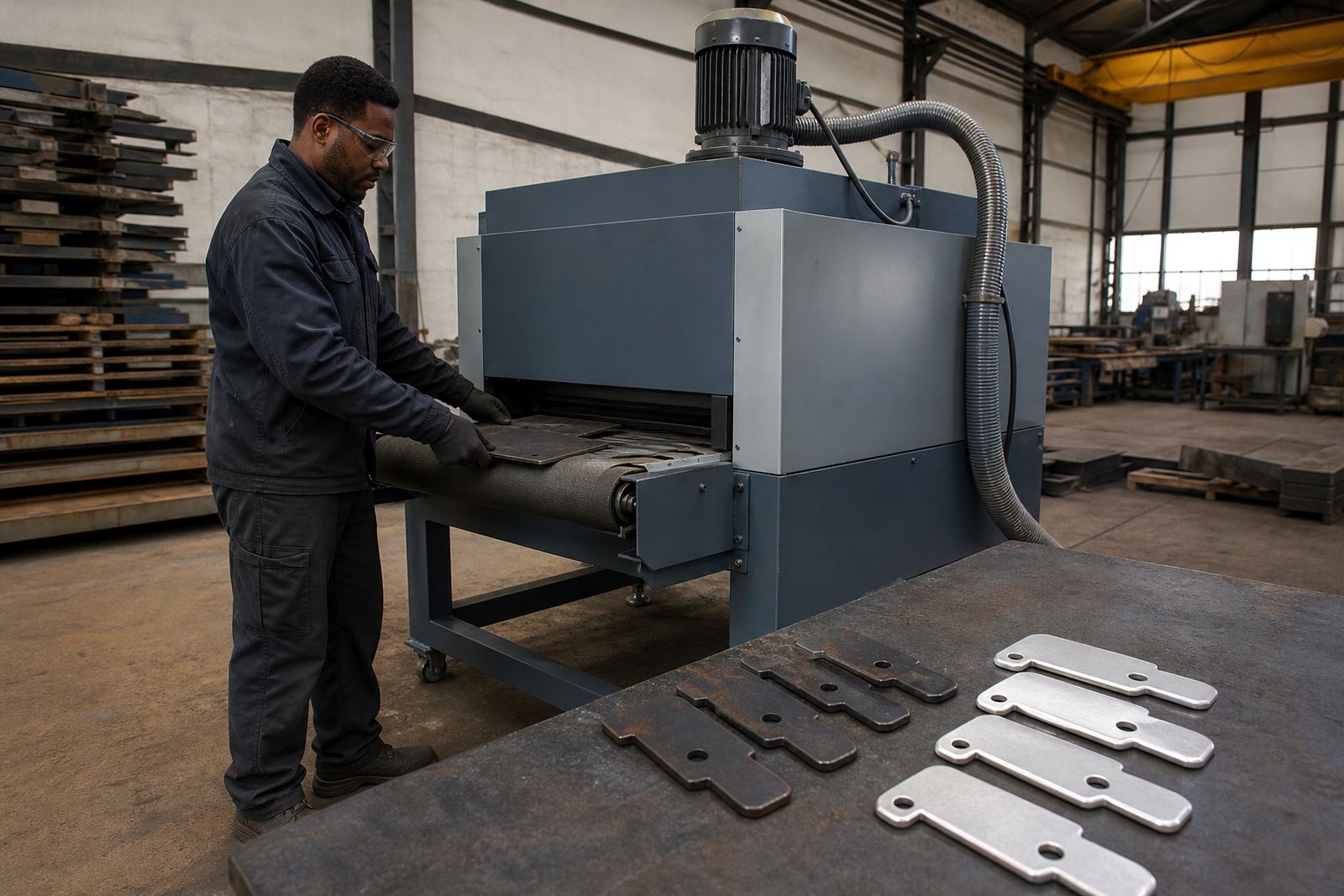
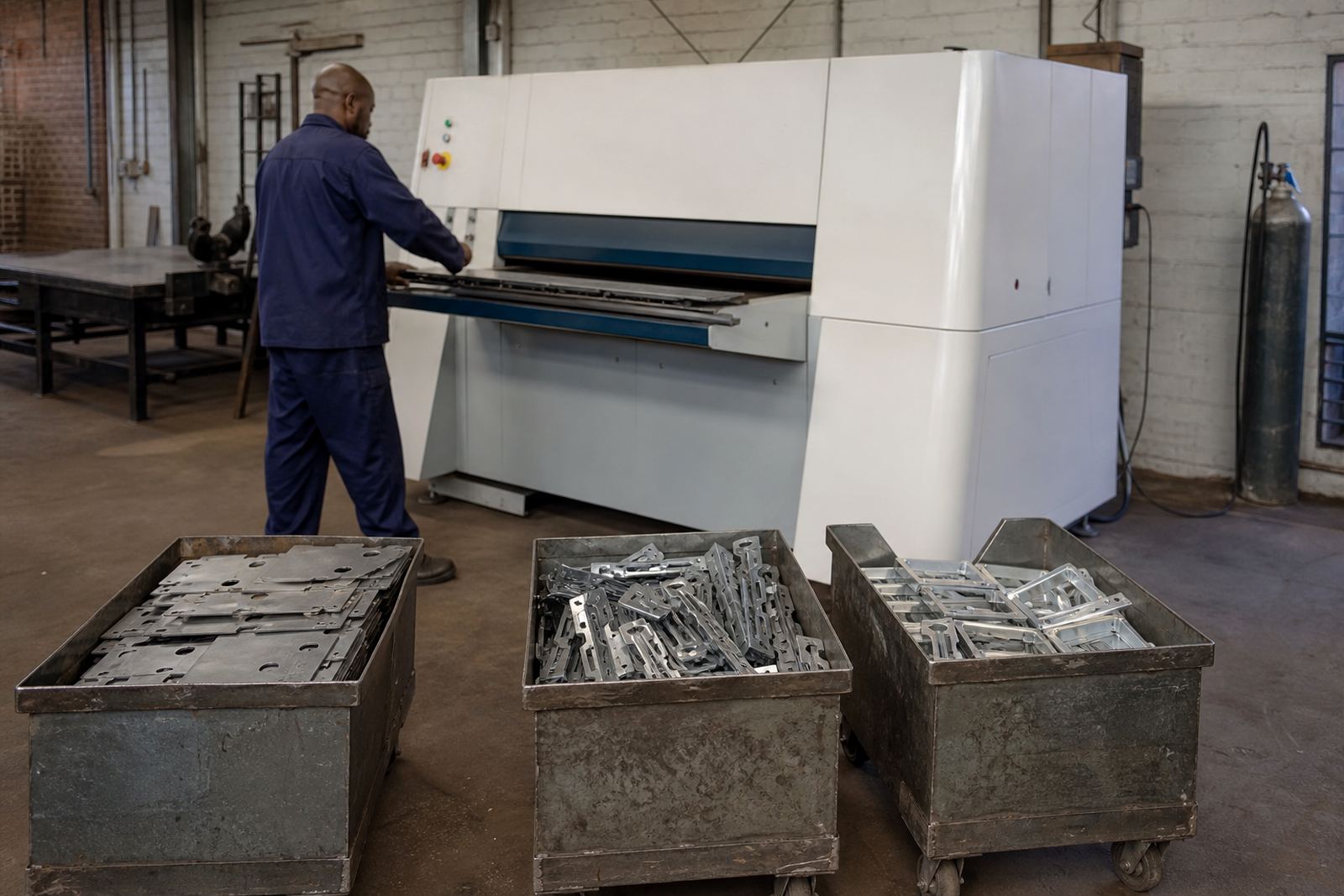
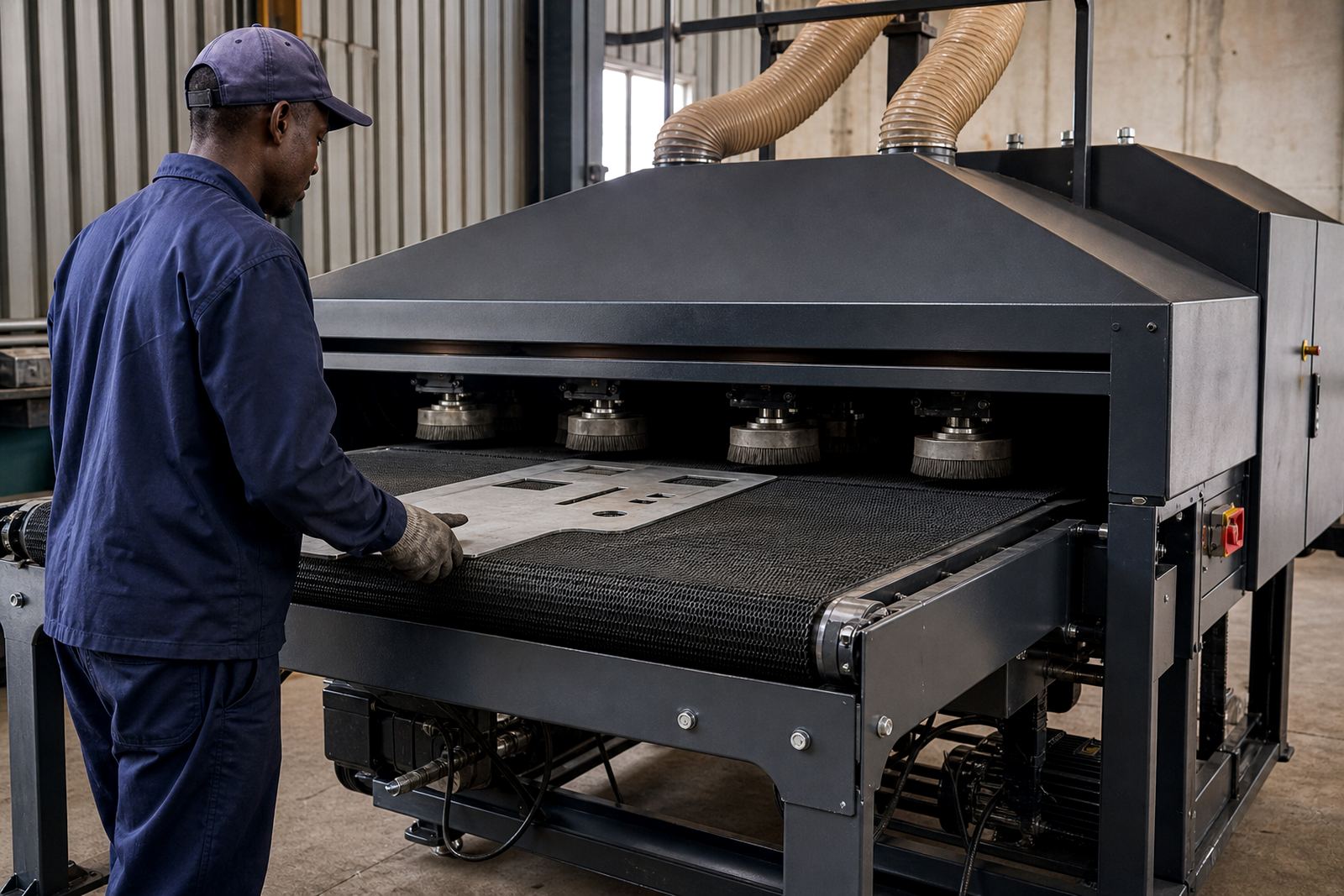
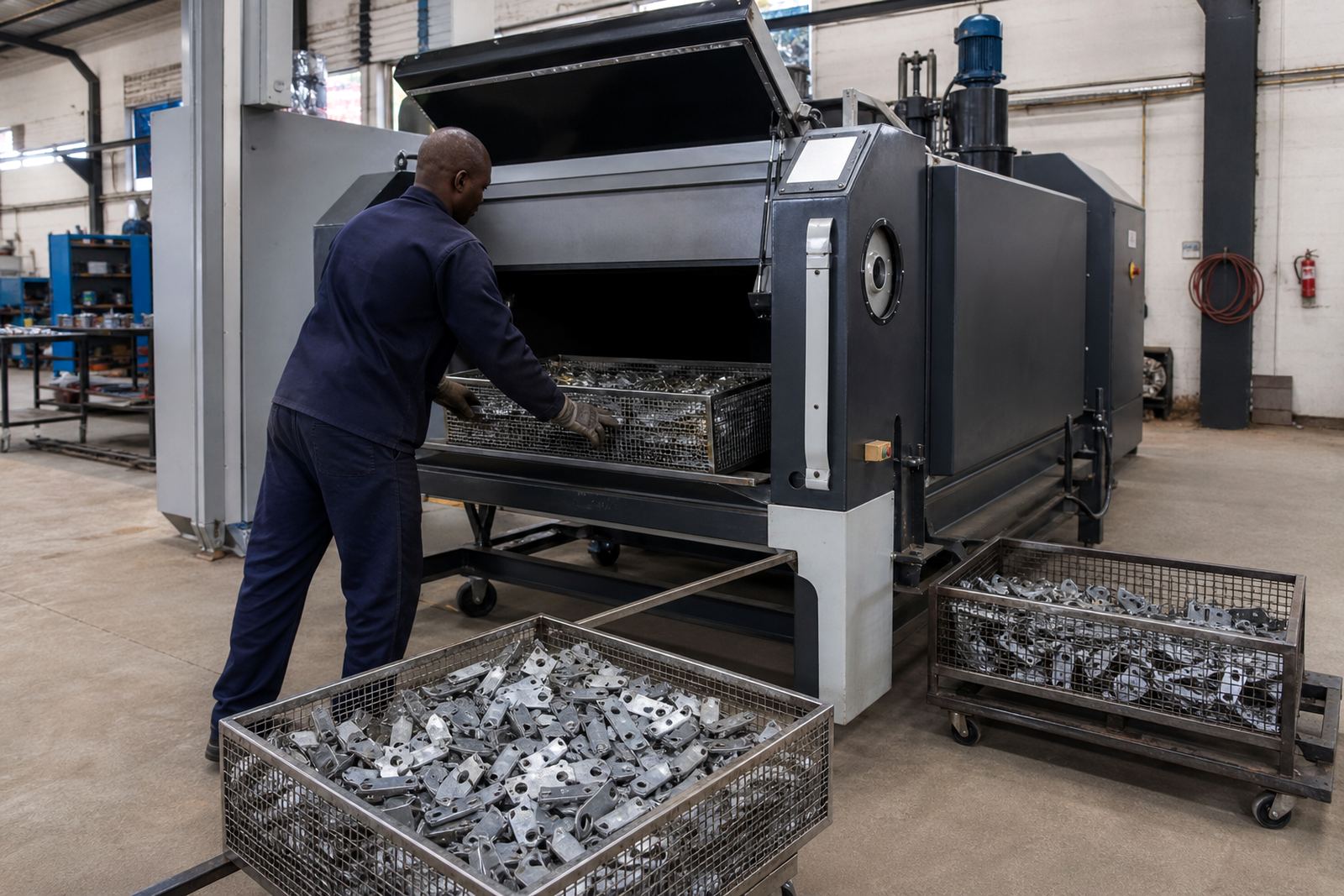
The Batch Parts Unit is used for deburring and edge-finishing of laser-cut sheet metal in batches, rather than one part at a time. That makes it a practical fit for fabricators handling repeats, mixed nests, or small component runs that still need a consistent finish from sheet to sheet. Parts are loaded in groups, processed through the finishing stage, then removed ready for the next operation.
For many South African workshops, the main value is simple handling. Operators do not need to spend time dressing each edge manually, and the machine helps keep output more even across long shifts. It also supports better throughput when production is under pressure and you need to keep jobs moving between cutting, bending and assembly without delays.
Because laser-cut edges can leave burrs, oxide and sharp corners, the Batch Parts Unit helps reduce rework and improve part safety. It is a good choice where customers expect clean edges, accurate fit-up and less time spent on hand finishing.
Where this unit suits best
This model suits manufacturers and fabricators that produce repeated components such as brackets, plates, frames, covers, panels and mounting parts. It is useful in jobbing shops, contract fabrication, enclosure work, farm equipment parts, steel furniture components and light industrial production. If the same part comes back often, batch finishing can save time and make quality easier to control.
It is especially helpful where output needs to stay steady despite staff changes, load-shedding planning or short production windows. In places like Wadeville, Germiston, Johannesburg, Pretoria, Durban, Cape Town and Rustenburg, many workshops need a machine that can be used by different operators without a steep learning curve.
- Repeat laser-cut parts with similar thicknesses
- Small to medium batches that must move fast
- Jobs needing cleaner edges before coating or assembly
- Workshops wanting less manual grinding and filing
- Production lines that need predictable finishing times
Sizes, layout options and handling capacity
The Batch Parts Unit is available in practical workshop sizes to suit different floor spaces and production volumes. Smaller units are suited to compact bays and lower daily counts, while wider machines handle larger panels or more parts per load. The right size depends on the biggest part you process, the average batch weight, and how much space you have for loading and offloading.
Common options include adjustable feed settings, variable finishing intensity and different contact media depending on the material and edge condition. On some jobs, you may need a gentler finish for thin sheet. On others, a firmer action is needed for heavier laser-cut steel. That flexibility helps the same unit handle a mixed order book without constant changeover.
When planning space, allow room for infeed, outfeed and part staging. A workshop in Gauteng may have a tighter footprint than a plant on the coast but both still need clear access for trolleys, crates and safe operator movement. If you are moving parts between departments, it helps to place the unit close to cutting or packing to cut down on handling time.
Power, services and installation needs
Installation requirements depend on the final configuration, but the Batch Parts Unit is typically set up as a workshop machine that needs stable electrical supply, level flooring and clear access for maintenance. For sites affected by load-shedding, it is wise to plan around the machine’s start-up load and to confirm what backup power arrangement is available before commissioning.
Most installations do not need gas supply for the finishing process itself, although compressed air may be needed for cleaning, part handling or related workshop tools. If your site already runs air lines for cutting, clamping or housekeeping, that can make installation easier. Good extraction and dust control are also worth checking, especially in enclosed spaces where fine metal particles can build up.
- Stable electrical supply and correct isolation point
- Level floor with enough space for access panels
- Clear route for delivery and positioning
- Compressed air if specified for the setup
- Dust extraction or housekeeping plan where needed
Our Wadeville, Germiston base supports installations across South Africa, including Johannesburg, Pretoria, Durban, Cape Town and Rustenburg, with setup guidance, operator handover and practical commissioning support.
Care, servicing and keeping output steady
Like any finishing machine, the Batch Parts Unit gives best results when it is cleaned and checked regularly. Daily housekeeping helps remove dust, offcuts and fine particles that can affect finish quality. Operators should inspect wear parts, check moving components and keep the working area clear before each shift. A few minutes of care can prevent poor edge quality later in the day.
For higher-volume sites, preventive maintenance is better than waiting for a breakdown. Our service team supports abrasive replacement, machine audits, breakdown repairs and annual service contracts. If the machine starts leaving uneven edges, slowing down or showing inconsistent output, that is usually the point to check consumables, alignment and feed settings before the issue becomes costly.
In coastal areas like Durban and Cape Town, humidity can affect stored parts and workshop conditions, so it is sensible to keep spares dry and follow a regular inspection schedule. In inland workshops, dust from cutting and grinding can be the bigger issue. Either way, routine care helps the machine keep producing neat finishes and less scrap.
What to check before you order
Before placing an order, it helps to review the type of parts you produce and the finish standard your customers expect. The best machine choice depends on thickness range, part size, daily batch count and whether you are finishing mild steel, stainless steel or mixed material jobs. If you are not sure, sample part testing can confirm whether the finish is right for your current laser-cut profile.
It is also worth checking your production flow. If parts move from cutting to bending on the same day, you may need a faster loading setup. If you work in smaller batches, the priority may be simple setup and easy changeover. Our applications support can help with process optimisation, production planning help and machine audits so the unit fits the way your workshop actually works.
- Largest part size and sheet thickness range
- Daily batch count and target output per shift
- Material types and finish quality required
- Available floor space and access for delivery
- Power supply, air supply and backup power plan
- Need for operator training, relocation or service cover
Clients reach us through the enquiry form on our contact page, and from there we can discuss the right setup, spares supply and support for your site.
Support across South Africa
Deburring is based in Wadeville, Germiston and supports fabricators across South Africa with machine installation, operator training, preventive maintenance, sample part testing and breakdown repairs. We also assist with relocation support, annual service contracts and spares supply, which matters when a workshop cannot afford long stoppages.
Our team includes Pieter Johannes van der Merwe, Thandiwe Mokoena, Sibusiso Dlamini, Ayesha Patel, Johan Kruger and Lerato Nkosi. Whether you are in Johannesburg, Pretoria, Durban, Cape Town, Rustenburg or the East Rand, the aim is to keep the machine running properly and the parts coming out clean. That practical support can make a real difference when deadlines are tight and orders stack up fast.
Key facts
| Application | Batch deburring and edge-finishing for laser-cut sheet metal |
|---|---|
| Typical material range | Mild steel, stainless steel and mixed fabricated parts, depending on setup |
| Batch handling | Grouped loading for repeat parts and small to medium production runs |
| Power supply | Workshop electrical supply, specification confirmed to site requirements |
| Air requirement | Compressed air may be required for supporting functions or cleaning |
| Support options | Installation, training, audits, spares, maintenance and annual service contracts |