Built for thin laser-cut parts that need careful handling
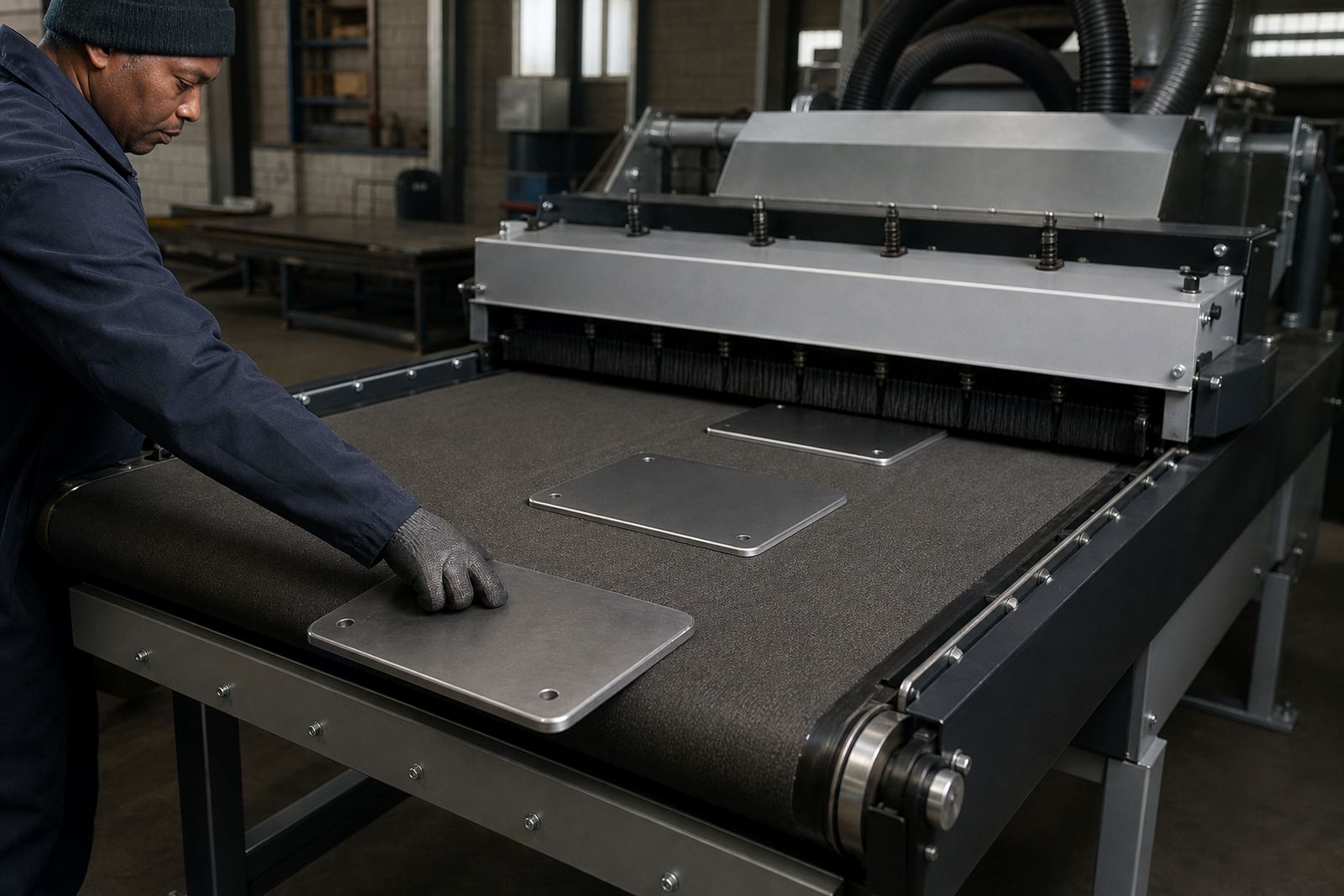
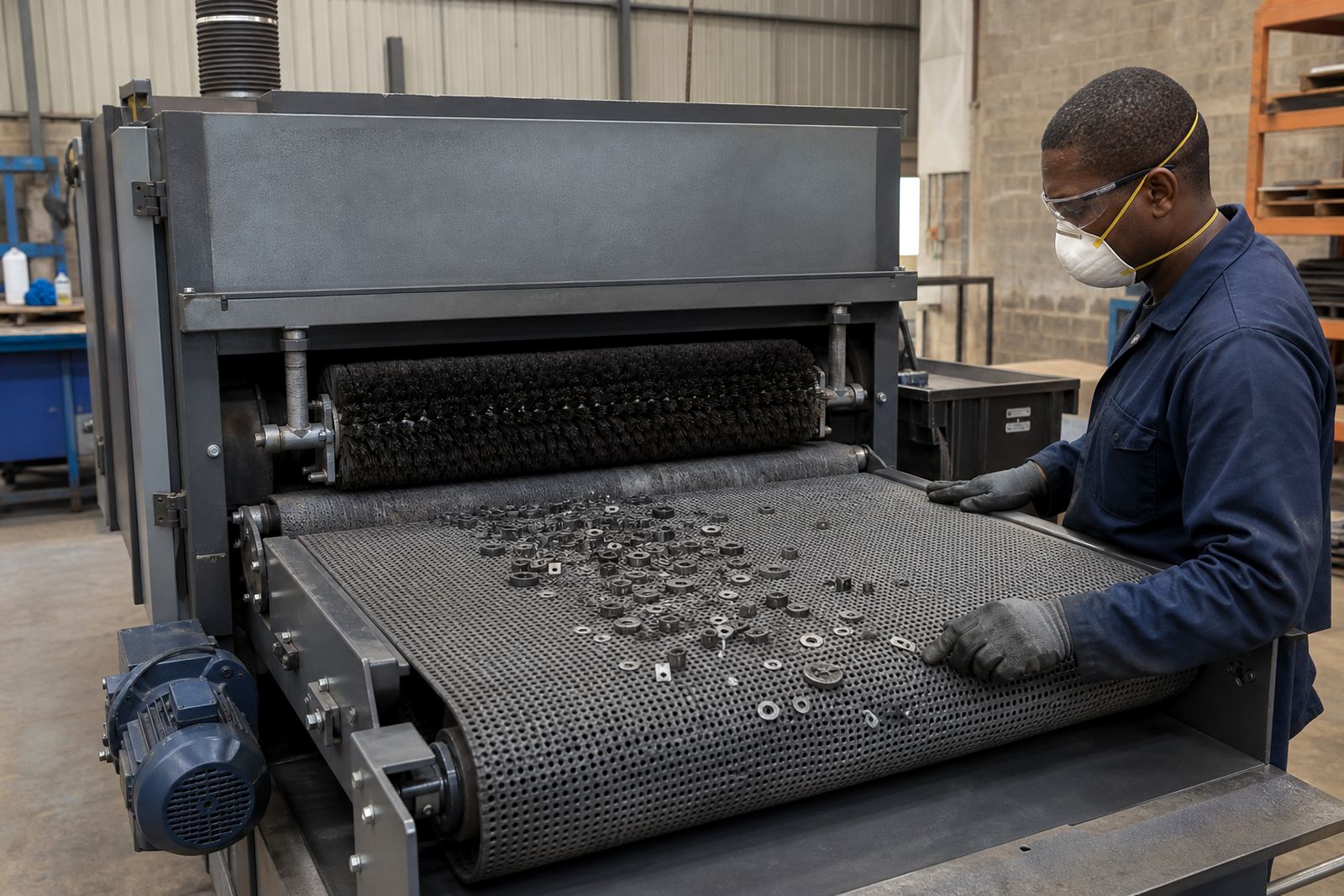
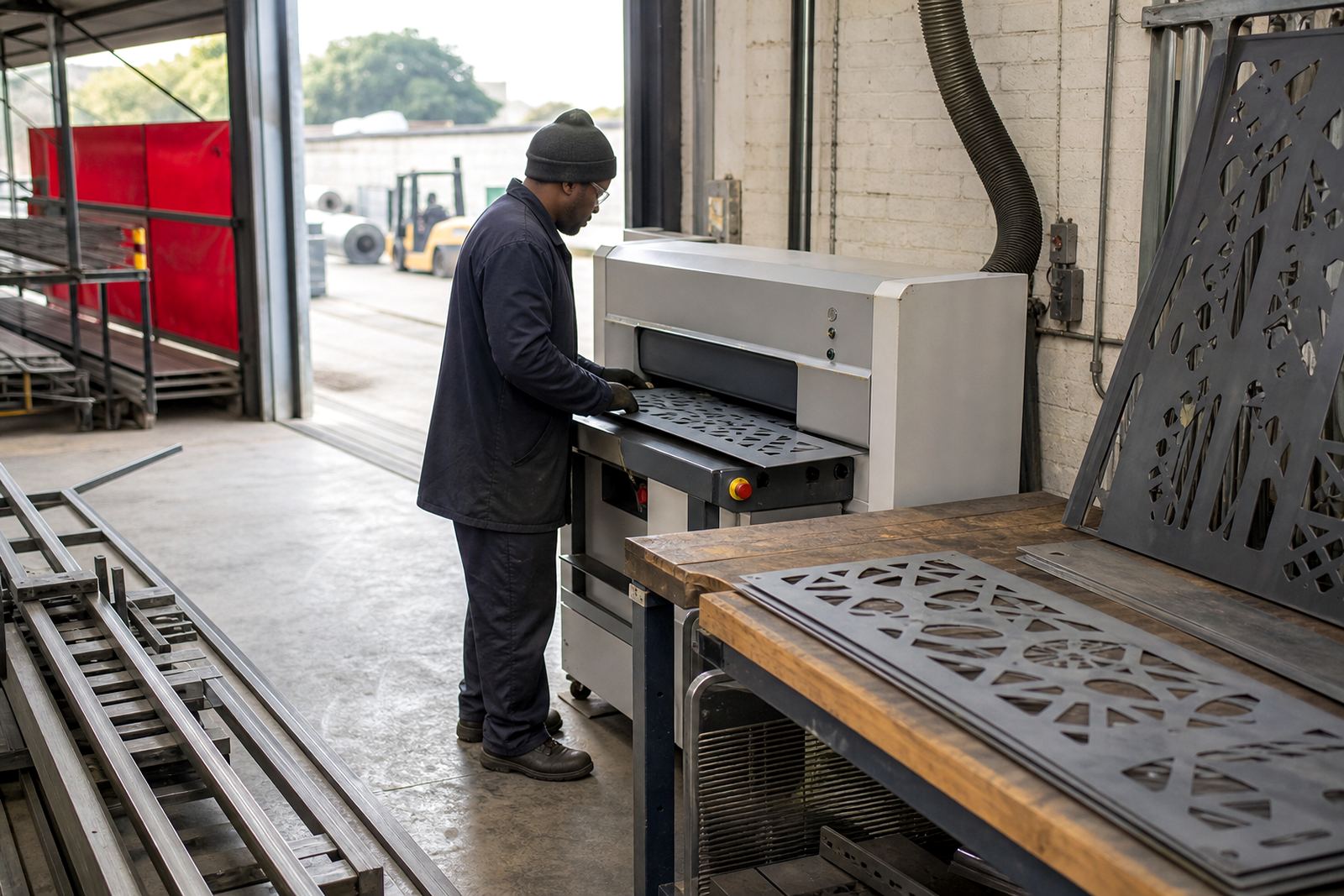
The Thin Sheet Finisher is set up for thinner gauge material where parts can flex, lift or chatter if the feed is too aggressive. It is used after laser cutting to remove small burrs, ease sharp edges and improve consistency before folding, welding, powder coating or assembly. In busy Gauteng workshops, that matters when you are handling nested sheets, small cutouts and parts with tight tolerances.
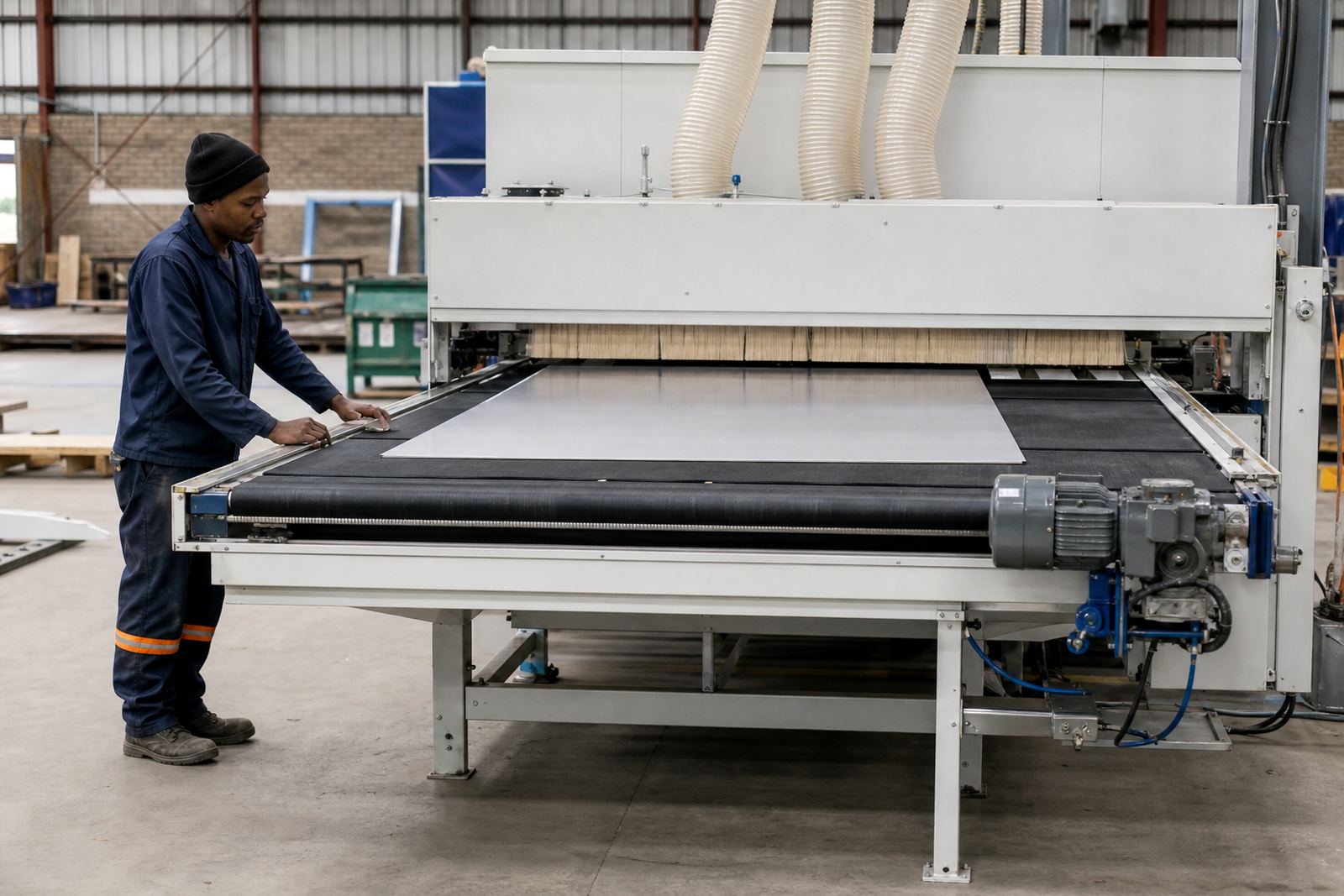
This machine is chosen when the job needs a gentle, even finish rather than heavy stock removal. It uses controlled transport, adjustable finishing heads and a steady process path so thin parts stay flatter and cleaner. For fabricators working in Johannesburg, Pretoria, Durban, Cape Town and Rustenburg, it helps reduce hand finishing and gives a more predictable result from batch to batch.
Because thin sheet can react to heat, vibration and poor support, the machine is designed to keep contact even across the part surface. That means less distortion, fewer rework calls and better edges ready for the next operation.
Sizes and configuration options for different workshops
Thin Sheet Finisher machines are supplied in different working widths and line setups depending on part size and throughput. A smaller unit suits jobbing shops and light production, while wider formats suit high-volume laser departments that want to process full nests without splitting the load. The right option depends on sheet size, daily output and how much floor space you have available in the plant.
- Working widths commonly matched to 600 mm, 1000 mm and 1300 mm sheet handling
- Single-pass or multi-stage finishing setups
- Adjustable feed speed for delicate parts and mixed batches
- Dry finishing options for light burr removal and edge softening
- Wet or assisted dust control options where fine particles must be managed
For plants near the coast, especially around Durban and Cape Town, airflow and corrosion resistance should be considered during selection. Coastal humidity can affect both the machine frame and stored parts, so the finish specification and workshop environment should be discussed before ordering.
Where the machine works best in South African production
This model suits laser-cut sheet metal from stainless steel, mild steel and aluminium where the material is relatively thin and edge quality must be consistent. It is commonly used by kitchen equipment makers, enclosure fabricators, lighting manufacturers, agricultural suppliers and general sheet-metal shops. If you are supplying municipal work, contract fabrication or repeat production for export, a clean edge can save time at inspection and assembly.
It is also useful where operators are under pressure to keep output moving during load-shedding. When power comes back on, a stable finishing process helps clear backlog without forcing extra hand deburring. In workshops with multiple shifts, the machine supports production planning by giving you one controlled step instead of several manual ones.
- Thin laser-cut panels and flat blanks
- Parts with fine cut-outs, slots and tabs
- Pre-fold parts needing edge break before bending
- Sheet metal for electrical, HVAC and cabinet work
- Batch work where repeatable edge quality is important
Installation, power and workshop requirements
Installation is planned around the layout of your laser cutting and downstream processes. Most workshops want the finisher close to the laser output area, but with enough space for loading, stacking and inspection. The floor should be level and capable of supporting the machine and material flow, especially where pallet jacks or trolleys are used throughout the day.
Power needs depend on the selected model and finishing configuration. A dedicated electrical supply is normally required, and compressed air may be needed for certain controls, dust handling or support systems. If your site uses a generator or changeover system because of Eskom interruptions, this should be checked before delivery so the machine starts and runs correctly after power restoration. We also look at extraction, noise and workshop access, which matters in tightly packed industrial units in Wadeville, Germiston and other East Rand areas.
Our team can assist with machine installation, operator training and relocation support if you are moving from one plant to another or adding the finisher into an existing line. That includes practical checks on access doors, ramp height, cable runs and the order in which equipment should be commissioned.
Care, servicing and spare parts that keep output steady
Like any production machine, the Thin Sheet Finisher works best when it is checked regularly. Thin material shows handling issues quickly, so worn consumables or poor settings are easy to spot in the finished edge. Preventive maintenance helps avoid sudden downtime and keeps the transport system aligned. We recommend a routine inspection schedule based on usage, material mix and shift pattern.
Typical care includes cleaning dust and fine swarf from the machine, checking feed components, replacing abrasive or finishing media on time, and confirming that the heads are set correctly for the thickness being run. For sites with heavy production, annual service contracts can help keep servicing on track and reduce breakdown pressure when orders are tight.
- Preventive maintenance and machine audits
- Abrasive replacement and wear part checks
- Breakdown repairs and fault finding
- Spares supply for common service items
- Process optimisation for cleaner edge results
If your workshop runs mixed jobs, ask for sample part testing before committing to a setting. That is often the quickest way to confirm the finish on your actual material rather than guessing from a spec sheet only.
What to check before you place an order
Before ordering, it helps to confirm the exact material mix, thickness range and daily tonnage you need to process. Thin sheet behaves differently from heavier plate, so the machine should be matched to the lightest and most delicate parts in your mix. Also note whether the finished part will be folded, welded, coated or packed straight away, because that affects how much edge break is required.
Ask yourself these practical points before choosing a configuration:
- What is the narrowest and widest part you need to process?
- Which thicknesses are used most often?
- Do you need dry finishing, dust control, or a wet process option?
- Is your power supply stable, or do you rely on generators during outages?
- How much floor space is available for infeed, outfeed and inspection?
- Will operators need formal training on settings and safety checks?
If you are ordering for a plant in Johannesburg, Pretoria, Durban, Cape Town or Rustenburg, it is worth sharing part samples and cycle targets at the start. That gives a better match between the machine, the operator and the production target, and it avoids costly changes later on.
Key facts
| Product type | Thin sheet deburring and edge-finishing machine |
|---|---|
| Best suited material | Laser-cut sheet metal, especially thinner gauges |
| Typical working widths | 600 mm, 1000 mm, 1300 mm options |
| Finishing method | Controlled deburring with gentle edge rounding |
| Installation needs | Level floor, electrical supply, optional compressed air and dust control |
| Support services | Installation, training, maintenance, repairs, spares and sample testing |