
What the Mixed Material Unit does in a busy workshop
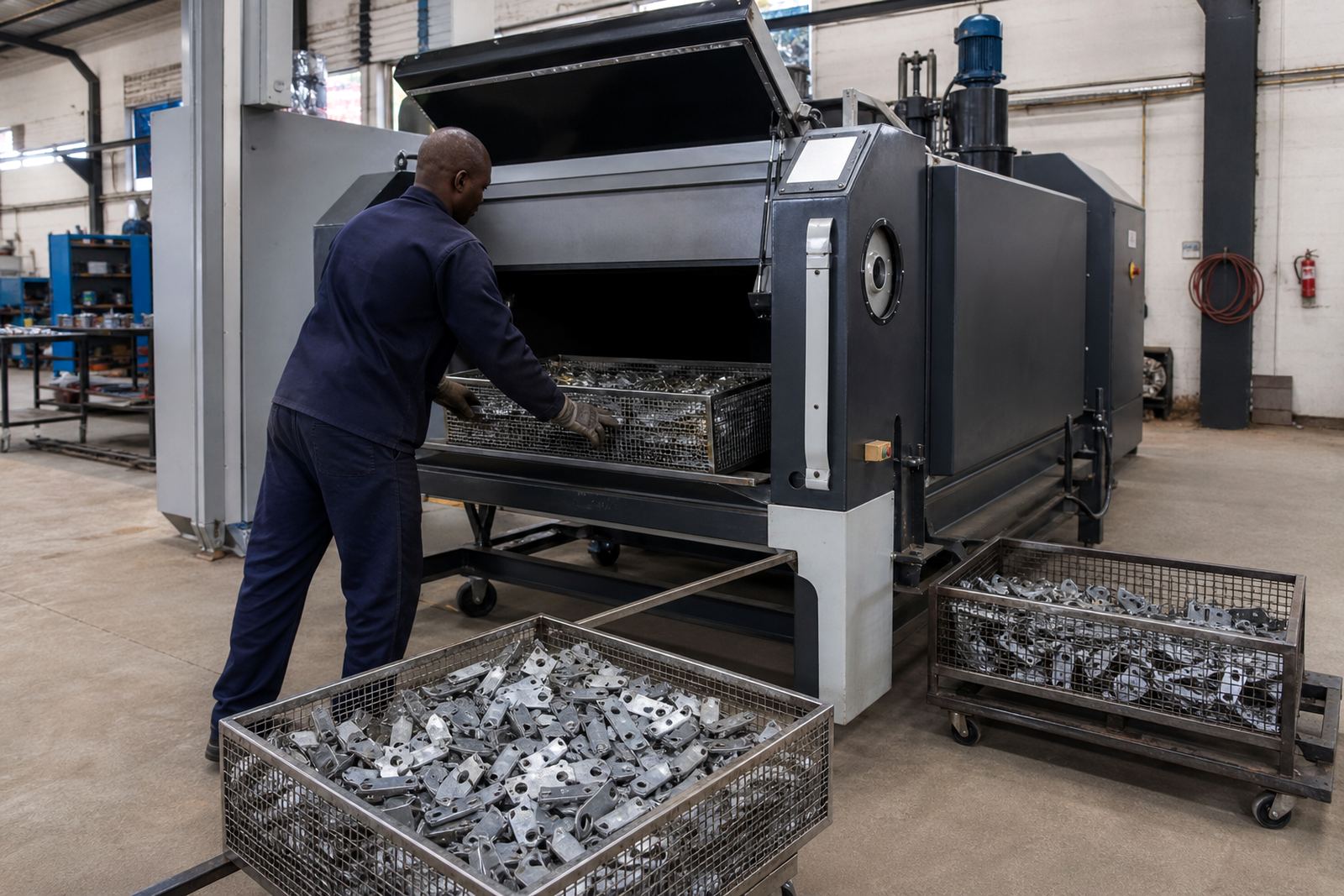
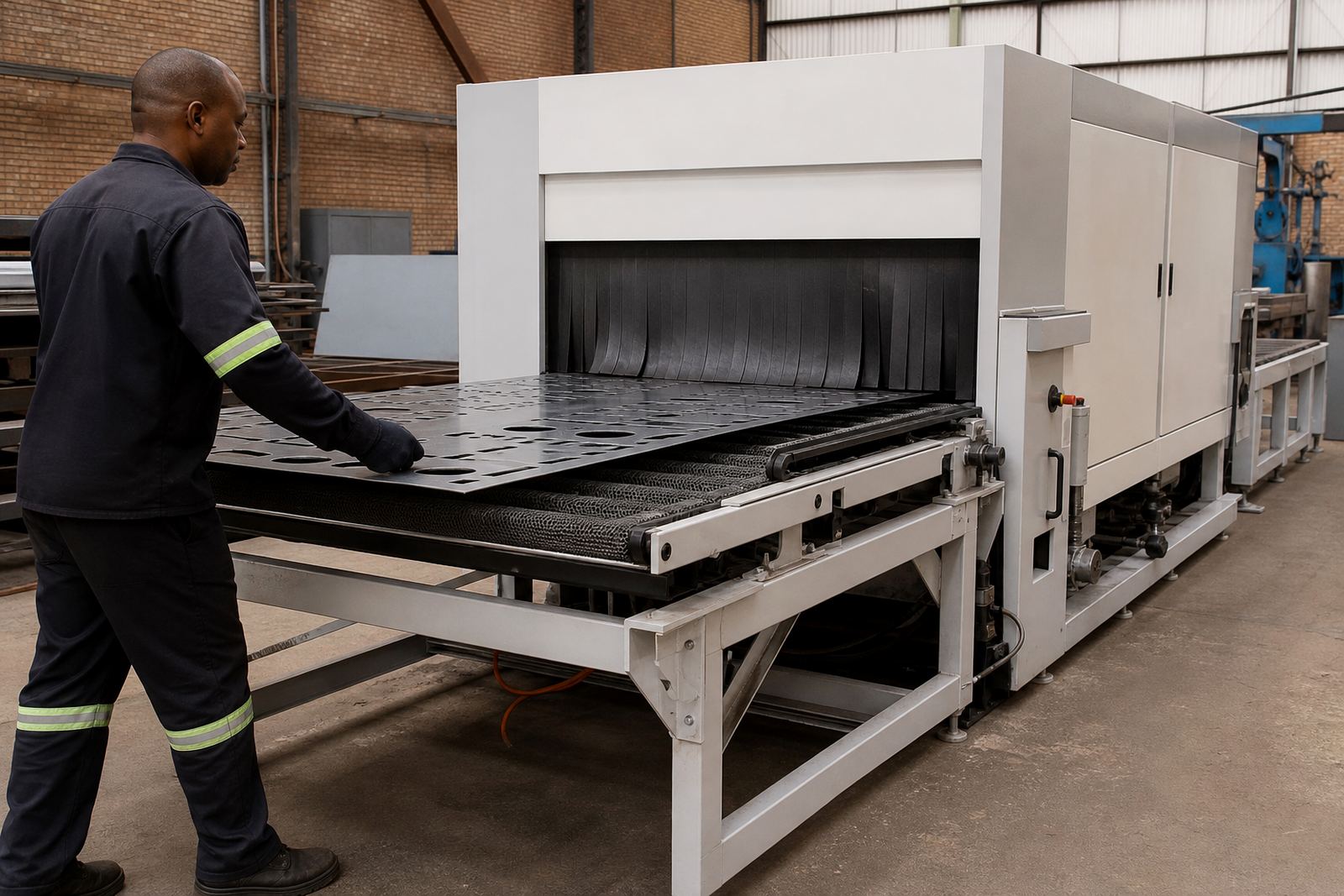
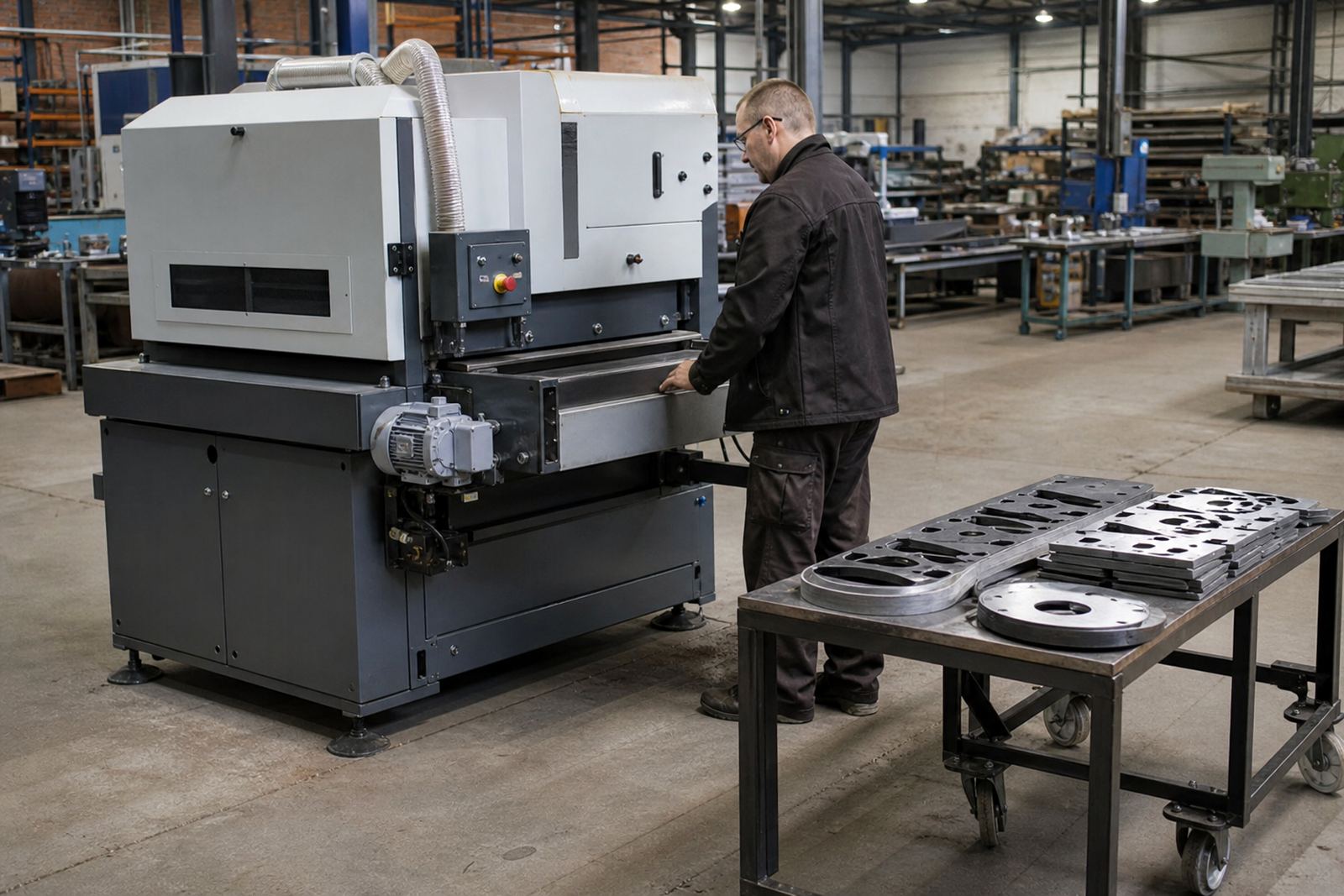
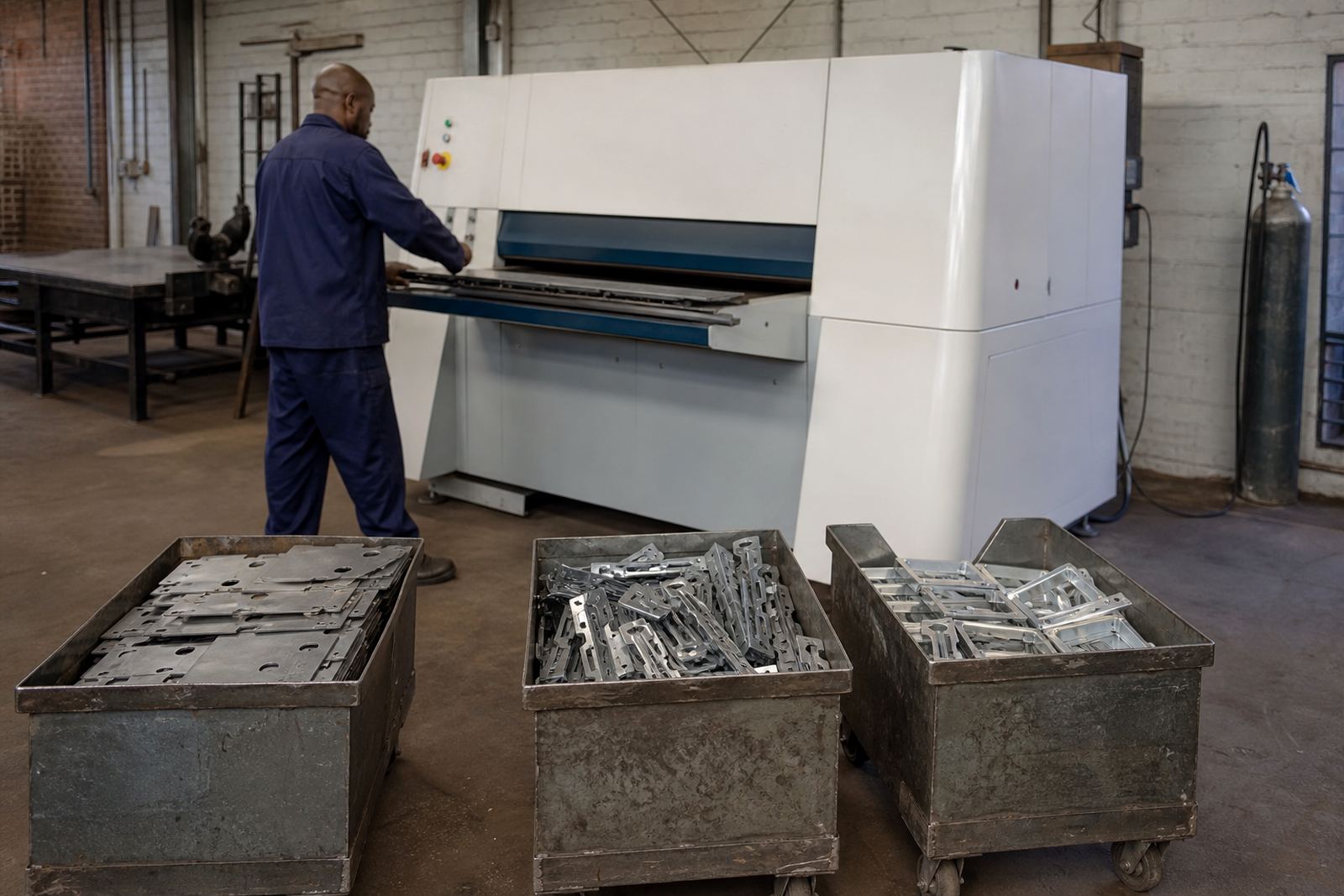
The Mixed Material Unit is a deburring and edge-finishing machine for laser-cut sheet metal where the work mix changes through the day. One batch may be mild steel brackets, the next stainless enclosures and then aluminium panels, so the machine has to cope with different burr types, oxide edges and surface sensitivities without slowing the line.
It uses controlled abrasive and finishing stations to remove sharp edges, small slag points and light burrs after cutting. That means safer handling, better fit-up at assembly and a neater finish before powder coating, welding or dispatch. For shops in Germiston, Johannesburg, Pretoria, Durban, Cape Town and Rustenburg, this matters when order sizes are small, lead times are tight and labour needs to be used well.
The unit is suited to fabricators that want one machine to handle mixed stock, instead of moving parts between separate machines for different metals. It is also useful where a shop is trying to reduce rework from hand deburring, which can be uneven and slow, especially when loadshedding pushes teams to catch up after power returns.
Sizes, widths and build options
Mixed Material Units are normally specified by working width, sheet thickness range and the level of edge finish required. A compact shop in Wadeville may only need a narrower machine for cut parts and short runs, while a larger plant running full sheets may need a wider format with stronger support and faster feed control.
Common options include vacuum table support for small parts, variable feed speed, dry or wet extraction, and a fine-finishing station for lighter material. Some sites also ask for entry and exit conveyors, digital thickness setting and wear monitoring on the abrasive heads. The right build depends on the mix of parts, the sharpness of the burr and the space around the cutting area.
- Working widths typically from 300 mm to 1300 mm, depending on the production line
- Sheet thickness handling commonly from 0.5 mm to 20 mm, subject to the finish required
- Feed speed set for light finishing or heavier edge removal
- Single-pass or multi-station configuration for one or more finishing steps
- Dry extraction or wet dust control, depending on the material and workshop layout
In coastal areas like Durban and Cape Town, stainless and aluminium work often needs careful handling to limit staining and salt-related surface marking, so the finishing setup should match the material flow, not just the sheet size.
Where it fits best on the shop floor
This machine suits fabricators that process a wide spread of laser-cut parts for cabinets, HVAC, machine guards, electrical housings, trays and general sheet metal work. It is a practical choice where the cutting room feeds several downstream jobs and the team needs one finishing step that stays predictable across material types.
It is especially helpful in workshops that work with contract manufacturing, jobbing work or repeat production in batches of varying size. If your operators spend time using files, flap wheels or hand tools to clean cut edges, the Mixed Material Unit can move that labour into a controlled process and free up people for fitting, packing or inspection.
- Best for mixed material workflow, not only one metal type
- Useful before welding, powder coating or final assembly
- Helps reduce sharp edges on parts handled by multiple operators
- Suitable for fabricators serving retail, industrial and municipal work
For sites in Gauteng, the unit also helps with production planning because parts can be sent through in a standard sequence instead of waiting for ad hoc hand finishing. That makes job timing easier to manage when deliveries, power interruptions and workshop congestion all land on the same day.
Installation, power and extraction requirements
Installation starts with floor space, access for loading and a power supply that suits the motor and control package. Most workshops will need a level concrete floor, clear infeed and outfeed space, and enough room for operators to load sheets safely without crowding the cutting area. If the unit includes extraction or a wet process, the services layout should be checked before delivery so the machine can be placed once and commissioned properly.
Power requirements vary by configuration, but many machines in this class use three-phase supply. A stable supply is important because voltage swings and frequent starts after loadshedding can affect control performance and abrasive life. Where a workshop has poor air quality or fine dust from other processes, the extraction system should be matched to the load and cleaned on schedule.
- Three-phase power is commonly required for production units
- Allow clear access for sheets, maintenance and abrasive change-outs
- Check extraction, dust control and disposal needs before ordering
- Plan around site rules for noise, ventilation and safe movement of material
On larger industrial sites, municipal and landlord rules may also affect where the unit can be installed, especially where discharge, noise or fire separation applies. It is worth checking those details early rather than shifting a machine after commissioning.
Care, wear parts and service planning
Like any production machine that works abrasive media against metal, the Mixed Material Unit needs regular care if you want consistent results. Daily checks should include conveyor condition, abrasive wear, extraction flow and any build-up around the finish station. Stainless steel and aluminium can leave different residues from mild steel, so the machine should be cleaned to suit the heaviest material in the current mix.
Preventive maintenance usually covers belt tracking, roller condition, electrical checks, safety stops and replacement of worn finishing media. If the machine is used on multiple shifts, service intervals should be shorter because abrasive life changes with part volume and edge condition. Keeping spare consumables on site helps avoid stoppages when production is already under pressure.
- Inspect abrasive wear and replace before finish quality drops
- Clean dust and swarf daily, especially after stainless work
- Check guards, sensors and emergency stops on a routine basis
- Book servicing before peak periods, not after a breakdown
Our Wadeville team supports installation, operator training, breakdown repairs, annual service contracts and spare parts supply. For busy plants around Johannesburg and the East Rand, that local support helps keep the machine in production instead of standing idle for a missing wear part or a simple adjustment.
What to confirm before you place an order
Before ordering, confirm the materials you process most often, the sheet thickness range, the minimum and maximum part size, and whether the machine must handle cut parts with sharp internal corners or heavy slag. The more detail you give upfront, the easier it is to match the unit to your actual work, not just the catalogue figures.
You should also check the finish target for each material. Mild steel may need simple edge removal, while stainless and aluminium may need a finer touch to avoid overworking the surface. If your parts are headed for powder coating, ask how much edge rounding is needed so coating adhesion and handling improve without losing accuracy.
- Material mix: mild steel, stainless steel, aluminium, or all three
- Typical sheet sizes and heaviest part weight
- Desired edge finish before welding, coating or assembly
- Power supply, extraction and floor space at your site
- Need for sample part testing before final specification
Deburring in Wadeville, Germiston works with fabricators across South Africa and can arrange sample part testing, process checks and production planning help before supply. That gives your team a clearer idea of how the machine will behave on your real parts, not just on paper.
Key facts
| Machine type | Mixed material deburring and edge-finishing unit for laser-cut sheet metal |
|---|---|
| Suitable materials | Mild steel, stainless steel and aluminium |
| Working width | Typically 300 mm to 1300 mm, model dependent |
| Thickness range | Commonly 0.5 mm to 20 mm, depending on finish requirement |
| Power supply | Usually three-phase, final requirement depends on configuration |
| Workshop fit | Single shift, multi-shift and batch production environments |