What Sheetline Pro Does in a Busy Laser-Cutting Shop
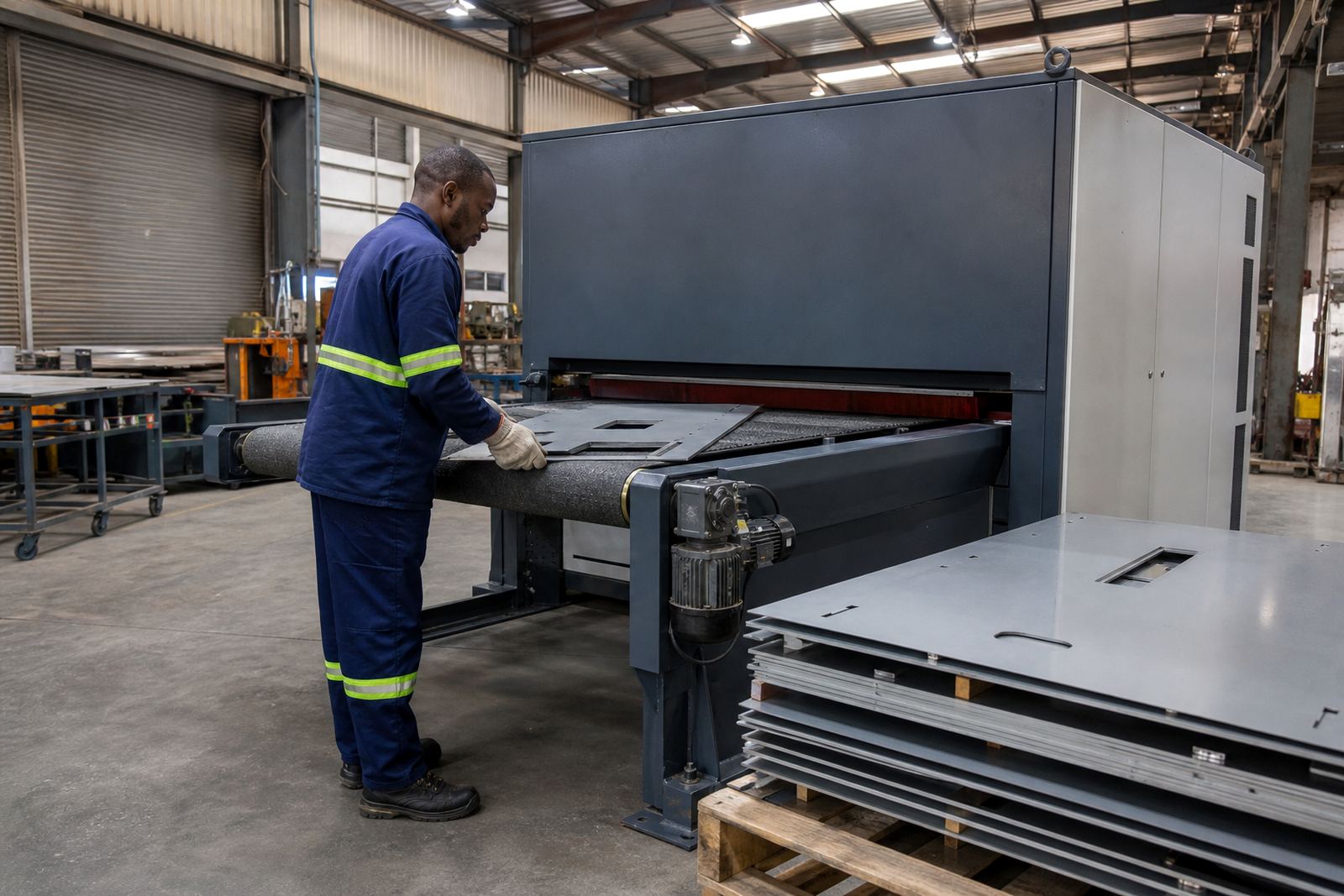
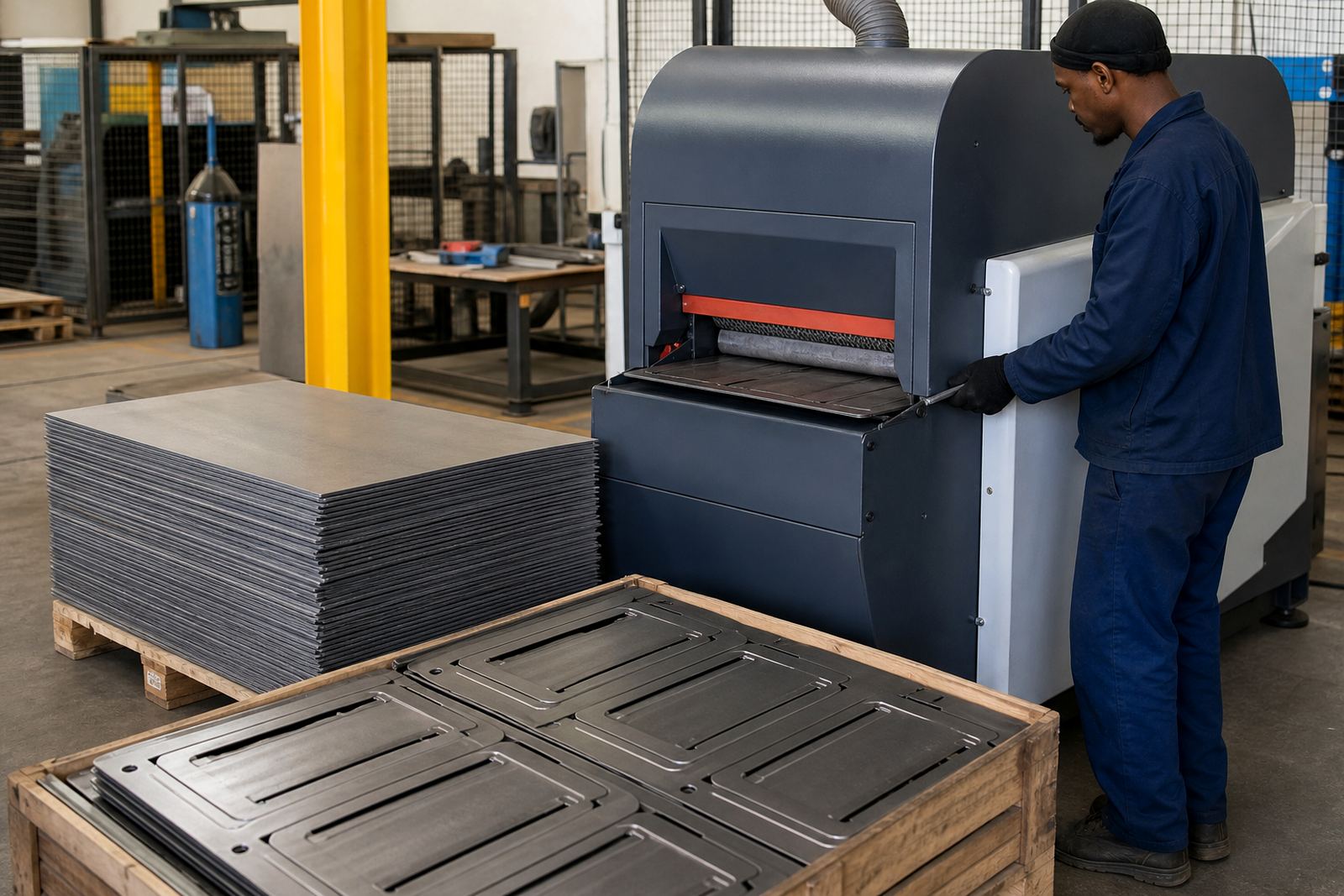
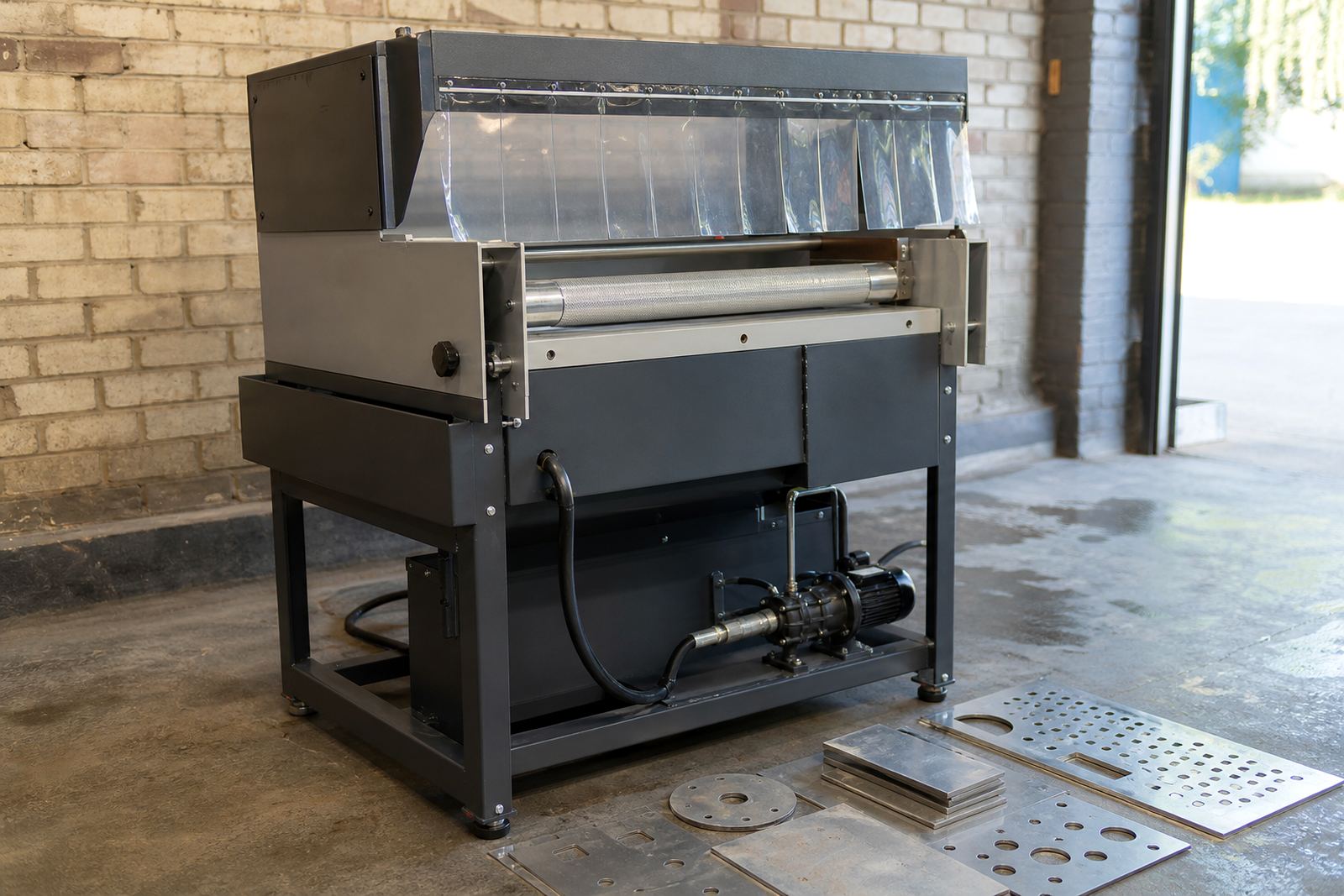
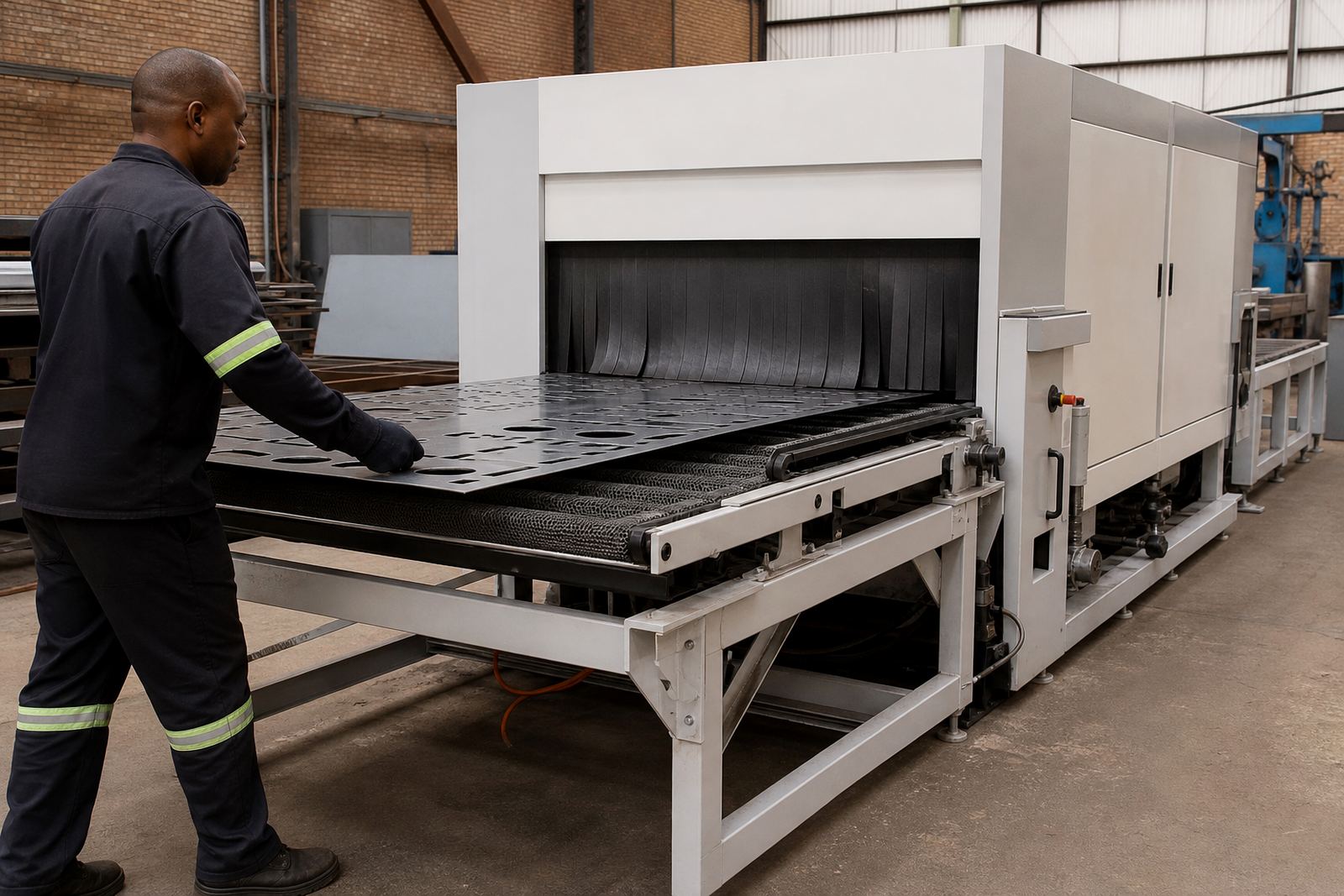
Sheetline Pro is a higher-output deburring and edge-finishing machine made for laser-cut sheet metal after cutting, nesting and part sorting. It removes burrs, sharp edges and light oxide marks, then leaves a more even edge that is safer to handle and better prepared for folding, welding, coating or assembly.
The machine is aimed at shops that cannot afford stop-start finishing. It keeps quality steadier on long jobs, especially where parts come off the laser in mixed thicknesses and the team needs a reliable finishing step before the next process. For a workshop under load-shedding pressure, that kind of repeatability matters because every restart costs time and can throw off output if the line is not set up properly.
- Designed for laser-cut mild steel, stainless steel and aluminium sheet parts
- Suitable for repeated production batches and mixed part runs
- Helps reduce hand finishing and rework at the bench
- Improves edge consistency before painting, powder coating or assembly
Typical Sizes, Build Options and Throughput
Sheetline Pro is usually specified by working width, sheet thickness range and finishing layout. Common line widths suit small to large workshop flow, with machine beds and support tables sized to handle sheet work without awkward lifting. The right configuration depends on the type of parts you cut, the finish required and how much material moves through the shop each shift.
For higher output, the machine can be configured with multiple finishing stations so coarse edge removal and finer surface finishing happen in one pass. That gives you a cleaner handoff between cutting and downstream work. The machine is also set up for stable feed control, so thinner sheets do not chatter and heavier parts stay flat enough for a proper finish. The build is practical, not fancy, and that is usually what a production floor needs.
- Working widths available for small, medium and high-volume sheet lines
- Suitable thickness range for light gauge through heavier laser-cut sheet parts
- Single-pass or multi-stage finishing layouts depending on output target
- Feed system arranged for steady movement and repeatable edge results
Where Sheetline Pro Fits Best
This model suits fabricators that cut parts daily and need a dependable finishing step before packing or fabrication. It is a strong fit for general sheet metal work, enclosure makers, jobbing shops, structural fabricators with sheet components and contract shops handling regular repeat orders. In Durban and other coastal areas, where humidity can affect stored sheet and finished edges, a proper finishing process also helps keep parts moving faster to the next stage.
Sheetline Pro is also useful where the workshop needs to reduce hand deburring, which often becomes the bottleneck after laser cutting. If one team is waiting on another to clean parts, the whole line slows down. This machine helps balance that flow and keeps the finishing area from becoming the part of the shop everybody avoids.
- Laser-cut job shops with steady daily throughput
- Fabricators making panels, brackets, frames, covers and housings
- Operations wanting less manual edge work and fewer touch-ups
- Shops supplying local industry, municipal work and export prep
Installation, Power and Workshop Utilities
Installation is arranged on site and should be planned around floor space, material flow and access for loading and unloading. The floor must be level and able to handle the machine weight, and there should be enough room for infeed, outfeed and maintenance access. If the workshop is in an older building in Germiston or Johannesburg, it is worth checking doorway widths, slab condition and overhead clearance before delivery.
Power requirements depend on the selected configuration, but the machine is normally connected to a suitable industrial electrical supply with proper protection and isolation. Shops dealing with load-shedding often ask about backup planning, and the honest answer is that the machine should be paired with a well-managed power strategy rather than a casual plug-in setup. Some layouts also need extraction or dust control depending on the finishing process selected. If compressed air is used for specific functions, clean dry air is important, not damp air from an overworked compressor.
- Allow enough floor space for sheet handling and safe operator movement
- Check supply voltage, protection and cable routing before installation
- Plan for extraction, dust control or air supply where needed
- Keep the machine on level concrete with good access for servicing
Care, Service Intervals and Workshop Support
Like any production machine, Sheetline Pro works best when it is cleaned and checked often. Abrasive parts wear down, belts and rollers need inspection, and the finishing effect should be monitored against sample parts so a change is caught early. Preventive maintenance is cheaper than chasing a breakdown mid-run, especially when a batch is due for dispatch that same afternoon.
Our support team can assist with installation, operator training, preventive maintenance, breakdown repairs, sample part testing and production planning help. For a busy shop, an annual service contract can make planning easier because the machine gets checked before wear turns into downtime. We also help with relocation support if the line is being moved within Wadeville, across the East Rand or to another province, and that usually saves a lot of rework at start-up.
- Inspect wear parts on a planned schedule, not only after a fault
- Keep the machine clean of swarf, dust and buildup from finishing media
- Use trained operators so settings stay consistent from shift to shift
- Book sample part testing after material or process changes
What to Confirm Before You Order
Before ordering, confirm the sheet sizes you run most often, the material types, thickness range, required finish and average daily volume. These details decide the correct width, station layout and handling setup. It is also worth checking whether your parts need a light edge break only, or a more aggressive finishing step for burr removal and oxide reduction. A good match up front avoids disappointment later on.
You should also confirm the shop layout, power availability, access route for delivery and any lifting equipment needed on arrival. If you are operating in Pretoria, Cape Town or Rustenburg, think about support timing and spares access too, because waiting for a small wear part can hold up a full shift. The more exact your order details, the better the result and the less back-and-forth there is during commissioning.
- Most common sheet sizes and batch volumes
- Material types and thickness range
- Required finish quality and downstream process
- Available floor space, power supply and handling method
- Need for training, maintenance cover or spare parts support
Key facts
| Machine type | Deburring and edge-finishing machine for laser-cut sheet metal |
|---|---|
| Primary use | Removal of burrs, sharp edges and light oxide from cut parts |
| Typical materials | Mild steel, stainless steel and aluminium sheet |
| Working range | Configured by width, thickness capacity and finishing layout |
| Power requirement | Industrial electrical supply, specification dependent on configuration |
| Support coverage | Installation, training, maintenance, repairs and spares across South Africa |