
Built for heavier plate and tougher edges
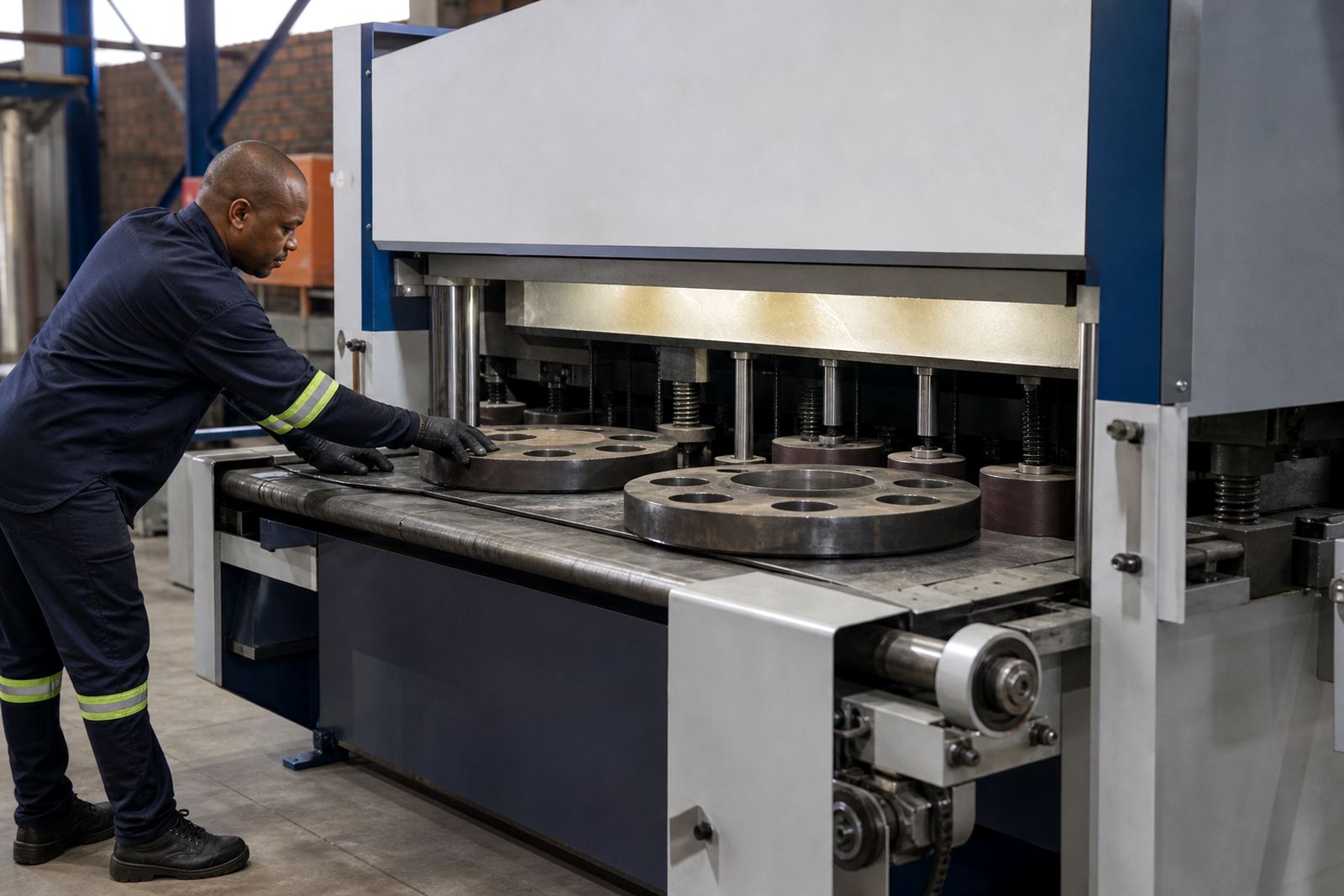
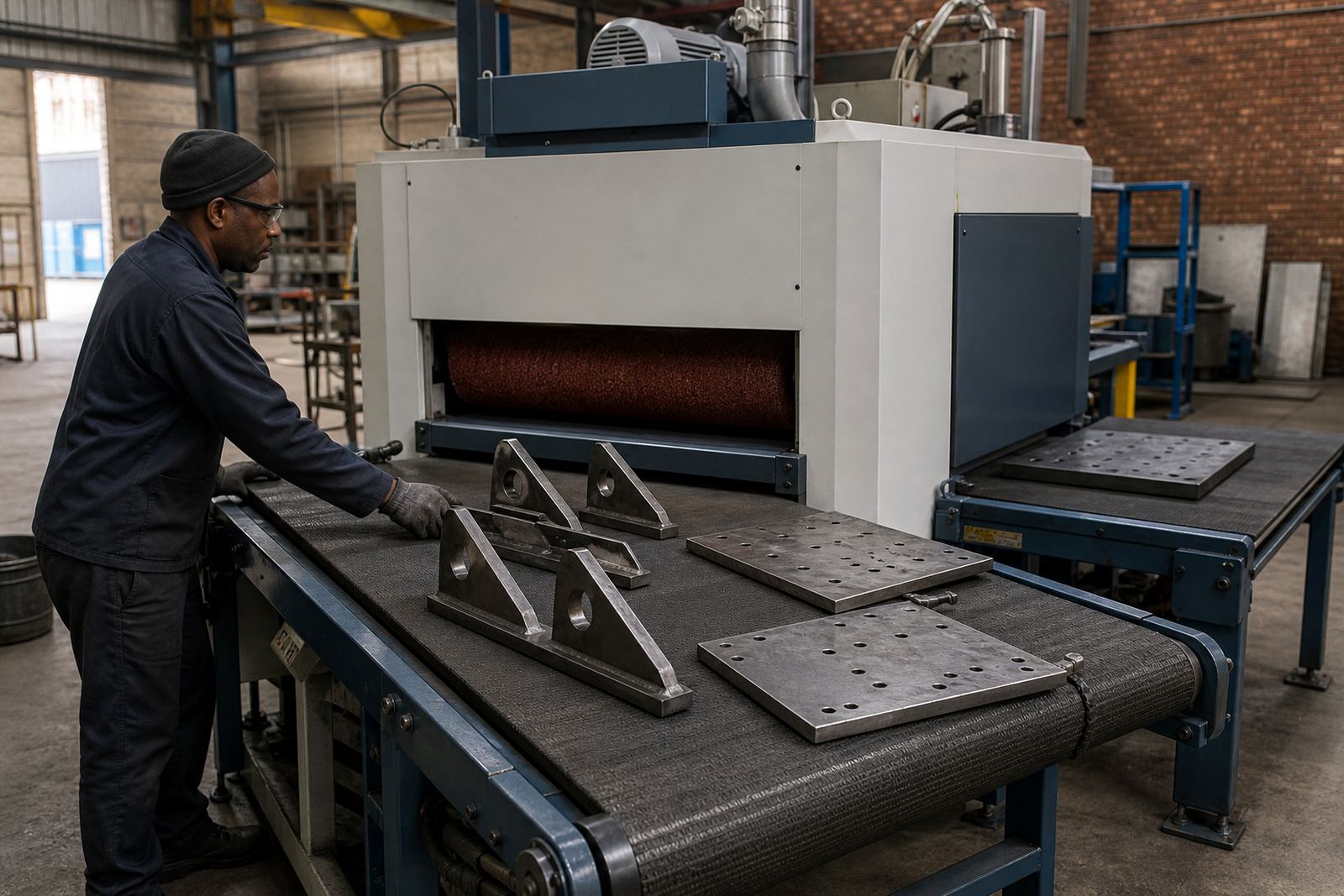
When laser-cut parts move beyond light gauge work, the finishing process needs more grip, more drive and better control. A Thick Plate Finisher is made for heavier components where burrs are harder, edges are sharper and the part weight starts to slow down manual finishing. It is suited to shops that process structural parts, brackets, machine guards, base plates and other thicker laser-cut items that need a cleaner edge before the next operation.
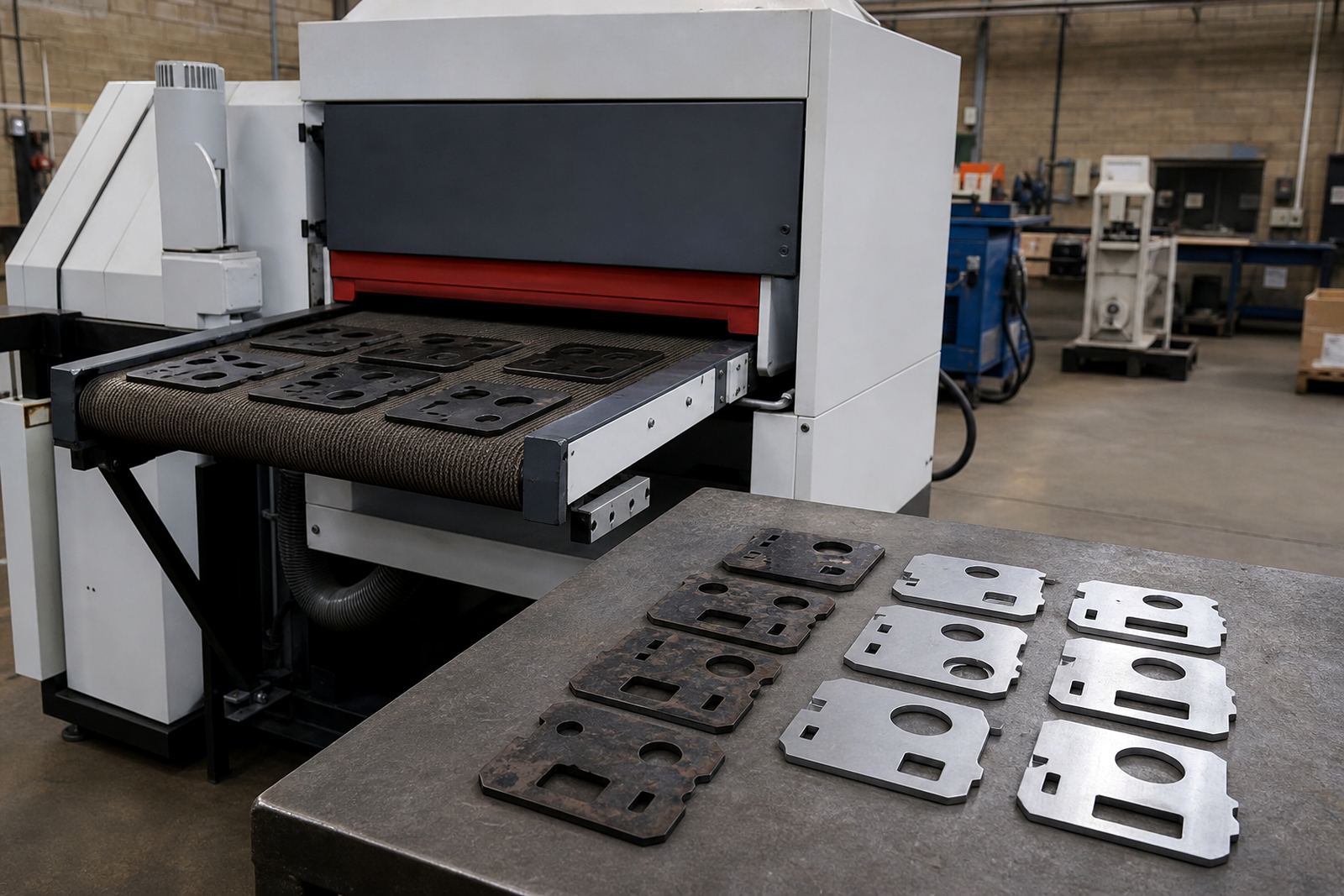
These machines are used after laser cutting to remove dross, soften sharp edges and improve handling safety. For fabricators in Wadeville, Germiston and across Johannesburg, Pretoria, Durban, Cape Town and Rustenburg, the main advantage is consistency. Every part comes through with the same finish, which makes packing, welding, assembly and coating easier. It also reduces the need for angle grinding by hand, which saves time and helps keep operators away from dust and sparks.
- Designed for laser-cut sheet metal and heavier plate sections
- Helps remove burrs, slag and sharp cut edges
- Supports cleaner handling before welding, painting or dispatch
- Useful where repeatable finish quality matters on every batch
Sizes, pass widths and finishing options
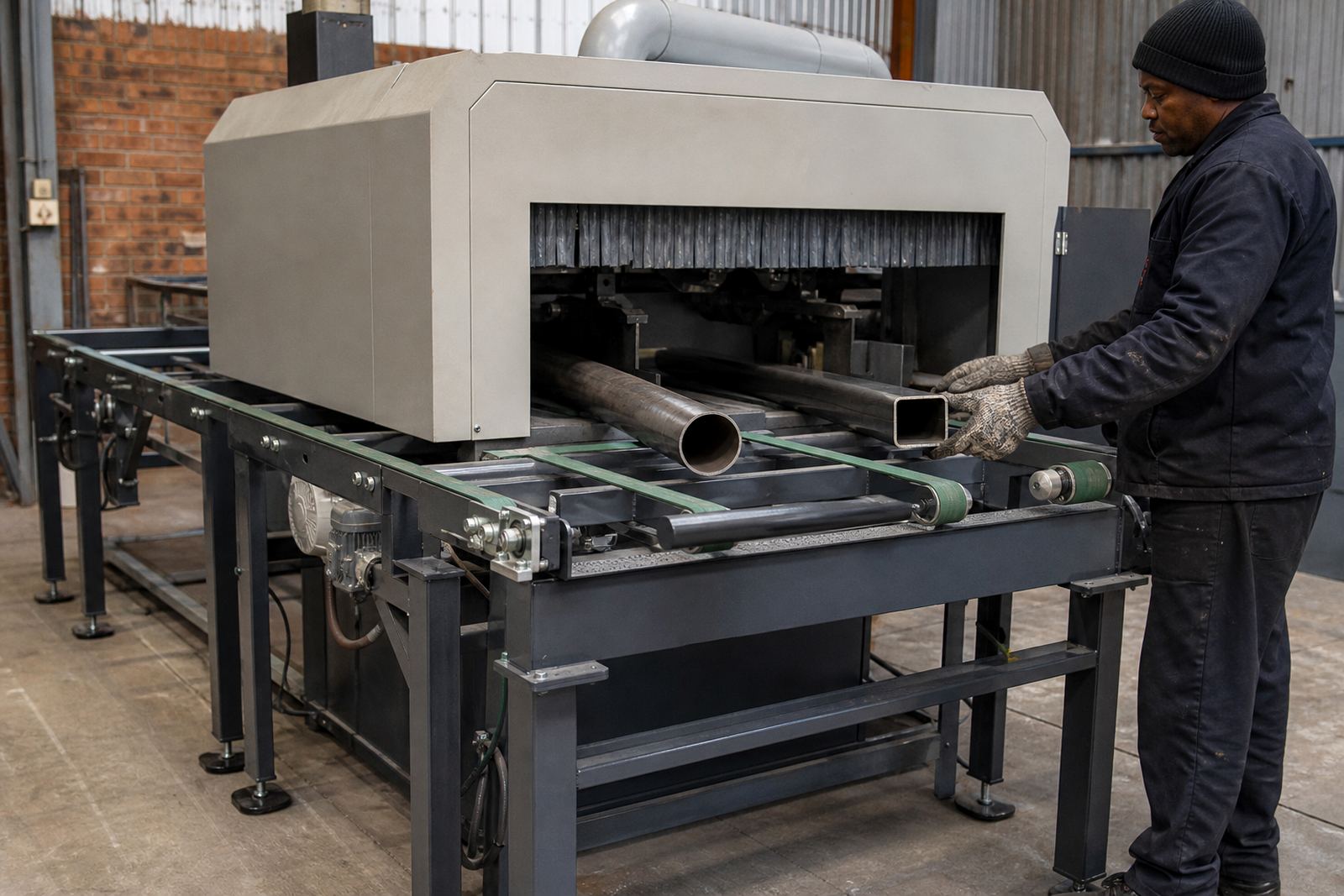
Thick plate machines are usually specified by working width, part thickness range and the type of finishing station fitted. Some workshops need a narrower machine for mixed batches, while others want a wider pass width for larger components and nested parts. The right setup depends on your most common job sizes and how often you run thick material.
Common options include stronger feed control, heavier support tables and finishing stations that can be adjusted for more aggressive edge work. In South African fabrication shops, it is also worth checking how the machine handles smaller offcuts as well as larger plates. A machine that supports both helps when work is split between production runs and one-off fabrication jobs.
- Working widths commonly from 600 mm to 1600 mm
- Material thickness range typically from 1 mm up to 40 mm, depending on the setup
- Heavy-duty support rollers or table sections for larger parts
- Adjustable finishing heads for different burr levels and edge conditions
For customers in coastal areas like Durban and Cape Town, finishers can also be specified with attention to corrosion resistance, especially where humidity is high and machines sit near open doors or changing room conditions. That matters when steel parts are moved in and out all day.
Where it suits in the production line
This machine fits best where laser cutting output is high and the next step needs a cleaner, safer edge. It is ideal for fabricators making parts for steel structures, commercial equipment, transport components, agricultural machinery and general metalwork. If your team currently spends too much time filing or grinding edges before assembly, a Thick Plate Finisher can take over that load in a controlled way.
It also suits sites that run multiple shifts or need to keep one machine on finishing duty while another handles lighter work. In areas like Rustenburg and the East Rand, where workshops often face tight delivery schedules and power interruptions, a well-planned finishing station can help keep batches moving when load-shedding disrupts normal flow.
- Best for heavier laser-cut parts that need stronger support
- Good fit for weld-prep, deburr and pre-coating finishing
- Useful where manual grinding is slowing down output
- Helps standardise finish quality across batches and operators
Installation, power and compressed air needs
Installation starts with floor space, access for loading and unloading, and enough room for safe part handling around the machine. Most heavier finishing units need a level concrete floor and clear access for pallets, trolleys or lifters. If the machine is going into an older workshop in Germiston or Johannesburg, it is worth checking the route in from the yard, door widths and turning space before delivery day.
Power requirements depend on the finishing configuration, but industrial units commonly run on 380 V three-phase supply. Some setups also need compressed air for cleaning, control functions or specific finishing stations. On sites where supply is unstable, many owners also ask about protection against voltage dips and the effect of repeated interruptions on motors and control systems. A proper installation plan should take that into account before commissioning starts.
We also look at extraction and housekeeping around the machine, especially where fine metal dust builds up. Good ventilation, regular cleaning and safe storage of consumables make a real difference in busy workshops.
Care, servicing and wear parts
Like any production machine, a thick plate finisher performs best when it is cleaned and checked regularly. The most common wear items are abrasive belts, brushes, contact rollers and guide parts, depending on the machine build. If these parts are left too long, finish quality drops and the machine starts to work harder than it should.
Preventive maintenance is especially important where the machine runs daily or in two shifts. Small checks done on time can prevent bigger breakdowns later. In coastal workshops, dust mixed with humidity can also affect moving parts and electrical panels if the machine is not kept clean. A scheduled service plan helps reduce downtime and keeps the finish more even from batch to batch.
- Inspect abrasive and brush wear before each production run
- Keep the feed path and support surfaces free of swarf and dust
- Check electrical connections during planned service intervals
- Replace consumables before finish quality starts to drift
Our service team supports machine installation, operator training, preventive maintenance, breakdown repairs, abrasive replacement, machine audits and annual service contracts. We also assist with spares supply, relocation support and production planning help when a line needs to be moved or rebalanced.
What to confirm before you order
Before placing an order, it helps to have a clear picture of your parts and your production targets. A thick plate machine should be matched to the type of cut you produce most often, not just the heaviest part you have on the floor. If you regularly run mild steel, stainless steel or coated material, make sure the finishing method suits all three where needed.
It is also worth confirming the average part size, maximum thickness, cutting quality from the laser, and whether you want edge rounding, burr removal or both. If your team handles short runs as well as repeat production, ask how quickly the machine can be adjusted between jobs. That can save a lot of time over the course of a month.
- Typical part size and maximum plate thickness
- Material types and whether finish quality must suit welding or coating
- Available power supply and compressed air on site
- Required working width, throughput and floor space
- Any need for sample part testing before purchase
Clients can reach us through the enquiry form on our contact page, and we support fabricators across South Africa from Wadeville, Germiston. If you need sample part testing, a machine audit or help comparing finishing options for your shop, our team can work through the details with you and recommend a setup that fits your workload.
Key facts
| Machine type | Heavy-duty deburring and edge-finishing machine for laser-cut sheet metal and thicker plate |
|---|---|
| Working width | 600 mm to 1600 mm, depending on configuration |
| Material thickness | Typically 1 mm to 40 mm |
| Power supply | 380 V three-phase industrial supply, subject to final specification |
| Compressed air | Required on selected configurations |
| Typical applications | Burr removal, edge softening, pre-weld finishing and handling safety improvement |