
Why a clean edge matters before the first bend
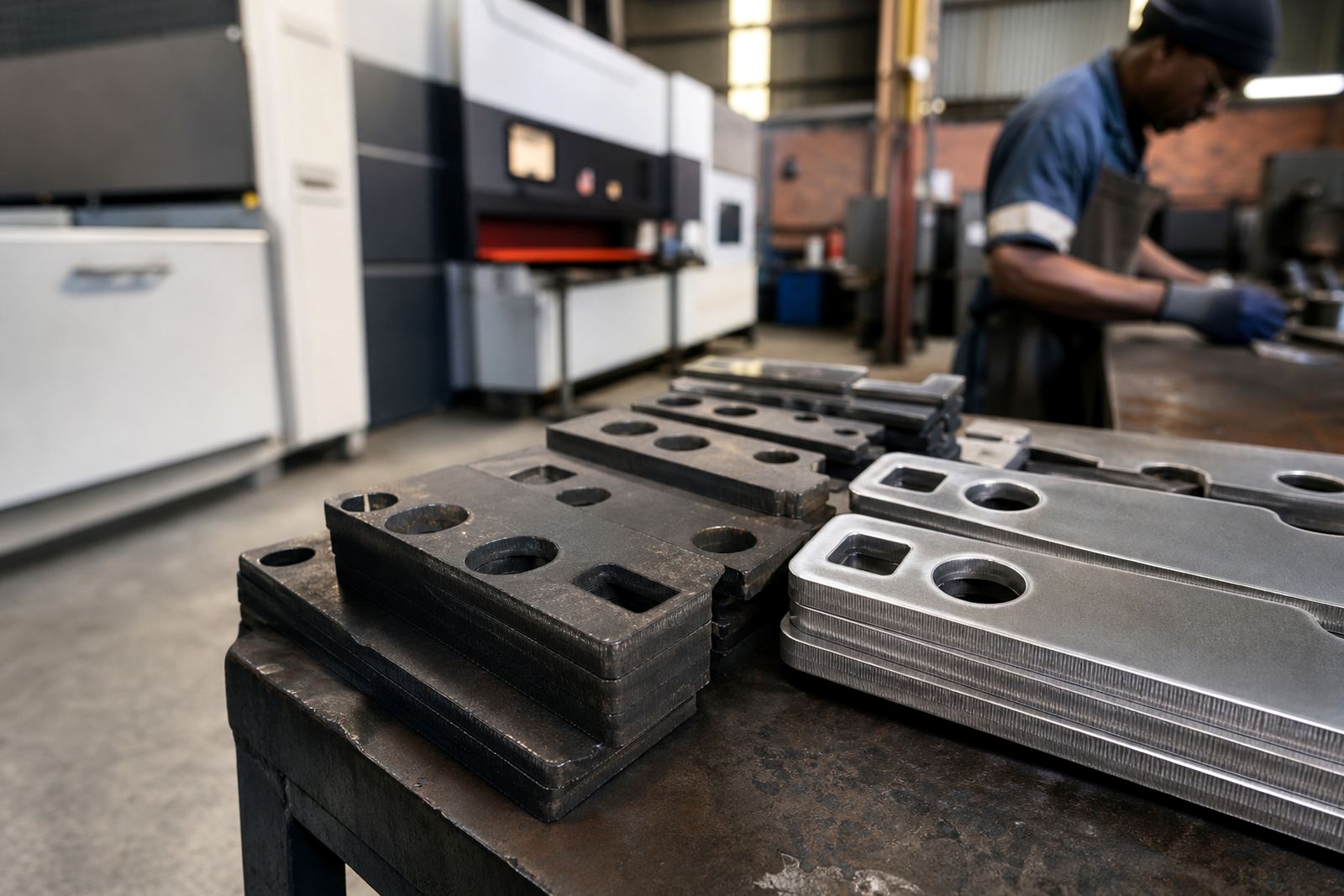
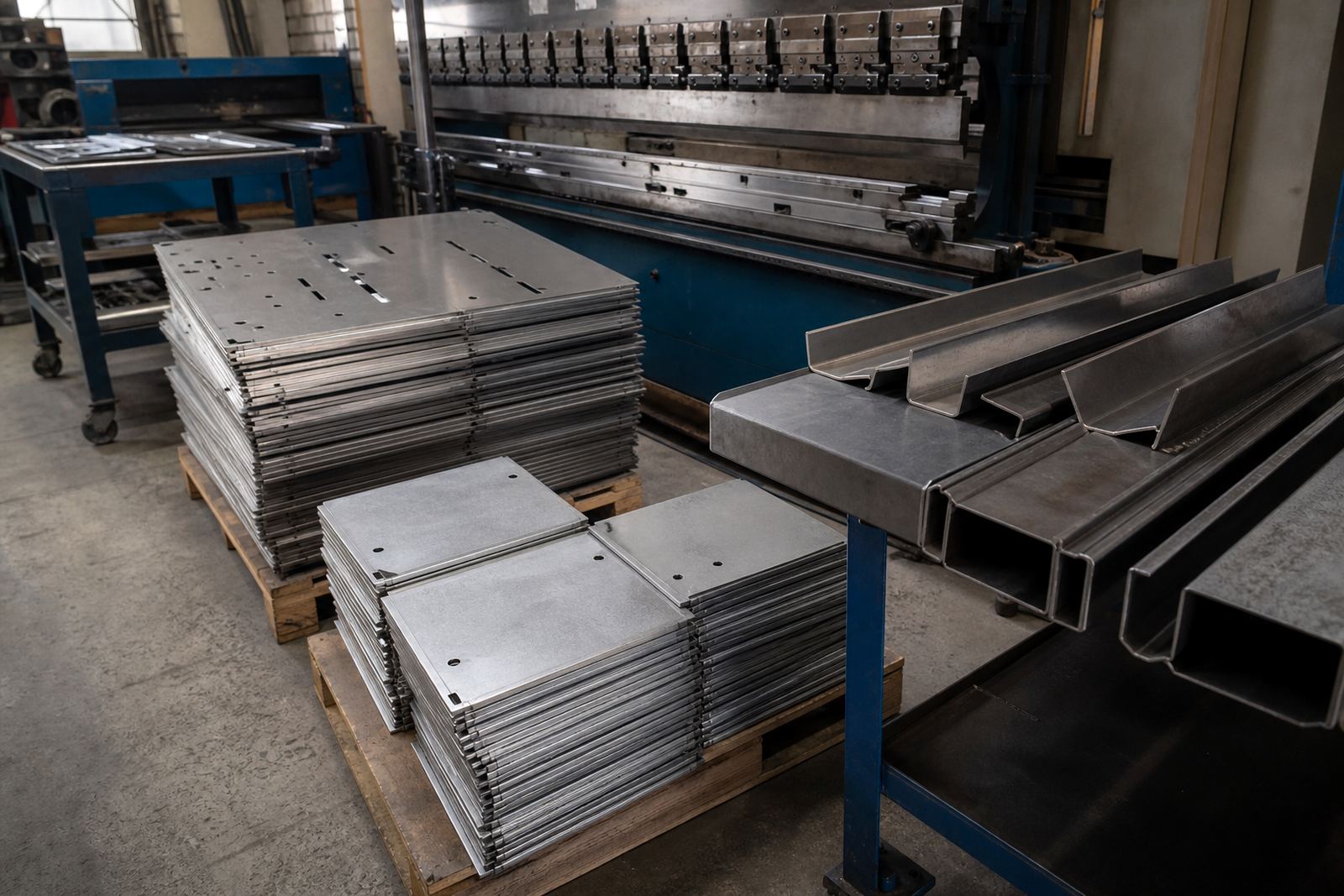
Press brake work starts long before the punch comes down. If a laser-cut edge has dross, burrs or a rough cut line, the part can sit unevenly on the tooling, scuff the die shoulders and mark the finished surface. On thin sheet this is often seen at the bend line first, then again when the part is handled for drilling, welding or assembly.
Deburring also helps remove the tiny high spots that cause stress concentrations. That matters on parts that must hold tight tolerances or go back into service after bending. A clean edge does not change the design, but it gives the bend a better chance of forming where it should, without extra force or unexpected cracking.
How edge-finishing improves bend consistency
When the cut edge is even, the sheet folds more predictably. Operators spend less time adjusting back gauge settings or checking why one bend measures correctly and the next one does not. On repetitive work, that consistency saves time and reduces scrap.
- Cleaner contact with the tooling
- Less chance of surface marking on coated or visible parts
- Reduced variation between pieces in the same batch
- Lower risk of burrs folding into the bend and causing a split
For fabricators running mixed jobs in Johannesburg or Pretoria, that repeatability is valuable. It helps keep production moving even when the same press brake is handling mild steel, stainless and aluminium through the day.
Handling safety on the workshop floor
One of the most practical reasons to finish edges properly is handling safety. A fresh laser-cut component can be surprisingly sharp, especially on smaller parts with lots of cutouts. Fitters and machine operators handling trays of parts are less likely to get cut when the edges have been broken and smoothed.
That becomes even more important in busy shops where parts are moved several times before final assembly. If the load-shedding schedule cuts a shift short, teams often rush to clear the floor and stack work for the next day. Clean edges reduce the chance of injuries during that fast movement and make parts easier to count, sort and carry.
- Safer lifting and stacking
- Less glove damage from sharp burrs
- Improved grip when moving larger panels
- Lower risk of scratching nearby finished parts
Common bend problems caused by poor cut quality
Not every bend fault comes from the press brake. In many cases the root cause is the cut edge. A burr can change how the material flows through the die opening, while heat affected edges from laser cutting can leave a harder zone that bends differently to the parent material.
Typical problems include visible cracking at the outside radius, uneven springback, or a bend that does not sit flat after forming. On stainless parts bound for coastal areas such as Durban, a rough edge can also hold moisture and contamination, which is never ideal when the part is meant to stay clean and corrosion resistant.
Where the edge is properly deburred and the part is checked before bending, the press brake operator gets a better starting point. That means fewer trial bends and less adjustment between batches.
What fabricators should check before the part reaches the press brake
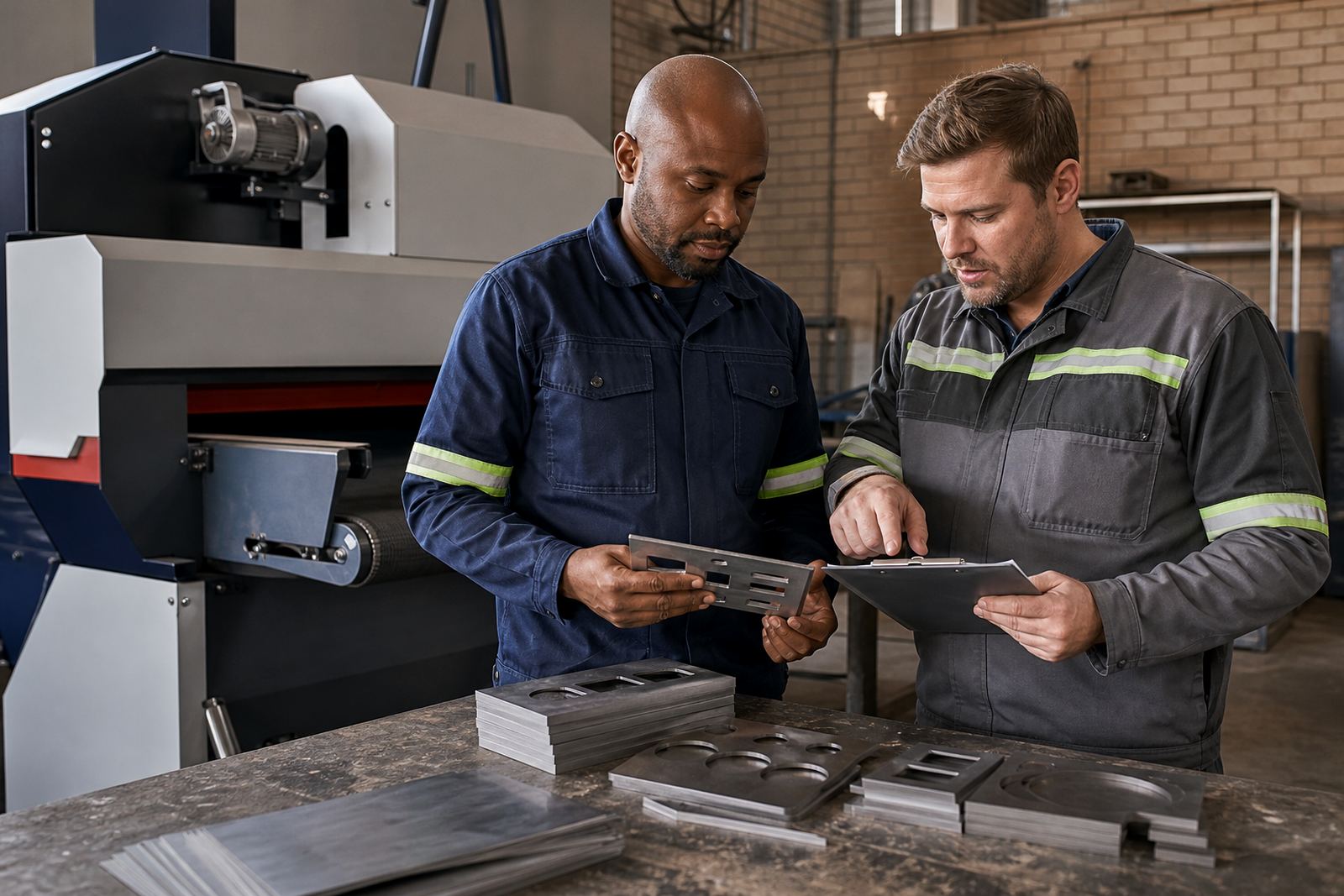
Good bend quality is not just about the machine setting. It also depends on what comes off the laser table and how it is prepared for the next stage. A quick inspection before bending can catch issues early and save rework later.
- Check for burrs on both sides of the cut
- Look for dross at corners and inside cutouts
- Confirm the bend line is clear of heavy heat marks
- Remove loose oxide or scale before the part is handled
- Separate damaged parts from the main batch so they do not slow down production
In busy shops across Wadeville and the East Rand, this kind of routine becomes part of the workflow. It is simple, but it keeps the press brake focused on forming parts rather than correcting cut defects.
A local example from a mixed fabrication shop
A fabrication shop in Germiston supplying brackets and covers for industrial equipment had a recurring issue on 3 mm mild steel parts. The bends looked fine on the first piece, then the second or third piece showed light scoring and occasional cracking near the edge. The team first blamed the tooling, then the material, but the real issue was inconsistent edge quality from laser cutting.
After introducing deburring and a basic edge-finishing check before bending, the crack rate dropped and the handling complaints stopped. Operators could stack parts faster, and the press brake ran with fewer stoppages. The shop also found that less time was spent on rework, which helped when municipal power interruptions and production delays had already compressed the day.
Why the right machine matters for laser-cut parts
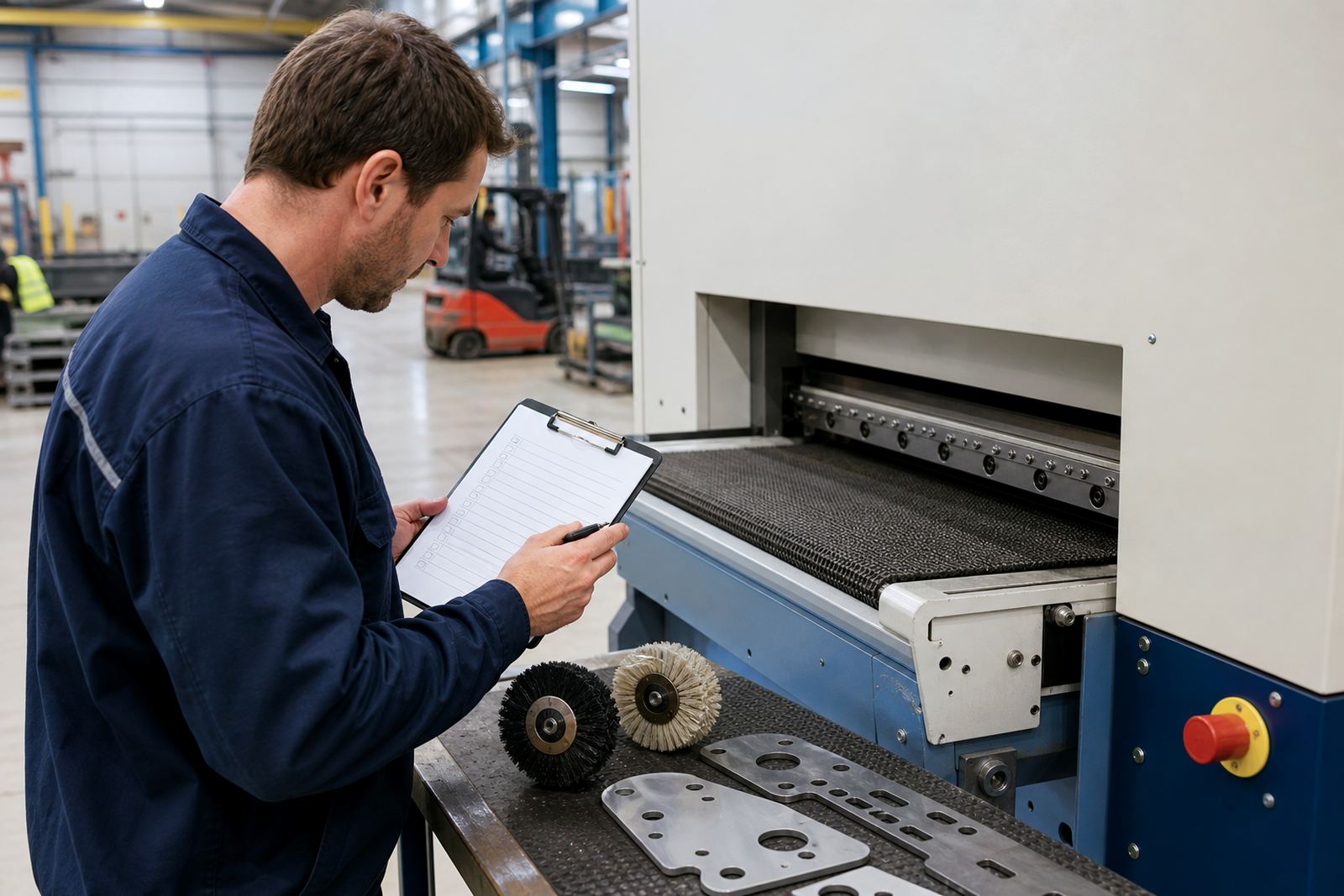
Not every deburring machine is suited to sheet metal that goes straight into press brake work. The machine must suit the thickness, part size and cut condition of the job. For lighter gauge material, the finish needs to be controlled so the edge is cleaned without rounding the part more than necessary. On heavier plate or mixed batches, the process must stay stable across the full width of the sheet.
For South African manufacturers, this is especially useful when jobs are spread across Johannesburg, Durban, Cape Town and Rustenburg. Different sites face different conditions, from coastal humidity to dry inland dust, and the finishing process should still give the same result. A well-chosen machine supports steady production, cleaner bends and better part handling with less manual filing.