
Why brush choice matters after laser cutting
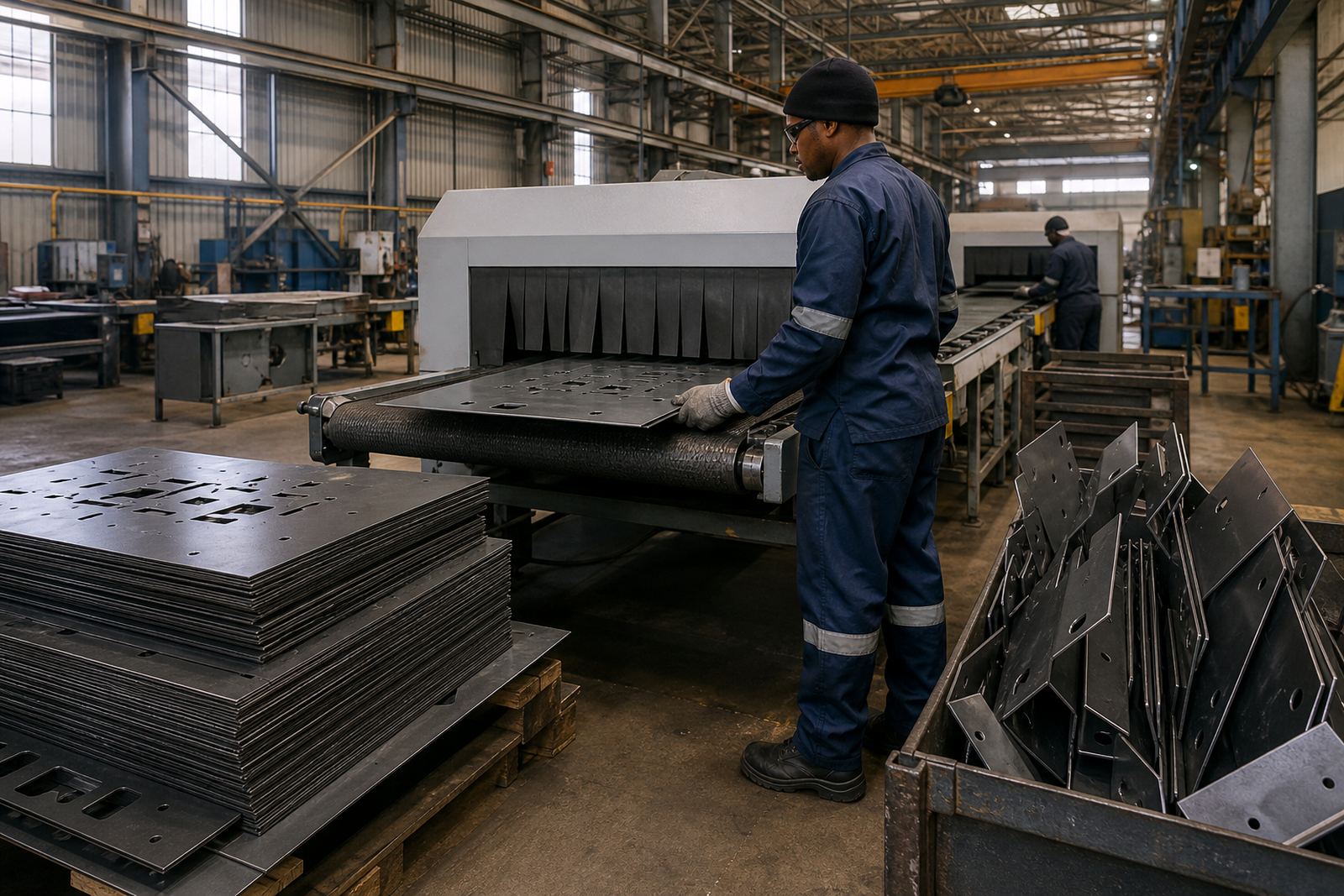
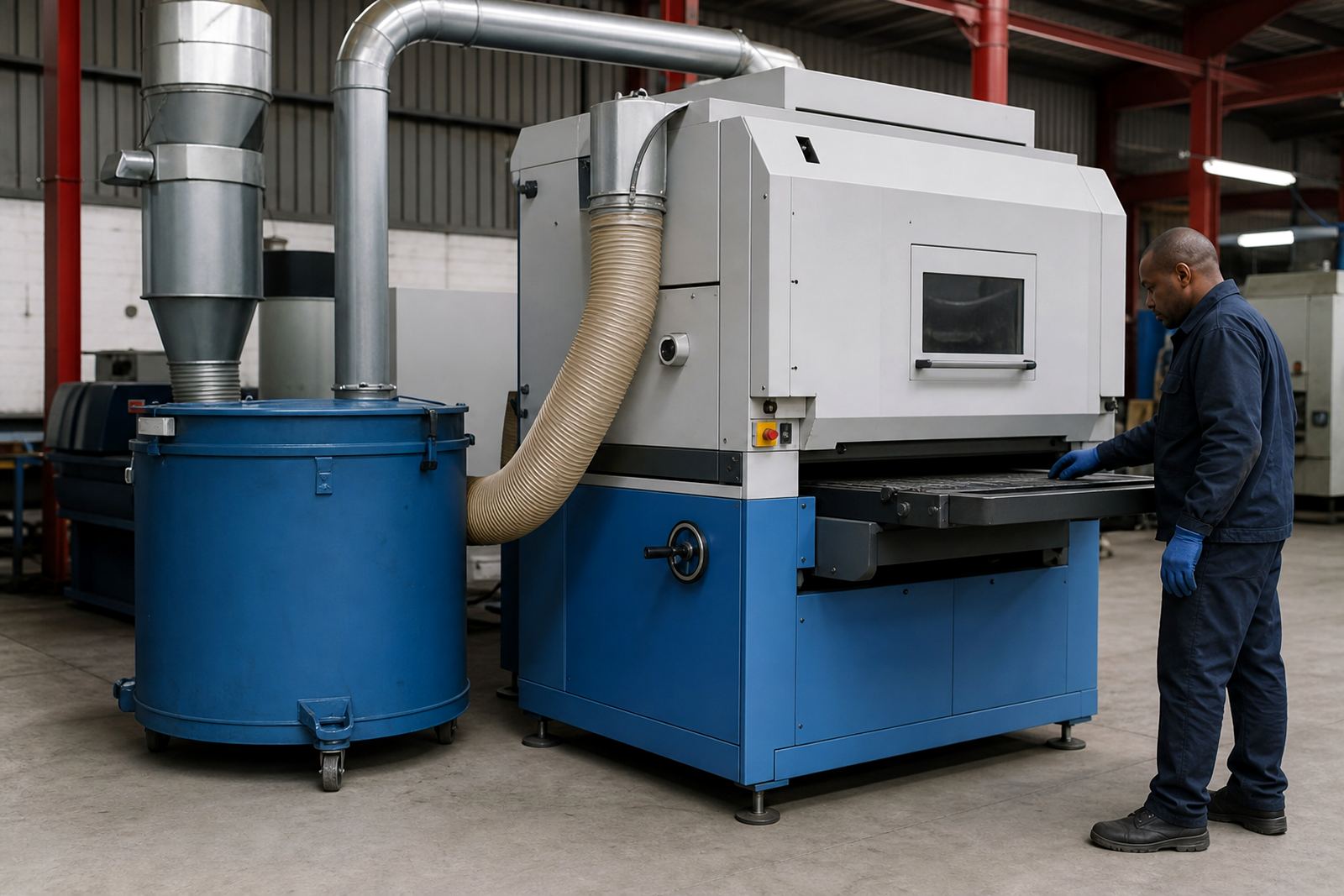
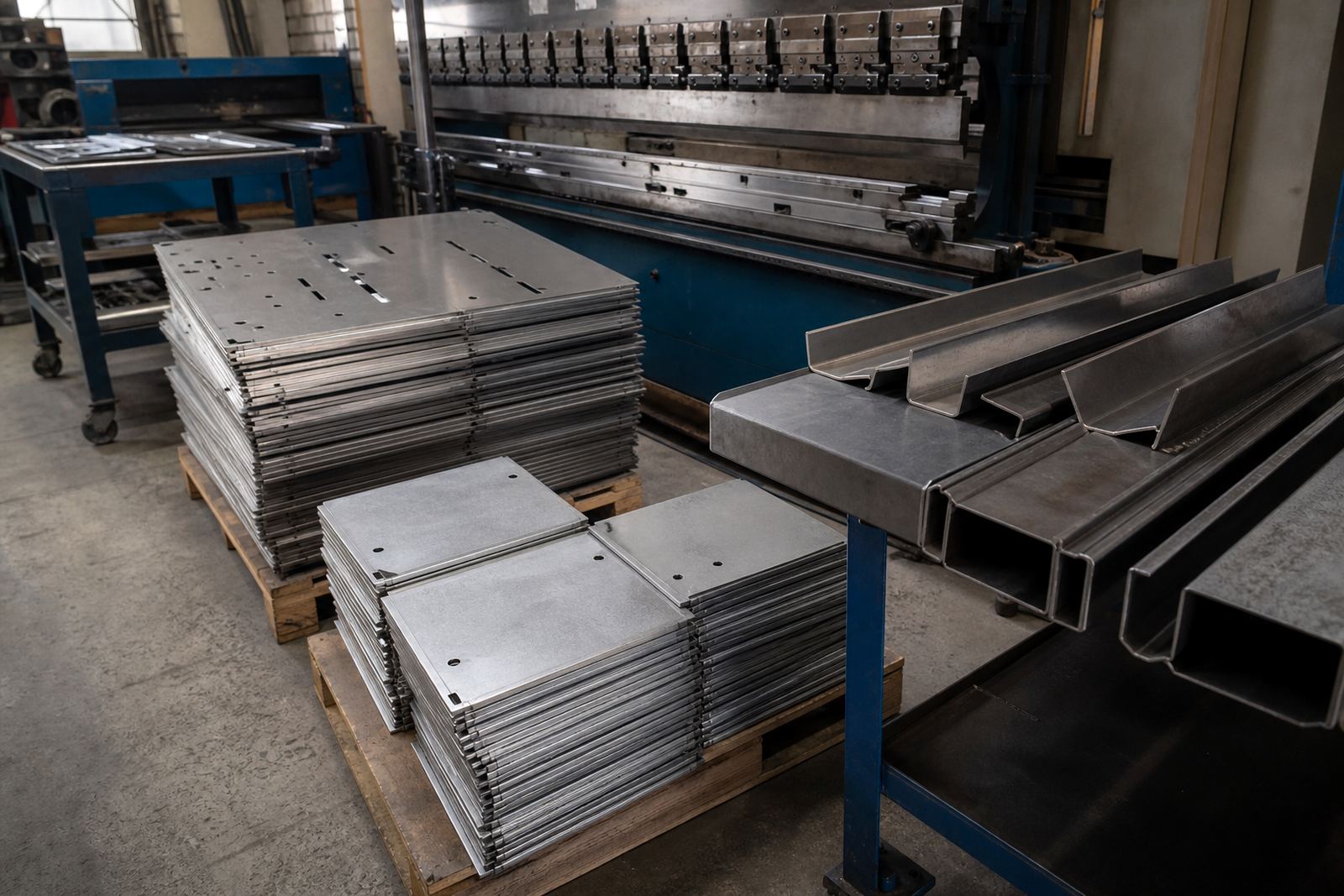
Laser cutting gives you speed and accuracy, but the edge still needs attention before the part can move to bending, welding or powder coating. A brush that is too aggressive can remove too much material, mark the face of the sheet or round the edge more than the drawing allows. A brush that is too soft may leave a sharp burr behind and send the part on for rework.
For fabricators in Johannesburg, Durban, Cape Town and Rustenburg, the right brush choice is often the difference between a part that passes first time and one that bounces between stations. On thin mild steel, stainless steel, aluminium and zinc coated sheet, the same machine can give very different results depending on the brush filament, density and operating setup. That is why brush selection is never just a consumable choice, it is a process decision.
Match the brush to the burr, not just the machine
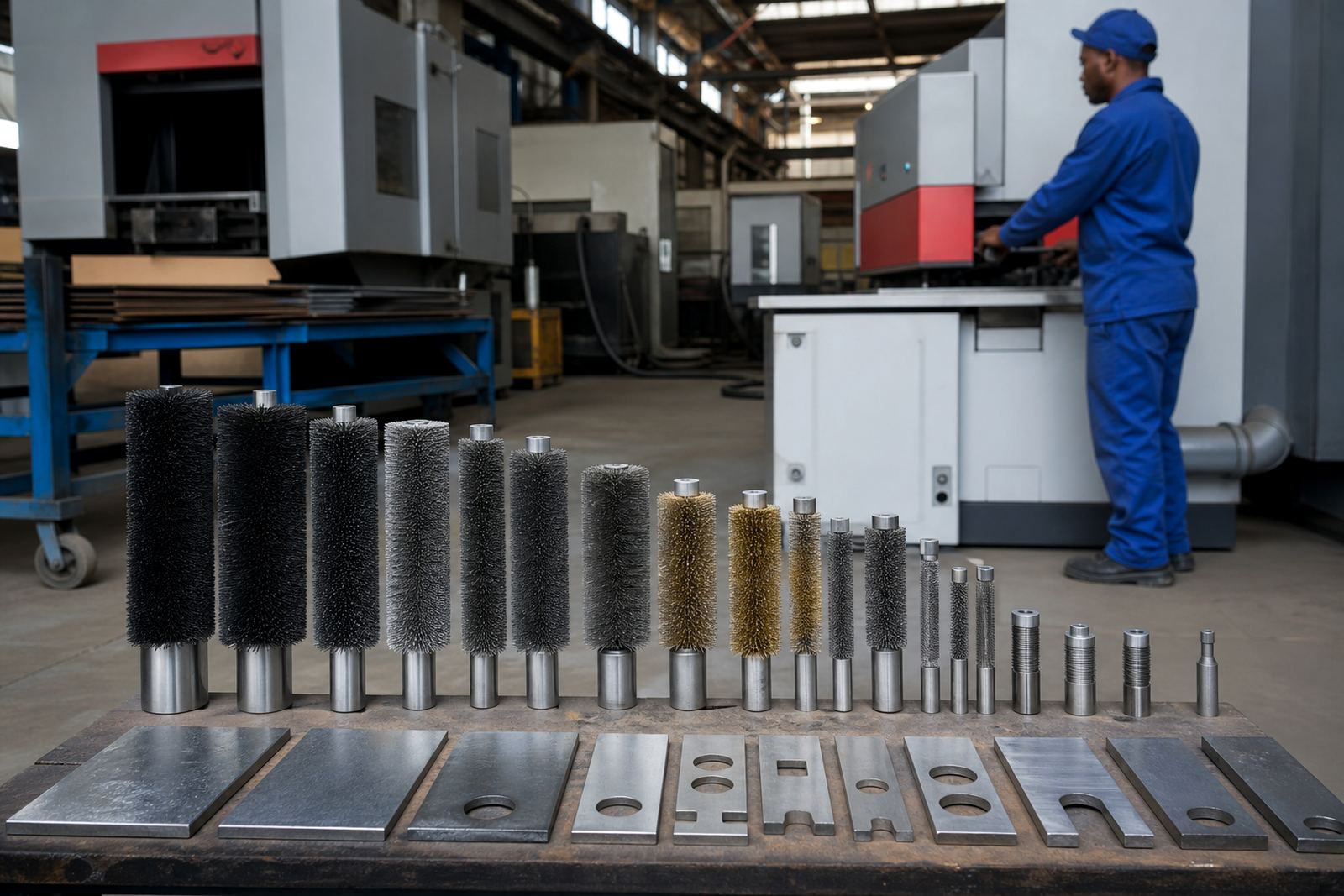
Start by looking at the burr itself. Fine burrs from clean laser cutting need a different response to heavier slag, dross or a raised edge from thicker plate. If the burr is light and even, a medium brush can clean it without overworking the part. If the burr is stubborn or inconsistent, you may need a firmer brush or a two stage approach.
- Light burrs: use a softer brush for controlled edge softening.
- Medium burrs: use a balanced brush that removes material without scuffing the sheet.
- Heavy burrs: use a more aggressive brush, then follow with a finishing pass.
- Mixed batches: set the machine for the worst part in the batch only if all parts can tolerate the same finish.
Many shops make the mistake of selecting the brush for the fastest removal rate instead of the required edge quality. That can cause problems during assembly, especially where parts must slide into fixtures or sit flush before welding.
How filament stiffness affects edge rounding
Brush stiffness controls how much the edge is rounded as burrs are removed. A stiffer brush presses harder into the cut line and can create a more noticeable radius. That can be useful where sharp edges are not allowed, but it can also affect fit on precision parts. A softer brush follows the edge more lightly and leaves a smaller radius, which suits parts that need tighter dimensional control.
For sheet metal fabricators, this is one of the key trade offs. If a part goes to powder coating, a slightly rounded edge can help coating coverage and reduce sharp handling points. If the same part is later bent or assembled with a close tolerance, too much rounding can throw off the result. The best brush is the one that gives enough edge break for safety and coating, but not so much that the part needs correction later.
- Choose firmer brushes when safety and handling are the main concerns.
- Choose softer brushes when finish and dimensional control matter more.
- Check edge radius against the drawing before changing the setup.
Surface finish is part of the decision
A clean edge is important, but so is the face around it. Some brushes leave a light brushed pattern that is acceptable on hidden parts and unacceptable on visible panels. Others can polish the area near the cut line but are slower and may need more regular replacement. The choice depends on where the part goes next in production.
If the part will be welded, a slightly textured edge may not matter. If it will be coated, the finish around the edge must be consistent so the coating lays evenly. In coastal areas like Durban and Cape Town, shops also need to think about humidity and flash rust. A brush that leaves less heat and less surface disturbance can help keep the metal cleaner before the next step, especially when parts wait in the rack over lunch or after a power interruption.
- Visible parts need a cleaner, more even surface finish.
- Welded parts can usually tolerate a coarser finish.
- Longer wait times need better rust control between operations.
Getting the setup right on South African shop floors
Brush performance is affected by speed, feed rate, part thickness and whether the operator is running a mixed pack of sizes. In Wadeville and across the East Rand, many workshops run varied jobs in one shift, so the setup has to be practical. A brush that works on 1.2 mm sheet may not behave the same on 6 mm laser-cut components, and the change in contact pressure can alter the finish fast.
Load-shedding adds another layer. When machines stop and start, operators often rush the restart and keep the same settings, which can lead to uneven results. It pays to record the brush type, machine settings and material grade for each job. That gives the team a repeatable starting point after power returns and helps prevent wasted material. A simple log can save a lot of rework later on.
- Record brush type, material grade and thickness for repeat jobs.
- Check wear after interruption or changeover.
- Keep the first few parts from a restart aside for inspection.
When to change brush type or ask for a sample test
If your parts are showing uneven burr removal, heavy edge rounding or a dull finish that was not there before, the brush may no longer suit the job. Wear changes the way a brush cuts, and a setup that once worked well can drift out of spec. This happens quietly, which is why routine checks matter.
A sample part test is worth doing whenever you switch to a new material, a new thickness or a different downstream process. It is also useful after machine relocation, maintenance or a change in production mix. For example, a fabricator in Pretoria might cut mild steel in the morning and stainless steel in the afternoon. Without testing, the same brush can give acceptable results on one and poor results on the other. A short trial saves time, material and arguments on the floor.
As a rule, change the brush or the process if you notice any of the following:
- Sharp edges are still present after deburring.
- The edge radius is larger than the drawing allows.
- The face finish is too rough for coating or visible parts.
- Brush wear is causing inconsistent results across the sheet.
A practical rule for better results
The best brush is not the hardest or the most aggressive one. It is the brush that removes the burr cleanly, keeps the edge within tolerance and leaves a finish that suits the next step. That means starting with the material, thickness and end use, then matching the brush to those conditions rather than forcing one setting across every job.
At Deburring, this is the approach we use when supporting fabricators across Johannesburg, Pretoria, Durban, Cape Town and Rustenburg. The aim is simple: cleaner parts, fewer rejects and a process that keeps moving even when the day gets busy. If the brush is right, the rest of the line works better too.