Start With The Part, Not The Machine
Improving part flow begins before the first sheet goes into the laser. If the part comes off the machine with sharp edges, loose dross or heavy tabs, every downstream step takes longer. A fabricator in Wadeville, for example, may cut brackets in the morning and need them bent, assembled and out the door by the next afternoon. In that setting, the real question is not just whether the laser is fast enough. It is whether the cut parts can move straight into deburring and then into forming without extra sorting, rework or manual edge dressing.
The best flow starts with part design and job routing. Parts that are grouped by thickness, material type and finish requirement are easier to process. Thin mild steel, stainless and aluminium all behave differently and need different settings at the laser and the deburring stage. If those jobs are mixed together in one trolley, operators spend time checking each part instead of running a stable process.
Keep The Handover Between Cutting And Deburring Tight
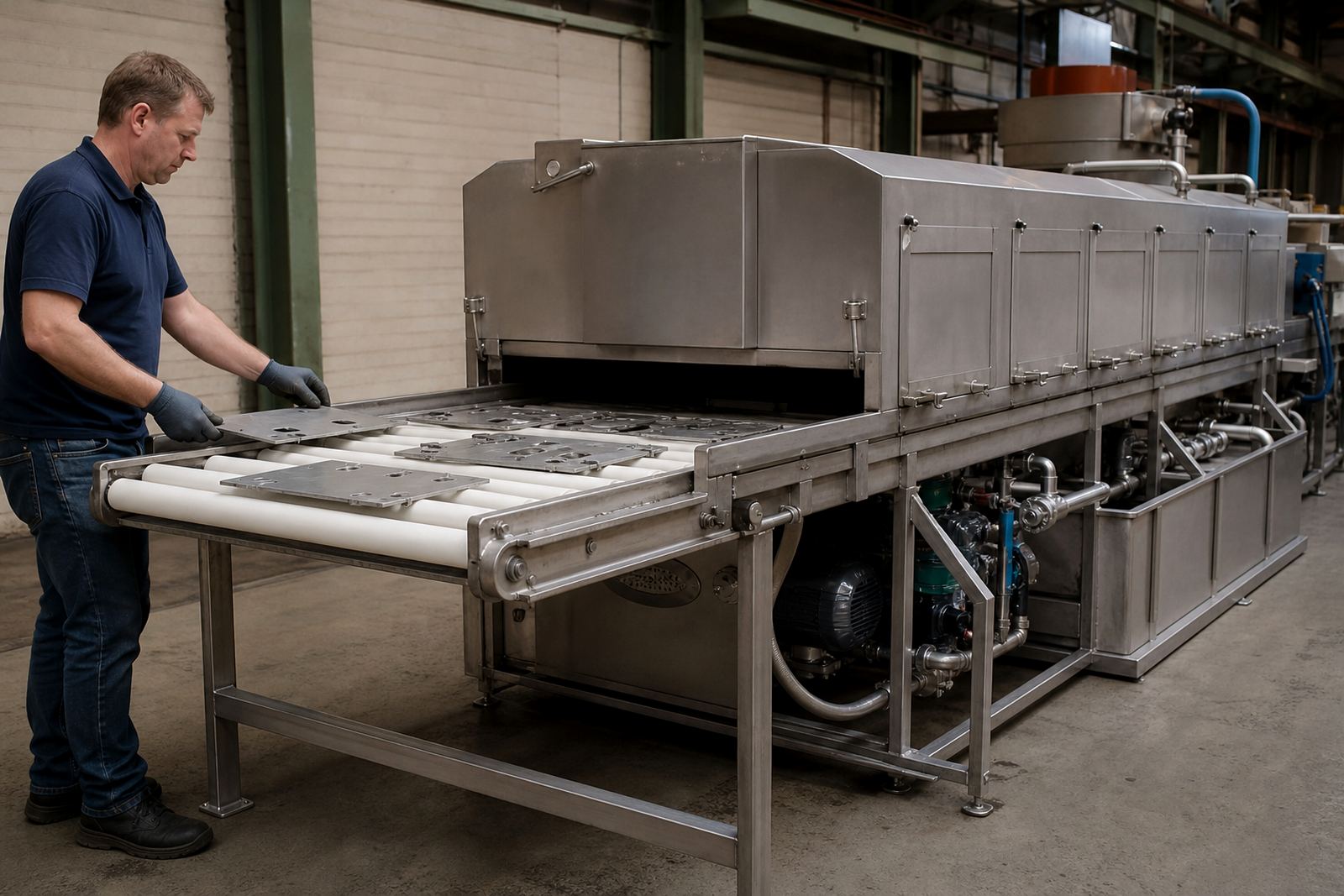
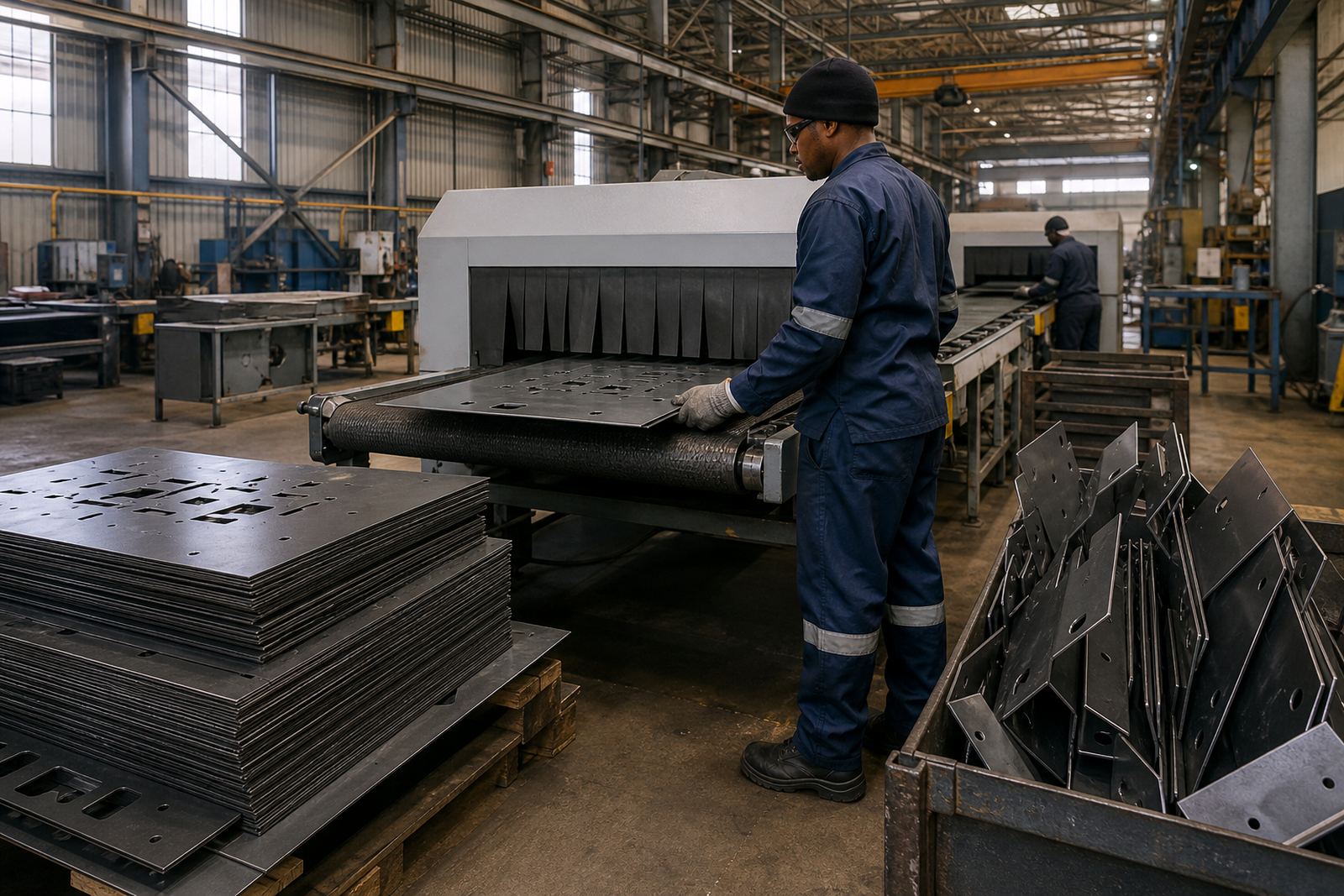
A clean handover saves time every single shift. Laser cutting leaves a stack of parts that often look finished at first glance, but the edges, slug marks and oxide need attention before forming or assembly. If parts are left in mixed piles, the next operator has to sort, count and inspect before work can continue. That is where production slows down.
Many shops get better results by setting a fixed transfer point between laser and deburring. The rack should be close enough to the cutter for easy loading, but clear enough that the deburring machine is never waiting for parts. On busy days in Johannesburg or Pretoria, that small layout change can mean the difference between one person managing a full queue and two people standing around waiting for the next bundle.
- Use marked trolleys for each job or batch
- Separate cut parts by material and thickness
- Remove small offcuts and loose scrap before deburring
- Keep the path from cutter to machine short and clear
Match Edge-Finishing To The Next Operation
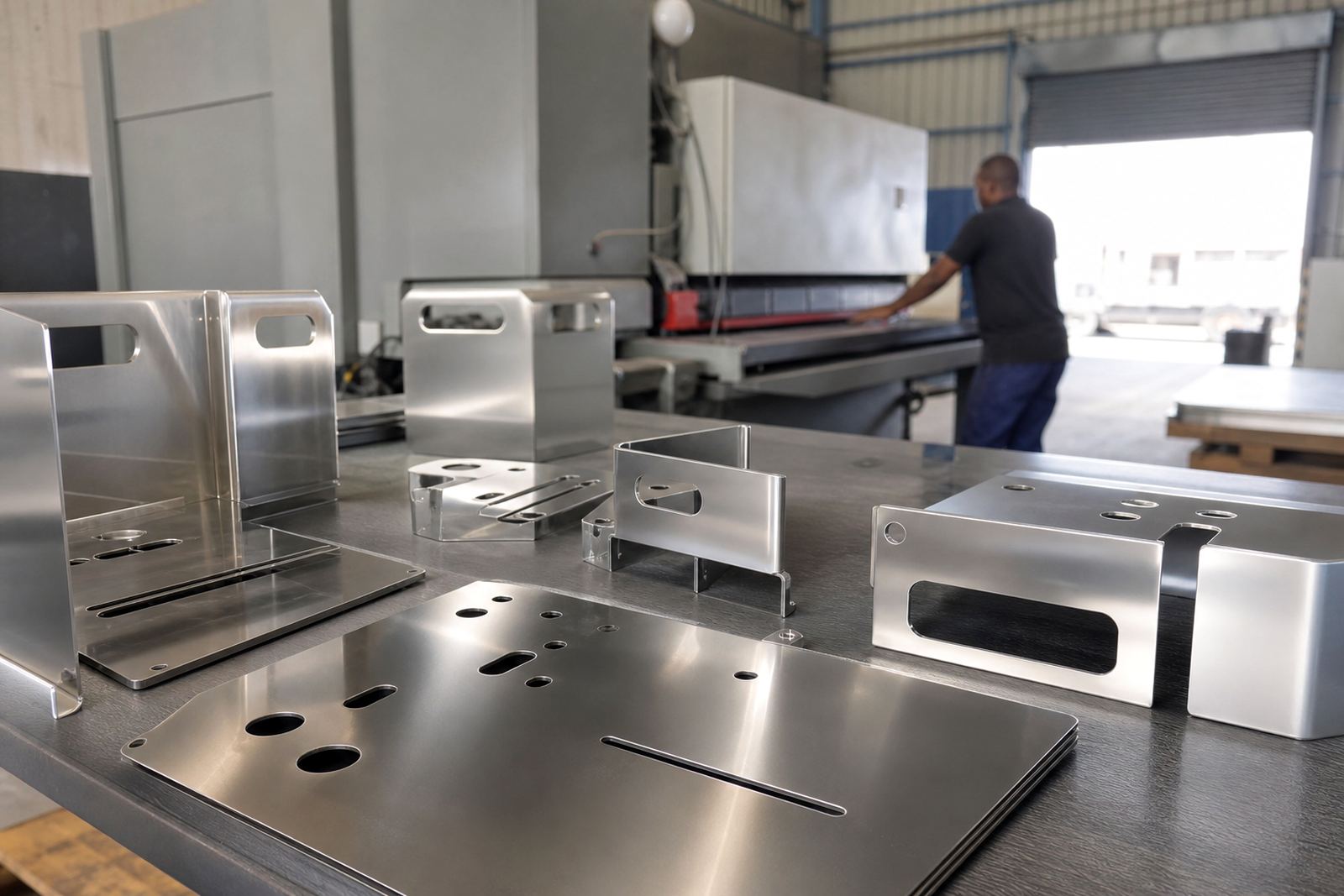
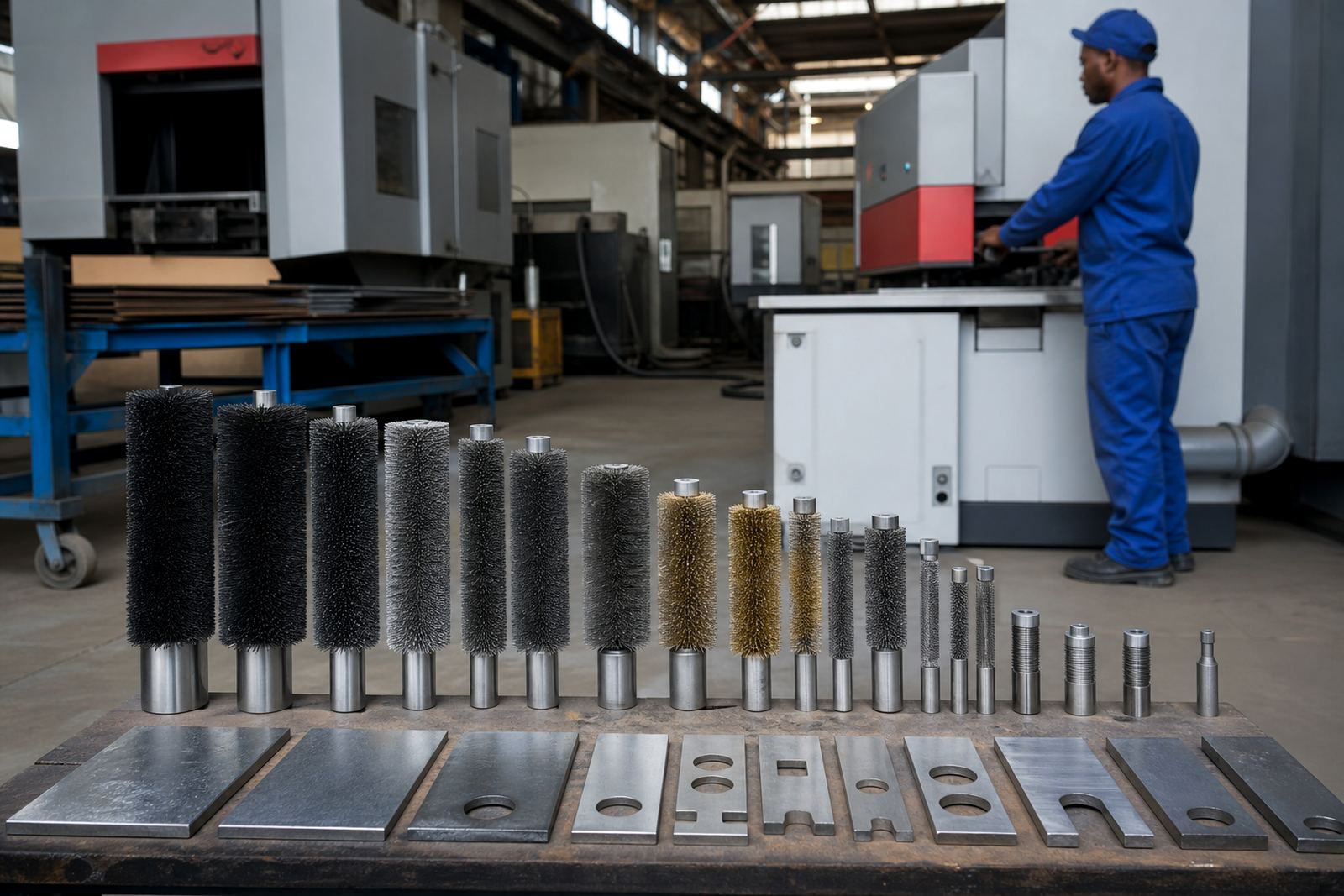
Not every part needs the same finish. A part that will be welded may only need a consistent, safe edge. A part that will be powder coated may need careful edge preparation so the coating builds evenly. A part going into a press brake needs enough edge control to handle safely, but not so much material removal that the dimensions drift. This is where process planning matters more than speed alone.
Forming teams often feel the effects of poor deburring first. Sharp edges make handling difficult, parts snag on gloves, and operators spend extra time aligning components before the bend. In coastal areas like Durban or Cape Town, moisture can also show up quickly on freshly cut carbon steel, so parts should not sit too long before edge-finishing and forming. A short queue is better than a long one that leaves parts exposed on the floor.
When the deburring process is matched to the next step, shops see steadier output and fewer complaints about fit-up. The goal is simple: every part should arrive at forming in the same condition, with the same edge quality and the same handling safety.
Design The Shop Around Movement, Not Just Capacity
Plants often buy enough equipment for the work but still lose time because movement is clumsy. A deburring machine placed too far from the laser or forming area creates extra forklift trips and too much manual carrying. That matters when you are moving heavy sheets or full nests. It also matters when load-shedding interrupts the day and everyone has to restart from where they left off.
Good part flow comes from a simple layout. Incoming material should be close to cutting, cut parts should move in one direction, and finished parts should leave the area without crossing back through work in progress. In Rustenburg, where many workshops handle mixed orders for mining and general fabrication, this kind of layout helps keep urgent jobs separate from standard batches.
- Place the laser, deburring and forming areas in a one-way sequence
- Keep a clear aisle for trolleys and pallet jacks
- Use visual labels for urgent, standard and completed work
- Plan backup movement for power cuts and crane downtime
Use Maintenance To Protect The Flow
A machine that is out of tune does not only affect finish quality, it affects the whole schedule. Worn abrasives, damaged conveyor parts or ignored dust build-up can slow the line and create repeat handling. Preventive maintenance is not just about avoiding breakdowns. It is about keeping parts moving at the same pace every day.
For South African shops working under tight deadlines, planned service is usually cheaper than a stop-start week. If a deburring machine needs abrasive replacement, alignment checks or a quick audit of feed settings, it is better to do that before the job queue builds up. That way the operator does not have to fight the machine while the planner is trying to recover lost hours.
Annual service contracts, routine inspections and clear spares planning all help keep the process stable. A machine that starts the shift in good condition will usually stay there, provided the team treats it as part of the production line and not a separate island.
Build One Conversation Between Sales, Production And Service
The smoothest shops are the ones where sales, production and service talk early. If a customer in Cape Town needs a stack of stainless parts turned around quickly, the team should know whether the job needs light edge-breaking, full deburring or sample part testing before the order is released. If forming is involved, the bend sequence should be checked before the first sheet is cut. That saves material, time and a lot of backtracking.
At Deburring, that kind of coordination is part of the service offer. Machine installation, operator training, production planning help and sample part testing all support the same outcome: clean parts moving from one process to the next without avoidable delays. When the flow is right, the workshop does not feel rushed. It just runs properly.
A useful rule is to measure the time between cut part and finished part, not only the time at each machine. Once that number starts coming down, the whole line becomes easier to manage.