
Why hand deburring is harder to price than it looks
Many shops treat manual deburring as a small line item, but it often eats more time than expected. A part may leave the laser table looking clean, yet the edges still need attention before it can move to bending, welding or assembly.
The real cost is not only the operator’s wage. It includes the time spent walking parts, checking edges, changing abrasive discs, handling breakages and sorting pieces that need a second pass. If the job runs in shifts, those minutes stack up fast.
In Wadeville, where many fabricators are balancing rush jobs, load-shedding and tight delivery windows, manual finishing can quietly become a profit leak. It is easy to underprice because the work is spread across the day and not always captured on a job card.
The main cost drivers you should measure
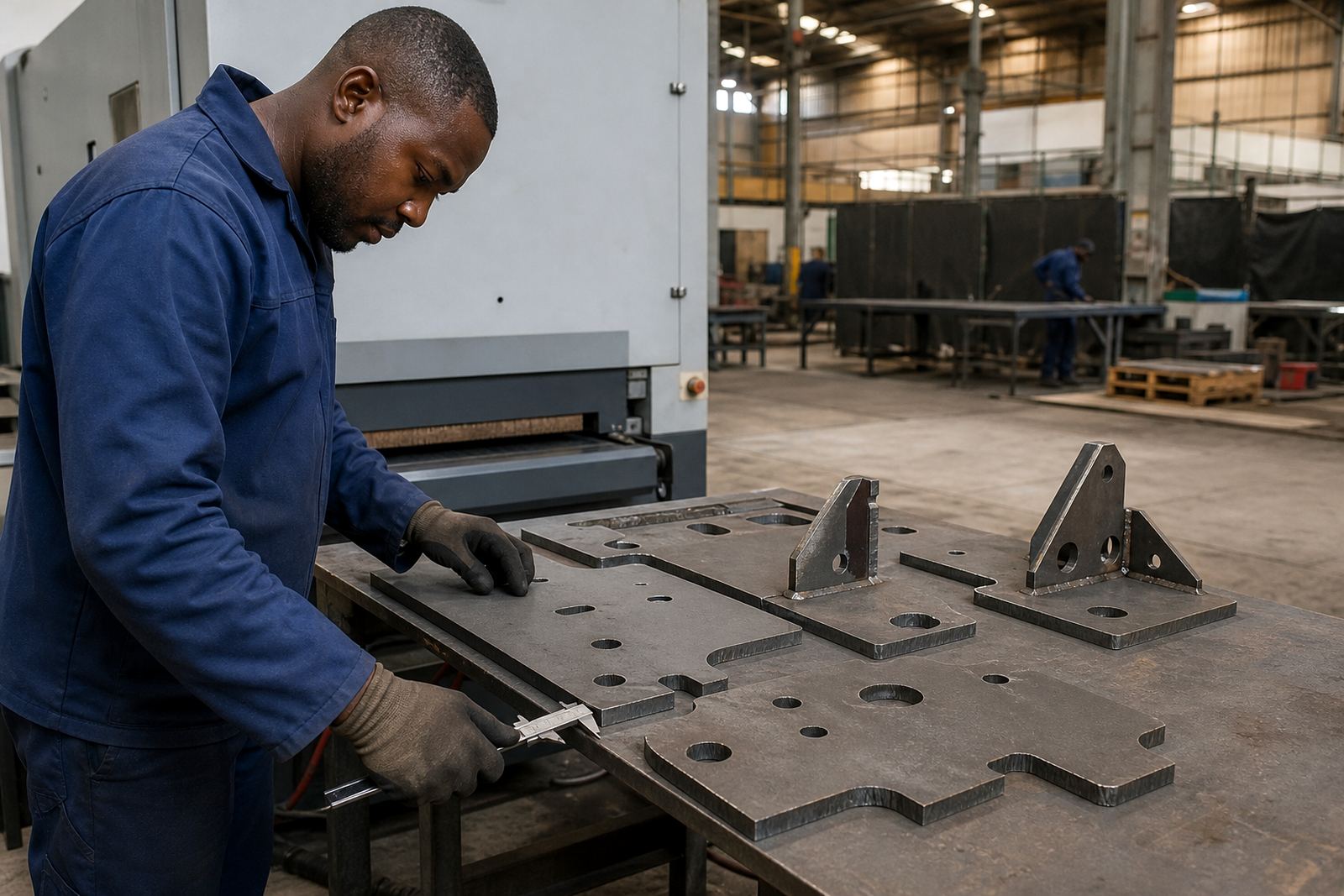
To cost manual finishing properly, start with the factors that change from job to job. Thin sheet with small holes behaves differently to thicker plate with long edges, and stainless needs a different touch from mild steel. The operator may move quickly on one batch and slowly on the next, so a single flat rate can be misleading.
- Part size and edge length in metres
- Material type and thickness
- Number of cut-outs, slots and internal edges
- Surface finish required before coating or welding
- Whether one or two sides must be finished
- Expected handling, sorting and packing time
- Abrasive wear and consumable replacement
A useful rule is to separate direct labour from support costs. Direct labour is the visible part. Support costs cover wear parts, downtime, supervision, machine setup and the admin time needed to keep track of the job proper.
A simple costing method for production managers
Start by timing a representative sample of parts. Record how long one operator takes to finish a known quantity, then divide that time by the number of parts or metres completed. Do this on a few different jobs, not just one, because a neat test sample can hide the slower, messy work that happens on the shop floor.
Then add the operator cost per hour, plus a fair share of overheads. Overheads may include electricity, lighting, ventilation, floor space, maintenance and supervision. If your site runs on generators during outages or you reschedule work around load-shedding, that cost should be included too.
A practical formula is:
- Labour cost per hour x time taken
- Plus abrasives and consumables used
- Plus overhead allocation
- Plus rework allowance
- Plus margin for profit and risk
If a part takes six minutes to deburr and finish, do not forget the extra minute or two spent moving it, checking it and stacking it safely. Those small gaps matter over hundreds of parts.
Local example: a Pretoria job that looked cheap at first
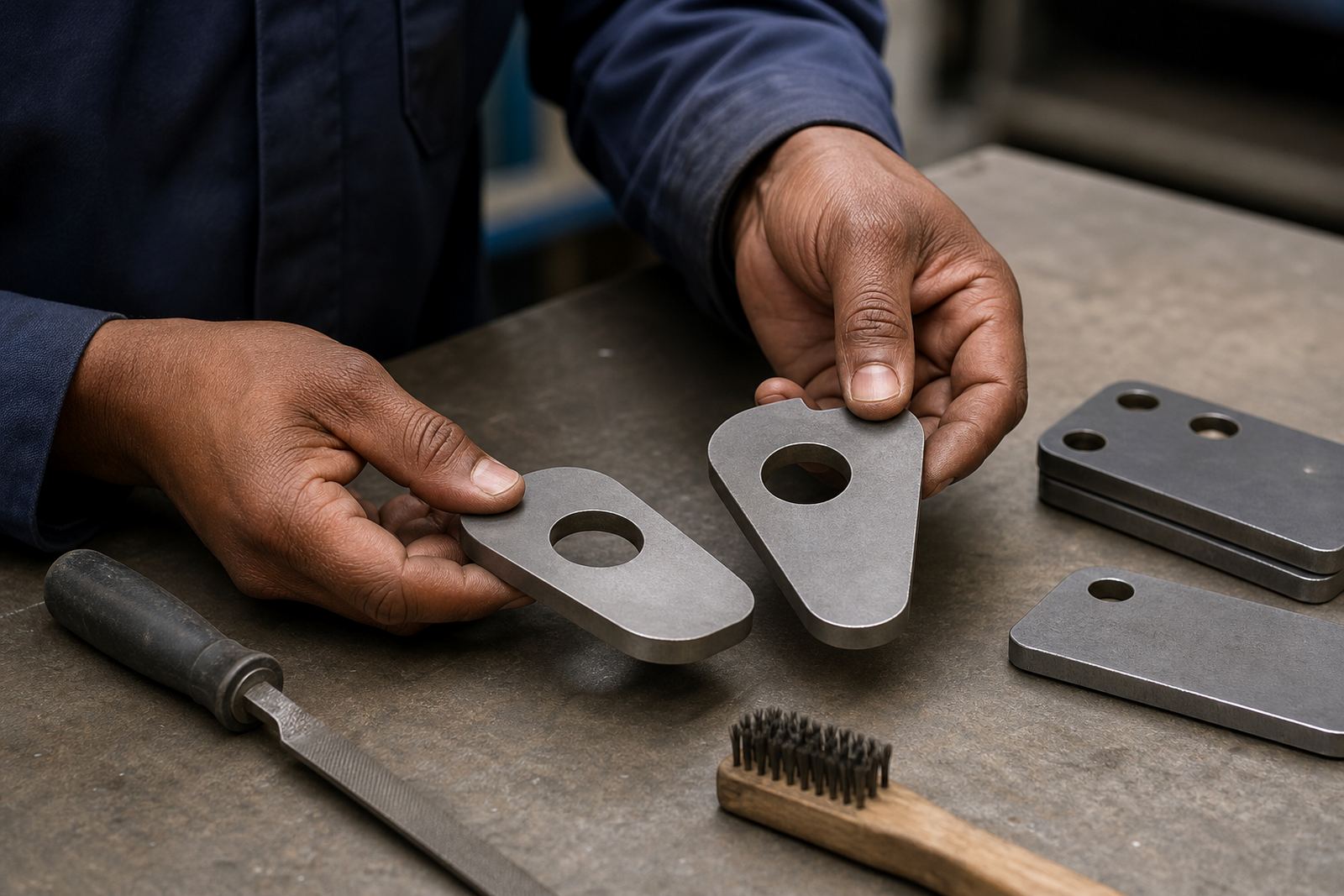
A fabricator in Pretoria quoted a batch of laser-cut brackets with hand finishing included at a very low rate. The parts were neat, but each one had sharp internal edges and a few burrs around small holes. What looked like a quick clean-up turned into repeated handling, slow progress and a lot of blade changes.
By the time the batch was complete, the actual labour was nearly double the estimate. The shop had also lost time on other work because one operator was tied up on finishing instead of feeding the next job through. That created a knock-on delay that affected delivery to a client in the West Rand.
The lesson is simple: if the estimate ignores how the part is shaped, the real cost will surface later in overtime or missed deadlines. For many shops, that is when the margin disappears.
Signs your manual finishing cost is too low
When the numbers are off, the warning signs usually show up in production, not in the quote. You may notice that finishing jobs are always running late, or that operators are being pulled off other work to help clear a backlog. If the same parts keep coming back for touch-up, the cost is already too low.
- Finishing work is always treated as a rush item
- Operators spend time redoing parts that should have been right first time
- Consumables disappear faster than expected
- Jobs with many internal edges are priced the same as simple profiles
- Supervisors avoid tracking finishing time because it feels too small to log
If this sounds familiar, the issue is not the operator. It usually means the process has never been measured properly, so the quote is based on habit rather than evidence.
When automated edge-finishing starts to make sense
Manual finishing is sometimes the right choice for short runs, repairs and unusual shapes. But once volumes rise, or quality expectations become tighter, a machine based process can give you more consistent results and easier costing. That matters when you are supplying multiple sites across Johannesburg, Durban, Cape Town or Rustenburg and every order must match the last one.
Automation also helps with planning. Instead of guessing how long a batch will take, you can work from repeatable cycle times and track output more accurately. For a shop handling laser-cut sheet metal daily, that makes quoting, scheduling and labour planning much easier.
It also reduces pressure on your finishing team during busy periods. Rather than relying on hand work to catch up after cutting, you can build a more predictable flow from laser to finished part. That is where many fabricators save time without sacrificing quality.
Build a costing sheet that your team will actually use
Keep the sheet simple enough for the shop floor and detailed enough for management. It should show the part type, material, batch size, estimated finishing time, operator rate and consumables. If you need to revise the estimate, note why. After a few weeks you will start to see patterns, and those patterns are worth money.
It helps to review a few completed jobs every month and compare estimated time against actual time. That one habit can reveal where your shop is losing time, whether it is with small holes, awkward shapes or repeated handling. The result is better pricing and less guesswork.
For fabricators in South Africa, especially those working with imported machines, local power interruptions and tight turnaround times, proper costing is not admin for the sake of it. It is the difference between a job that pays and one that quietly drains the month.