Why thick plate changes the finishing job
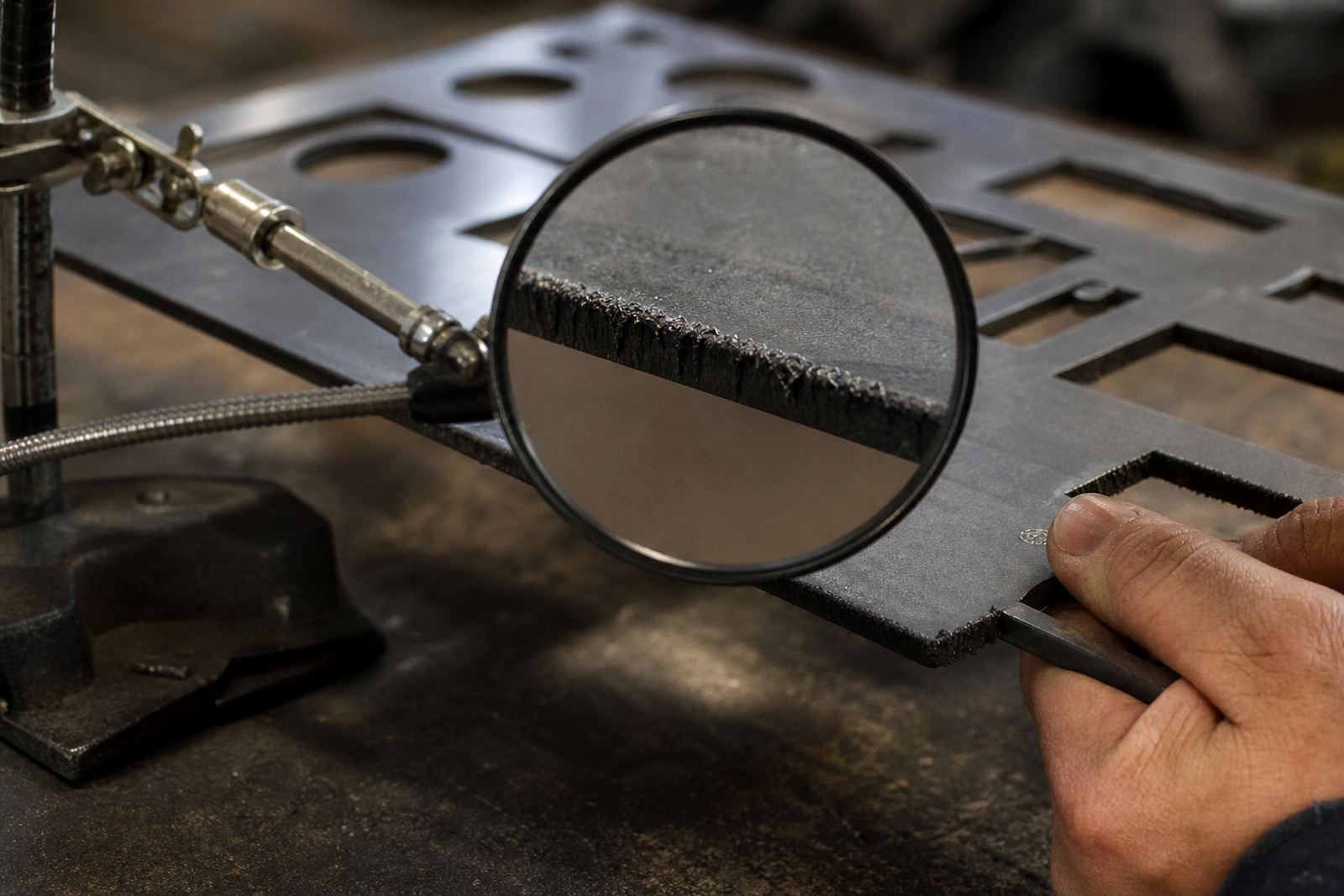
Thick plate behaves differently from thin sheet. The laser can leave a tighter burr, a sharper underside edge and heat marks that are more noticeable once the part is welded or painted. If the edge is not handled properly, you get poor fit-up, coating problems and complaints at assembly. On thicker sections, a small inconsistency becomes a bigger issue because the parts are usually used in load-bearing frames, covers or brackets where alignment matters.
A practical finishing process should be matched to the material thickness, cut quality and downstream use. A part that is going straight to welding may only need burr removal and edge softening, while a visible component for powder coating may need a cleaner and more even finish. In both cases, the aim is the same: remove the problem without wasting material or time.
Edge quality affects welding, coating and assembly
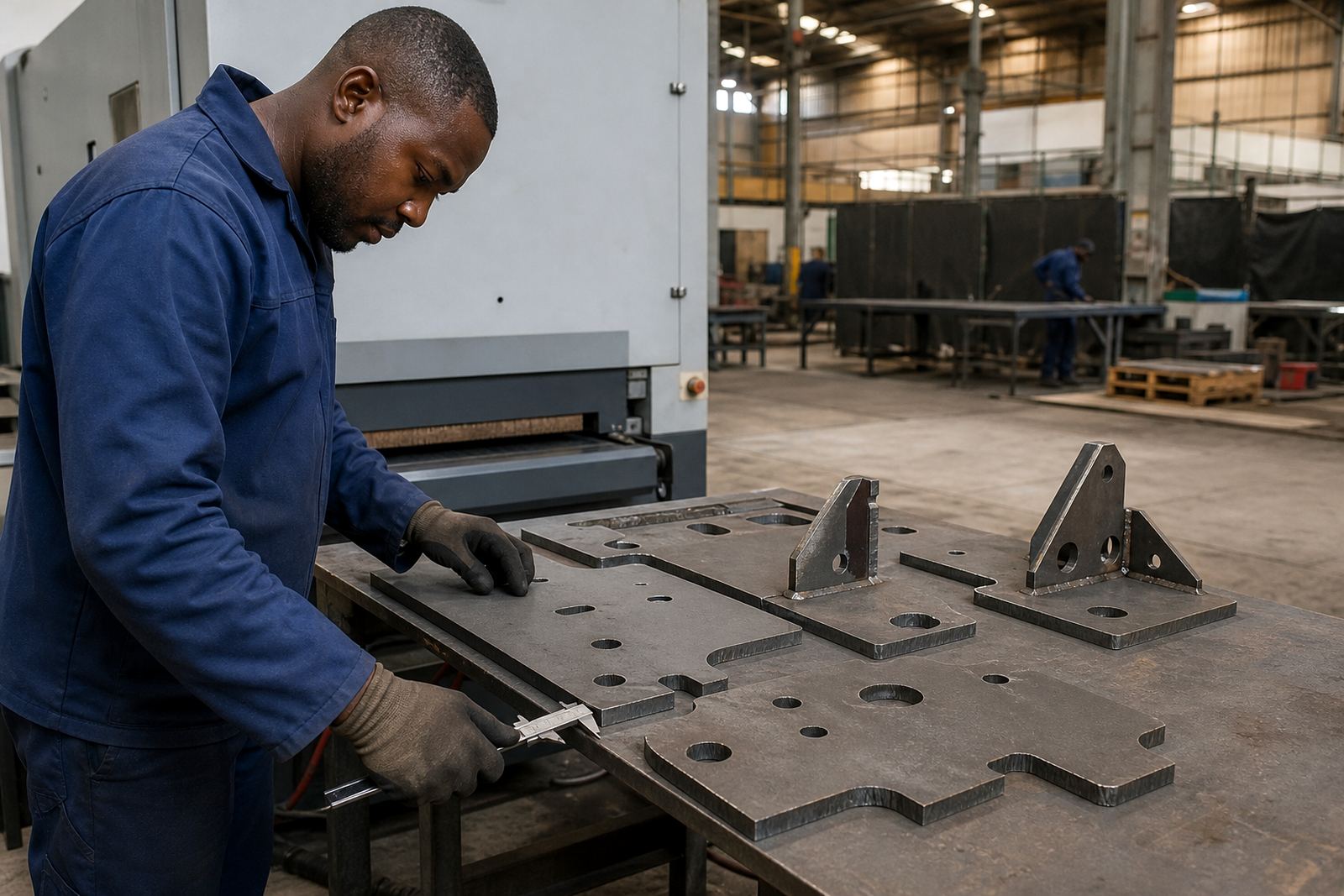
It is easy to think of deburring as a final cosmetic step, but on thick plate it often protects the whole job. Sharp edges can cause weld gaps, poor clamp contact and uneven seating on jigs. Coatings also struggle on contaminated edges, especially where scale, dust or fine metal residue sits in the cut zone. If you are working in coastal areas like Durban or Cape Town, moisture in the air can make untreated edges more troublesome before the job even leaves the floor.
For fabricators supplying end users across South Africa, repeatable edge quality helps avoid delays between laser cutting, welding and dispatch. When each batch comes out with the same edge condition, the workshop can plan better and spend less time on sorting. That matters when power interruptions or shift changes already put pressure on production. A steady finishing process helps keep the work flowing, even when the day is not perfectly planned.
What to look for in a finishing setup for heavier parts
Not every deburring setup is suited to thick plate. Heavier parts need a machine that can cope with variable burr height, wide contact surfaces and pieces that are awkward to handle. If the machine is too light or too narrow, operators end up doing extra passes or moving parts back and forth, which wastes time and creates a handling risk.
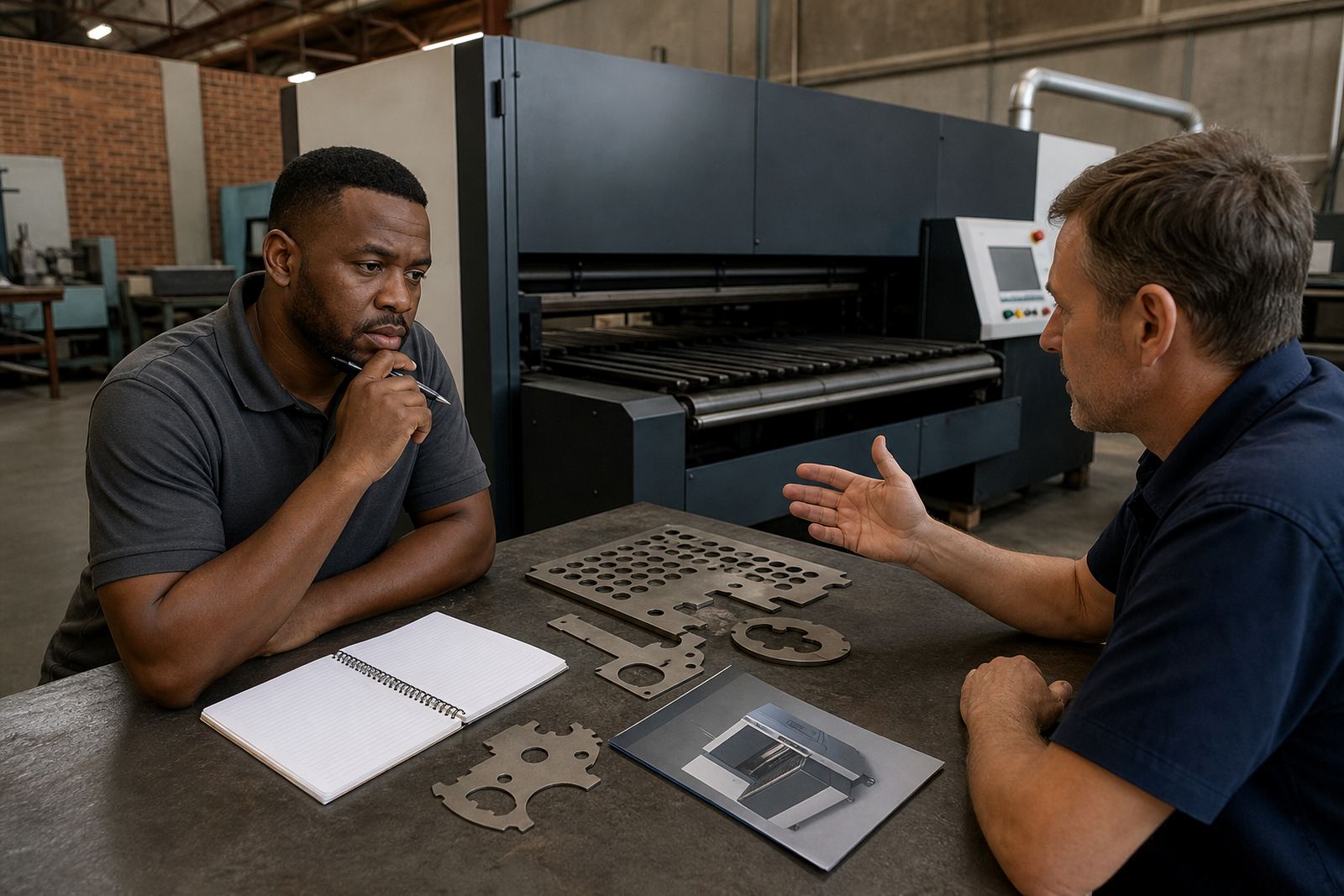
Good setups for laser-cut plate should focus on control, consistency and practical loading. The workshop should also think about how parts enter and leave the process. A machine that suits a 3 mm bracket may not be the right choice for 10 mm or 16 mm plate, especially if the parts are long, heavy or have multiple internal cut-outs. In Germiston and Wadeville, many fabricators work with mixed batches, so flexibility is often just as important as speed.
Handling large parts without slowing the shop
Heavy parts are not only a finishing issue, they are a movement issue. A 1.5 metre frame plate or a bulky structural gusset cannot be treated the same way as smaller sheet parts. If the workshop layout is poor, operators spend too much time lifting, turning and staging parts, and the finishing machine becomes just another bottleneck. The answer is to plan the flow from laser table to finishing, then to welding or dispatch.
This is where practical process planning helps. The floor should allow for safe staging, simple handover points and enough space for the operator to work without crowding. In some plants, a small change in layout cuts the handling time more than any change in machine speed. That is especially useful when the team is running on reduced staff during load-shedding or when orders are due out the same day.
A local example from Wadeville to Rustenburg
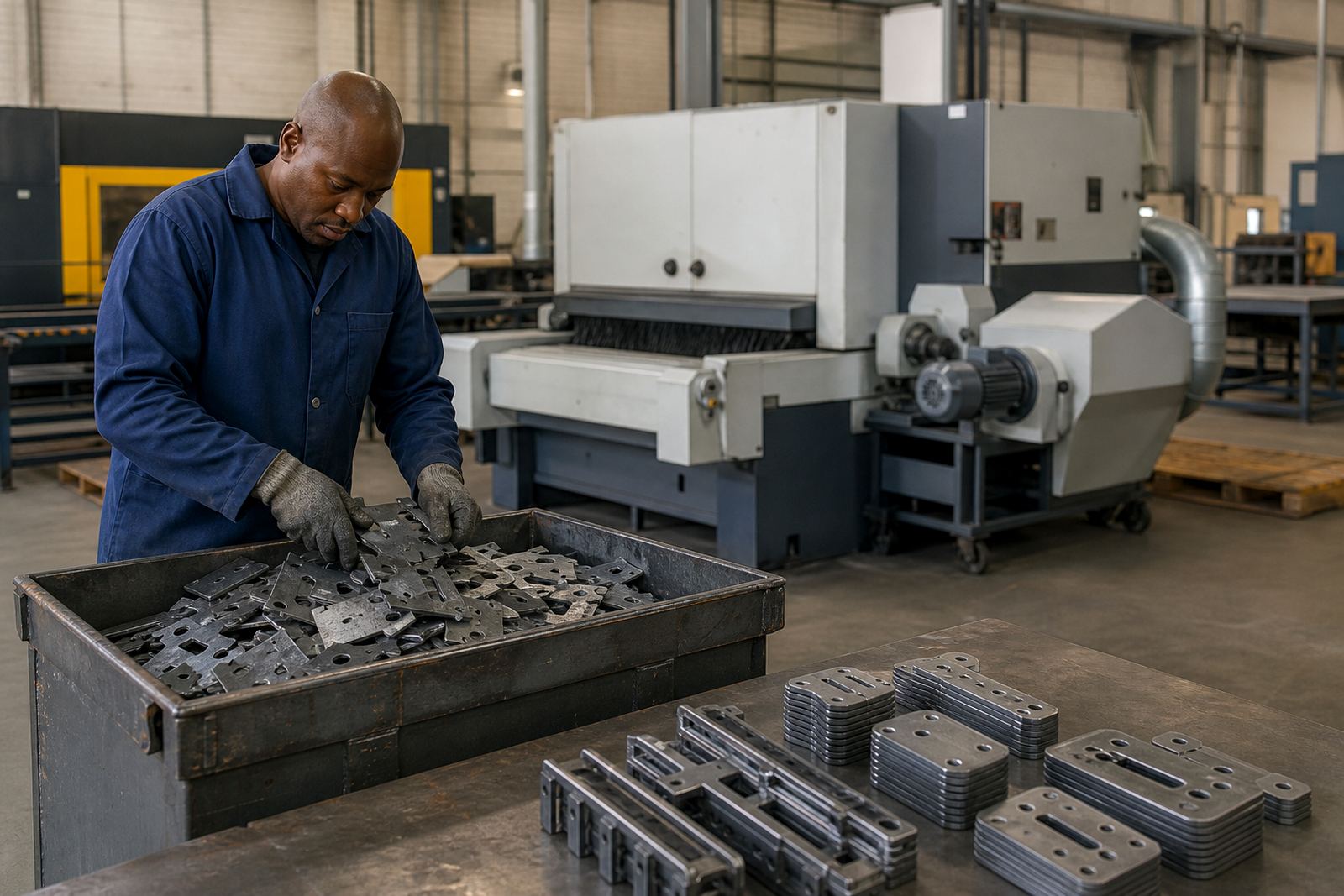
A common case in the East Rand is a fabricator cutting thicker plate for mining support equipment and service structures. The parts are heavy, edges are sharp and the customer wants quick turn-around because the job is feeding a larger assembly line. Before the finishing step was improved, operators spent time grinding each edge by hand and still had variation from one part to the next. That created delays in welding and extra checks before dispatch.
By setting up a more controlled deburring process, the workshop reduced rework and made the parts more consistent from batch to batch. The welding team received cleaner edges, the coating team had fewer touch-ups, and production planning became easier because the finishing time was predictable. For a business that serves Johannesburg, Pretoria, Durban, Cape Town and Rustenburg, that kind of consistency is often worth more than a quick fix.
Thick plate does not need guesswork. It needs a repeatable method, the right machine and a team that understands how the part will be used after it leaves the laser bed.
Keep thick sheet work moving with the right process
For heavier laser-cut parts, the best results come from matching the finishing process to the real job on the floor. That means checking thickness, burr height, part size and the next operation before choosing how to finish the edge. It also means keeping machines maintained, abrasives replaced on time and operators trained to spot parts that need more than a standard pass.
Fabricators that handle thick sheet every day cannot afford stop-start finishing. They need a system that supports production, handles the rough edges properly and keeps the team moving. When that happens, the workshop spends less time correcting faults and more time getting finished parts out the door on schedule.