Why edge-finishing matters before powder coating
Laser cutting gives speed and accuracy, but it can leave a hard edge, small dross marks or fine burrs that do not suit a powder coated finish. If those edges are left as-is, powder can thin out on sharp corners, bridge unevenly, or leave rough spots that become visible after curing. On some parts, the issue is not only appearance. A sharp burr can also make handling unsafe for the next stage on the floor.
For fabricators in Wadeville, Germiston and the wider East Rand, this matters because powder coating shops are often working to tight delivery windows and repeat work. When cut parts arrive with a more even edge, the coating line spends less time on rework and more time on production.
- Cleaner edges help powder spread more evenly on corners and cut-outs
- Reduced burrs mean less hand finishing before coating
- Better edge condition lowers the chance of visible defects after curing
- Parts are easier and safer to handle between cutting, finishing and coating
What powder coaters usually notice on untreated laser-cut parts
Most coating problems start small. A faint burr on a bracket edge can catch powder during application, then show up as a rough line after curing. On flat panels, sharp edges may look fine before coating but appear thin or patchy once the powder flows and sets. In coastal areas like Durban and Cape Town, any extra handling or delays also increase the chance of surface contamination, especially when parts are moved between sites in humid weather.
We often see the same complaints from coaters and fabricators: inconsistent film build on edges, touch-up work after curing, and parts that need another pass through prep before they can go into the oven. A better deburring process reduces those issues at the source.
- Patchy coverage on corners and profiles
- Visible drag marks from manual handling
- Extra cleaning needed before pretreatment
- Higher reject rates on batches with many small parts
How a proper deburring process improves coating consistency
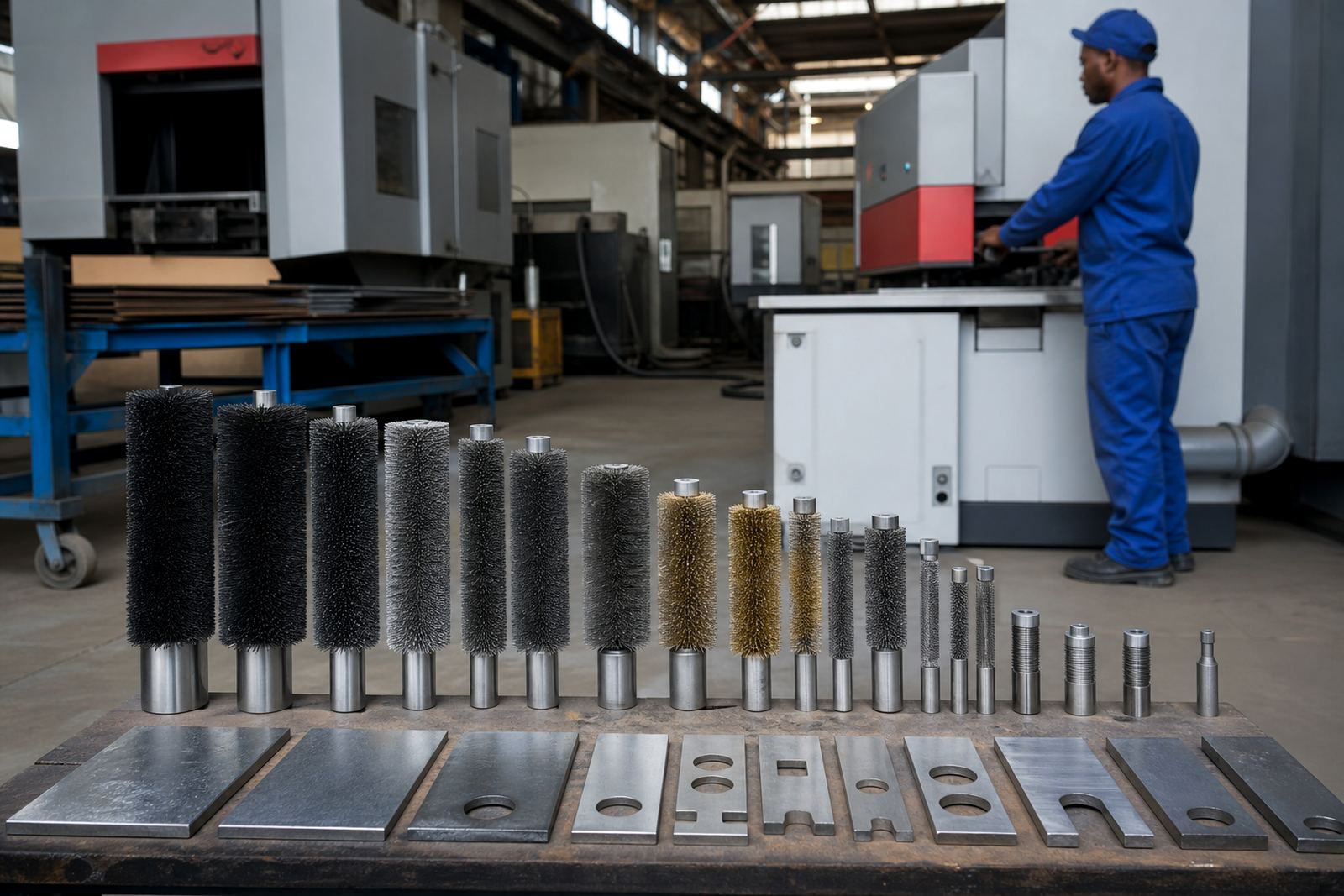
The aim is not to remove material for the sake of it. The goal is controlled edge-finishing so the part stays within drawing tolerances while the sharpness and loose residue are removed. A well set up machine can process laser-cut sheet metal consistently, which is important when a shop is doing repeat runs for gates, brackets, enclosures, shelving or support frames.
When the edge is more uniform, powder coating becomes more predictable. The coating has fewer places to pull thin, and pretreatment chemicals can work on a cleaner surface. That helps in plants where the same part might be coated today, then again in two weeks after a new batch is cut. Consistency is what saves time, not just a nicer finish.
- More even edge radius for better powder flow
- Less loose slag and fine dust before pretreatment
- Improved repeatability across batches
- Less manual sanding or flap work before coating
Where local fabricators feel the difference most
In Johannesburg and Pretoria, many shops run mixed batches for commercial fit-outs, mining support parts and general fabrication. Those jobs often have different thicknesses in the same load, which makes edge condition even more important. A part that coats well in 1.6 mm mild steel may show problems immediately if the corners are rough, while thicker parts can hold burrs that survive basic cleaning.
In Rustenburg, where production often has to keep moving under load-shedding and tighter turnaround times, every unnecessary manual step becomes a delay. A deburring machine can take one process out of the hand-finishing queue, which helps keep the spray line fed and reduces bottlenecks. It also means less dependence on workers doing the same edge work with handheld tools all day, which is tiring and inconsistent.
For Cape Town and Durban sites, humidity can make storage and handling more sensitive. If a batch sits too long after cutting, edge residue and surface grime can become harder to manage. Faster, cleaner prep gives the coating team a better starting point.
Choosing the right machine for coated parts
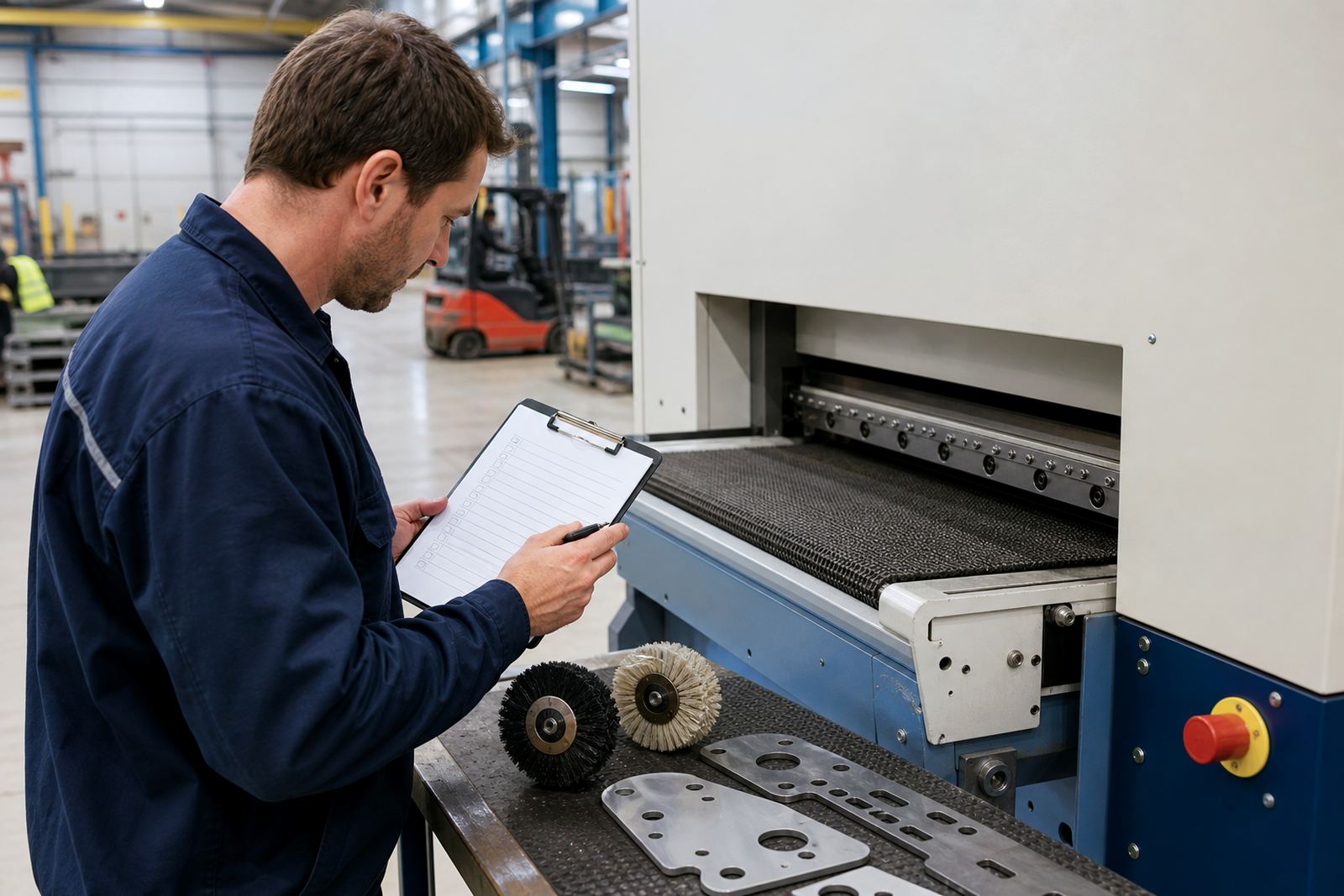
Not every edge-finishing machine is set up for the same result. Powder coating work usually needs controlled burr removal, predictable edge softening and a finish that does not leave heavy scratches or uneven marks that can show through paint. The right setup depends on the metal type, thickness range, daily volume and how the parts are handled after cutting.
We work with manufacturers and fabricators who want a practical system for laser-cut sheet metal, not extra complexity on the floor. The machine should fit the production flow, from cutting to cleaning to coating, and it should be simple to maintain when the workshop is busy.
- Sheet thickness range and part size
- Daily batch volume and changeover frequency
- Expected finish level before powder coating
- Space available in the workshop
- Power supply and operating conditions
A sample workflow for cleaner coating results
A good workflow is usually straightforward. Cut the sheet, remove sharp edges and burrs, clear the part of loose particles, then send it on for the next prep stage. If a shop skips the edge-finishing step, operators often end up fixing problems later, usually when the coating has already been applied and the defect is harder to hide.
A typical sequence for a local fabricator might look like this:
- Laser cut parts in the cutting bay
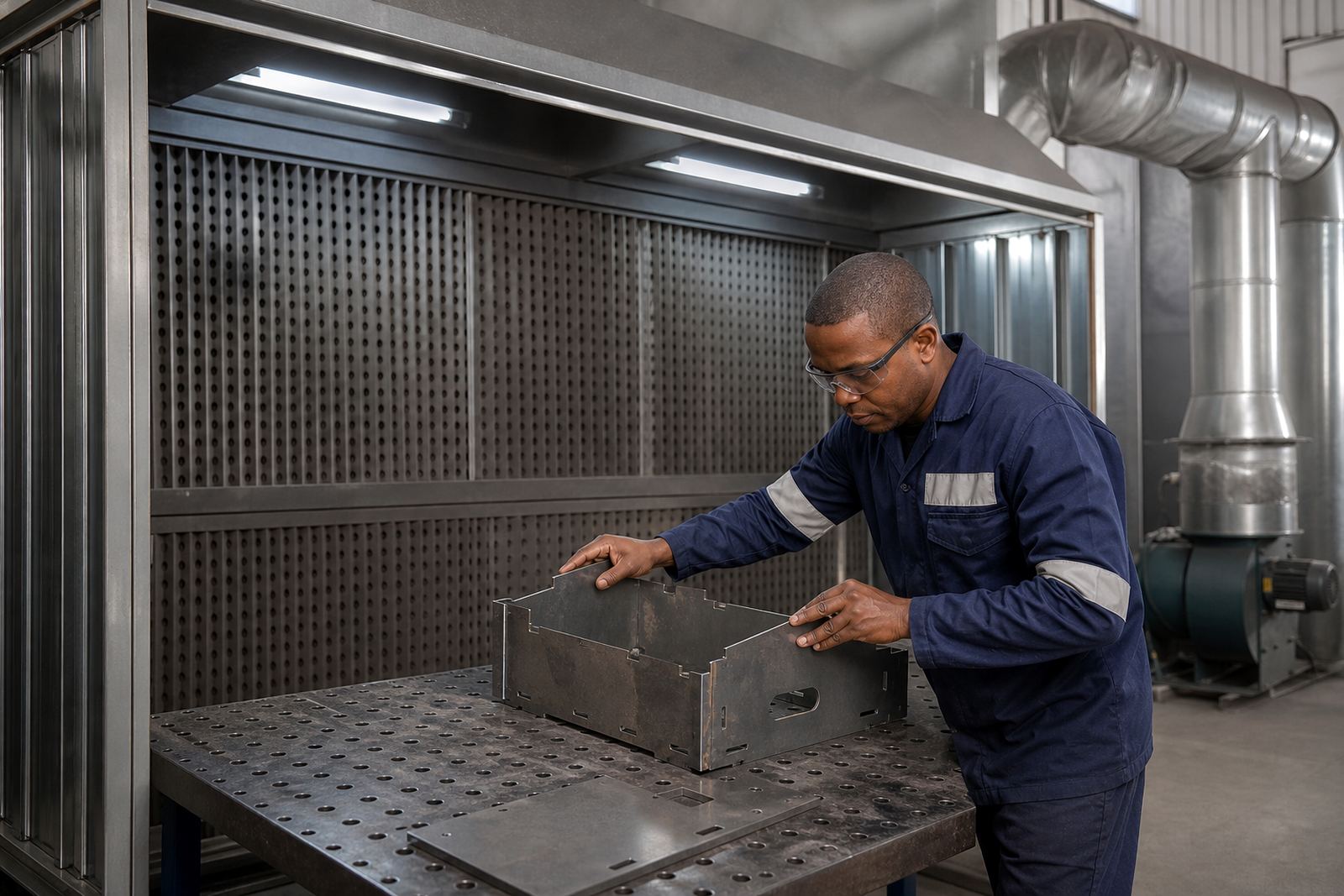
- Deburr and edge-finish before stacking
- Blow off or clean the parts as required
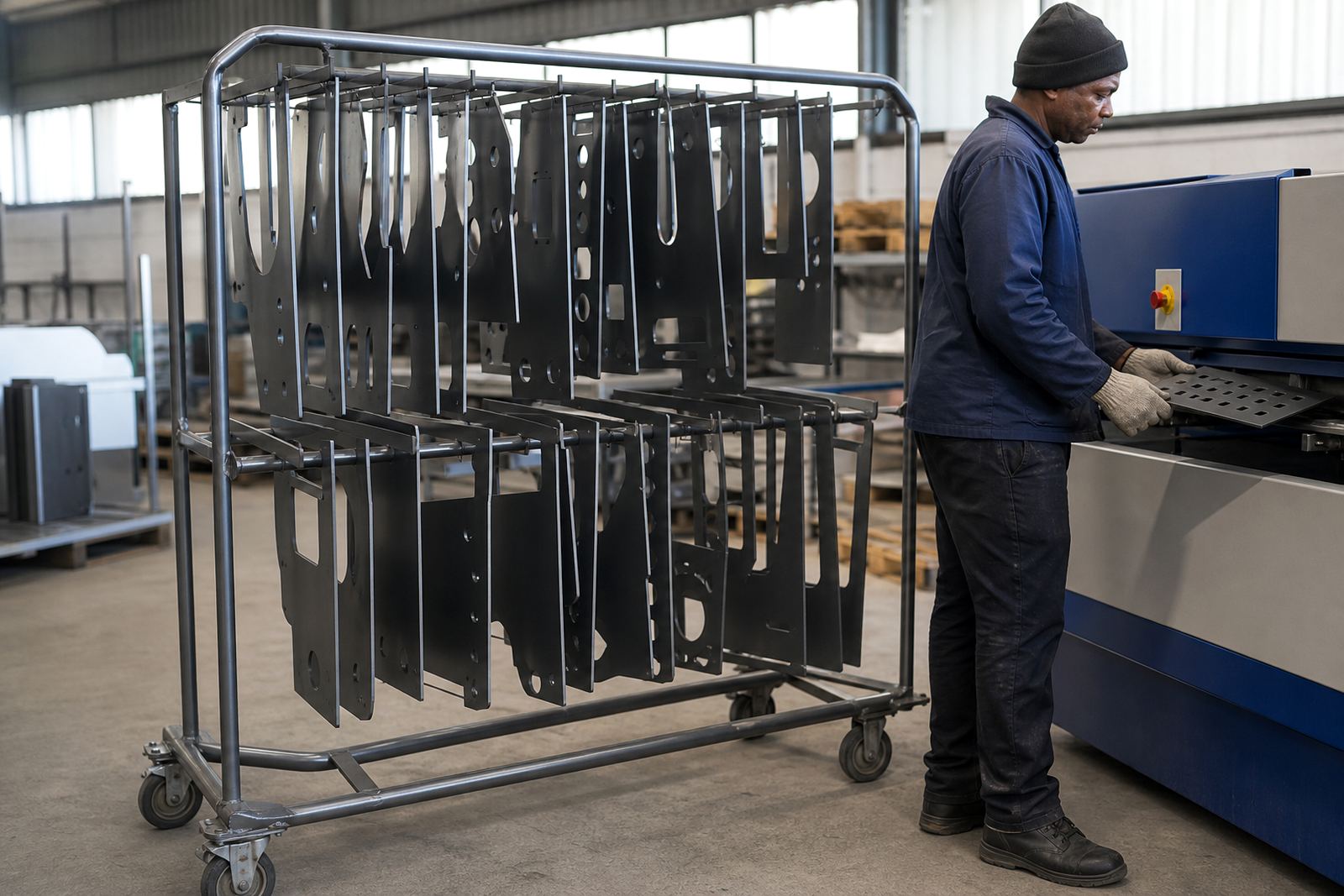
- Move to pretreatment and powder application
- Inspect the finished batch for edge coverage and uniformity
That process does not just help with appearance. It also helps protect margins, because fewer parts come back for touch-up, stripping or rework.
Support for production teams across South Africa
From our base in Wadeville, Germiston, we support fabricators in Johannesburg, Pretoria, Durban, Cape Town and Rustenburg with machine installation, operator training, preventive maintenance and breakdown repairs. We also assist with sample part testing, process optimisation, machine audits, abrasive replacement, spares supply and annual service contracts. If a shop is relocating equipment or trying to improve output before a bigger coating order, the first step is often to look closely at the cut edge.
Our team includes Pieter Johannes van der Merwe, Thandiwe Mokoena, Sibusiso Dlamini, Ayesha Patel, Johan Kruger and Lerato Nkosi, with support available through Wadeville, Germiston, Johannesburg, Pretoria, Durban, Cape Town, Rustenburg and the East Rand. Clients reach us through the enquiry form on our contact page when they need help matching machine setup to the type of work they send for powder coating.
For many shops, the fix is simple: cleaner edges before coating means fewer complaints after coating.