Why edge quality changes the welding job
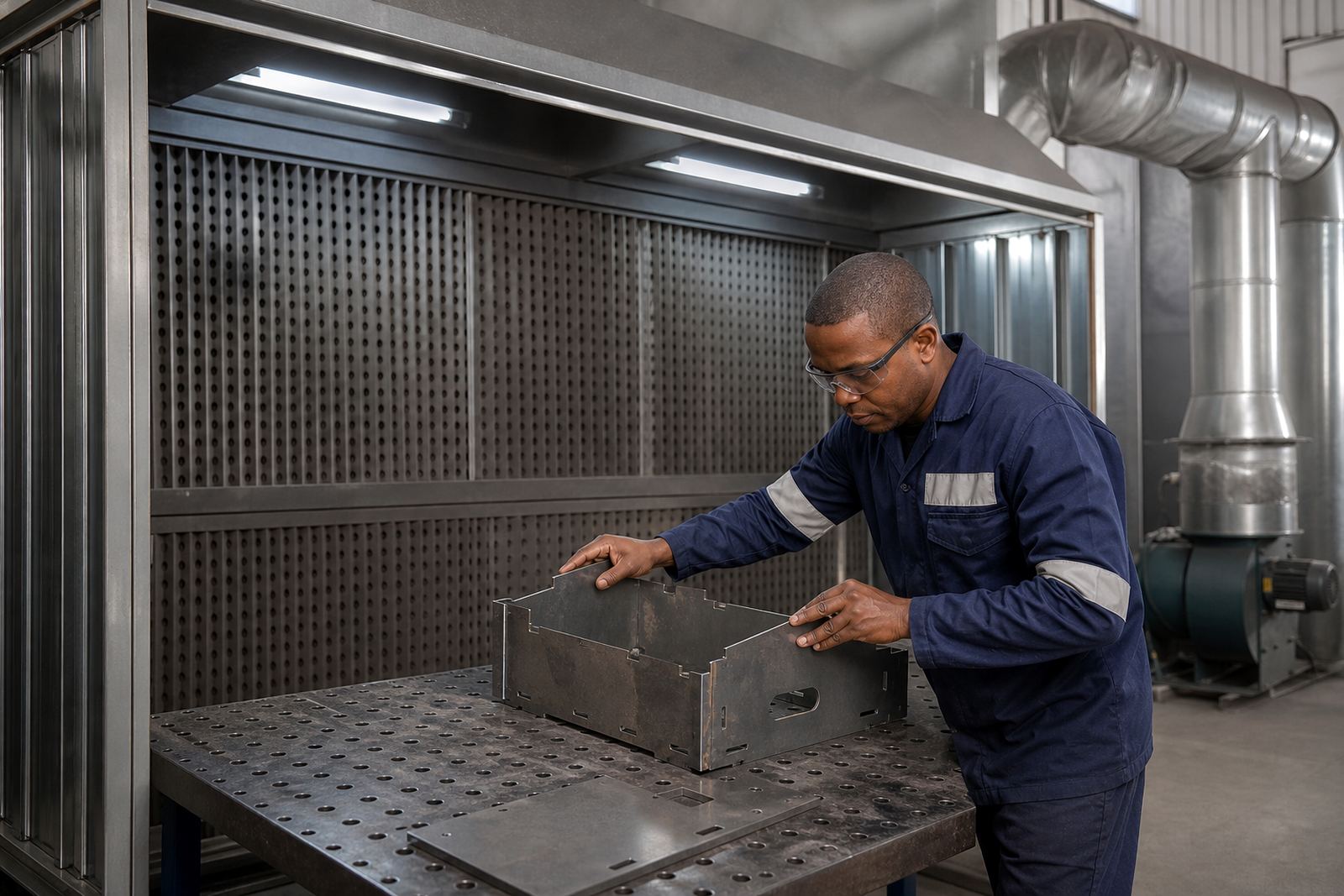
After laser cutting, even a small burr can stop two parts from sitting properly. That means clamps work harder, gaps change along the joint, and the welder spends time forcing material into line instead of welding. On thin sheet metal this is even more noticeable because a sharp edge can lift the part or create a false fit.
Deburring removes those raised edges and leaves a more consistent line for assembly. The result is not only a cleaner finish, but also less time spent grinding, filing, or reworking parts before the first tack is placed. For manufacturers running repeat jobs, that time saving adds up quickly across a full shift.
Where deburring helps most before welding
Some jobs can tolerate a rough edge. Welding work usually cant, especially when parts need to register accurately, sit flush on jigs, or line up across a long seam. A deburred edge helps the fitter see the true part size and reduces the chance of chasing alignment problems later.
- Sheet metal frames that need tight corner fit-up
- Enclosures with visible welds or cosmetic seams
- Parts that must sit flat in a jig or fixture
- Stainless or mild steel components where surface marks are visible after welding
- Small batch jobs where every minute of prep affects cost
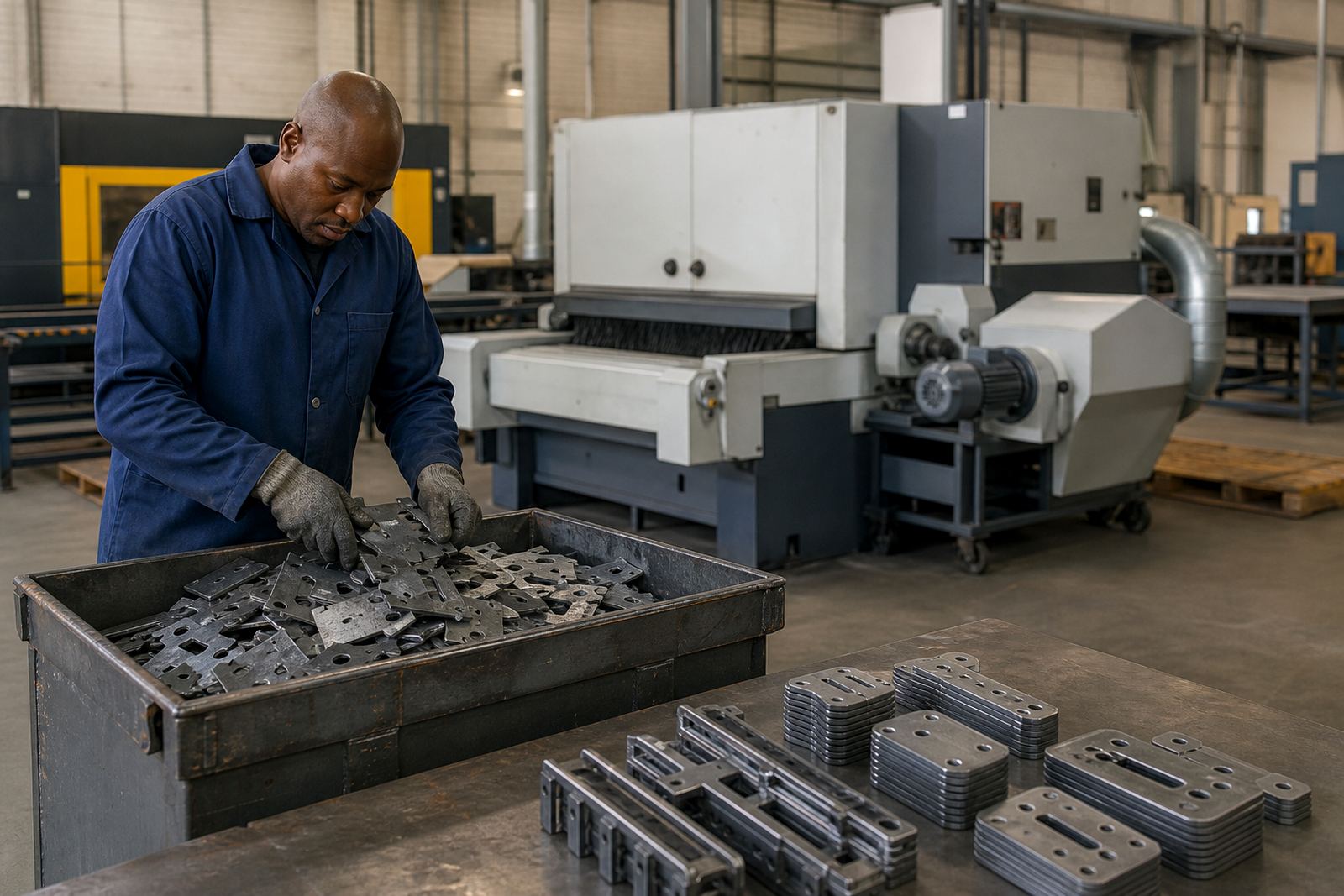
In many workshops, welders spend too long cleaning up the same issues: burrs from cutouts, tiny slag points, and sharp internal edges. Removing those defects before welding keeps the process steady and reduces repeat handling.
Better fit-up means steadier welds
A good weld starts with the joint, not the torch. If the edges are square, smooth and repeatable, the gap stays more consistent from part to part. That helps with penetration, bead shape, and heat control, especially on lighter material where distortion can become a problem.
For production teams, cleaner fit-up also makes scheduling easier. Operators can prepare parts in a more predictable way, and supervisors can trust that a batch will assemble the same way each time. That matters on projects with multiple sets of parts, where one uneven edge can slow down the whole line.
In Wadeville and across the East Rand, many fabricators are working on mixed jobs in the same day. One batch may be mild steel brackets, the next a set of housings or covers. If the laser-cut parts are deburred first, welders dont need to stop and adjust every piece by hand.
What a practical pre-weld process looks like
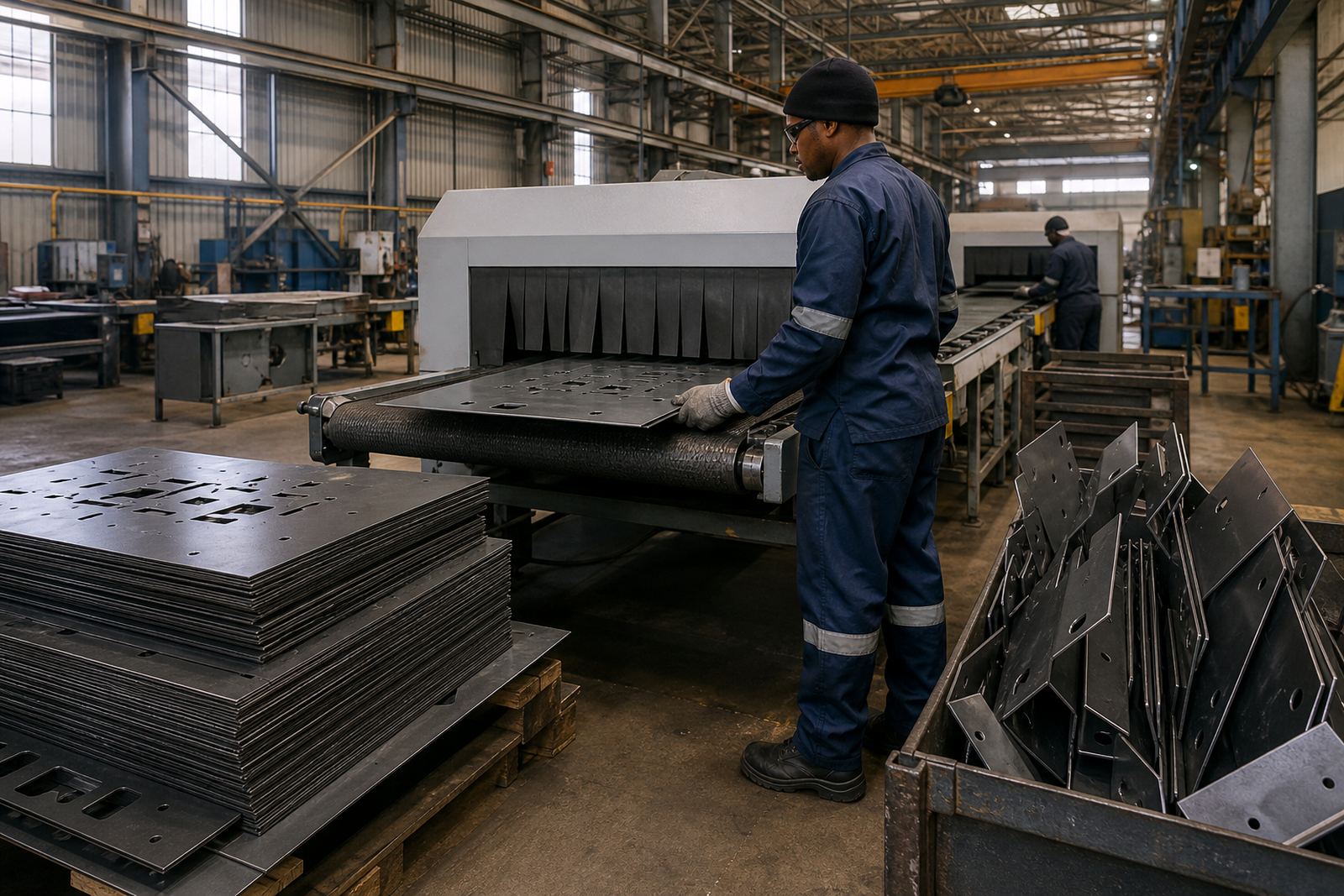
Deburring does not need to be complicated. The point is to remove the sharp edge and leave a surface that is safe to handle and ready for the next step. In a busy shop, the best process is one that fits into the flow between cutting and assembly without creating extra bottlenecks.
- Collect laser-cut parts before they move to the welding bay
- Remove burrs from outer edges and internal cut-outs
- Check corners, slots and holes where weld fit-up may be affected
- Separate cosmetic parts from heavy fabrication parts
- Send cleaned parts to jigging, tacking and final welding
This kind of flow works well for fabricators that handle short runs and repeat orders. It keeps the welders focused on joining parts, not cleaning them. It also helps reduce hand injuries from sharp edges, which is a simple but important workshop benefit.
Why South African shops benefit from cleaner edges
Local fabrication plants have to manage labour, power interruptions, delivery timing and tight customer deadlines. Any process that cuts wasted time is worth attention. Cleaner edges help by reducing grind time, reducing rework, and keeping parts moving through the shop even when the team is under pressure.
In coastal cities like Durban and Cape Town, moisture can also affect stored parts and the way surface marks show up before welding. A tidy, deburred part is easier to inspect and handle, and it gives the team a better base to work from if parts are queued before assembly. In hotter inland workshops, where metal can move quickly from cutting to welding, having consistent edges helps the crew keep pace.
For municipal or commercial work, where dimensions and appearance both matter, this consistency supports a neater final result. It is especially useful on visible fabrication, plant equipment, and steelwork that has to pass inspection before handover.
When deburring becomes part of production planning
Deburring is not just a finishing step, it can be built into production planning. Shops that plan for it often find that welding teams are less congested and that part flow is easier to manage. That can matter on larger jobs in Johannesburg, Pretoria, Rustenburg and beyond, where a single workshop may be handling several orders at once.
When the cutting team, the finishing team and the welders all work to the same standard, the job travels more smoothly. Sample part testing can confirm the right edge finish for a specific product, while process optimisation helps decide whether parts need a light pass or a more thorough finish before welding. On some jobs, that small decision saves a full round of rework later.
For fabricators in South Africa, cleaner edges are one of those quiet improvements that show up everywhere: easier alignment, fewer sparks during prep, better tack control and less time spent with grinders in hand.
Deburring supports the welding team by making the joint easier to build from the start. That is simple, practical and worth doing on any shop floor that values time and consistency.