Why deburring becomes the bottleneck at scale
At low volume, a manual tidy-up can feel manageable. Once a plant is cutting several nests a shift, the same hand finishing starts to hold back assembly, powder coating and dispatch. Burrs, sharp edges and heat-affected slag can also trigger complaints from fitters and end users, so the issue is not only speed but consistency.
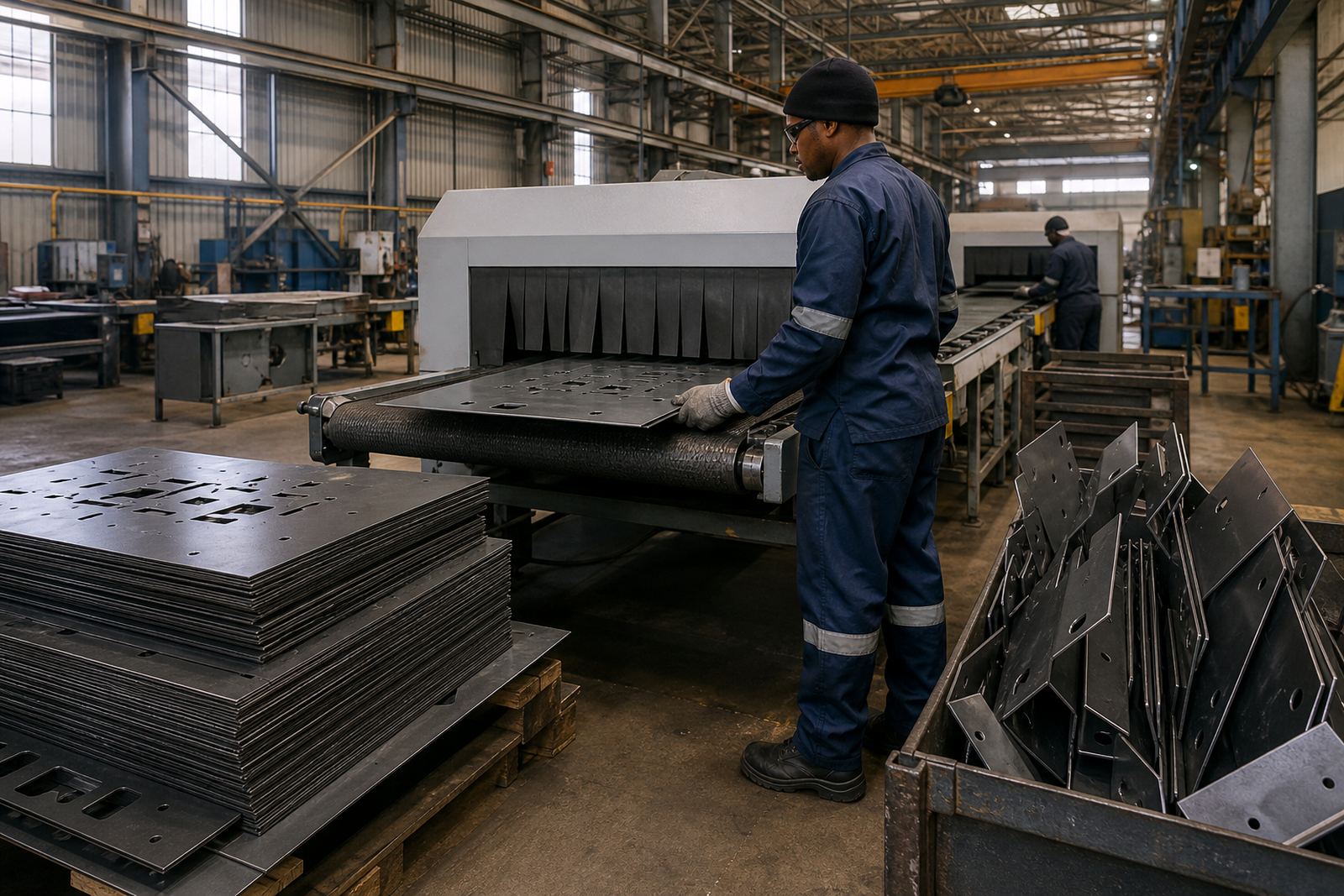
For South African fabricators working long runs of brackets, panels and enclosures, the risk is uneven throughput. One slow batch can push overtime into the evening and add strain when load-shedding cuts across the day. A dedicated deburring line gives the laser department a proper downstream path instead of sending sheet metal to random workstations where the work gets done differently every time.
Build a separate finishing lane for repeat parts
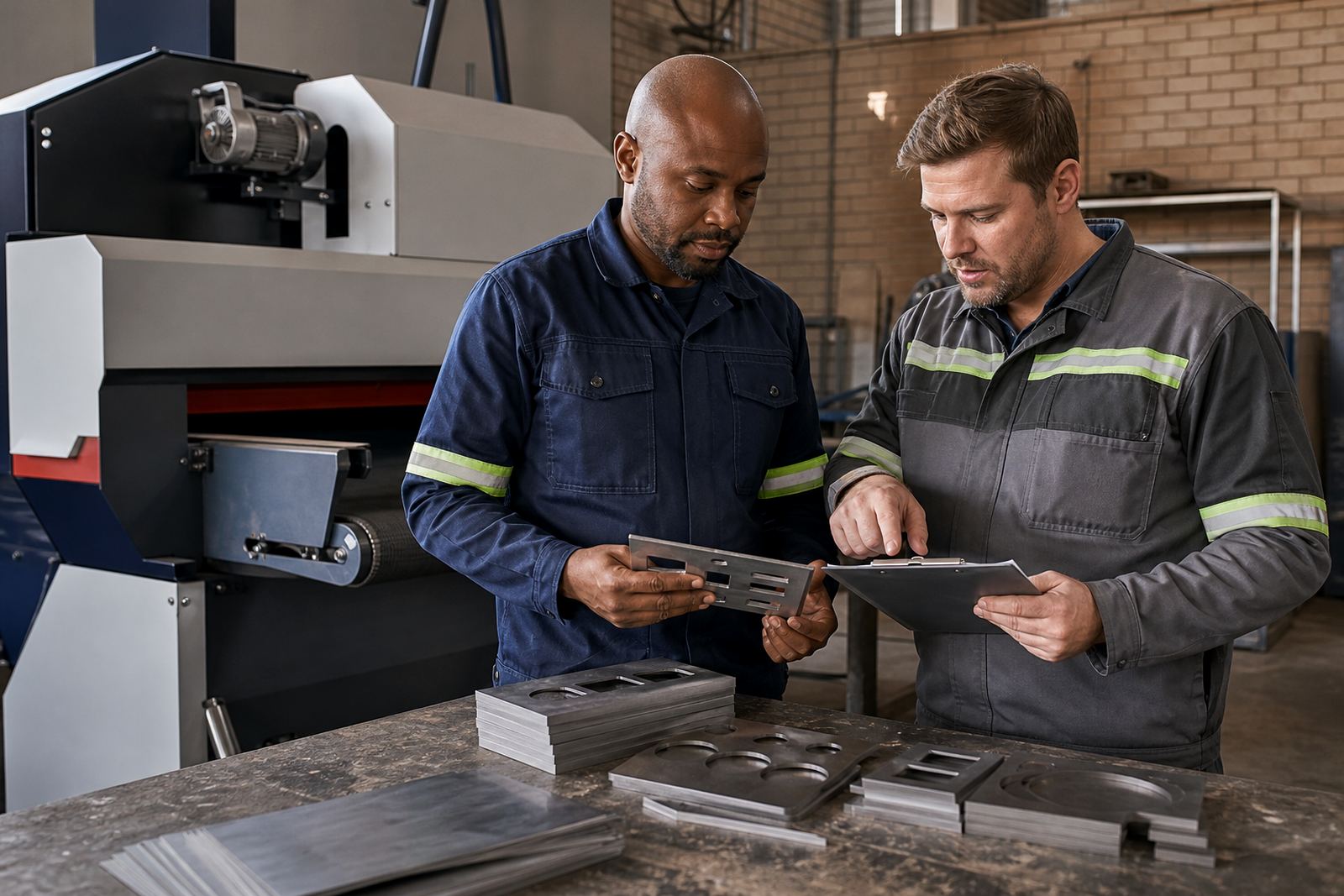
The cleanest high-volume strategy is to treat deburring as its own process, not an afterthought. That means separating incoming laser-cut parts by thickness, material type and finish requirement before they reach the machine. Stainless, mild steel and aluminium often behave differently, and mixing them up causes delays and avoidable tool wear.
A practical lane will usually include a staging rack, a simple check sheet, and one clear operator flow from cut parts to finished parts. In a busy Germiston or Wadeville workshop, that small discipline can save a lot of walking and waiting.
- Sort parts by thickness range before processing
- Keep sharp-edged reject bins away from finished stock
- Use part labels that survive oil, dust and handling
- Set one agreed finish standard for repeat work
Match machine capacity to the laser output
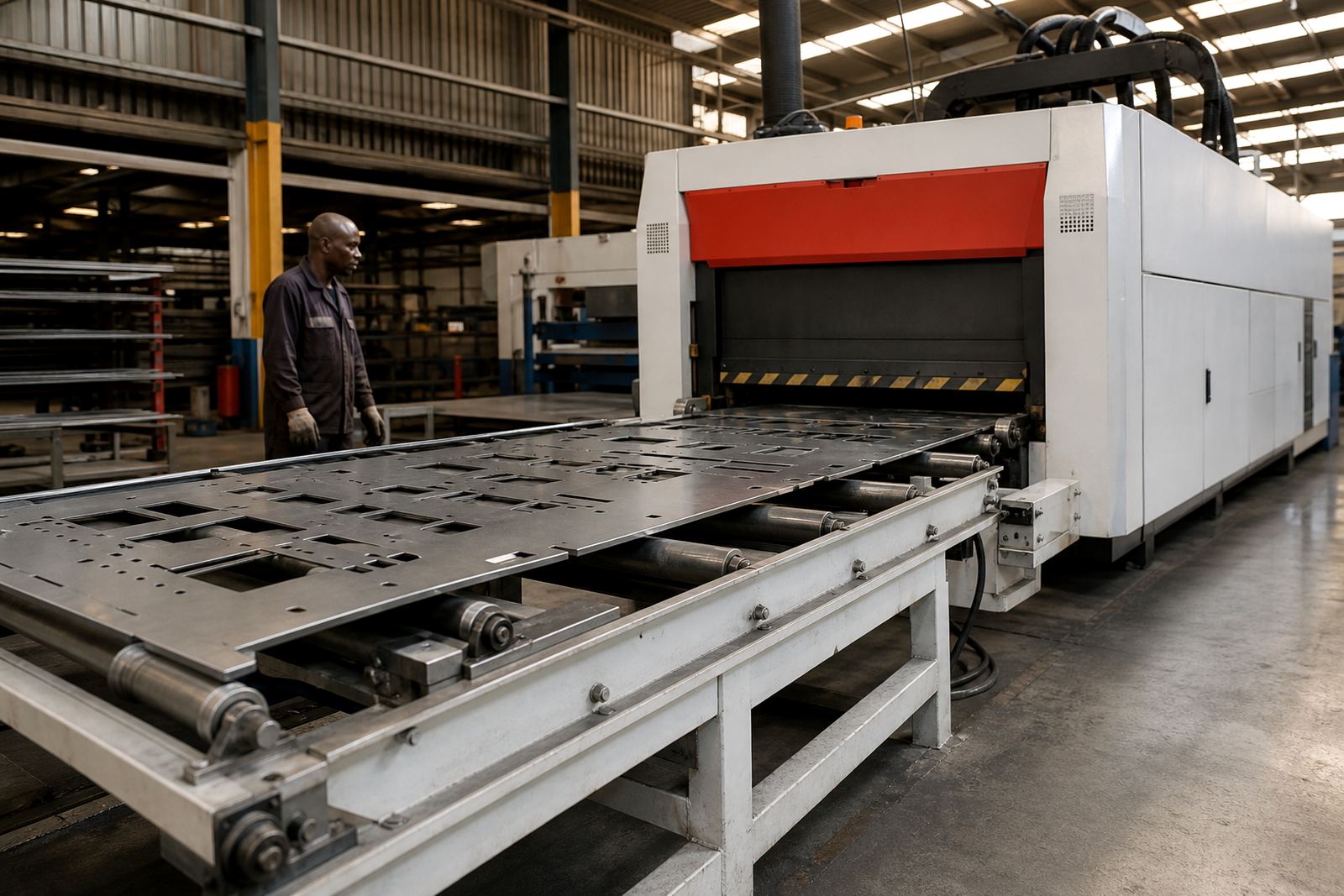
A common mistake is buying finishing capacity for the average week, not the busiest one. If the laser can cut more sheets than the deburring team can clear, work starts backing up by midday. The answer is not always a bigger machine, but the right machine for the part mix and the target daily metres of edge to be finished.
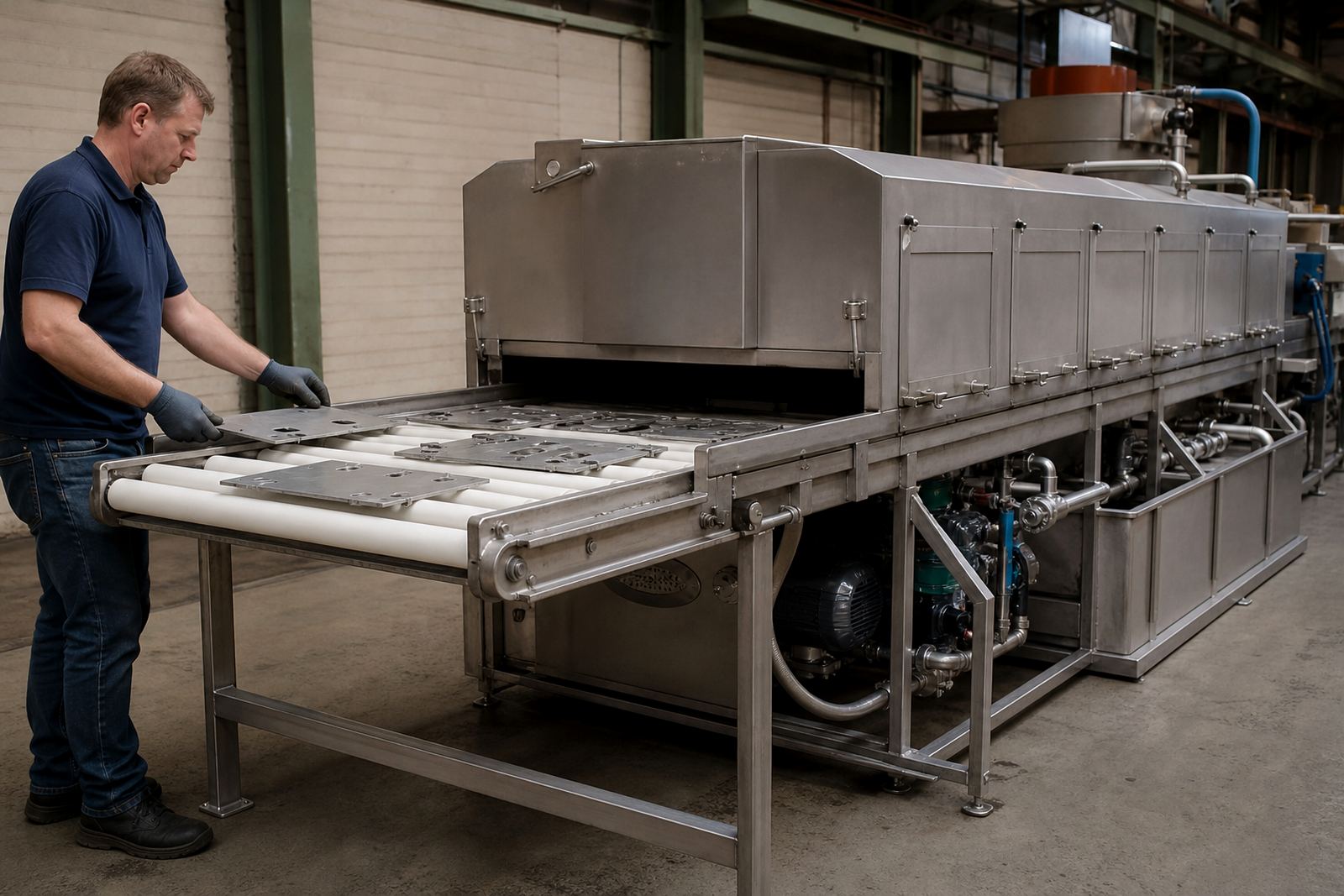
When choosing a deburring machine, look at the width of the working opening, feed speed, brush or abrasive options, and how often you need to change settings between jobs. If you run many short batches, quicker setup matters. If you run long production orders, stable feed and reliable repeatability matter more. The best fit is the one that keeps the line moving without asking for constant intervention.
- Measure your average and peak daily sheet count
- Check the widest and longest parts you process
- Confirm whether you need one-sided or two-sided finishing
- Plan for future growth, not only current demand
Keep quality stable across shifts
Large operations lose money when one shift finishes parts cleanly and the next leaves inconsistent edges. That is why operator training must be part of the production plan, not a once-off event. The person loading and checking parts needs to know what acceptable edge quality looks like on each job and when to stop the machine for a setting adjustment.
Preventive maintenance also matters. Dust extraction, abrasive condition, feed rollers and guards all need regular attention, especially in dusty inland towns and humid coastal conditions where contamination can build up quickly. A machine that is ignored for two weeks can start giving mixed results, and then the sorting table becomes the real bottleneck. Simple daily checks are worth far more than emergency fixes after a breakdown.
Use process data to cut rework and waste
Higher volume gives you enough repetition to spot patterns. If the same part keeps coming back with edge marks, the cause may be a laser setting, a worn abrasive, or an inconsistent nesting method. Machine audits and sample part testing help identify these faults early, before they turn into scrap piles or customer returns.
Production planning helps too. If the finishing cell always receives every job at once, the operator ends up chasing deadlines instead of working to a smooth rhythm. A better approach is to release work in controlled batches and track the common problem parts. That allows the team to adjust speeds, consumable changeouts and break times with a bit more control and less stress.
- Record repeat defects by job number and material type
- Track changeover time between part families
- Review abrasive life against actual output, not guesses
- Use test pieces before starting new production runs
A local example from Wadeville to the coast
A Wadeville fabricator supplying enclosures and mounting plates to clients in Johannesburg and Durban recently had the same complaint every week: the laser was ahead of the finishing team. Parts were piling up, dispatch was slipping, and the night shift was doing too much hand work. After reviewing the mix, the company moved high-run parts into a dedicated deburring lane, then introduced clearer job cards and weekly maintenance checks.
The result was not magic, just steadier flow. Operators spent less time sorting mixed batches, the edge finish became more consistent, and urgent jobs no longer knocked the whole schedule off balance. For larger South African operations, that sort of change can make the difference between chasing output and actually controlling it.
When support, spares and servicing should be planned in advance
High volume work leaves little room for waiting on parts or guessing at machine condition. Annual service contracts, spares supply and preventive maintenance should be set up before the pressure starts, not after a breakdown stops a shift. If your site has multiple lines or a fast-growing order book, it helps to have relocation support and production planning help ready as well.
For plants in Johannesburg, Pretoria, Durban, Cape Town and Rustenburg, the practical goal is the same: keep deburring capacity available when the laser cutting is running hard. A planned support routine protects delivery dates, keeps operators focused, and reduces the kind of stop-start production that drags down every department.
- Schedule service before peak order periods
- Keep critical spares on hand for wear items
- Review machine placement if material travel is too long
- Use operator feedback to guide future upgrades