Why hand finishing still gets used on the shop floor
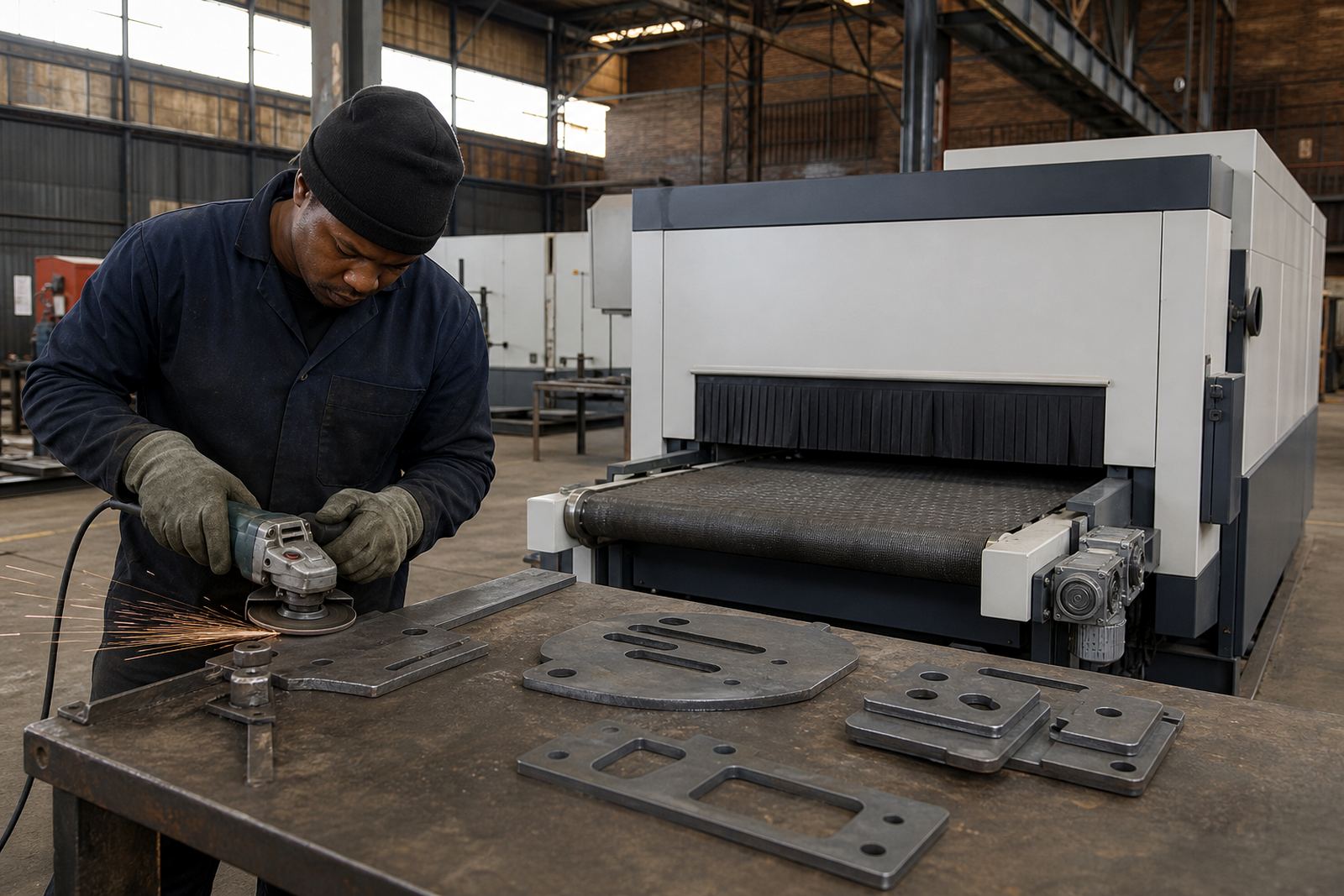
In many South African workshops, manual deburring is the first method people learn and the one they fall back on when a job is small or urgent. A file, grinder, flap wheel or handheld abrasive tool can remove sharp edges and tidy up a few parts quickly enough, especially when the batch is short and the material is forgiving.
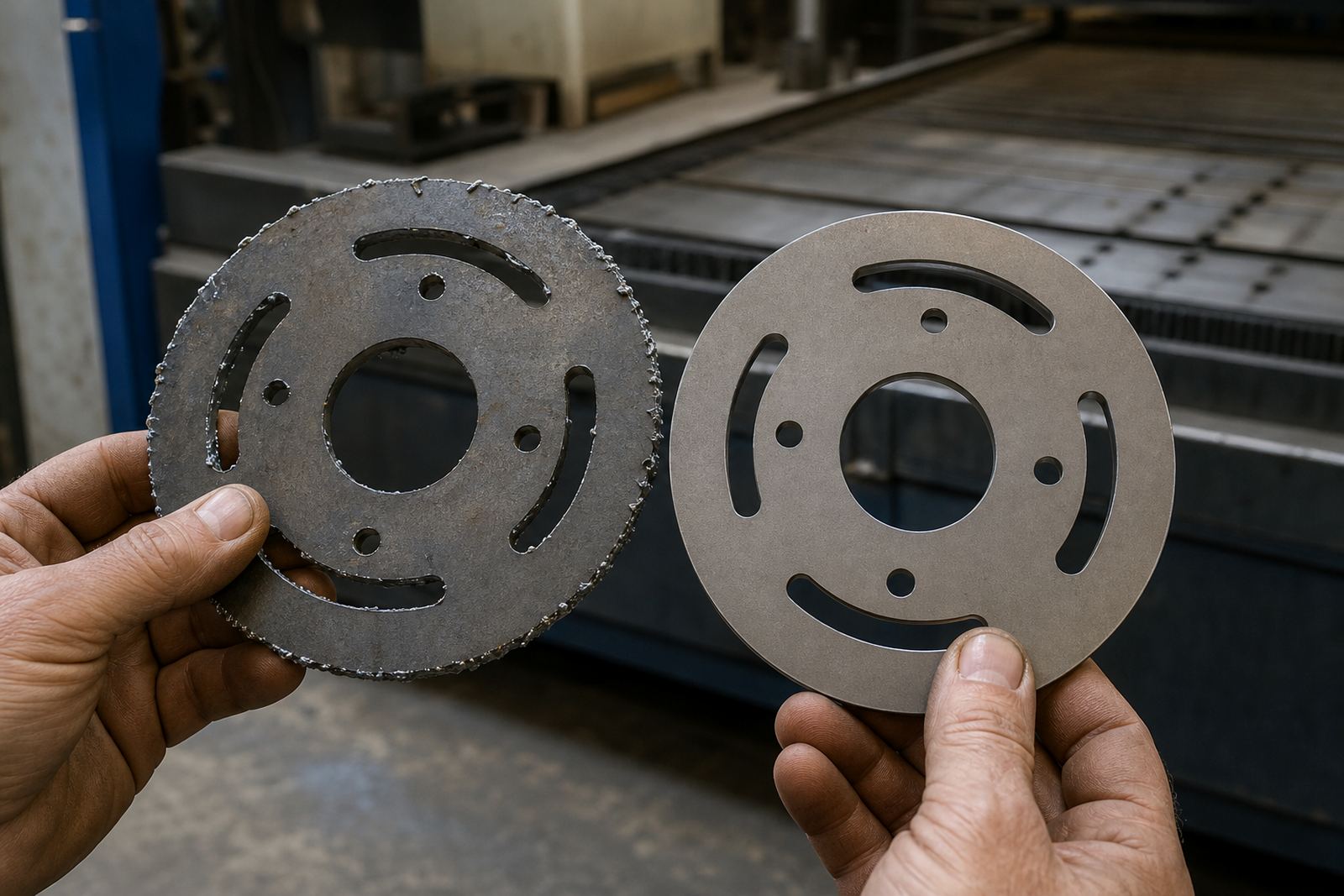
The problem starts when that same approach is stretched across hundreds or thousands of laser-cut parts. One operator may break the edge neatly while the next leaves a slightly harsher finish. On thinner sheet, overworking the edge can mark the part or create extra heat at the cut line. That means more scrap, more rework and a finish that depends too much on who happened to be on shift.
Manual finishing also uses more judgement than many managers think. The operator has to decide how much pressure to apply, how long to spend on each part and when the edge is good enough. That is manageable for repair work or special pieces, but it becomes costly when production must stay predictable.
Where machine deburring changes the numbers
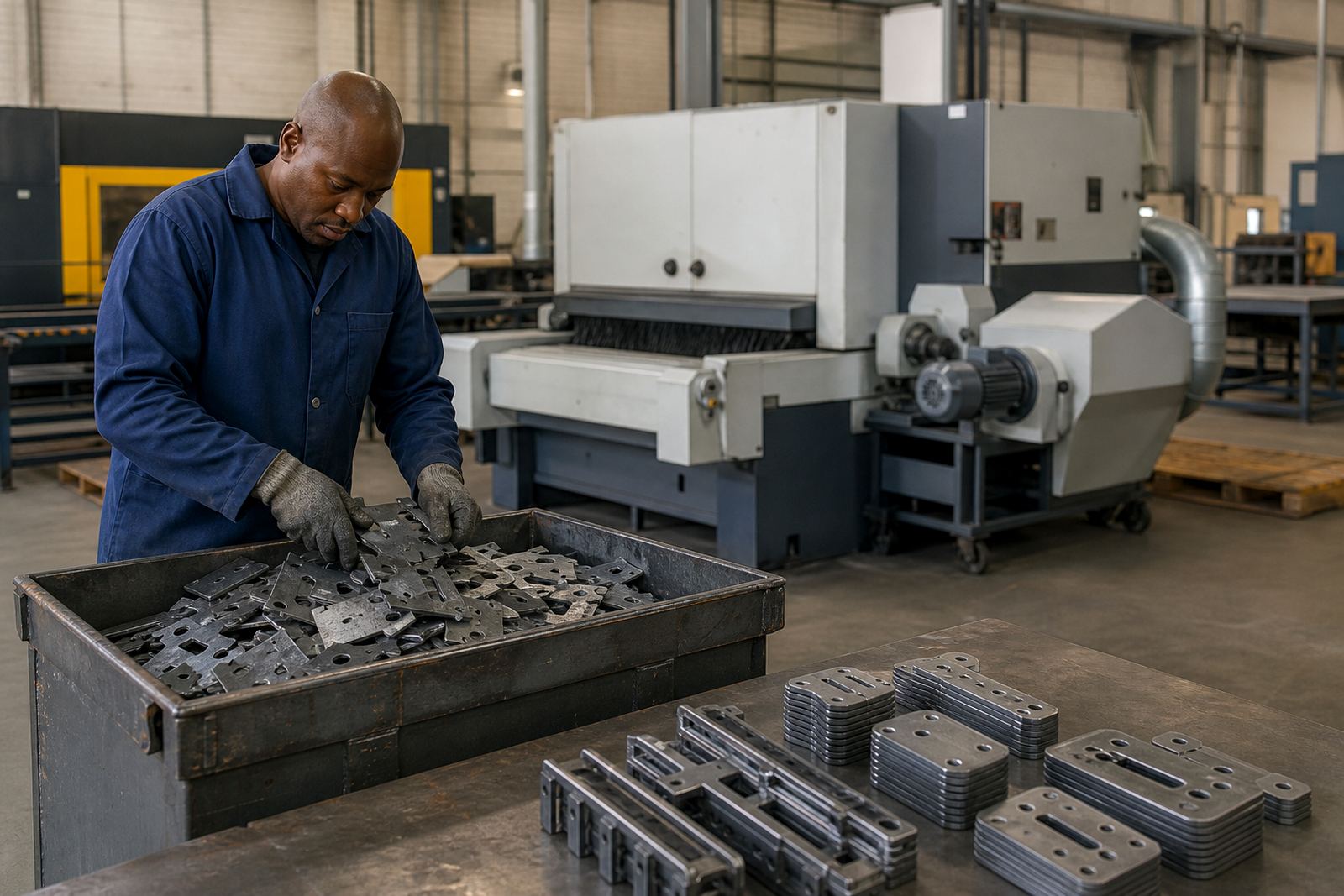
Machine deburring is built to do one job repeatedly and at the same quality. For laser-cut sheet metal, that matters. Instead of relying on hand pressure, the machine moves the part through a controlled finishing process that can remove burrs, soften sharp edges and improve the surface finish at a steady rate.
For fabricators, the main benefit is consistency. A batch of parts cut this morning should look like the batch cut last week, and the one going out tomorrow. That kind of repeatability helps with quality checks, assembly and paint prep. It also reduces the chance of a sharp edge becoming a safety issue for staff handling the work later in the line.
Machine finishing is not only about neat edges, its about keeping production moving. Once the setup is correct, the operator can process parts faster and with less physical strain. In a busy Gauteng workshop, that can be the difference between clearing a daily queue and carrying work into the next shift.
- More even edge quality across every part in the batch
- Less dependence on operator skill for the final finish
- Better flow into welding, bending, coating or assembly
- Reduced rework and fewer rejected parts
The cost comparison no one should ignore
Hand finishing can look cheaper because the machine is already there in the shop and the consumables seem simple. But labour is the real cost. If a worker spends 30 seconds extra on each part and a job runs into the hundreds, the numbers climb quickly. Add repeat handling, tired operators and the occasional mistake, and the saving starts to disappear.
Machine deburring has a different cost profile. There is an upfront spend on the equipment and ongoing costs for abrasives, maintenance and training. Yet the output per hour is usually far better, and the finish is easier to predict. For a fabricator handling regular laser-cut work, the machine often pays for itself by cutting labour input and reducing bottlenecks.
There is also the hidden cost of inconsistency. If a customer receives parts with mixed edge quality, the workshop may need to sort, rework or remake them. That hits margins hard. In many cases, the best comparison is not machine cost versus hand cost, but machine cost versus the full cost of delays, complaints and lost time.
For smaller shops, the right answer may be a mix of both methods. Manual finishing can handle one-off jobs, while the machine takes the repeat production work. That balance often gives the best return without overcommitting capital too early.
Speed matters when orders stack up
Speed is not only about how fast a machine can move a part through the system. It is also about setup time, labour flow and how much attention the job needs once it starts. Manual finishing asks for constant operator involvement. Machine deburring frees staff to move to other tasks while the parts are being processed.
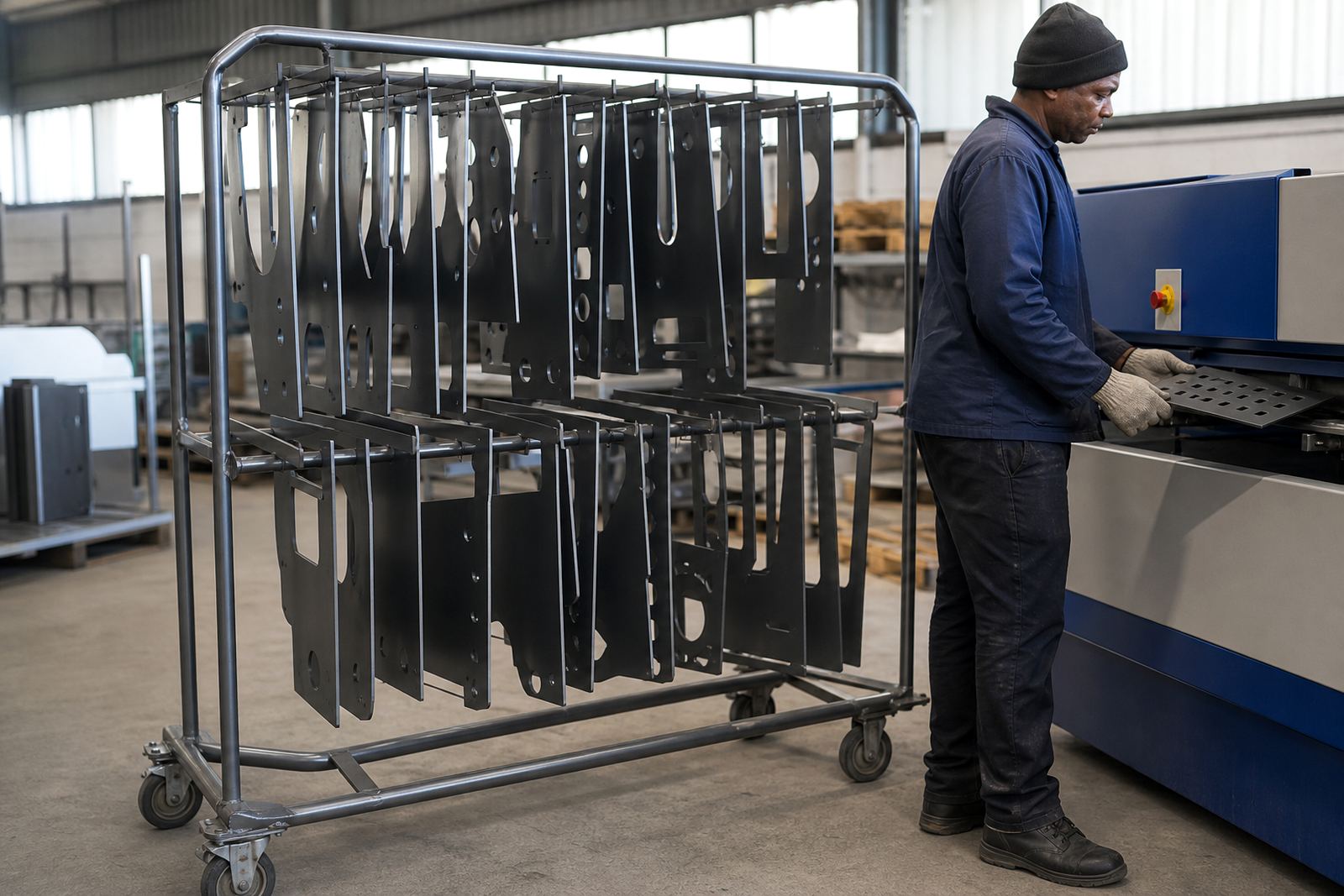
This matters in workshops that run flat out during the week and still need to catch up after load-shedding or a power interruption. When the work stack builds up, a faster and more repeatable finishing stage can keep the rest of the production line moving. Welders, fitters and packers do not have to wait for the edge finishing section to clear the pile.
A machine also helps when deadlines are tight and the customer wants the same standard on every part. That is common in batch production for gate components, machine guards, cabinet parts and general sheet metal fabrication.
- Shorter turnaround on repeat jobs
- Less congestion around the finishing area
- Better planning for shifts and overtime
- More predictable delivery dates for customers
A local example from a busy Gauteng workshop
Take a fabricator in Wadeville or nearby Germiston handling laser-cut mild steel parts for commercial equipment. The shop receives a mix of small repair orders and larger repeat batches for local clients in Johannesburg and Pretoria. On busy weeks, the team needs parts ready for bending, welding and coating without extra handling.
If that workshop relies on hand finishing alone, the edge quality can vary from shift to shift and the finish time will depend on who is available. In a machine-based process, the finishing step becomes easier to plan. Parts come through in a more uniform condition, which makes the rest of the job easier to control. It also helps when the workshop is dealing with coastal humidity on parts moving to Durban or with transport delays that can throw off production schedules.
In practical terms, the difference shows up in the final day of the job. A batch that was cleaned up manually may still need sorting before packing. A batch that has gone through proper machine deburring is more likely to be ready for direct handover, which is what most production managers want.
That is why many fabricators now treat machine deburring as part of the main process, not an extra step after the real work is done.
How to decide which method fits your shop
The right choice depends on the volume of work, the material thickness, the finish expected by the customer and how tight your delivery windows are. If you only run a few parts a week and the edges are not critical, manual finishing may still do the job. If you are processing laser-cut sheet metal daily, machine deburring is usually the better call.
Before you decide, look at the full production picture. Ask how many operators are spending time on edge finishing, how often parts need to be touched again and whether customers are asking for cleaner edges or safer handling. If the answers point to repeat work, the case for machine finishing becomes stronger very quickly.
It also helps to test real samples. A sample part test can show how your own material behaves and what finish level is realistic. That gives a clearer answer than guessing based on one job or one machine quote.
- Choose manual finishing for low volume, irregular or urgent one-off work
- Choose machine deburring for regular production and repeatable quality
- Test sample parts before committing to a process change
- Factor in labour, rework, safety and delivery pressure, not only equipment price
The practical takeaway for South African fabricators
Manual finishing will always have a place, but it works best as a support method, not the main production method, once volumes rise. Machine deburring gives South African fabricators a steadier finish, faster turnaround and fewer surprises when the order book is full.
For shops in Johannesburg, Pretoria, Durban, Cape Town and Rustenburg, the real question is not whether hand work can remove a burr. It is whether hand work can do it consistently enough, and fast enough, to protect margin. In most busy fabrication environments, the answer is no.
If your workshop wants cleaner edges, less rework and a more predictable output flow, moving from manual finishing to machine deburring is usually a sensible step. It is practical, measurable and easier on the team over time.