Why Rework Often Starts After Laser Cutting
Laser cutting gives good accuracy, but it does not remove the need for a controlled finishing stage. Burrs on the underside, oxide on cut edges, and small dross build-up can interfere with bending, welding, powder coating, fitting and assembly. If the edge condition changes from batch to batch, the rest of the job starts to drift too.
In many workshops the first sign of trouble is not on the cutting bed, it shows up later when parts do not nest properly, fasteners sit proud, or coating has to be stripped and redone. That is where rework grows. A steady deburring process gives every sheet the same handling point before it moves into the next operation, which keeps the job predictable.
For South African fabricators working under tight deadlines, that predictability matters. When power interruptions, shift changes, and rush orders are part of daily life, the finishing stage must be consistent enough to carry the load without constant checking.
What A Stable Finishing Stage Changes On The Shop Floor
A stable finishing stage does more than clean an edge. It creates a known process, with known output, so supervisors can plan the next step with less guesswork. Instead of sending parts back for handwork, operators can move sheets through the line with a clear standard for what is acceptable and what needs further attention.
This usually improves three areas at once: part fit, surface quality, and throughput. When burr height is controlled, assembly teams spend less time filing, grinding or reworking holes. When the edge is uniform, coating teams get better adhesion and less edge breakdown after cure. When the finish is repeatable, the workshop can quote more confidently too.
- Less time spent on manual clean-up after cutting
- More consistent edges before bending or welding
- Reduced risk of coating defects and handling damage
- Fewer rejected parts in final inspection
- Better control over labour on repeat jobs
Where Deburring Machine Consistency Pays Off
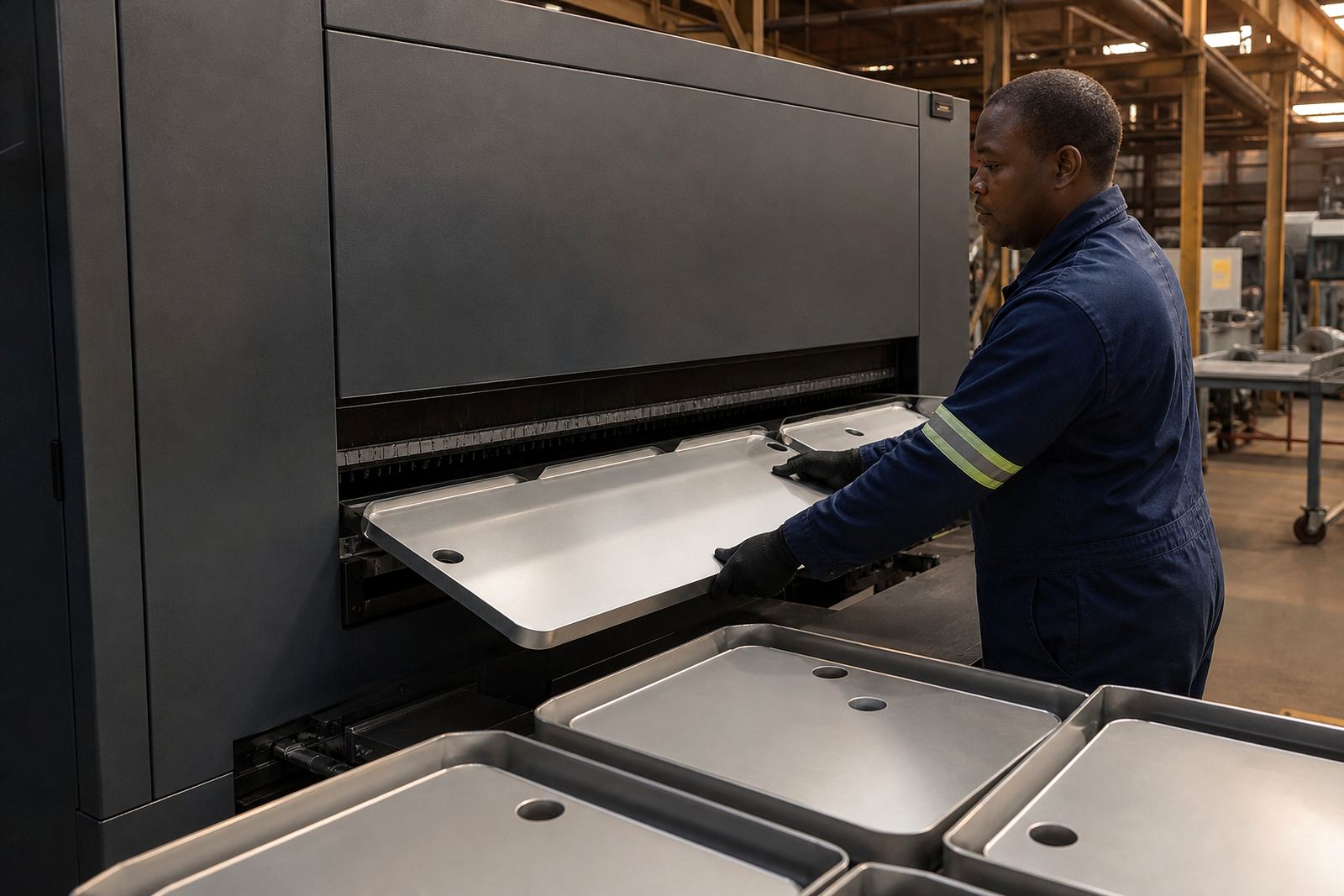
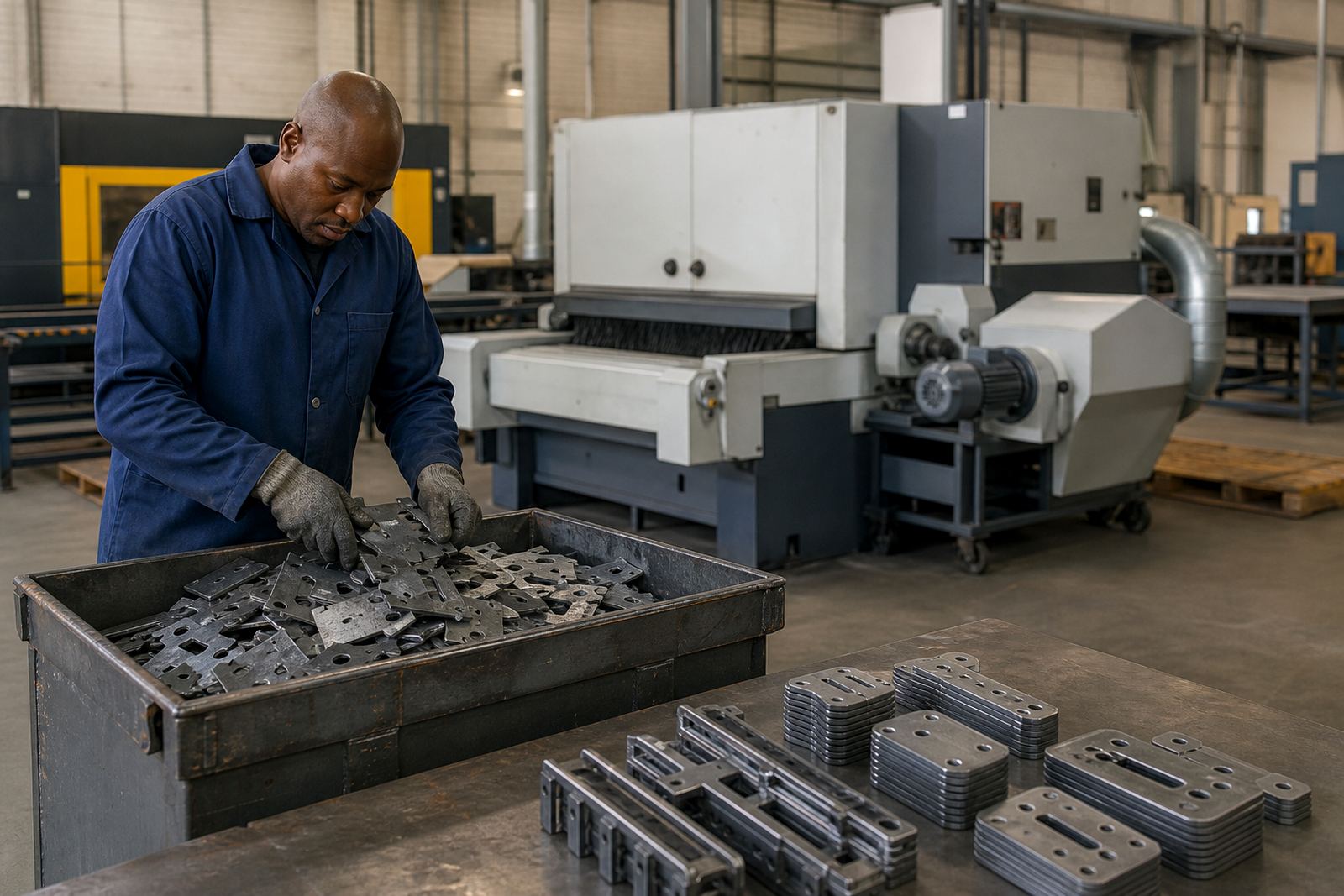
Factories often try to manage rework with extra labour, but hand-finishing has natural variation. One operator may take a light pass, another may hold the part too long or miss a corner. A machine based process is easier to standardise, especially on parts that are repeated daily. That matters when the same profile is going to multiple stations for welding, forming, or final assembly.
Consistency also helps protect margins. If a job was priced on the basis of clean laser-cut parts, then repeated touch-up work can quietly eat into profit. A machine that gives a reliable edge finish reduces those hidden costs. It also helps with quality records, because the workshop can set a clear process instead of relying on memory or the skill of one experienced finisher.
On heavier plate, or mixed batches of mild steel and stainless steel, even small changes in edge condition can create delays. The more uniform the finishing step, the easier it is to plan the shift and keep the flow steady.
A Germiston Example: Less Filing, Faster Assembly
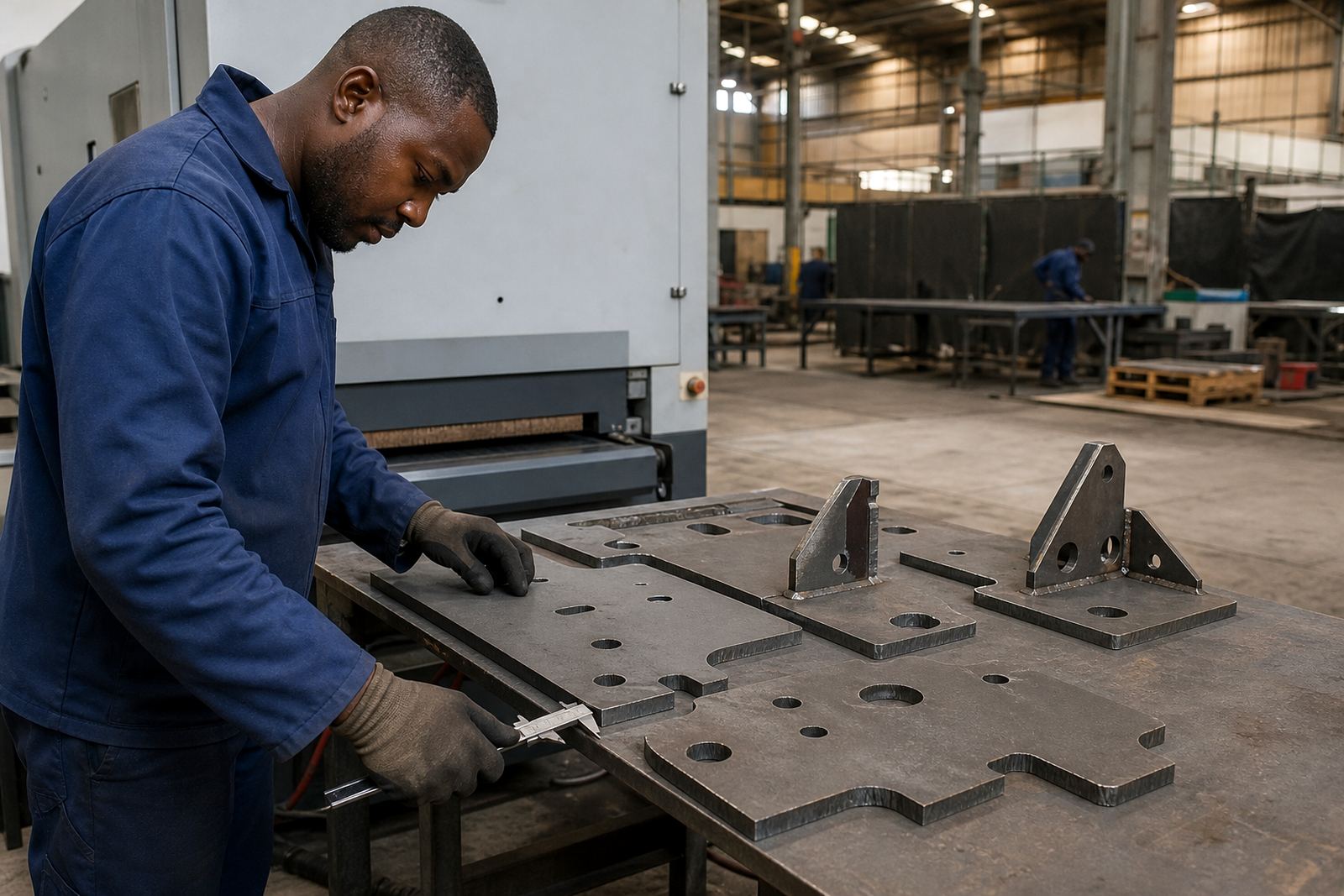
One Wadeville based fabrication team handling laser-cut brackets for industrial equipment was spending too much time on hand deburring. The parts were accurate, but the edges were inconsistent enough to slow down assembly. Welders were cleaning corners before fit-up, and the coating crew kept flagging sharp points that could damage handling gloves and powder finish. The result was extra movement between stations and too much rework on a job that should have been straightforward.
After introducing a stable deburring and edge-finishing process, the team reduced the amount of manual touch-up needed before the next operation. Parts moved through the shop with fewer stops, the assembly team had a cleaner fit-up, and the coating crew had less to reject. It was not dramatic, but it was measurable, and in a busy month that kind of improvement protects both output and morale.
The real gain was not only speed. The shop gained a repeatable standard that could be used across similar jobs, which made planning easier when urgent orders came in from Johannesburg and Pretoria.
Practical Checks That Reduce Rework Before It Starts
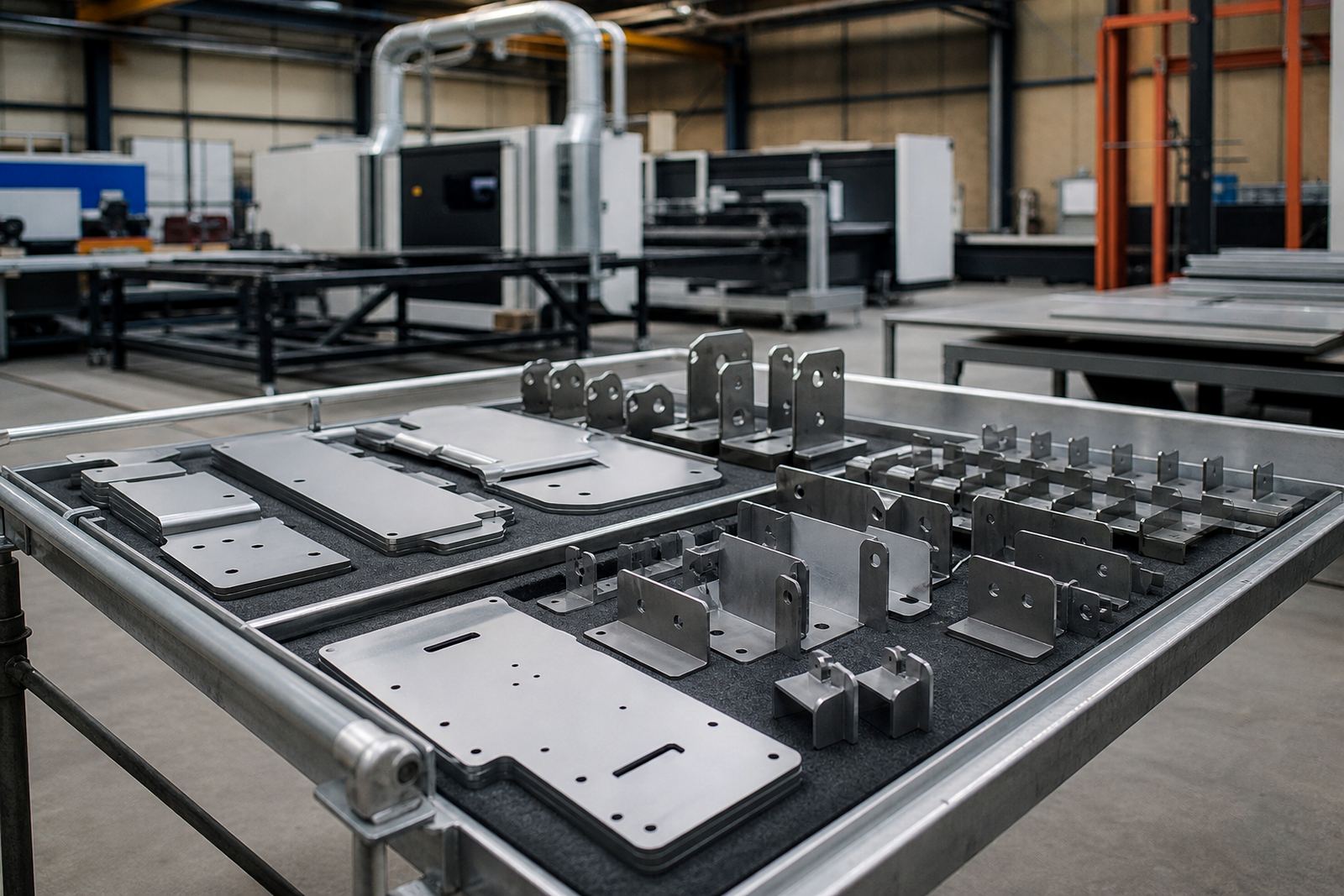
Before a sheet leaves the finishing area, it helps to check the edge condition against the actual use of the part. A bracket for coating does not need the same finish as a precision assembly part, but both need a controlled result. Shops that define the finish properly usually see less backtracking later in the process.
These checks are worth building into the routine:
- Confirm which faces must be burr-free before bending or welding
- Set a clear standard for corners, holes and cut-outs
- Match the finish level to the coating or assembly requirement
- Inspect sample parts from every batch, not only the first sheet
- Keep abrasive wear under review so the finish does not drift
When these checks sit alongside the machine process, supervisors spend less time chasing defects. That frees the team to focus on output instead of sorting problems after the fact. In a coastal environment like Durban or Cape Town, it also helps to keep finished parts cleaner and less exposed to unnecessary handling, which matters on jobs that sit in store for a few days before dispatch.
From Reactive Repairs To Planned Output
Rework is expensive because it steals time from the next job. It also creates frustration across the workshop, since the same part may be touched by cutting, finishing, assembly and coating teams more than once. A planned deburring process helps stop that cycle. Instead of reacting to defects at the end, the workshop puts a controlled step in the middle where the problem can be removed early.
For many manufacturers, this is the difference between a shop that constantly catches up and one that keeps moving. It supports better production planning, cleaner handovers, and more reliable delivery dates. When load shedding or a machine stoppage interrupts the day, a clear finishing standard also makes it easier to restart without losing quality.
That is why the finishing stage should be treated as part of production, not as an afterthought. When it runs steadily, rework falls away and the whole operation becomes easier to manage.
Support For Fabricators Across South Africa
From Wadeville, Germiston, Deburring works with fabricators across Johannesburg, Pretoria, Durban, Cape Town and Rustenburg, helping them choose deburring and edge-finishing machines suited to laser-cut sheet metal. The team supports machine installation, operator training, preventive maintenance, breakdown repairs, abrasive replacement, machine audits, sample part testing, process optimisation, spares supply, relocation support, production planning help, and annual service contracts.
That support matters because the machine is only part of the answer. The bigger result comes from matching the equipment to the parts being run, the finish required, and the pace of the workshop. With the right setup, rework drops, output becomes easier to control, and the finishing stage stops being the weak point in the line.
For teams that want less filing, fewer rejects and a cleaner handover between departments, the goal is simple: keep the finish stable so the rest of the job stays on track.