Why small batch work still needs machine finishing
Many smaller workshops think deburring machines are only worth it for high-volume production, but that is not always the case. When you are running short orders for brackets, panels, enclosures or light fabrication parts, the real cost sits in handling time, inconsistent edges and call-backs from clients who expect clean parts first time.
In Johannesburg, Pretoria and the East Rand, a small job can move through cutting quickly and then stall at manual finishing. That is where a compact edge-finishing process helps. Instead of having one operator spend hours on files and grinders, the parts can be cleaned, the burr removed, and the batch moved on with less variation between one piece and the next. For a workshop in Wadeville or Germiston, that kind of consistency matters just as much on 20 parts as it does on 2 000.
Small batch strategies work best when the finishing step is treated as part of production, not as a final cleanup job. Once that change is made, the shop can quote more accurately, plan labour better and keep delivery promises realistic, even when load-shedding or urgent orders put pressure on the schedule.
Match the machine to the size of the batch
The best machine for small batches is usually the one that is easy to start, easy to set and does not need constant adjustment between jobs. If your work changes often, from thin mild steel to stainless steel or aluminium, the machine should allow quick setup without slowing the team down. That matters for fabricators in Durban where coastal humidity can affect storage and surface finish, and for inland shops where dust and heat can build up in the workshop.
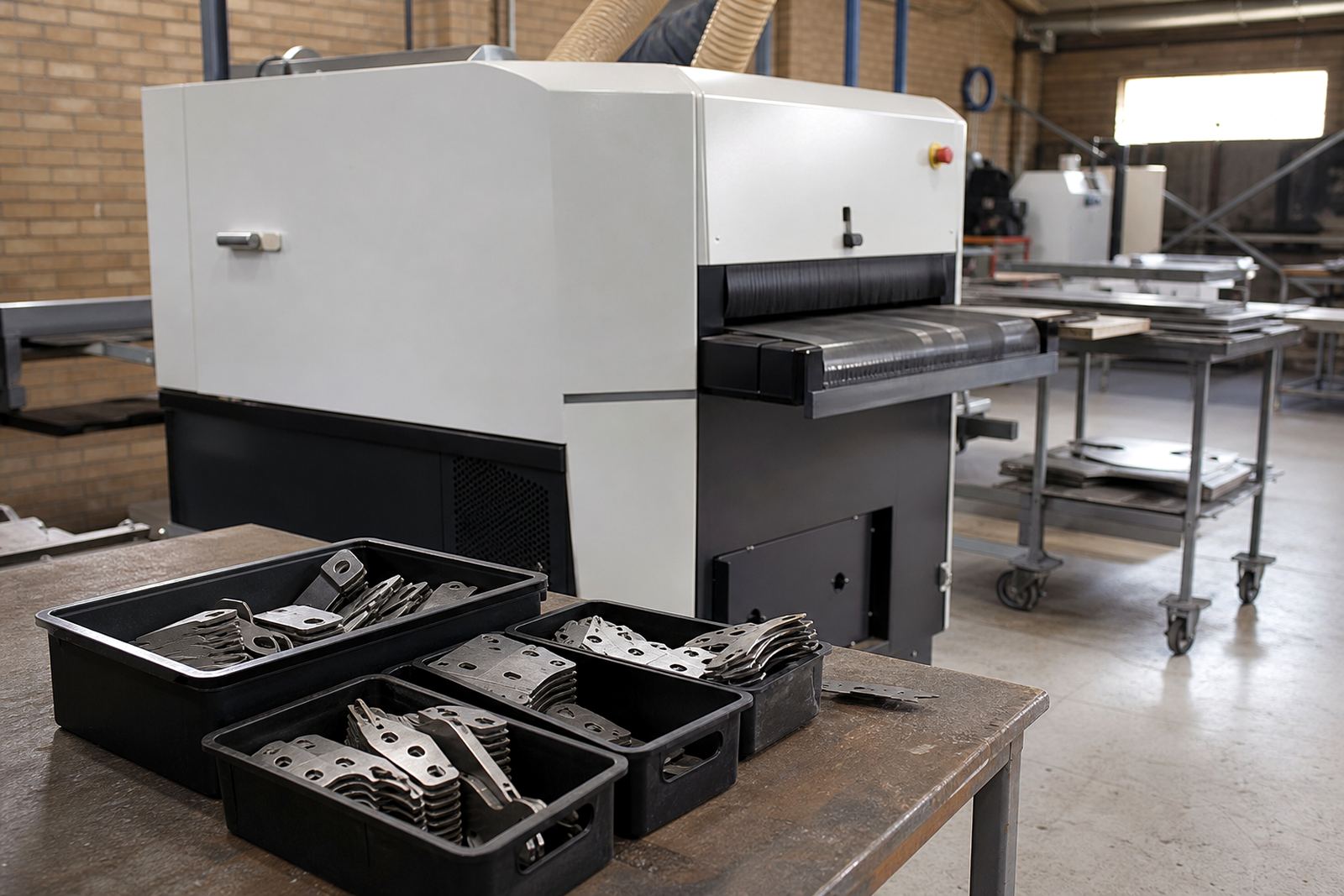
A practical approach is to look at the batch pattern instead of only the total monthly tonnage. A shop doing 10 different jobs a day may benefit more from a flexible finishing line than from a larger unit built for one long run. If the machine can handle laser-cut sheet metal cleanly, it reduces the need for manual touch-up and keeps edges more even across the full batch.
- Choose equipment that can be started and stopped quickly between jobs.
- Keep changeover steps simple so the operator does not lose time resetting settings.
- Confirm the machine handles the thickness range you cut most often.
- Use sample part testing before committing to a new production routine.
For smaller shops, the goal is not to add complexity. It is to remove the steps that slow the batch down.
Keep the workflow short from laser bed to finished part
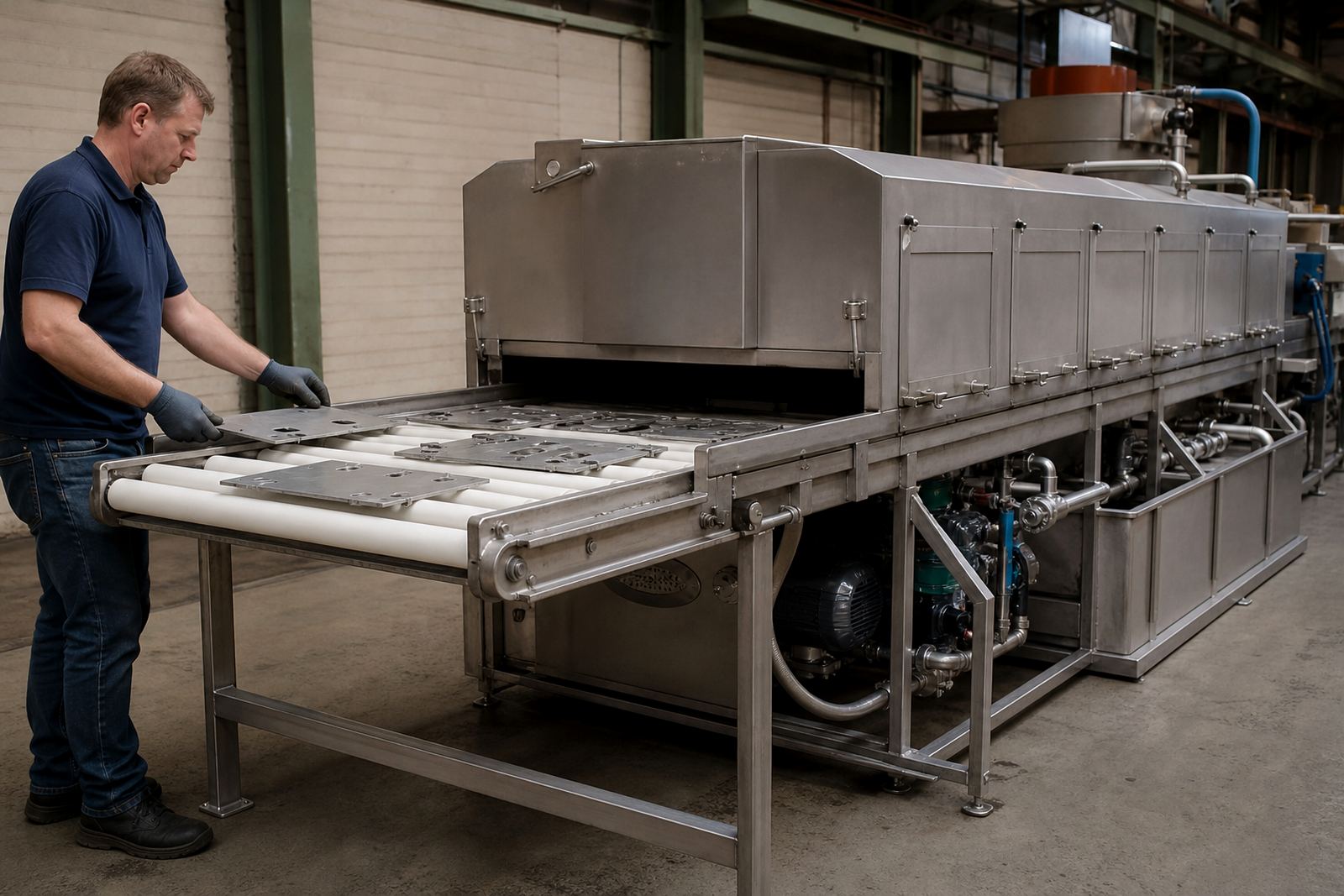
Short batches benefit from a clear material path. If cut parts are stacked near the laser, moved to a finishing station, then sent straight to inspection or packing, you save time and reduce damage. When pieces bounce between tables, benches and bins, edges get marked and operators lose track of which parts are complete.
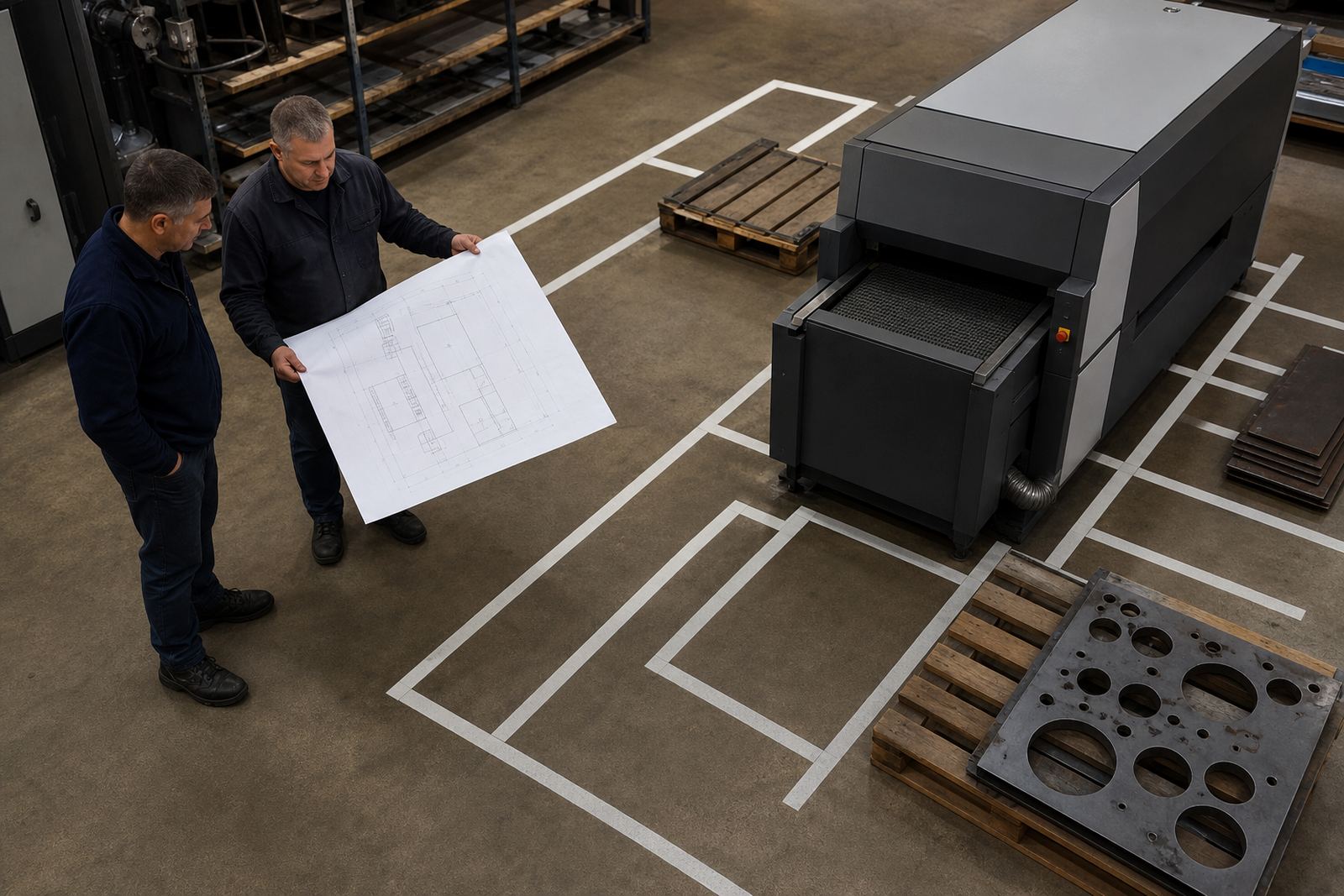
A simple layout can make a big difference. In a Rustenburg support scenario, a workshop running a few medium batches each day might place the deburring machine close to cutting and packing. That means one operator can manage movement without dragging parts across the shop floor more than once. It also helps with production planning when the team is small and one person is covering more than one task.
For small batch work, the cleanest workflow is often the easiest one to train. Keep the sequence fixed, label the batch, and decide where finished parts go before the first sheet is cut. That saves time and avoids confusion later.
Use finishing to protect margin, not just appearance
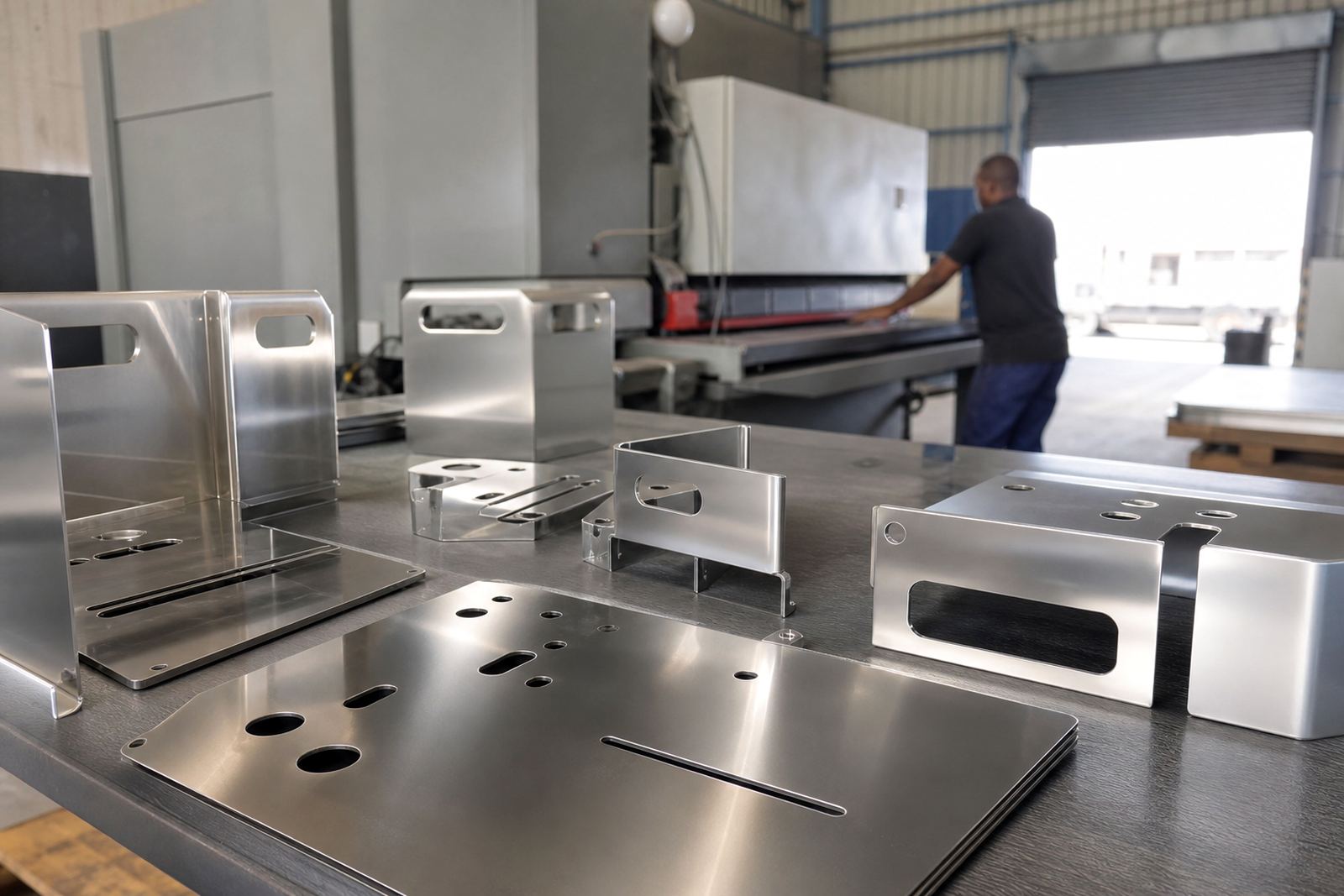
Many workshop owners think of deburring as a cosmetic step, but the financial value is broader. Clean edges reduce handling injuries, lower the risk of coating defects, and help parts fit better at assembly. When a batch is small, even one rejected part can affect the margin. A machine that improves edge quality can prevent that waste.
This is especially useful for fabricators supplying local contractors, equipment builders and maintenance teams. If a bracket arrives with sharp edges or inconsistent finish, the customer may reject it or ask for rework. That means more labour, more transport and another delay. On a tight order, those extra costs matter more than the original machine time.
- Reduce grinding and hand finishing on parts that need repeatable edges.
- Cut down on rework from poor fit-up or coating problems.
- Improve operator safety by removing sharp burrs before packing.
- Make quoting easier because finishing time becomes more predictable.
In small batch production, the machine should protect profit by making every part more dependable, not just more presentable.
Plan maintenance around real workshop conditions
Small workshops cannot afford long breakdowns, so preventive maintenance has to be practical. In South Africa, many shops deal with power interruptions, fluctuating workloads and mixed material types, all of which place pressure on finishing equipment. That means maintenance needs to fit the way the workshop actually runs, not just a calendar reminder.
Operators should know what to check at the start of the day, what to clean after each batch and when to call for support. Simple habits like checking abrasives, clearing dust build-up and watching for unusual vibration can prevent bigger faults later. If the machine is part of a busy production line, even a short stoppage can hold up packing and dispatch for the rest of the day.
Annual service contracts and planned breakdown cover are useful when the team is lean. They help smaller workshops stay ahead of wear and keep the machine ready for the next batch. For a busy Germiston or Pretoria operation, that can be the difference between finishing on time and pushing delivery into the next shift.
A small batch example from the East Rand
Take a fabrication shop in Wadeville that cuts stainless and mild steel parts for local equipment builders. The jobs vary from week to week, but the shop rarely runs huge quantities. Before using machine finishing, two workers might spend a full afternoon cleaning edges by hand, with results that changed from one operator to the next. During busy periods, that process created a backlog and parts were leaving the shop with visible marks.
After introducing a controlled deburring process, the team started grouping similar parts together, testing one sample at a time, and using the machine as part of the normal job flow. That did not require a major change to the whole factory. It simply removed wasted effort and improved repeatability. The workshop could still handle small batches, but with less pressure on labour and better results for customers across Johannesburg and the broader East Rand.
The lesson is straightforward. Small batch production does not need a complicated system. It needs a reliable one.
Simple rules that keep small batches moving
The most effective small batch strategy is usually a disciplined routine. Once the workshop has a clear method for sorting, finishing and checking parts, the machine can do its job without slowing the rest of the floor. That is what helps smaller businesses keep up with changing order sizes and short lead times.
- Set one standard route for parts from cutting to finishing to packing.
- Test new materials or thicknesses before the batch starts.
- Keep consumables in stock so work does not stop for a small part.
- Train one backup operator so the process can continue during leave or sick days.
- Review finished parts after each job and adjust the process where needed.
For fabricators in Cape Town, Durban, Pretoria, Rustenburg and Johannesburg, small batch work can be competitive when finishing is handled properly. The machine does not need to be complicated. It just needs to fit the job, the people and the pace of the workshop.