
Why thin sheet behaves differently after laser cutting
Thin sheet has less mass, so it responds quickly to vibration, pressure and heat. Even a small burr can lift an edge enough to affect nesting, folding and fit-up later in the job. That is why lighter gauge material needs a gentler and more controlled finishing approach than heavier plate.
On parts as thin as 0.8 mm to 2.0 mm, the issue is not only burr removal. It is also about keeping the part from distorting while the edge is being cleaned. If the sheet flexes during finishing, the part can lose flatness and the edge can pick up marks that show through after powder coating or painting.
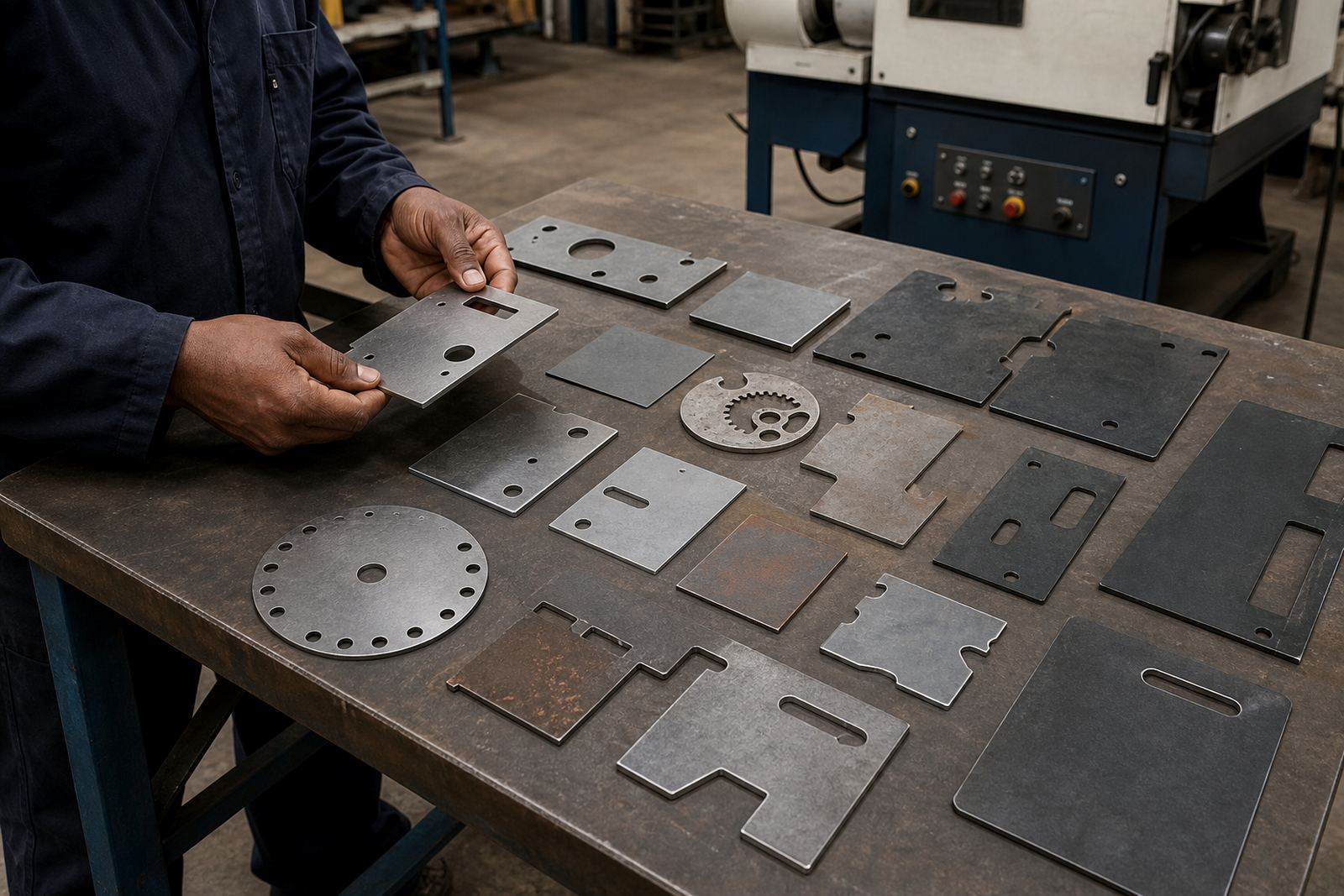
In Wadeville and across the East Rand, we see this on electrical enclosures, control panels and small fabricated covers. The jobs often come through for final finishing after laser cutting, and the challenge is to keep repeatability while the parts are still light enough to shift under their own weight, not easy to manage on a busy floor.
Set the machine for light contact, not heavy pressure
The first control point is contact pressure. Thin sheet does not need aggressive stock removal. It needs even, light contact so the abrasive or finishing heads remove the burr without digging into the face of the part. Too much pressure can dish the panel, round sharp details and leave swirl marks that are hard to remove later.
A practical way to check the setting is to run sample parts from the same nest and inspect both sides. If the burr is gone but the face has scuffing or the corners are softening too much, the machine is doing more work than necessary. For many lighter gauge jobs, the aim is simply to break the edge and remove the sharpness, not to reshape the profile.
- Start with sample parts from the same material grade and thickness.
- Use the minimum pressure needed to clear the burr.
- Check face condition after the first pass, not only the edge.
- Adjust feed rate before increasing pressure.
Support the part so it does not flutter or snag
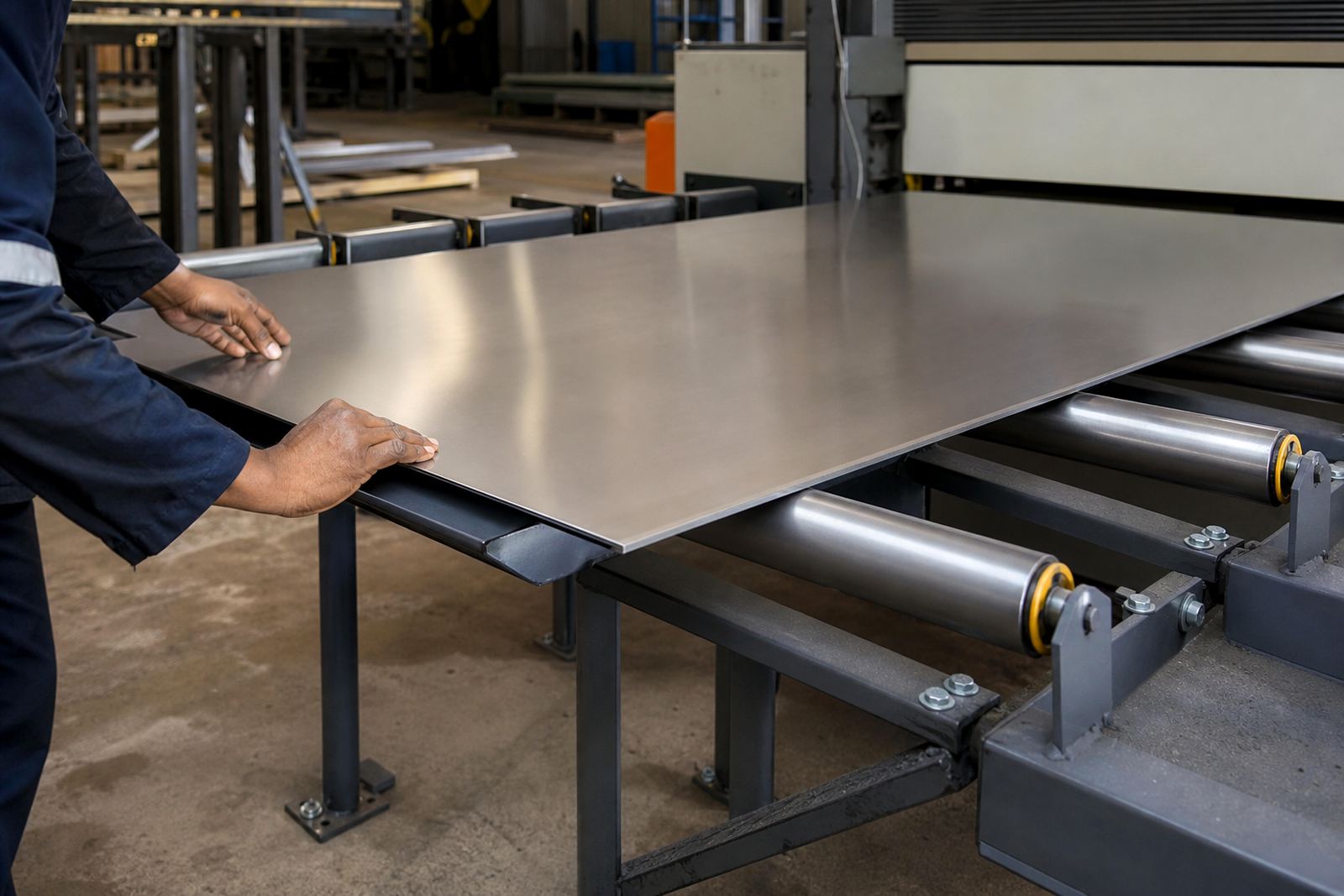
Part support is often the difference between a clean finish and a poor one. Thin material can flutter as it enters the machine, especially on small parts with long cut-outs or narrow tabs. If the sheet is not supported properly, the edge can snag and the part may twist. This is where handling discipline matters as much as the machine settings.
Keep the infeed area clear and make sure operators separate very small parts from larger panels before processing. Mixed sizes can cause collisions inside the machine path. For thin components, it is better to process like with like, because parts of similar size and shape behave more consistently. That saves time and lowers the risk of rework.
In coastal areas such as Durban and Cape Town, humidity can make thin sheet stick slightly to stacks or trays, which makes handling more difficult. Operators should avoid forcing parts apart with sharp tools. A careful lift and a clean stacking method are better than trying to rush it.
Choose the right finish for coated, welded or folded parts
Not every thin sheet job needs the same edge finish. Parts that will be folded should have an edge condition that reduces cracking at the bend line. Parts that will be welded need clean, even edges so the weld pool is not contaminated by rough burrs or loose debris. Parts that go straight to coating need a finish that does not leave scratches visible under paint or powder.
When customers send sample parts for testing, we usually look at the end use before recommending a finish approach. A panel for indoor electrical use may need a neat cosmetic edge, while a small bracket for outdoor use may need a more consistent finish to handle corrosion risk once coating is applied. The point is not to over-process thin material, because every extra pass can affect the shape.
- For folded parts, keep edge break consistent along the bend line.
- For welded parts, remove loose burrs and sharp fragments fully.
- For coated parts, protect the face from scratch marks during handling.
- For visible parts, inspect under good light before packing.
Avoid rework by controlling the full handling chain
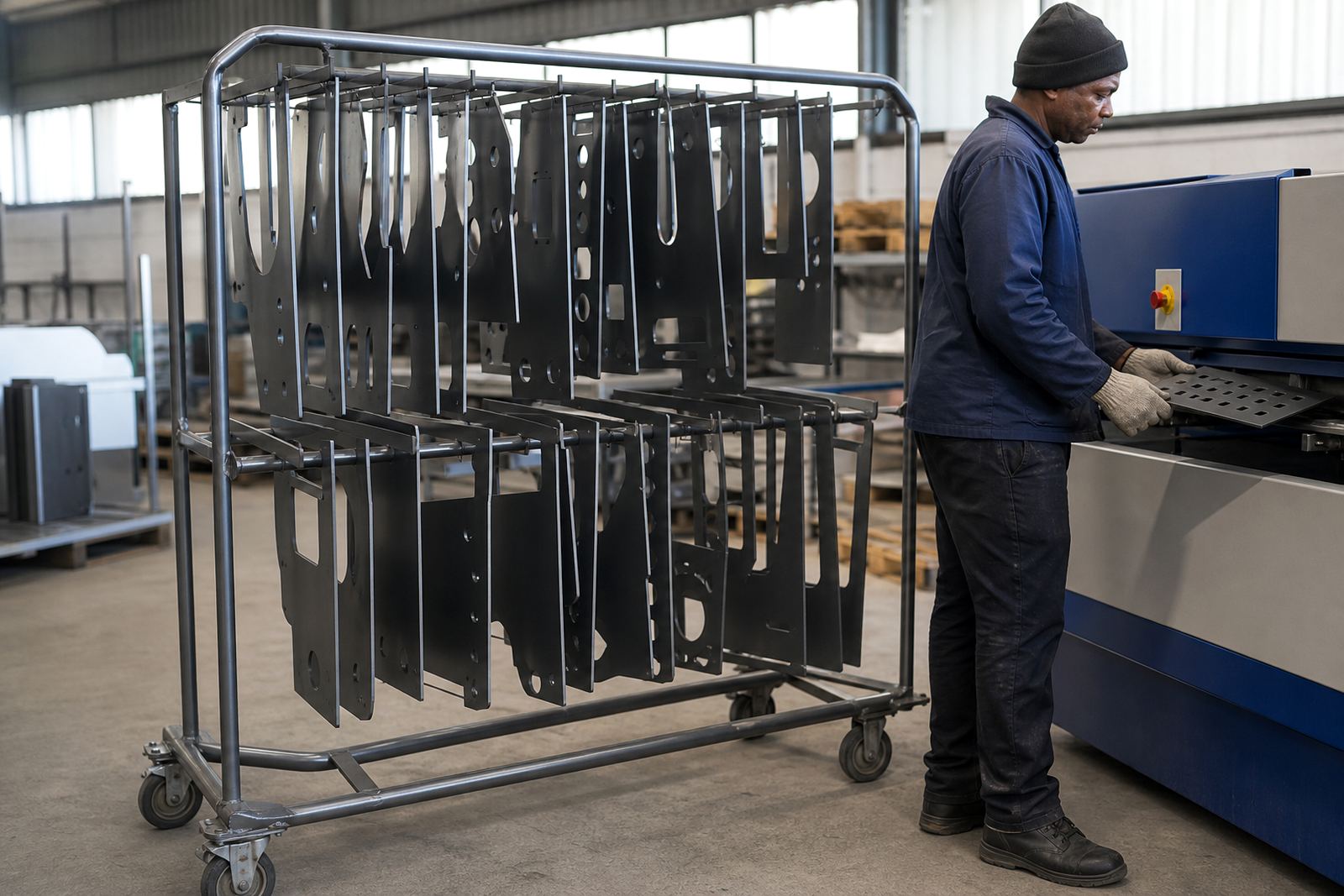
Thin sheet problems often start before deburring and only show up after the part has been moved three or four times. A clean handling chain matters. That means careful unloading from the laser, sensible stacking, controlled transfer to the finishing machine and a final inspection before dispatch. If any one step is rushed, the chance of edge damage goes up.
Simple floor discipline helps a lot. Use flat trays, avoid over-stacking and keep different jobs separated so parts are not mixed. A thin stainless cover and a mild steel bracket may look similar from a distance, but they do not behave the same. Mixing them up can lead to surface marks, contamination or the wrong finish on the wrong part.
For fabricators running through load-shedding periods, it is also worth planning production so that laser cutting, deburring and packing are not split across long stops. Interrupted work causes parts to sit around longer, which increases the chance of handling damage. A clear sequence helps keep the job moving and the finish consistent, even on a tight shift.
A Germiston example from high mix production
A fabricator in Germiston was producing thin enclosure plates in batches of 20 to 40 pieces, with thickness ranging from 1.2 mm to 1.6 mm. The laser cuts were accurate, but the parts were arriving at assembly with rough edges and occasional face marks from manual handling. The team was spending extra time on rework and sorting, which slowed the next stage.
After reviewing the samples, the finishing setup was adjusted for lighter contact and the stacking method was changed so the parts moved through in smaller, matched groups. The operator training focused on lifting and transfer rather than forcing the sheets through faster. The result was better part stability, fewer scratches and more consistent edge quality across the batch. It also made the job simpler to repeat on future orders.
That kind of change does not need a full production overhaul. Often it is a matter of matching the machine settings to the material, then tightening the handling steps around it. For thin sheet, that small discipline makes a big difference in the final result.
What to ask before you start a thin sheet job
If a job includes light gauge material, it helps to ask the right questions before the first part is processed. That saves time and reduces the risk of reject parts later. The best finishing plan will depend on thickness, material type, part size, downstream forming and the required cosmetic finish.
- What is the material thickness and grade?
- Will the part be folded, welded or coated after finishing?
- Are there small cut-outs or narrow tabs that may flex?
- Do you need cosmetic consistency or only burr removal?
- How will the parts be stacked and moved between stages?
When those points are clear, the machine can be set up to support the job instead of fighting it. That is the real value in thin sheet handling: less distortion, fewer scratches and a finish that holds up from laser cut to final assembly.