
Boksburg workshop brief and production pressure
The client is an HVAC parts manufacturer in Boksburg working with laser-cut sheet metal for ducting accessories, mounting pieces and light structural parts. Their team was seeing burrs, sharp edges and uneven edge quality after cutting, which led to hand finishing, slowed assembly and an avoidable amount of rework.
The brief was straightforward: improve edge consistency without adding a complicated process that would need constant babysitting. They wanted a machine setup that could handle flanges, strips and smaller parts in regular production runs, with enough capacity for local demand from Gauteng installers and fabricators.
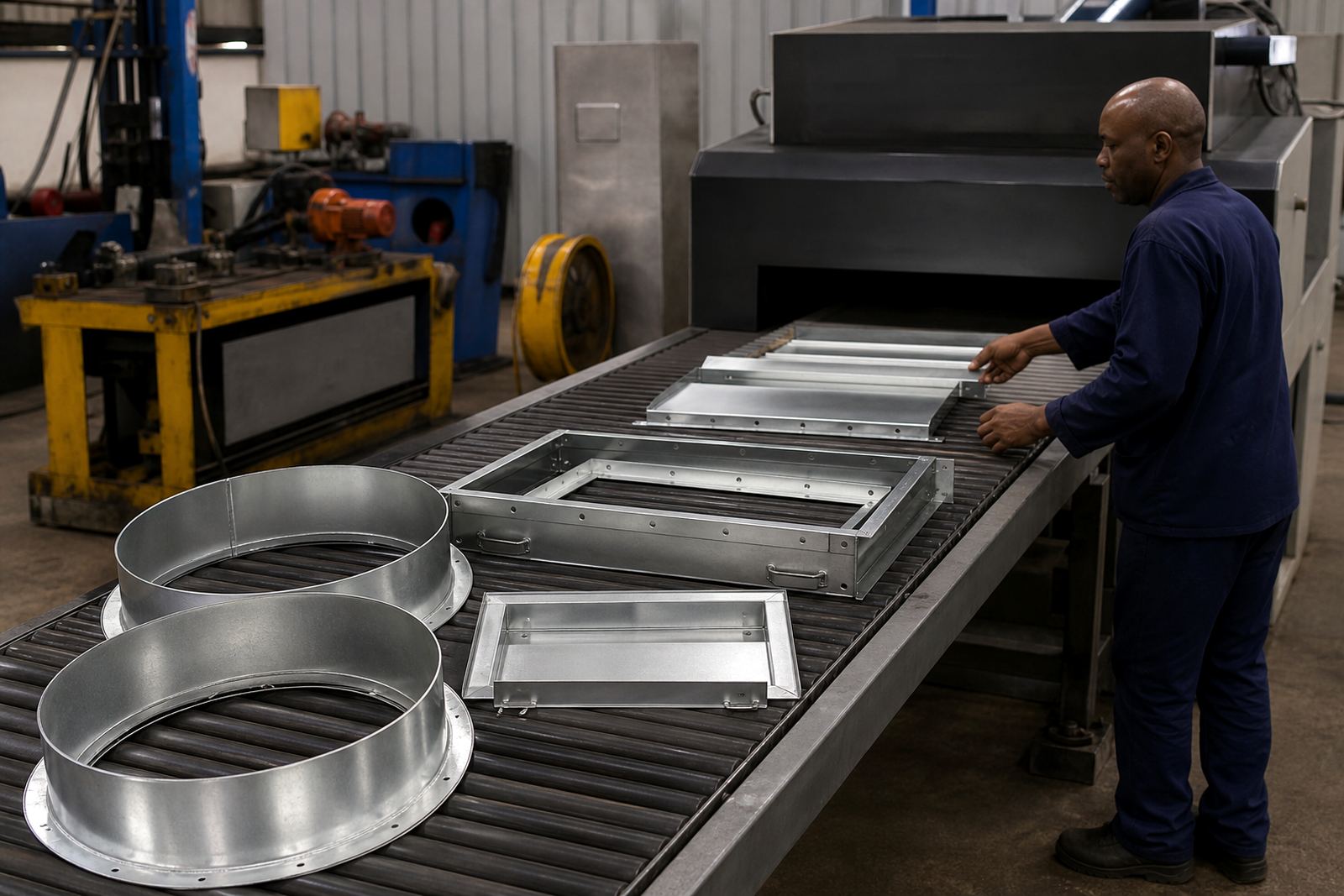
- Workpieces included mild steel sheet, galvanised sheet and light-gauge cut parts.
- Typical part sizes ranged from 80 mm wide strips to panels around 1 200 mm long.
- The workshop needed a process that could be run by existing staff after training.
What was holding the line back
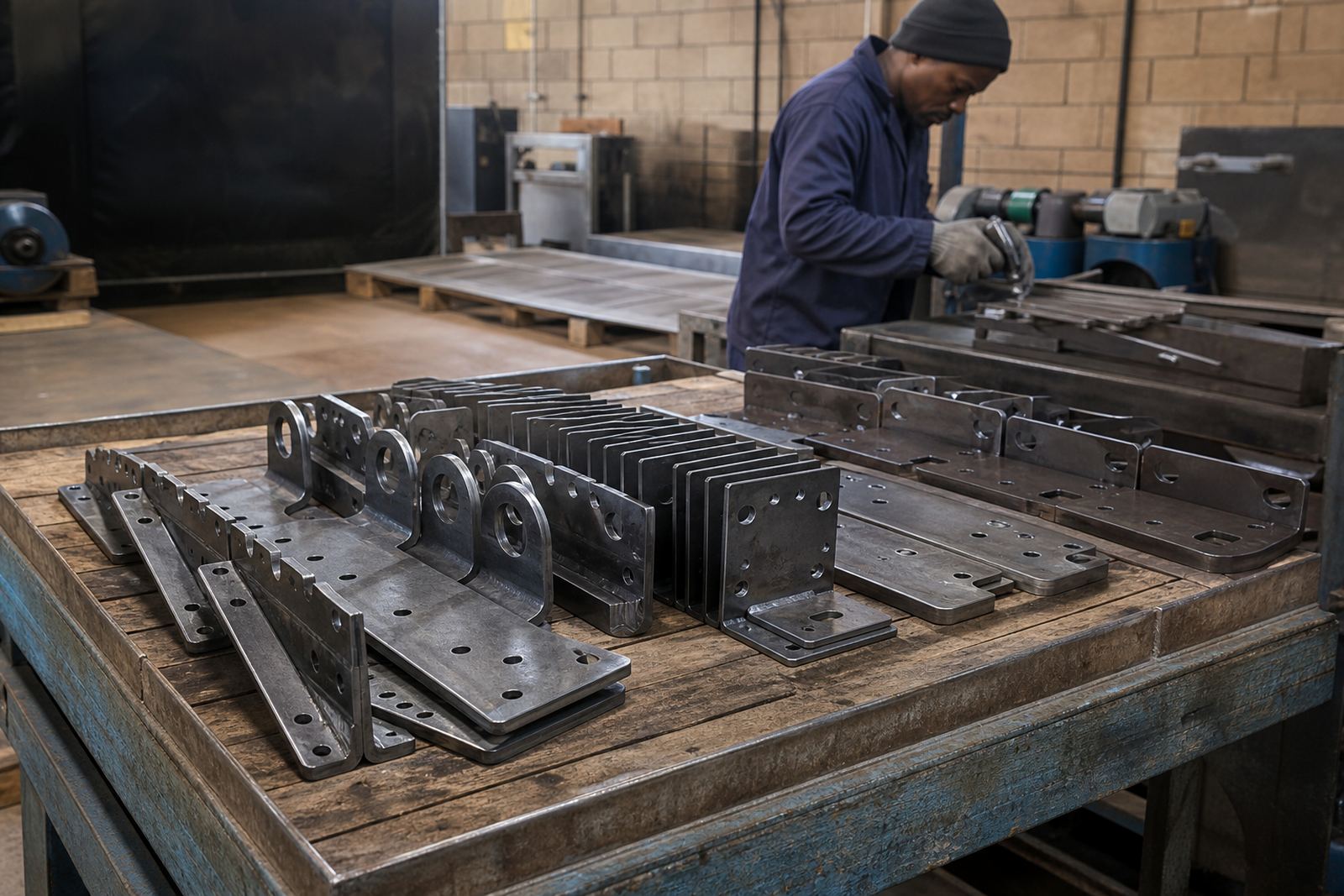
The main problem was not cutting accuracy, it was edge condition. Burrs along the cut edge affected fit-up on flanges and caused unnecessary time at the assembly table. In a busy workshop, even small inconsistencies can slow down every part that follows.
They also had to deal with power interruptions and a humid coastal supply chain on some material batches, so they needed equipment that could be set up sensibly, kept clean and put back into production quickly after stoppages. The floor space was tight and the team did not want a machine that would demand major layout changes.
- Constraints included limited floor space and a small handling team.
- The process had to suit mixed part sizes and short job changeovers.
- Dust control and routine cleanup mattered because of daily sheet metal volumes.
The machine set-up and key specs
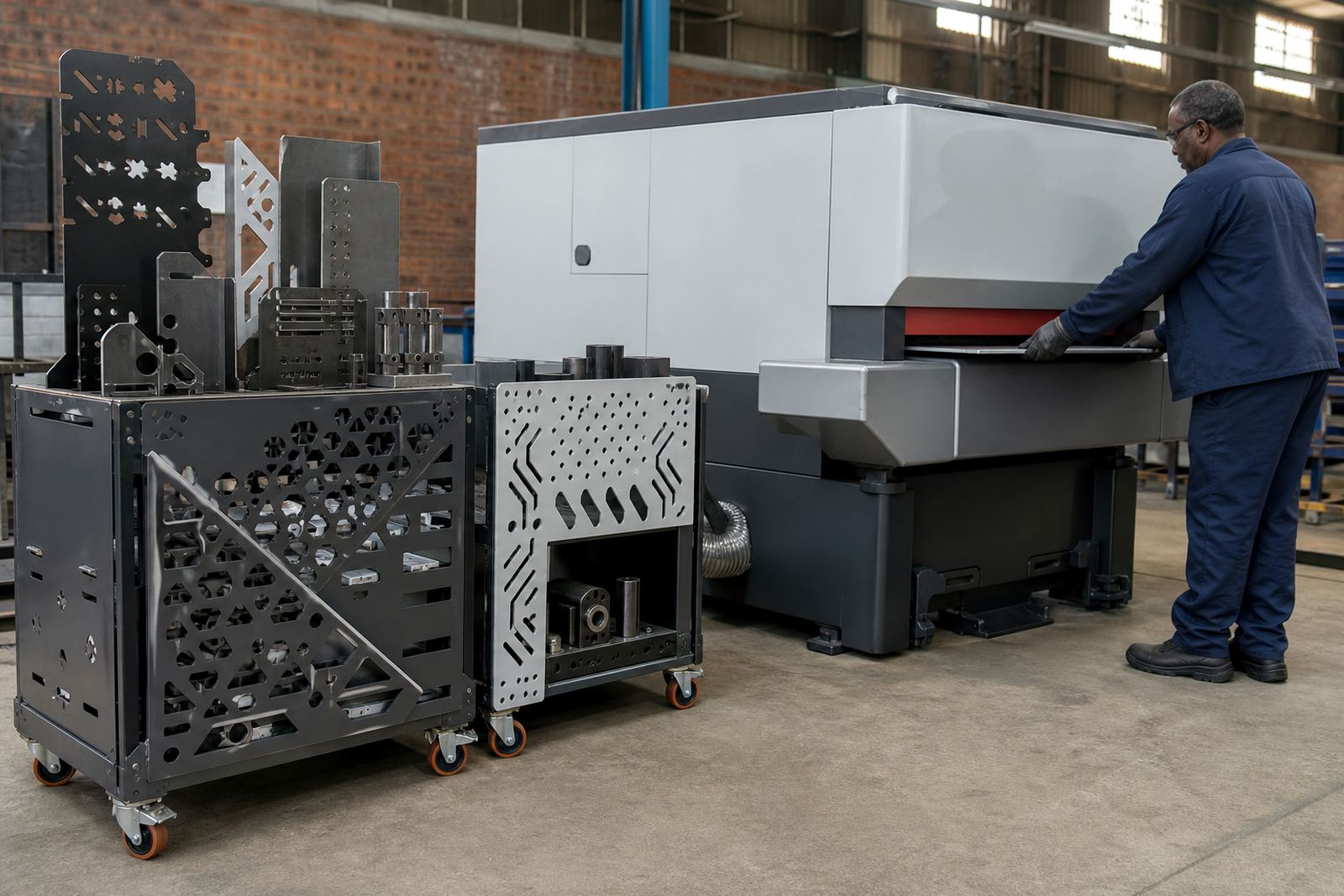
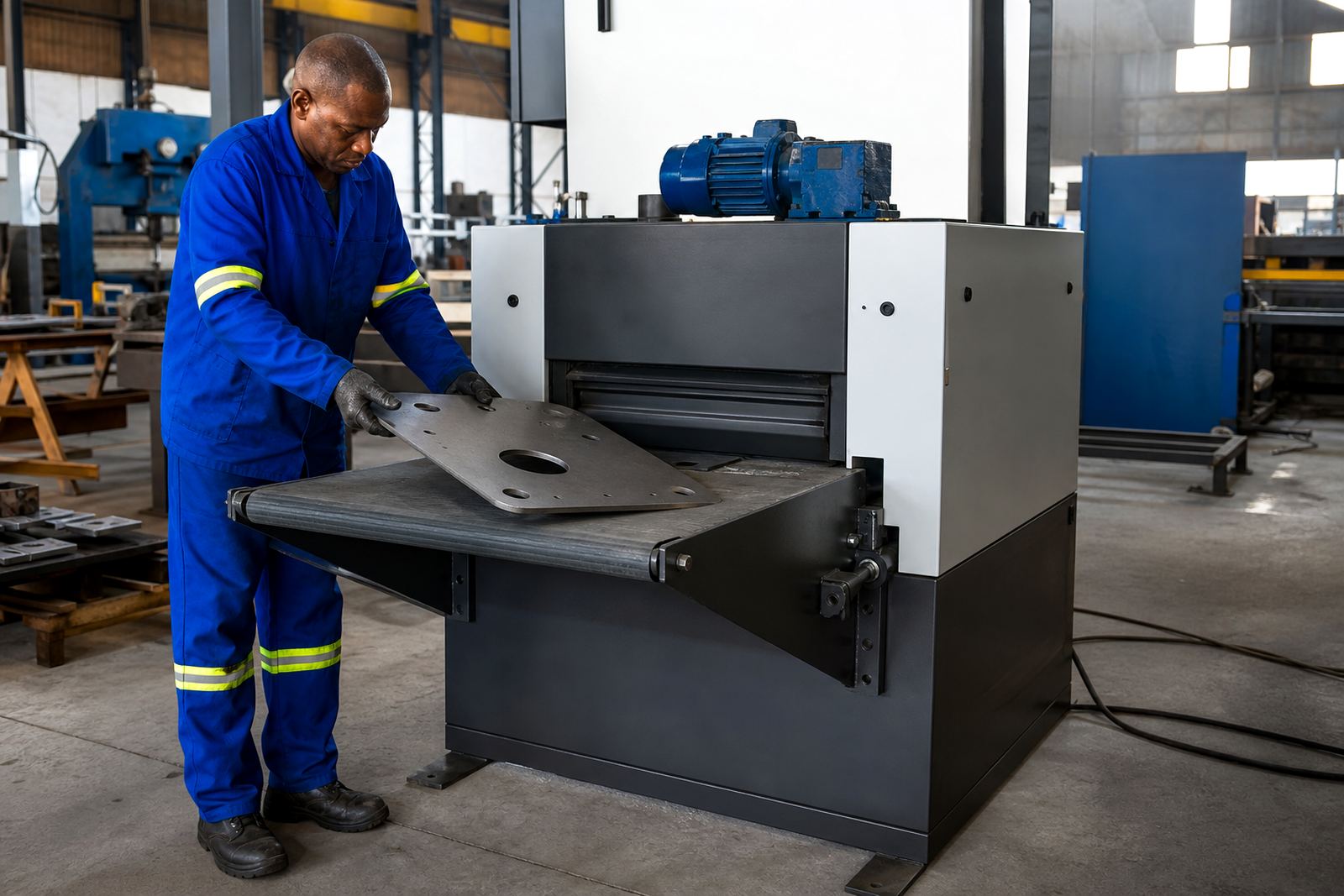
We supplied an edge-finishing setup sized for laser-cut sheet metal in a Boksburg workshop environment. The chosen configuration focused on deburring, edge-breaking and light finishing rather than heavy stock removal, which was the right match for their parts mix.
Key specifications included a working width suitable for common HVAC components, variable feed control for different thicknesses and an abrasive finishing stage that could be tuned to the material. The operators needed repeatable settings, not constant adjustment. We also set the machine up so routine abrasive changes could be done quickly during the shift, which kept downtime low.
- Material thickness range: light-gauge sheet through to general fabrication thicknesses.
- Part type: laser-cut flanges, strips, brackets and flat components.
- Finish target: clean edges, reduced burrs and safer handling before assembly.
Installation, training and first run support
The installation was completed in one working week, with the full handover and first production checks finished in week two. We handled machine placement, power checks, safety checks and initial settings for the client’s common part types.
Training was practical and focused on day-to-day use. The operator team worked through setup, feed speed, abrasive replacement, cleaning and simple fault checks. We also covered how to keep edge quality consistent when switching between thicker parts and thinner strips. Johan from the workshop team took to it quickly and the line was back in production with far less stop-start handling.
- Week 1: delivery, positioning and electrical check.
- Week 2: setup, operator training and sample part trials.
- Week 3 to 4: process tuning and routine production support.
Results on flanges, strips and light-gauge parts
By the end of the four-week rollout, the workshop had a much more consistent finish across its cut parts. Flanges seated better during assembly, strips were safer to handle and the time spent on manual touch-up dropped noticeably. The team could move parts from cutting to assembly with fewer stoppages and less sorting at the bench.
The biggest gain was consistency. Once the settings were dialled in, the machine produced a repeatable edge finish that suited both internal production and the expectations of fitters on site. That made planning easier, and it reduced the amount of rework that used to creep in late on a Friday when the team was trying to clear orders.
- Less hand finishing before assembly.
- Cleaner, safer edges on cut sheet metal.
- Better repeatability on mixed part batches.
- Faster handover between cutting and fitting.
What we would repeat on the next Boksburg job
If we were doing the same job again, we would approach it the same way: start with the part mix, test the common pieces first and match the machine settings to the workshop’s actual daily work. That saved time and gave the team confidence before full production started.
We would also keep the training hands-on and brief, then return after the first production week to fine-tune settings around real jobs. That is usually the best way to make sure the process sticks. For workshops in Boksburg, Germiston or the East Rand, that kind of practical start pays off quickly.
- Test the most common parts before full changeover.
- Set up operator notes for thickness and feed speed.
- Review abrasive wear after the first few shifts.
Key facts
| Project town | Boksburg |
|---|---|
| Client type | HVAC workshop producing laser-cut sheet metal parts |
| Main parts | Flanges, strips, brackets and light-gauge components |
| Timeline | 4 weeks from delivery to steady production |
| Machine role | Deburring and edge-finishing before assembly |
| Region served | Gauteng with support for nationwide supply and training |